Artwork
Dancers in the Rotunda at the Paris Opera
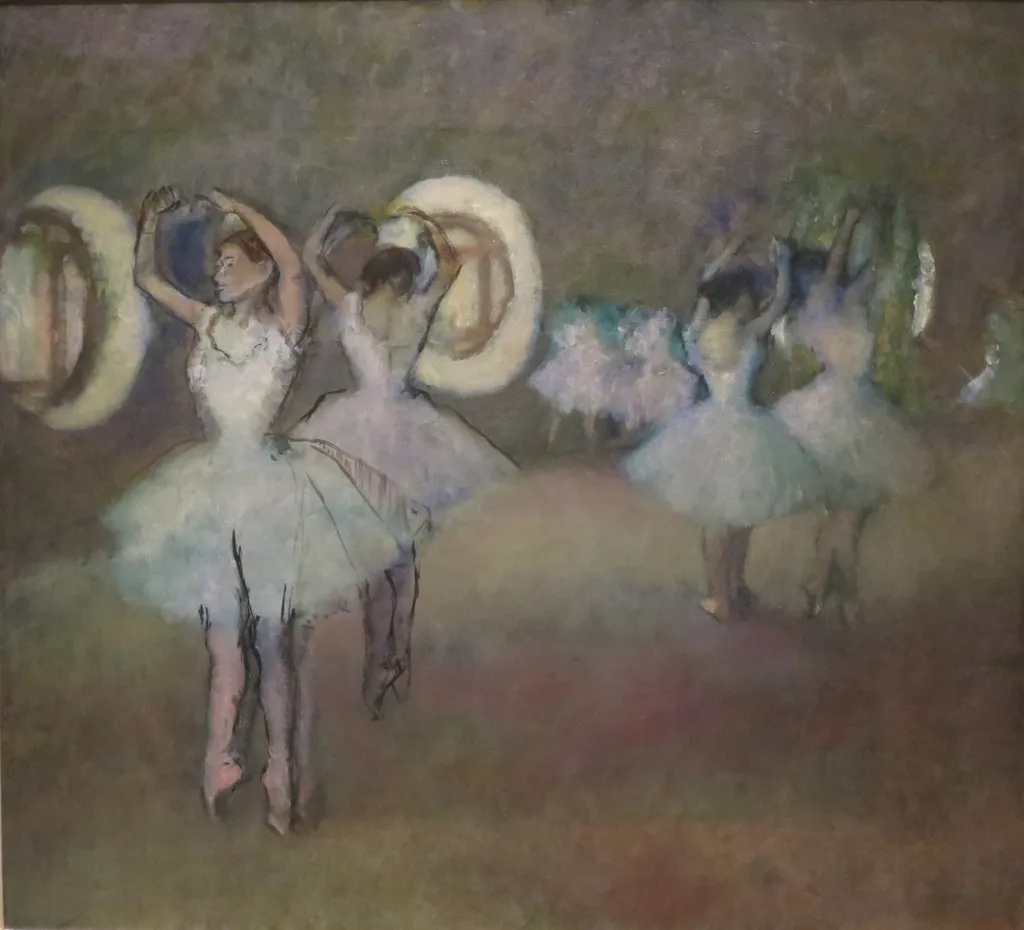
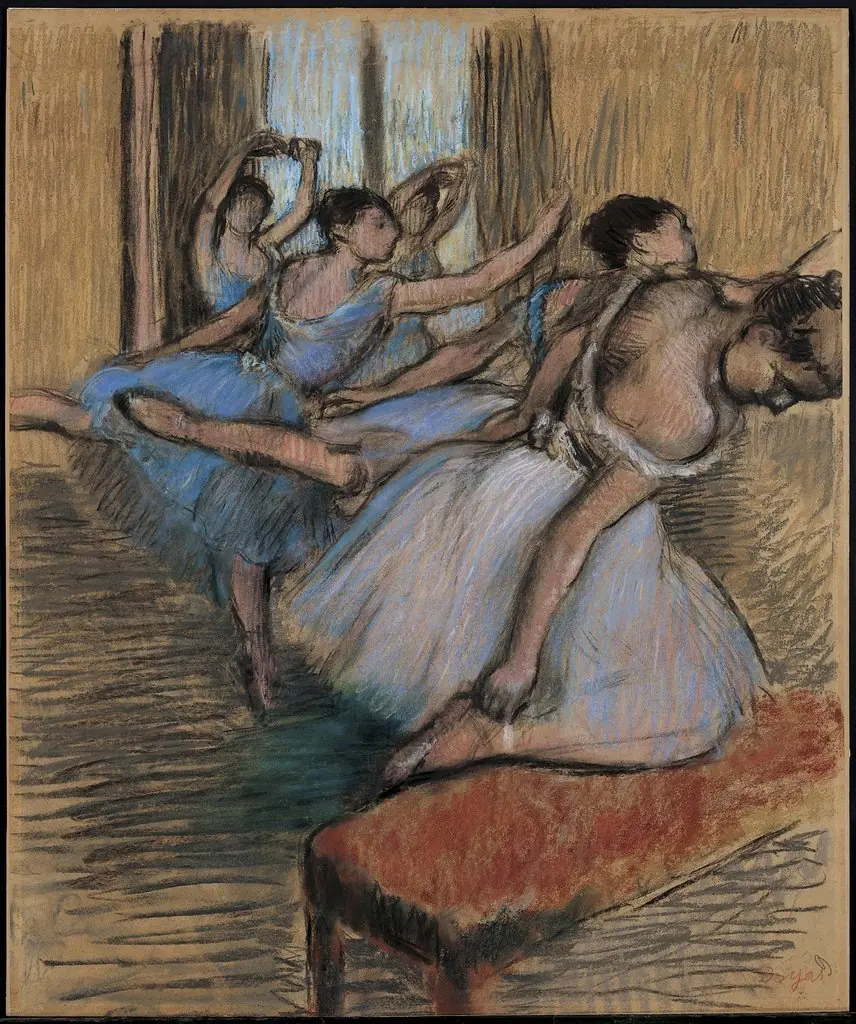
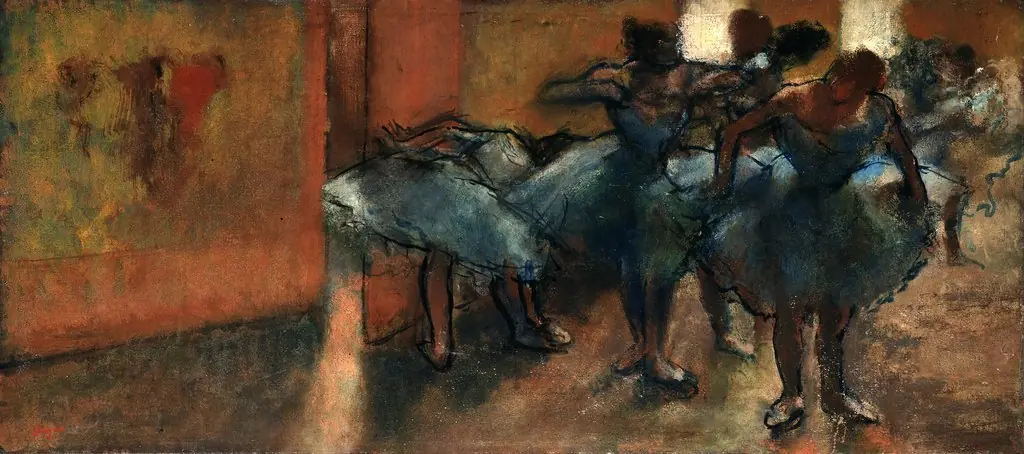
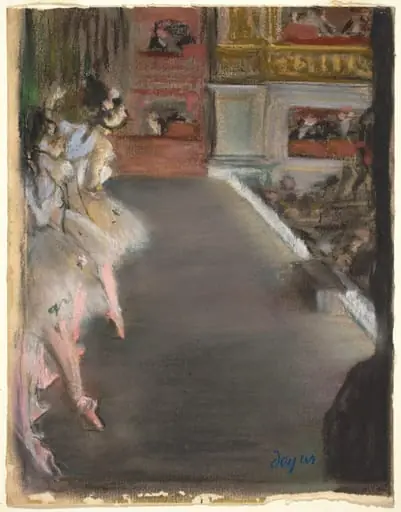
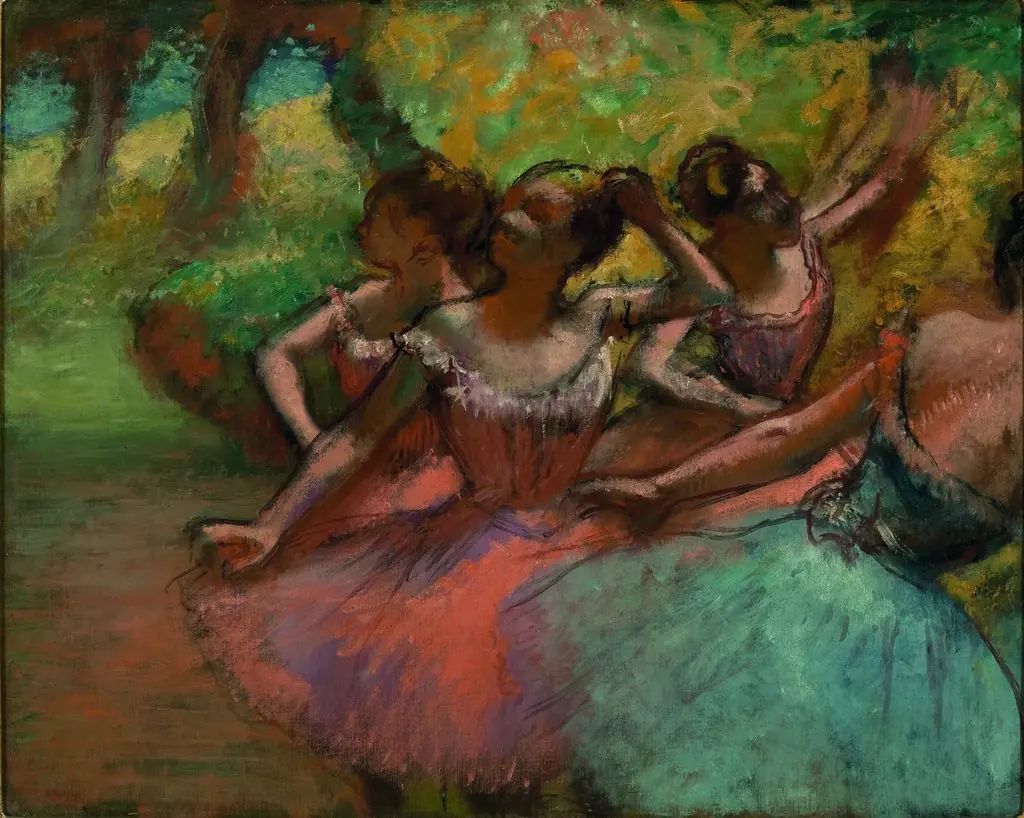
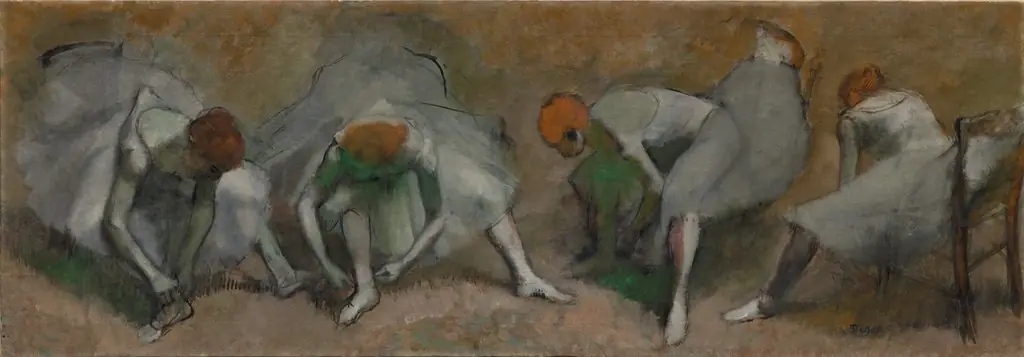
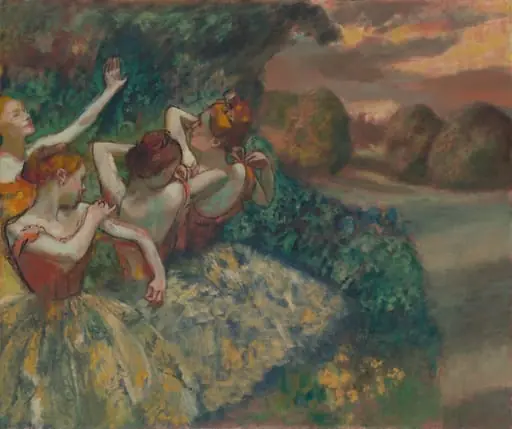
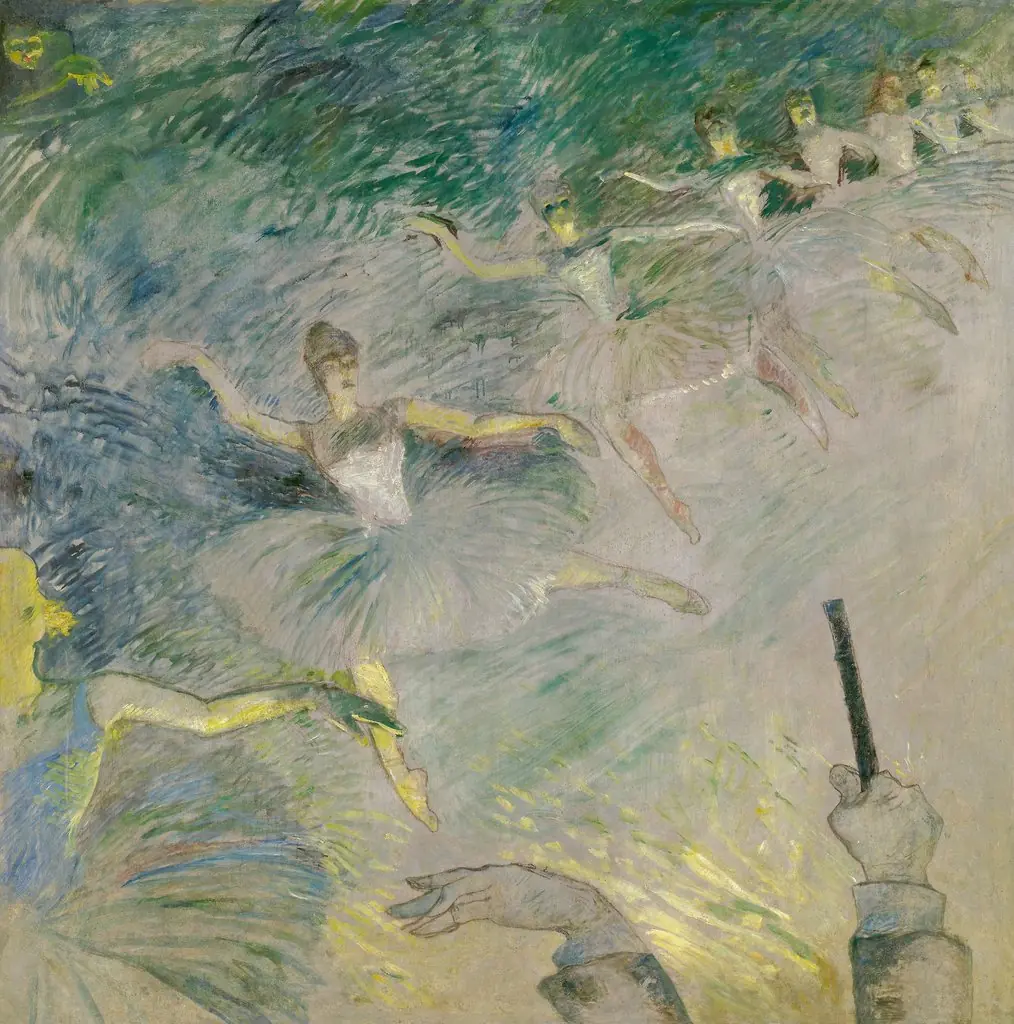
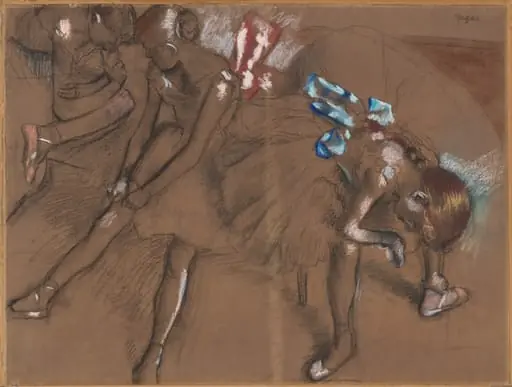
Dancers in the Rotunda at the Paris Opera is an oil painting by the Impressionist artist Edgar Degas. It dates from 1884 and is held in the collection of the Norton Simon Museum.
About this work
Overview
Painted around 1884, Dancers in the Rotunda at the Paris Opera is an oil work by Edgar Degas that captures a quiet interlude within the Paris Opera House.
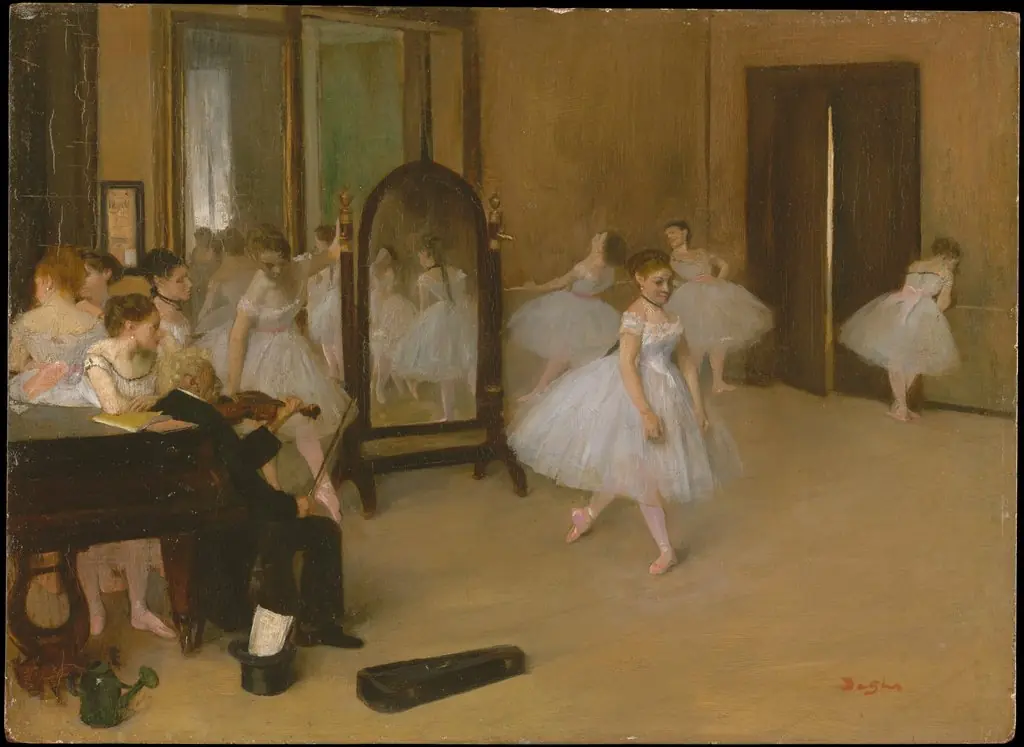
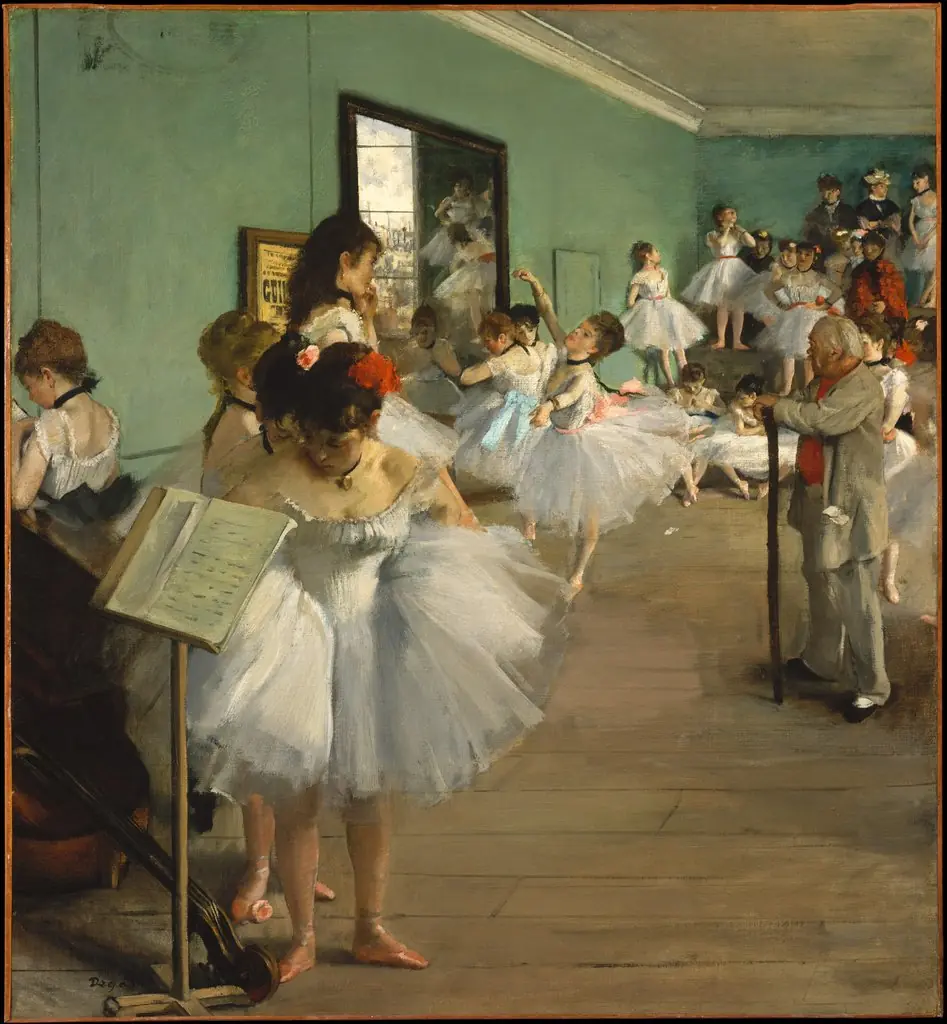
Painted around 1884, Dancers in the Rotunda at the Paris Opera is an oil work by Edgar Degas that captures a quiet interlude within the Paris Opera House. The scene centers on a group of ballet dancers gathered in the building’s circular vestibule, their white tutus contrasting with the muted tones of the architecture. Rather than depicting performance, Degas focuses on the stillness between rehearsals, offering a glimpse into the dancers’ private moments.
Subject & Meaning
The painting portrays dancers in a moment of pause, arranged in a loose circle, some making eye contact, others lost in thought. Their postures suggest fatigue or reflection, not theatricality. Degas avoids idealization, presenting them as workers in a disciplined environment. The absence of audience or stage emphasizes the backstage reality of their lives, shifting focus from spectacle to solitude within a structured routine.
Technique & Style
Degas employs soft, diffused lighting and delicate brushwork to convey a hushed atmosphere. Colors are restrained—pale pinks, grays, and creams—enhancing the sense of calm. Forms are rendered with subtle modeling rather than sharp definition, allowing figures to blend into the architectural space. The composition’s circular arrangement mirrors the rotunda’s curvature, reinforcing spatial harmony without overt drama.
History & Provenance
Created in the mid-1880s, the painting entered the collection of the Norton Simon Museum in Pasadena, California, where it remains today. It is one of several works by Degas that explore the Paris Opera’s backstage world, reflecting his long-standing interest in the institution. The piece was likely painted from sketches made during visits to the opera house, consistent with Degas’s method of working from direct observation.
Context
During the 1880s, Degas frequently returned to the Paris Opera as a subject, drawn to its interplay of movement and stillness. Ballet dancers were common figures in his oeuvre, but this work stands apart for its emphasis on quietude rather than motion. The rotunda, a real architectural feature of the opera house, served as a transitional space where dancers waited between rehearsals, making it a natural setting for Degas’s interest in unguarded moments.
Legacy
The painting contributes to Degas’s broader exploration of modern life through intimate, unposed scenes. Its understated composition influenced later artists interested in the psychology of routine and the dignity of labor. Unlike grand historical or mythological subjects favored in academic circles, this work asserts the artistic value of ordinary, overlooked moments within institutional spaces.
Artist & collection
Artist
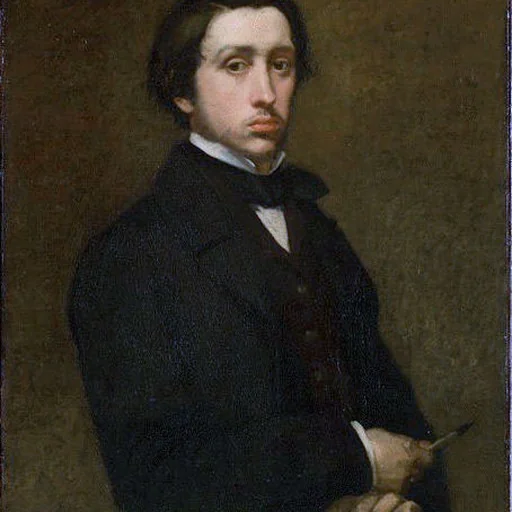
Born Hilaire-Germain-Edgar De Gas on 19 July 1834 in Paris, Edgar Degas came from an affluent banking family with aristocratic roots and spent his childhood among the cultivated circles of the French capital.