Artwork
Asolo
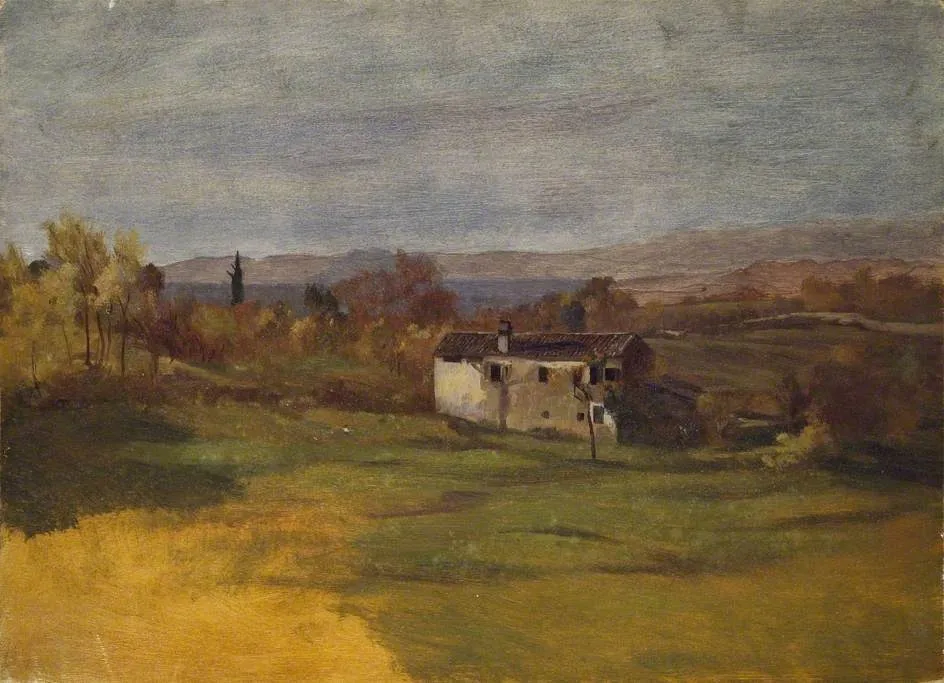
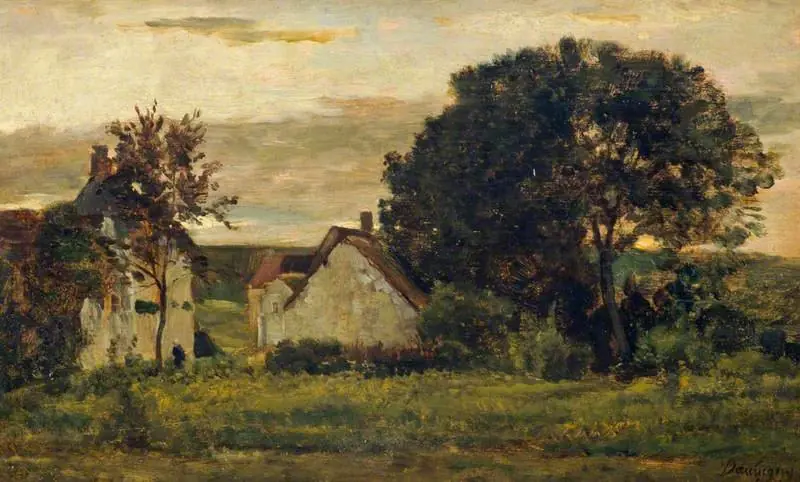
Asolo is an unspecified painting by the Impressionist artist Edith Corbet. It dates from 1900 and is held in the collection of the Ashmolean Museum.
About this work
Overview
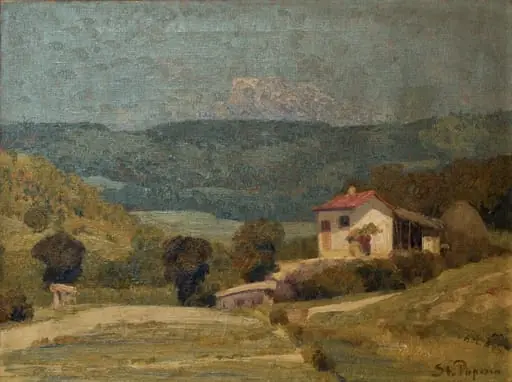
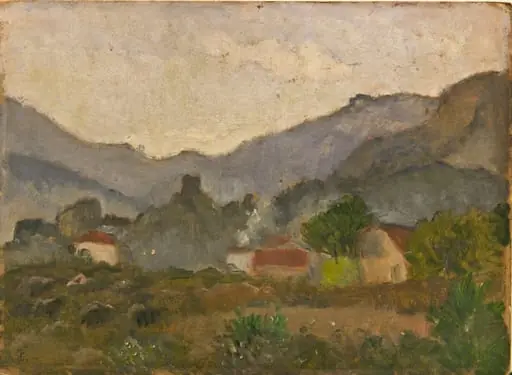
Created in 1900, *Asolo* is a landscape painting by British artist Edith Corbet. The work depicts a modest white house with a dark roof and chimney perched on a gently sloping, grassy hill surrounded by trees. A muted sky, heavy with clouds, hovers above, lending the scene a calm, subdued atmosphere.
Subject & Meaning
The composition centers on the solitary dwelling, suggesting a quiet rural retreat. The surrounding foliage and the overcast heavens emphasize a sense of isolation and tranquility, inviting contemplation of the relationship between human habitation and the natural environment.
Technique & Style
Corbet employs visible brushwork and a restrained palette of greens, browns, and grays, echoing the plein‑air practices of the Italian Macchiaioli. The painting’s broad, panoramic layout and emphasis on light and color align it with late‑19th‑century Impressionist tendencies, while the textured strokes convey the tactile quality of the landscape.
History & Provenance
Edith Corbet, an English painter who spent considerable time in Italy, was associated with the Macchiaioli circle, a group that championed outdoor painting. *Asolo* entered the collection of the Ashmolean Museum, where it remains part of the institution’s holdings of British and European art from the turn of the century.
Context
The work reflects the cross‑cultural exchange between British Victorian artists and their Italian contemporaries. By integrating Macchiaioli methods with her own sensibility, Corbet contributes to a broader narrative of European landscape painting that sought to capture fleeting atmospheric conditions through direct observation.
Artist & collection
Artist
Edith Corbet née Edenborough (28 December 1846 – 1920) was a Victorian landscape painter, having close associations with the Macchiaioli group (also known as the Tuscans or Etruscans), who, in a break with tradition,…