Artwork
Studio Interior
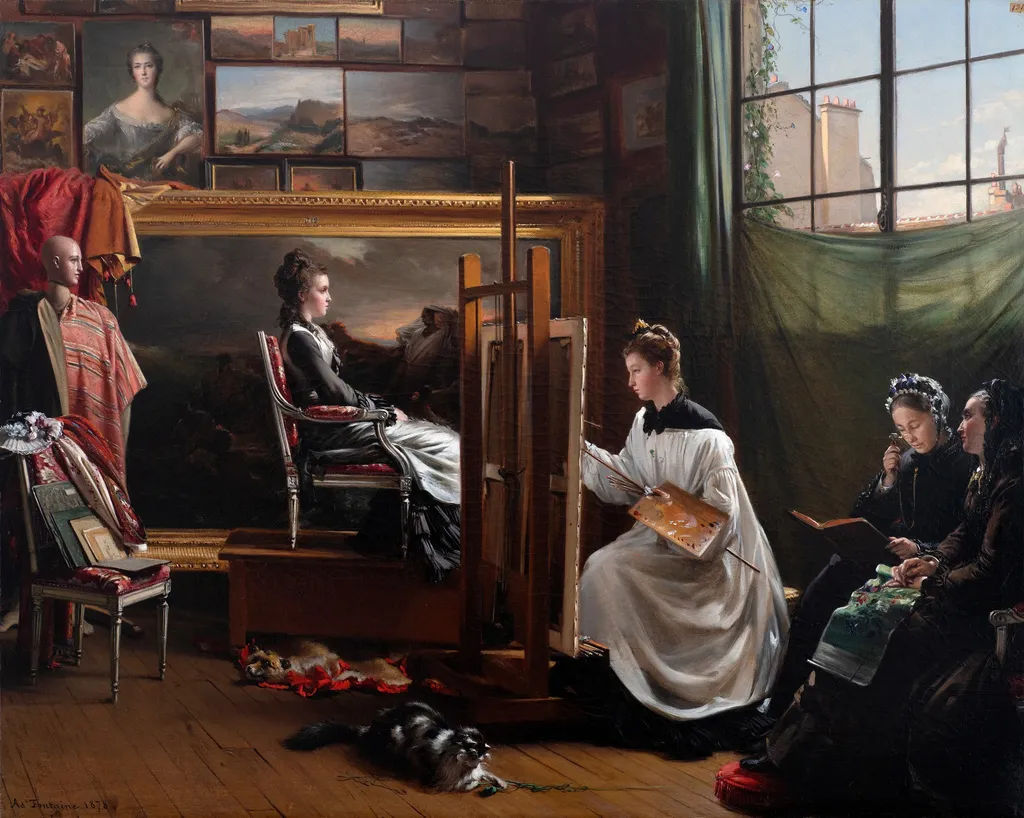
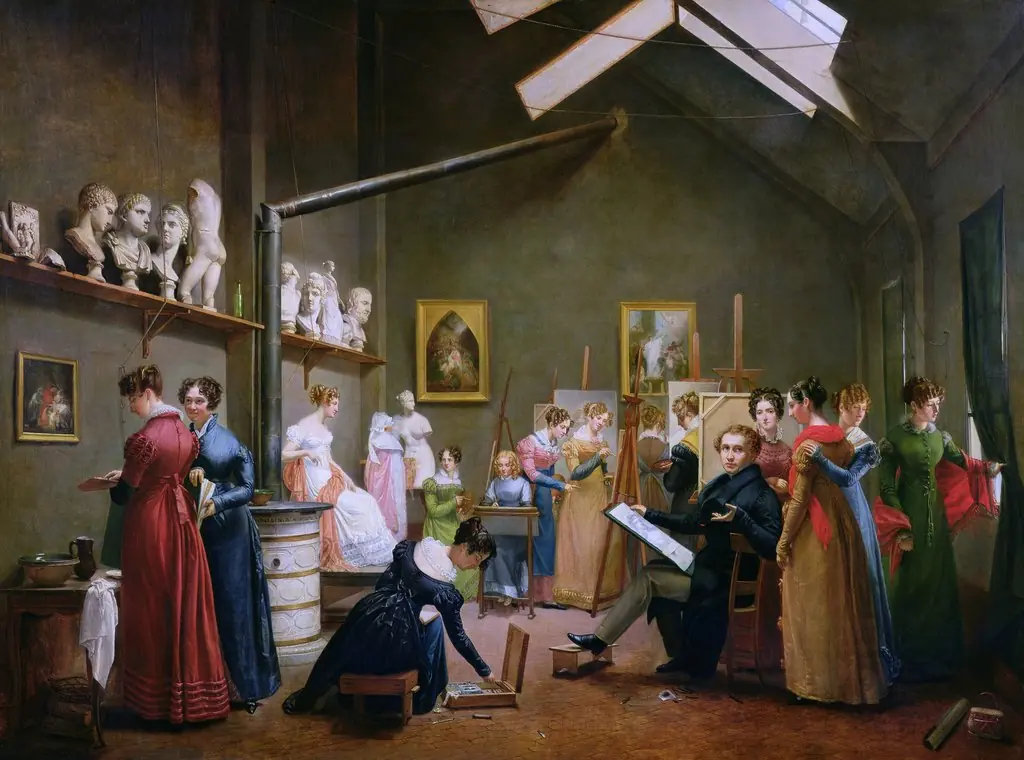
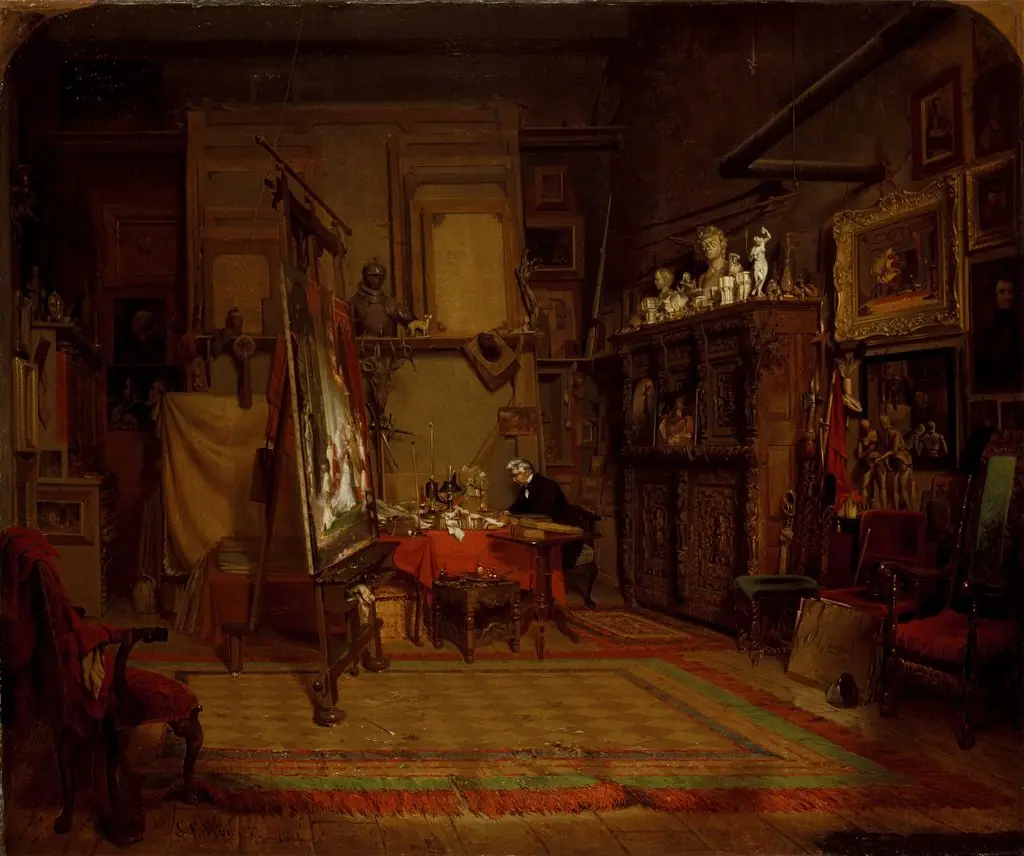
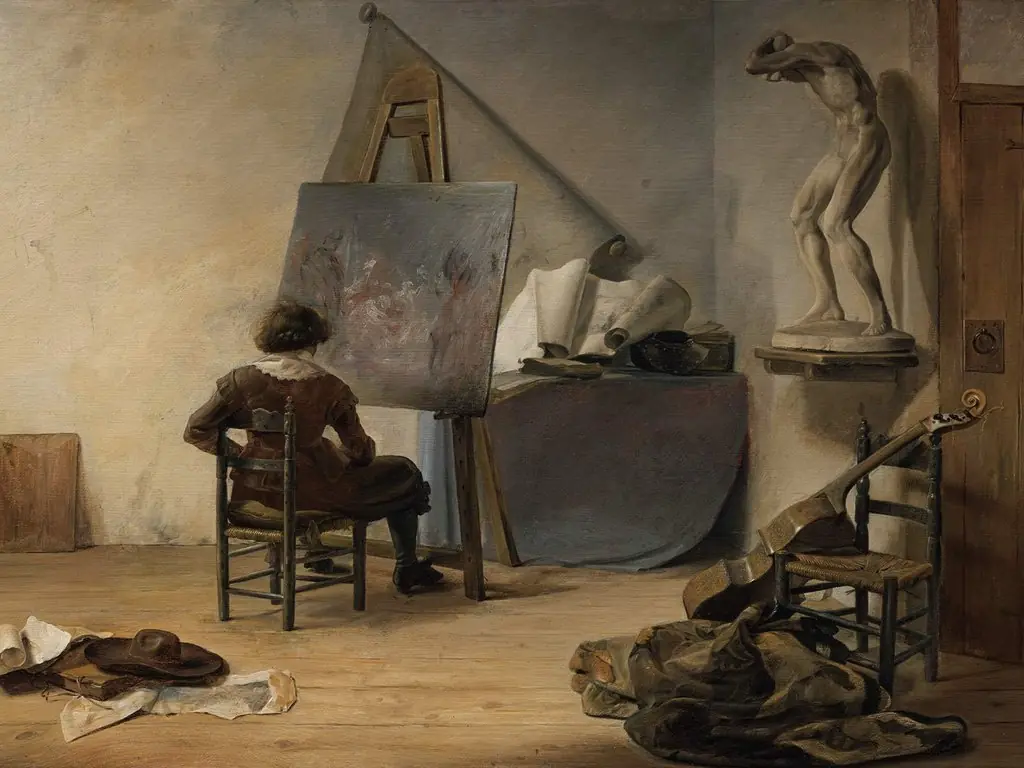
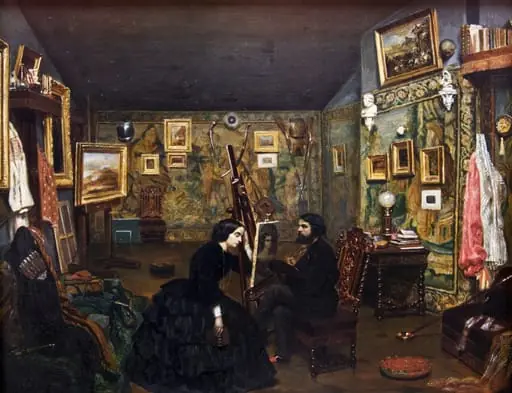
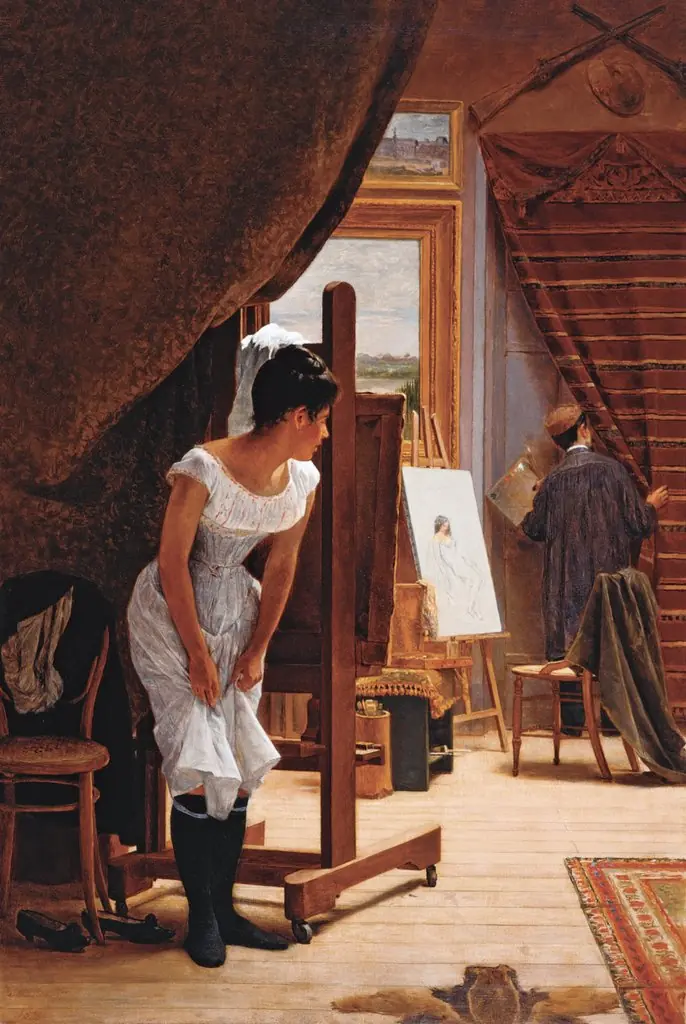
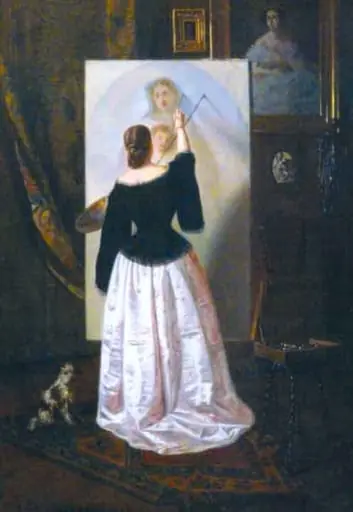
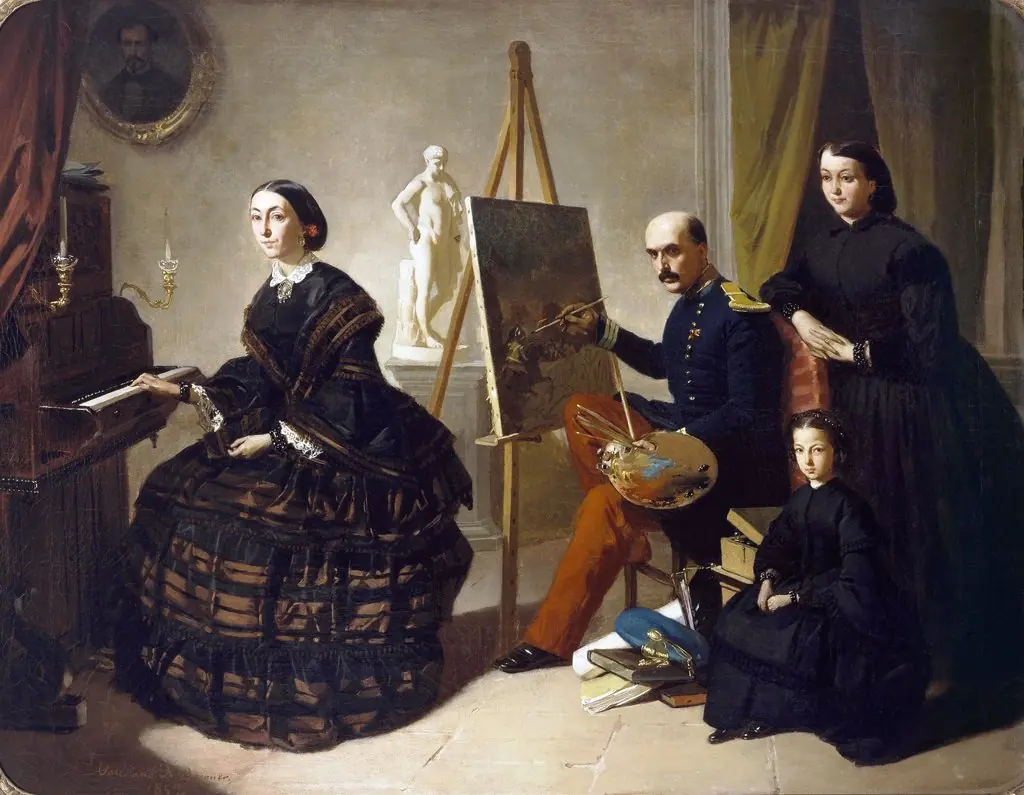
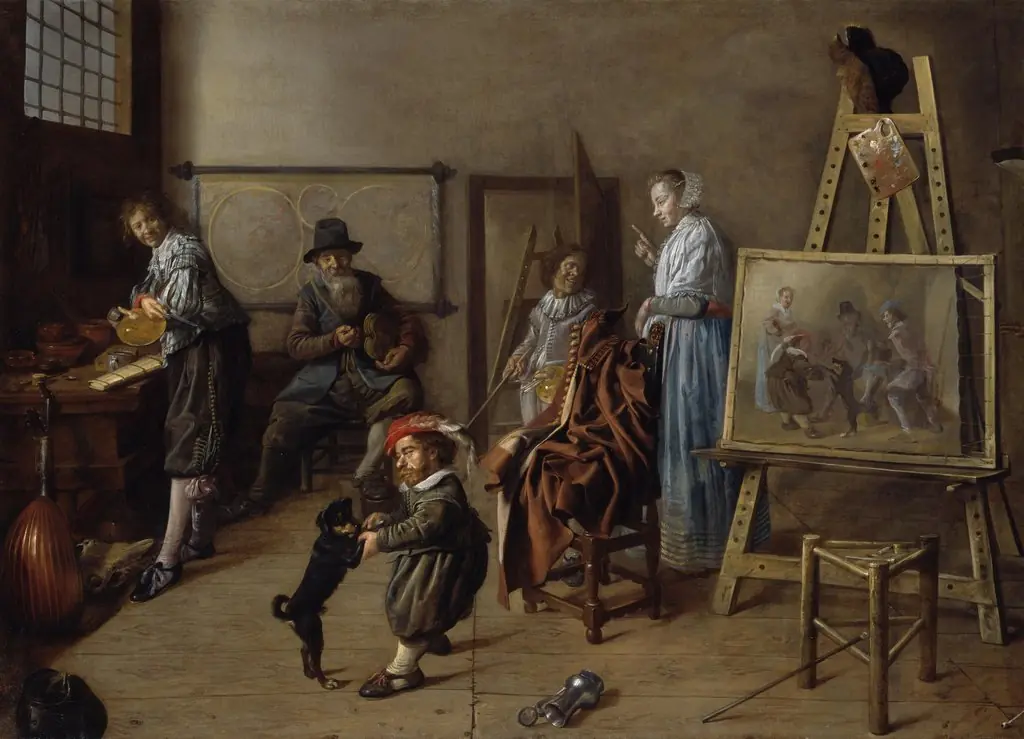
Studio Interior is an oil painting by Edme-Adolphe Fontaine. It is held in the collection of the Fitzwilliam Museum.
About this work
Overview
The interior is densely furnished with artistic tools and unfinished works, suggesting a lived-in environment where creation and observation intersect.
Painted in 1890 by Edme-Adolphe Fontaine, this oil on canvas captures a quiet moment within an artist’s workspace. The scene centers on two women: one seated, the other actively painting. The interior is densely furnished with artistic tools and unfinished works, suggesting a lived-in environment where creation and observation intersect. The painting is part of the Fitzwilliam Museum’s collection.
Subject & Meaning
The seated woman, dressed in white with her hair bound, appears as a model, her stillness contrasting with the active painter before her. The artist, clad in a white robe with a black collar, engages with her canvas, implying a collaborative dynamic. The presence of a dog at rest and scattered artworks reinforces the studio as a sanctuary of routine and creative labor, where the boundary between subject and maker blurs.
Technique & Style
Fontaine employs subtle tonal shifts to model forms and suggest spatial depth, with light filtering through unseen windows to illuminate fabrics and surfaces. The palette is restrained, dominated by whites and muted earth tones, accented by dark shadows that define volume without dramatic contrast. Brushwork is deliberate but unobtrusive, favoring clarity over flourish, aligning with academic traditions of the period.
History & Provenance
The painting remained within the Fontaine family until its acquisition by the Fitzwilliam Museum. Edme-Adolphe Fontaine, a lesser-known French artist, often depicted domestic and studio scenes, and this work likely reflects his personal environment. Marie-Claire Fontaine, his wife, frequently served as a model, suggesting the painting is both a record of daily life and a private artistic exercise.
Context
In late 19th-century France, studio interiors were a common subject among artists seeking to document their creative process. While contemporaries like Degas and Manet explored similar themes with more radical compositions, Fontaine’s approach remains rooted in realism and quiet observation, reflecting a more conventional, academic sensibility prevalent outside the avant-garde circles.
Legacy
Though not widely exhibited or studied, the painting offers insight into the private rhythms of 19th-century artistic practice. Its preservation in a major public collection ensures its role as a quiet testament to the often-overlooked domestic and collaborative nature of art-making, particularly within family-run studios of the period.
Own this work as a print
Artist & collection
Artist
Edme-Adolphe Fontaine (1814–1883) was an artist, born in Noisy-le-Grand.