Artwork
The Queen of Sheba
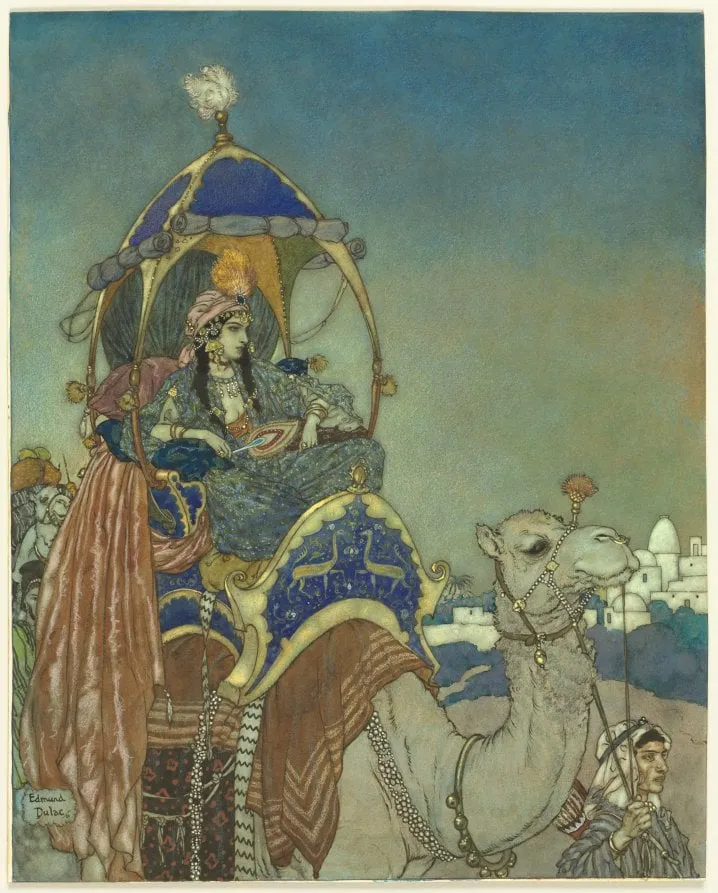
The Queen of Sheba is a drawing by Edmund Dulac. It dates from 1911 and is held in the collection of the Cleveland Museum of Art.
About this work
Overview
Edmund Dulac's watercolor, The Queen of Sheba, is one of four illustrations created to accompany André Dumas's poem, Figures of the Orient. This piece showcases Dulac's interpretation of a legendary Eastern figure.
Subject & Meaning
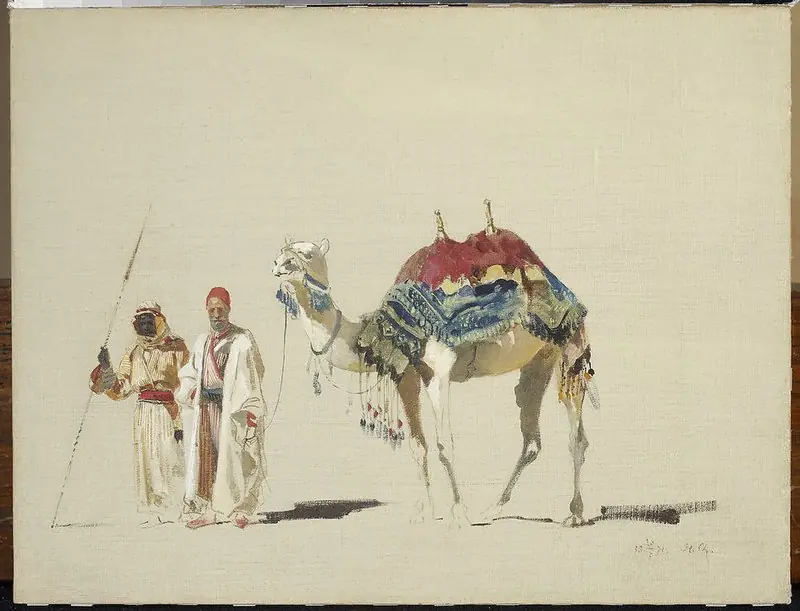
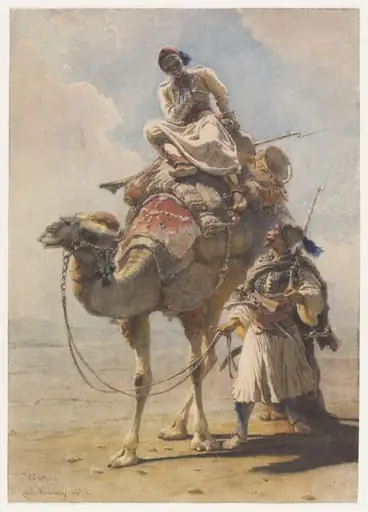
The Queen of Sheba is depicted riding a white camel, approaching the Holy Land, symbolizing her biblical visit to King Solomon. Her calm yet powerful demeanor reflects her regal status.
Technique & Style
Dulac employed vibrant, soft, and glowing colors, blending Persian miniature influences with a dreamy quality achieved through sfumato, blurring edges to create a sense of serenity.
History & Provenance
Created as part of a series for Figures of the Orient, this watercolor represents Dulac's work during the golden age of British book illustration, influenced by his study of manuscript illustrations.
Context
The Queen of Sheba was part of a thematic collection highlighting legendary enchantresses of the East, including Circe, Salome, and Scheherazade, reflecting early 20th-century fascination with Orientalist themes.
Legacy
While specific lasting impacts of this piece are not widely documented, it contributes to Dulac's reputation as a prominent illustrator of his era, known for blending Eastern and Western artistic traditions.
Artist & collection

Artist
Edmund Dulac was a French-British naturalised magazine illustrator, book illustrator and stamp designer.