Artwork
The Hhareem, Cairo
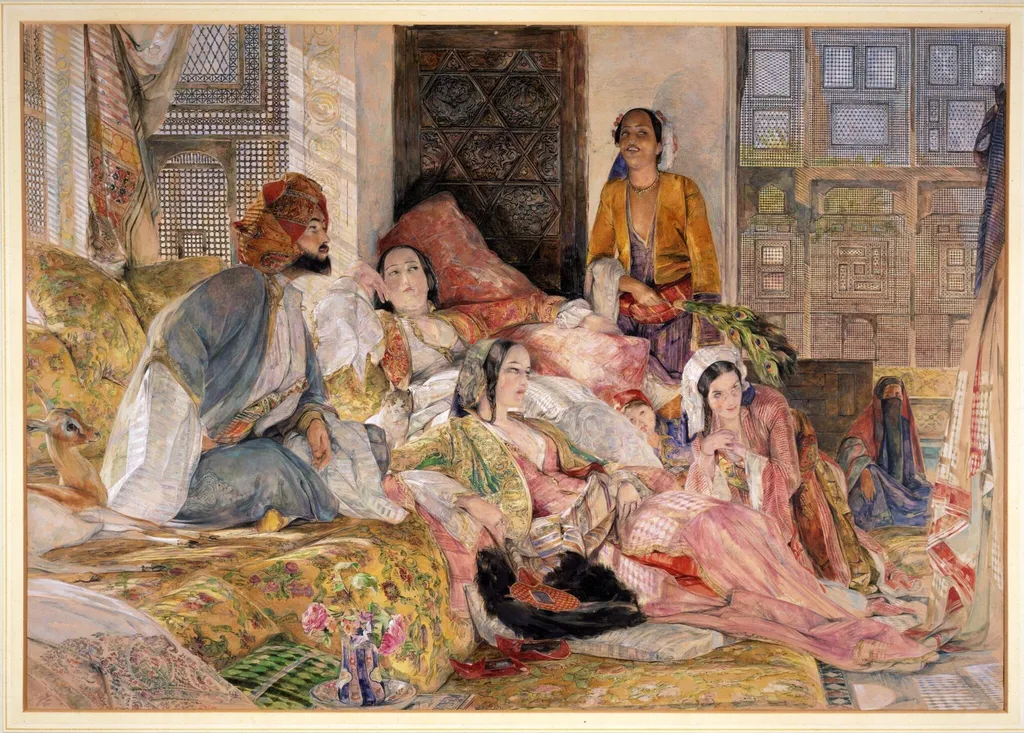
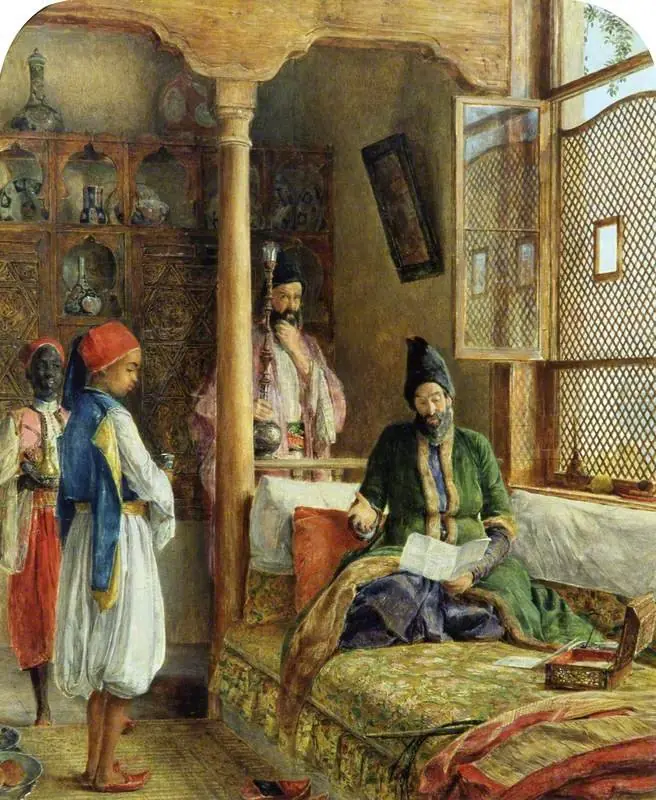
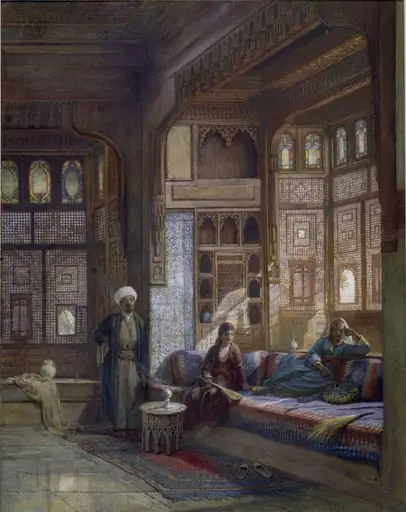
The Hhareem, Cairo is a watercolor work on paper by the Impressionist artist John Frederick Lewis. It dates from 1850 and is held in the collection of the Victoria and Albert Museum.
About this work
John Frederick Lewis painted *The Hhareem, Cairo* around 1850. It’s a watercolour in the Realist style, full of careful details. Lewis spent ten years living in Cairo.
He rented the house you see here. Critics loved his work when he showed it in 1850. The painting even changed after the first show—more figures appeared on the right.
Look up Lewis, John Frederick (RA POWCS) next.
Overview
The work is a variant of a larger composition first exhibited at the Old Watercolour Society, where it drew significant attention for its detail and atmosphere.
John Frederick Lewis created this watercolour around 1850 during his decade-long residence in Cairo. It depicts an interior scene within a domestic space he actually rented, capturing everyday life with precision. The work is a variant of a larger composition first exhibited at the Old Watercolour Society, where it drew significant attention for its detail and atmosphere. The V&A version represents an earlier stage of the composition before additional figures were added.
Subject & Meaning
The scene portrays a moment of quiet tension within a harem chamber, likely illustrating the introduction of a new member to the household. The Pasha’s focused gaze and the women’s varied expressions suggest a formal reception, though the full narrative is incomplete in this version. The absence of the extended right panel, which originally showed the new arrival, leaves the moment ambiguous, inviting interpretation of social hierarchy and ritual.
Technique & Style
Lewis employed fine, controlled brushwork to render textures of fabric, tile, and wood with near-photographic accuracy. His watercolour technique combined transparency with layered washes to achieve depth without heavy pigment. The composition is tightly framed, emphasizing architectural detail and the stillness of interior life. This approach aligns with Realist principles, prioritizing observed truth over idealization.
History & Provenance
The painting was first shown in 1850 at the Old Watercolour Society, where it received widespread acclaim. Lewis later modified the composition by extending the right edge to include additional figures, a change documented in a contemporary photograph. The V&A’s version predates this alteration, preserving the initial presentation. Its provenance traces back to Lewis’s personal collection before entering the museum’s holdings.
Context
Lewis was among the few Western artists of his era to live extensively in Egypt, immersing himself in local customs and architecture. His work stood apart from the exoticized Orientalism common in European art, offering instead intimate, unembellished views of domestic spaces. This painting reflects his commitment to authenticity, shaped by years of direct observation rather than secondhand accounts.
Legacy
Lewis’s detailed watercolours influenced later artists interested in ethnographic realism. His decision to reside in Cairo and paint from lived experience set a precedent for direct engagement with non-European cultures. Though his work was celebrated in Victorian Britain, its significance today lies in its quiet documentation of daily life, offering a counterpoint to more sensationalized depictions of the Middle East.
Artist & collection
Artist
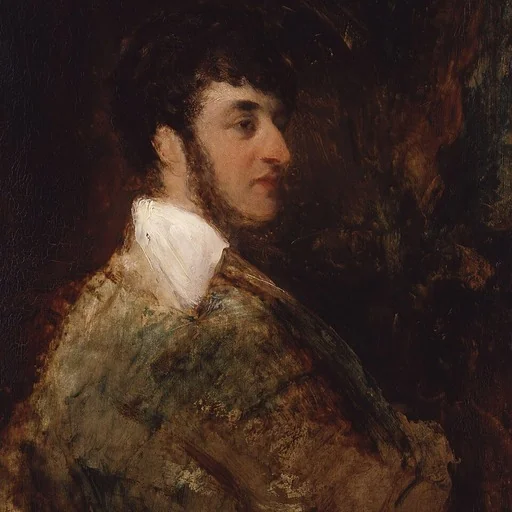
John Frederick Lewis (1804–1876) was an English Orientalist painter. He specialized in Oriental and Mediterranean scenes in detailed watercolour or oils, very often repeating the same composition in a version in each…