Artwork
The Alliance of the Noblemen in 1566
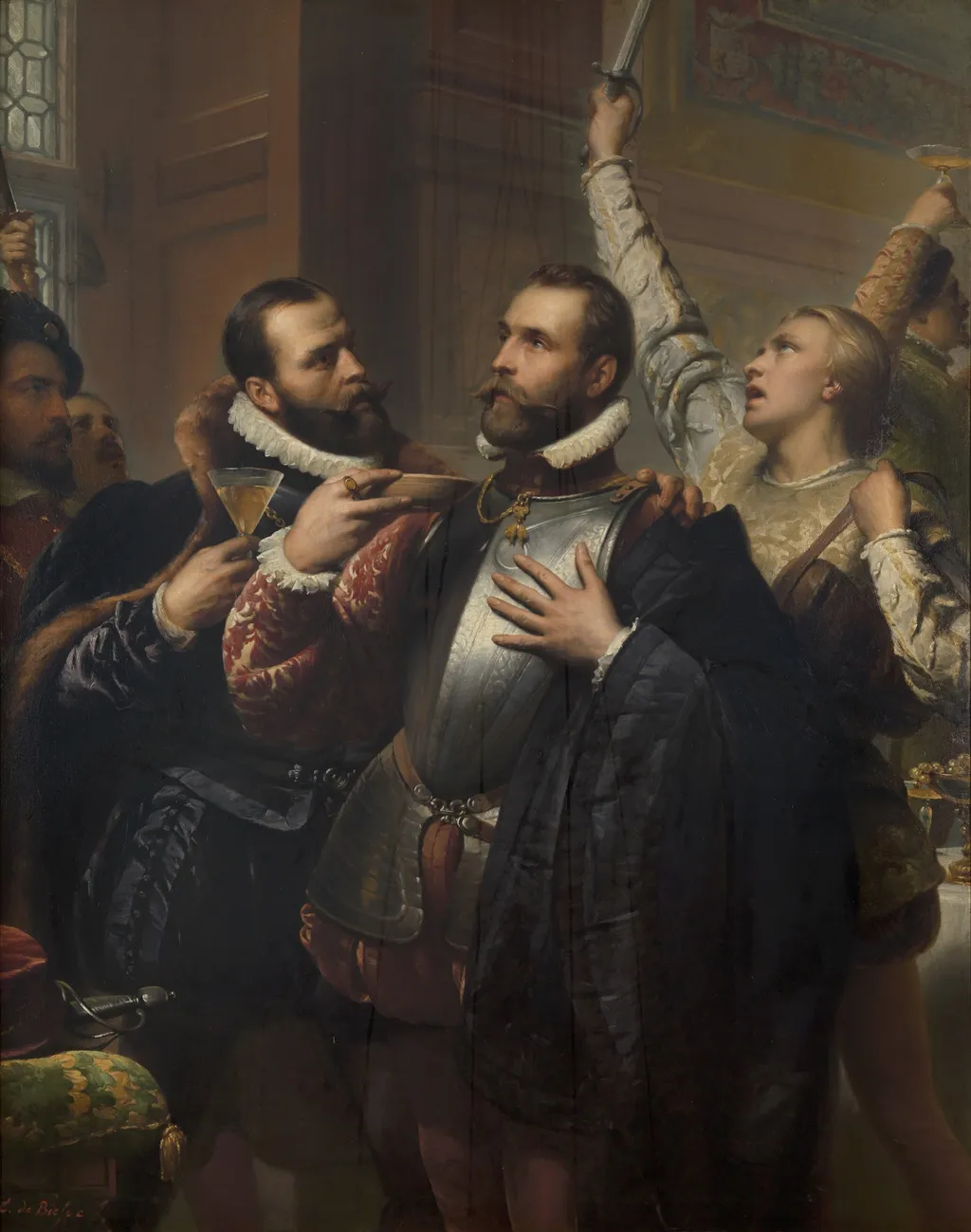
The Alliance of the Noblemen in 1566 is an oil painting by Edouard De Bièfve. It dates from 1855 and is held in the collection of the Royal Museum of Fine Arts Antwerp.
About this work
The painting is titled The Alliance of the Noblemen in 1566.
It was created by Edouard De Bièfve using oil paint.
The Royal Museum of Fine Arts Antwerp holds this work, which suggests it has some historical significance, possibly due to its depiction of a specific event or group, in this case, noblemen from 1566.
You can learn more about similar works at the Royal Museum of Fine Arts Antwerp.
Overview
As a key figure in Belgian Romanticism, De Bièfve focused on historical narratives that resonated with national identity.
Painted around 1855 by Belgian artist Édouard De Bièfve, this oil-on-canvas work depicts a pivotal moment in the early resistance against Spanish rule in the Low Countries. As a key figure in Belgian Romanticism, De Bièfve focused on historical narratives that resonated with national identity. The painting is part of the permanent collection at the Royal Museum of Fine Arts Antwerp, where it contributes to the institution’s emphasis on regional historical art.
Subject & Meaning
The scene portrays a gathering of Flemish nobles in 1566 who formally petitioned Margaret of Parma, the Spanish governor, to halt religious persecution and the enforcement of the Inquisition. Their act of collective protest, known as the Compromise of Nobles, marked a turning point in the Dutch Revolt. De Bièfve captures the tension and resolve of the moment, framing the nobles as moral actors defending conscience against authoritarian power.
Technique & Style
De Bièfve employed the rich tonalities and dramatic lighting characteristic of Romantic history painting. Figures are arranged in a semi-circular composition, drawing attention to the central petitioners. Detailed costumes and expressive gestures convey individual character while maintaining a sense of unified purpose. The brushwork is precise yet emotive, balancing realism with theatrical gravity to elevate the historical moment.
History & Provenance
Commissioned during a period of rising Belgian nationalism, the painting was completed shortly after Belgium’s independence. It entered the Royal Museum of Fine Arts Antwerp’s collection in the mid-19th century, where it has remained as part of a curated narrative of national resistance. Its preservation reflects its role in shaping public memory of early struggles for autonomy in the region.
Context
Created during the mid-19th century, the painting emerged amid a broader European revival of interest in historical rebellion and constitutional rights. In Belgium, such subjects reinforced a sense of shared identity following the 1830 revolution. De Bièfve’s choice to depict a 16th-century political act aligned with contemporary calls for liberty and civic courage, linking past and present struggles for self-determination.
Legacy
Though less widely known outside Belgium, the painting remains a significant example of 19th-century historical art in the Low Countries. It influenced later Belgian artists who sought to visualize national history through emotionally charged scenes. Its continued display in Antwerp underscores its role as a cultural artifact, anchoring public understanding of early resistance to Habsburg authority.
Own this work as a print
Artist & collection
Artist
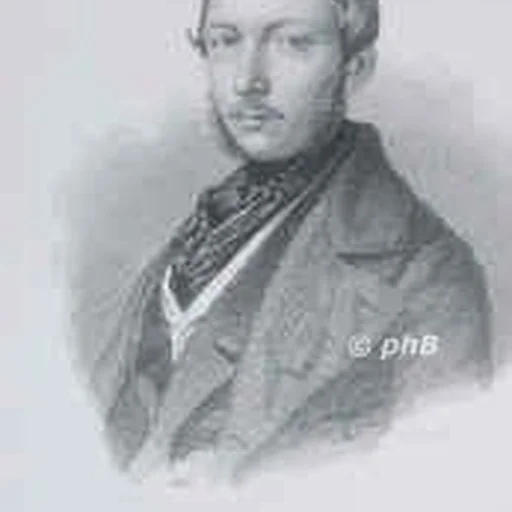
Édouard De Bièfve (4 December 1808 – 7 February 1882) was a Belgian history and portrait painter.

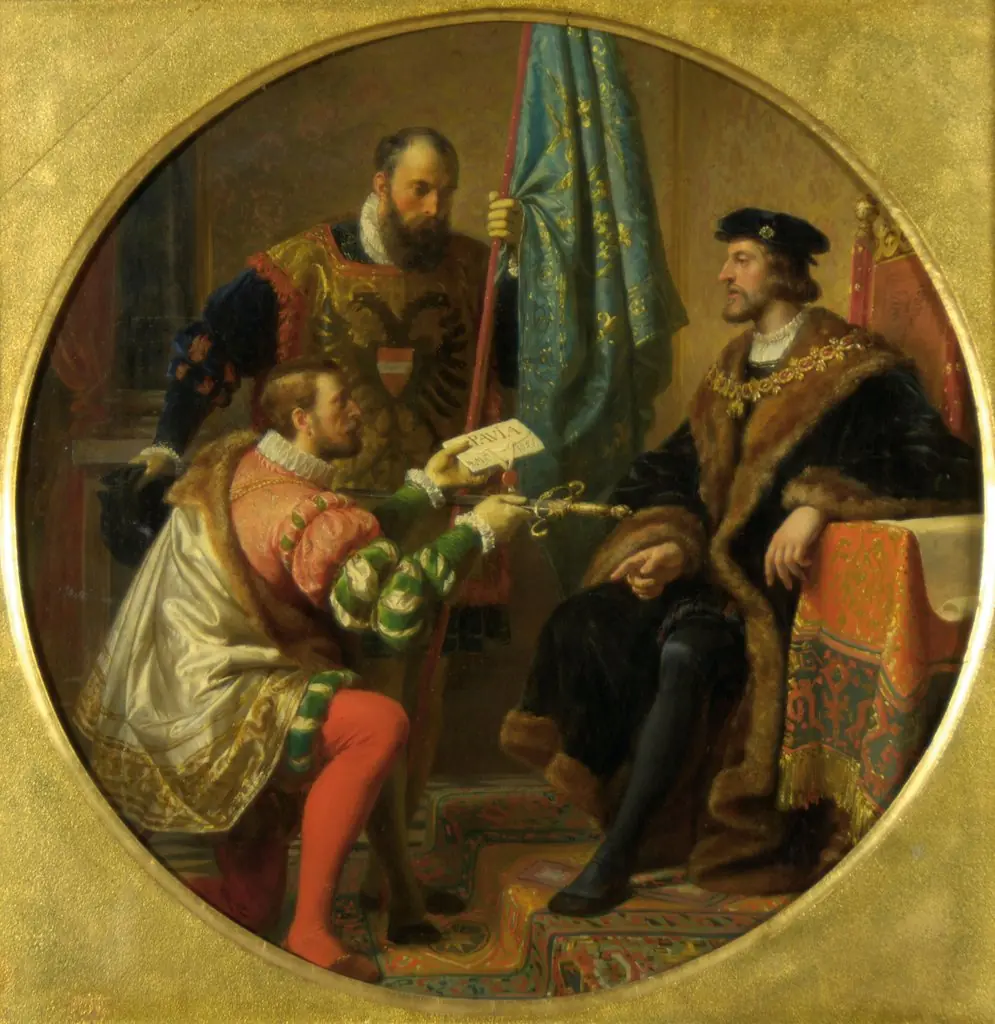 Emperor Charles V and King Francis I at Pavia 1525
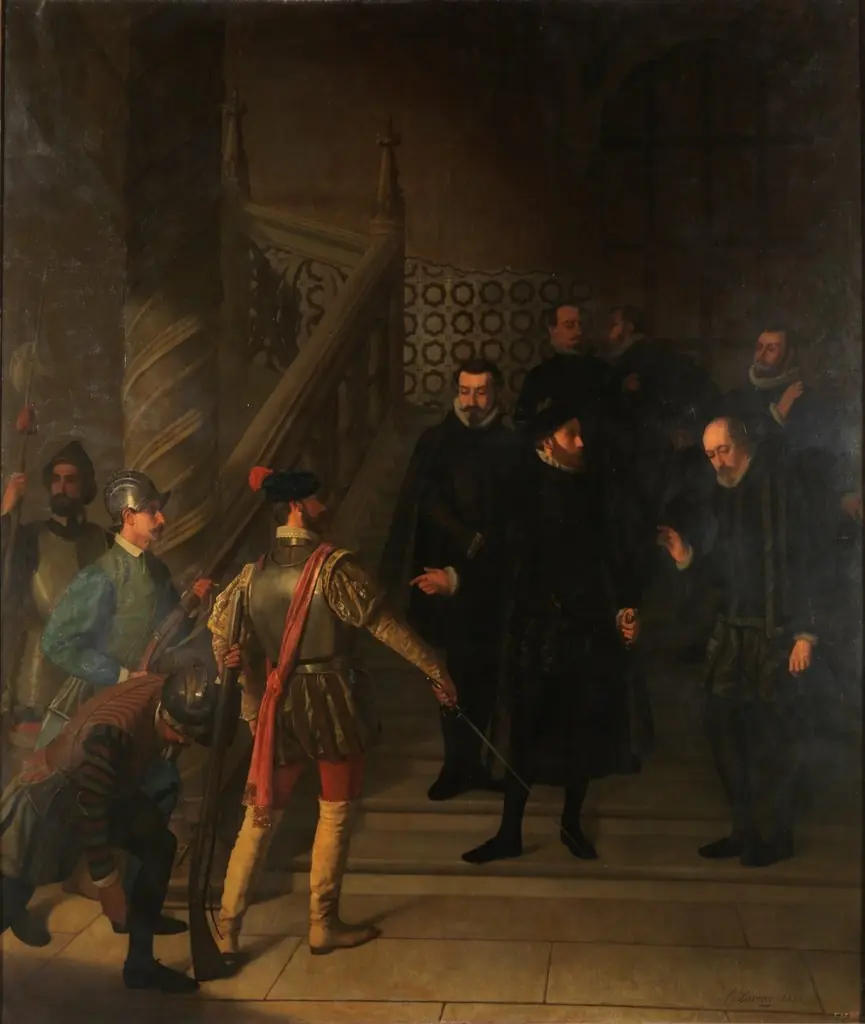 La prisión de Lanuza
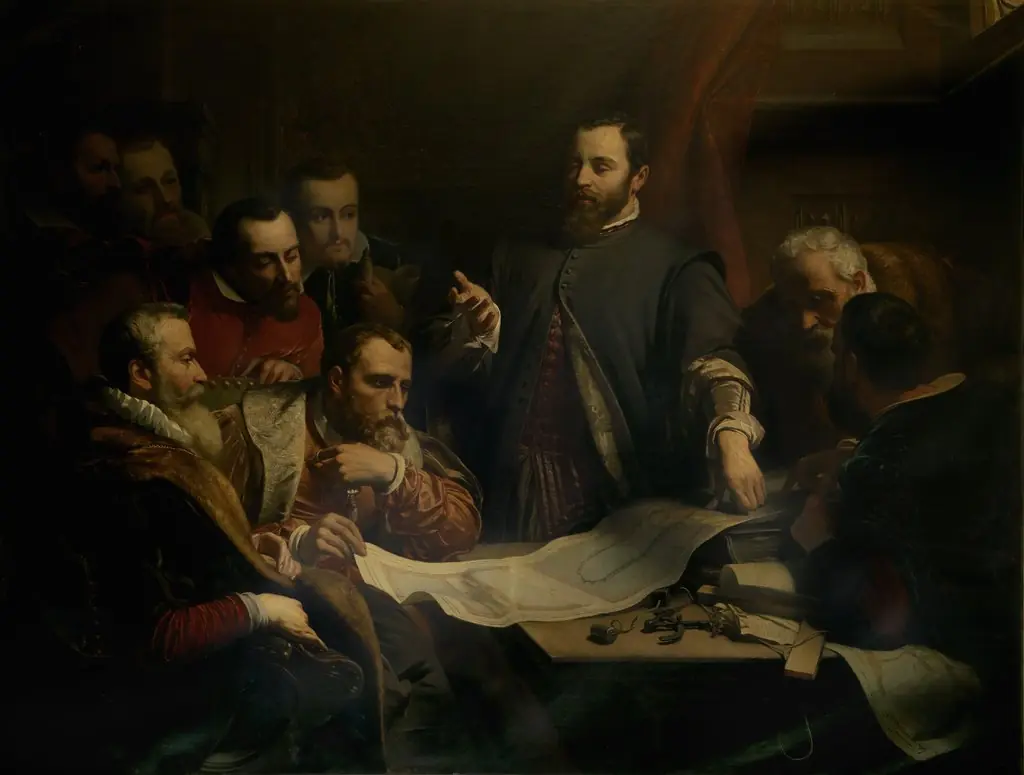 Scene from the life of Gilbert of Schoonbeke
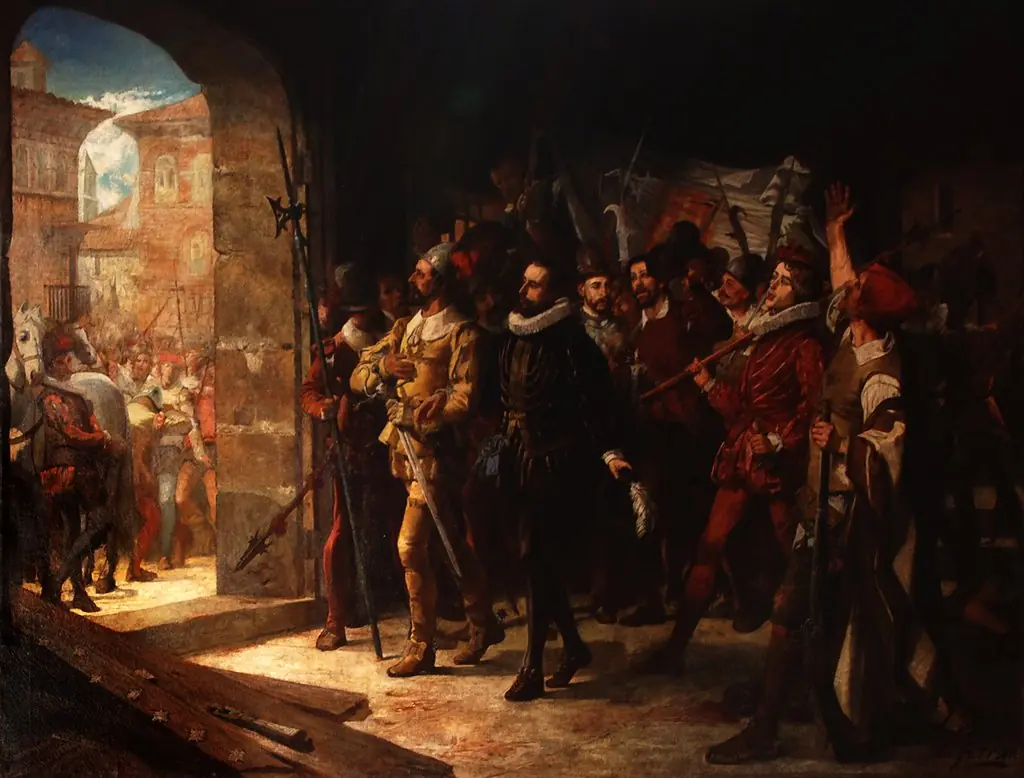 Antonio Pérez released from the prison of the Manifestados by the people of Zaragoza in 1591
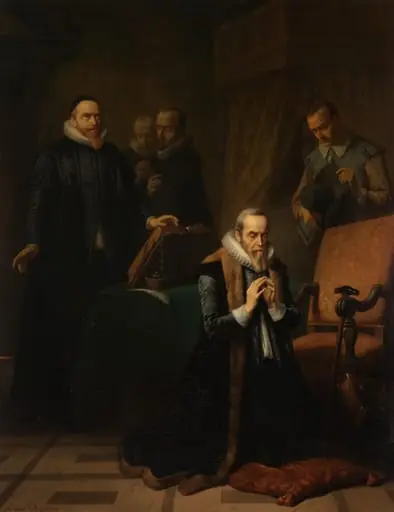
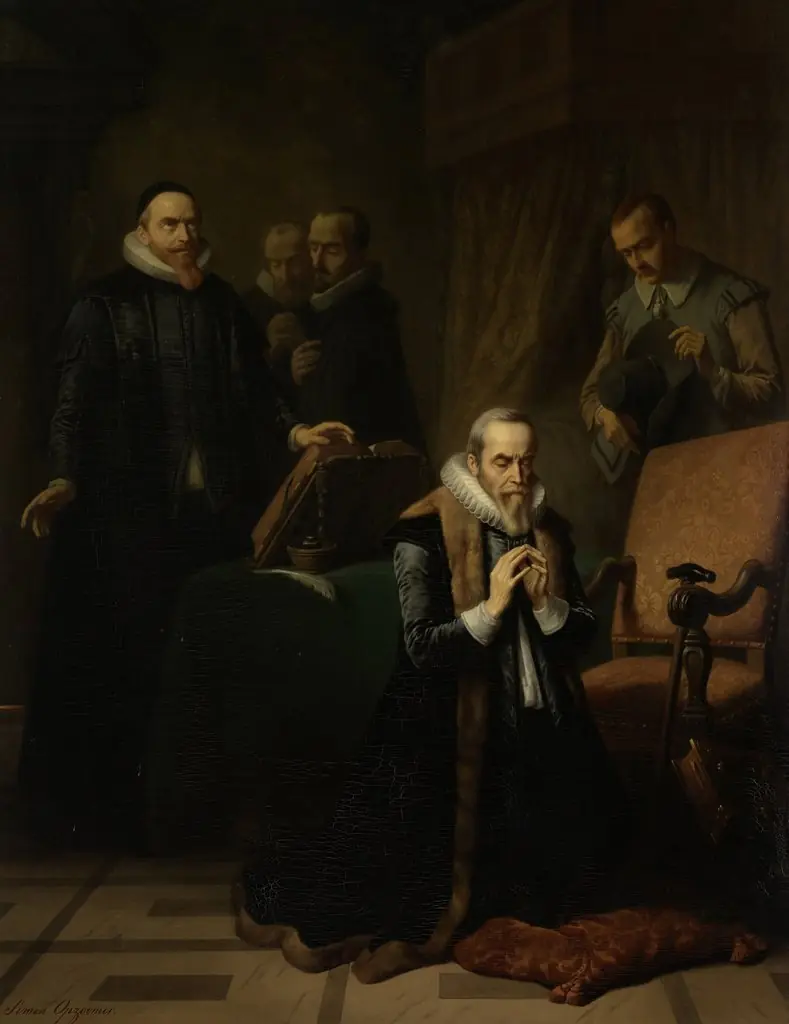 The final prayer of Johan van Oldenbarneveldt
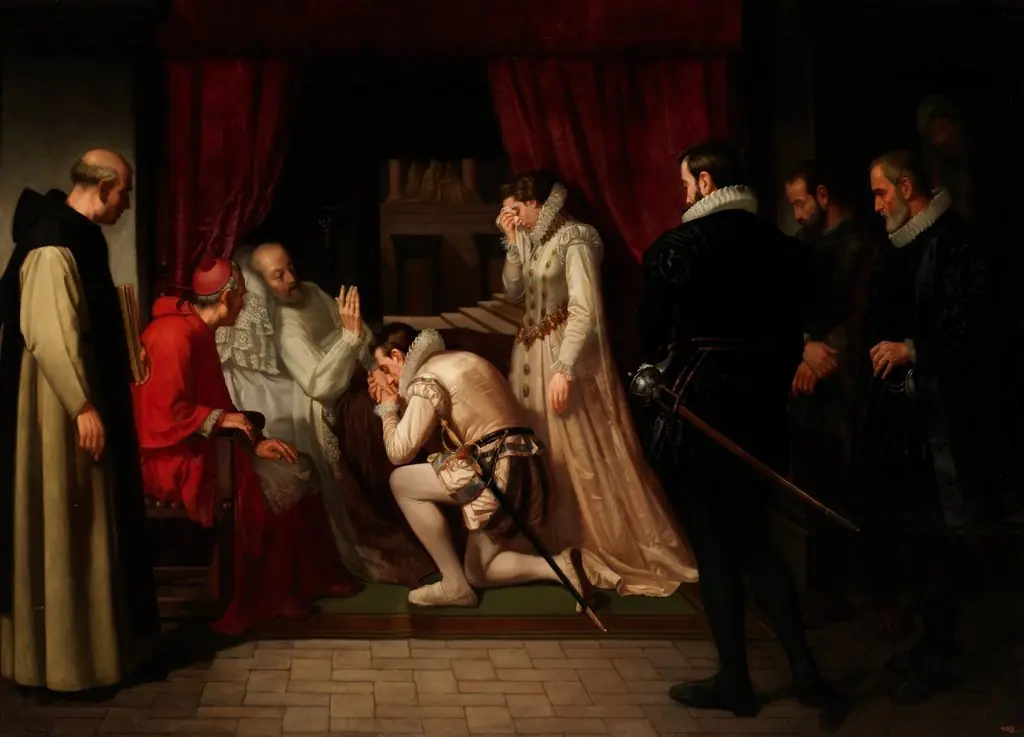 Últimos momentos de Felipe II
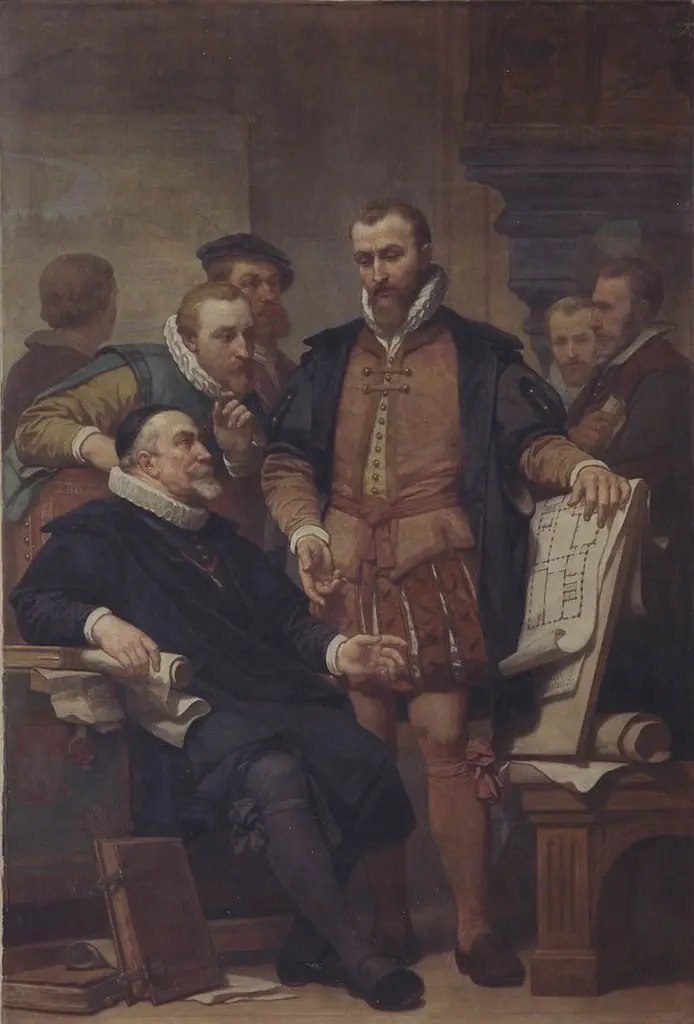 Cornelis Floris II Shows the Plan of the Town Hall
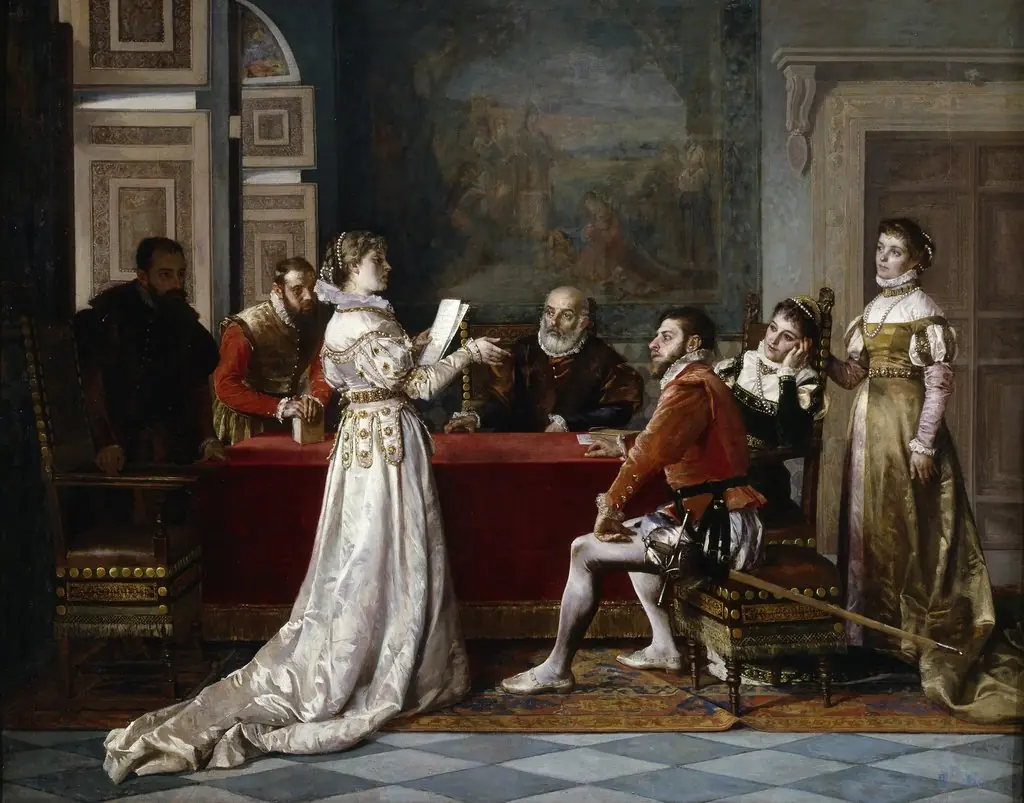 La poetisa
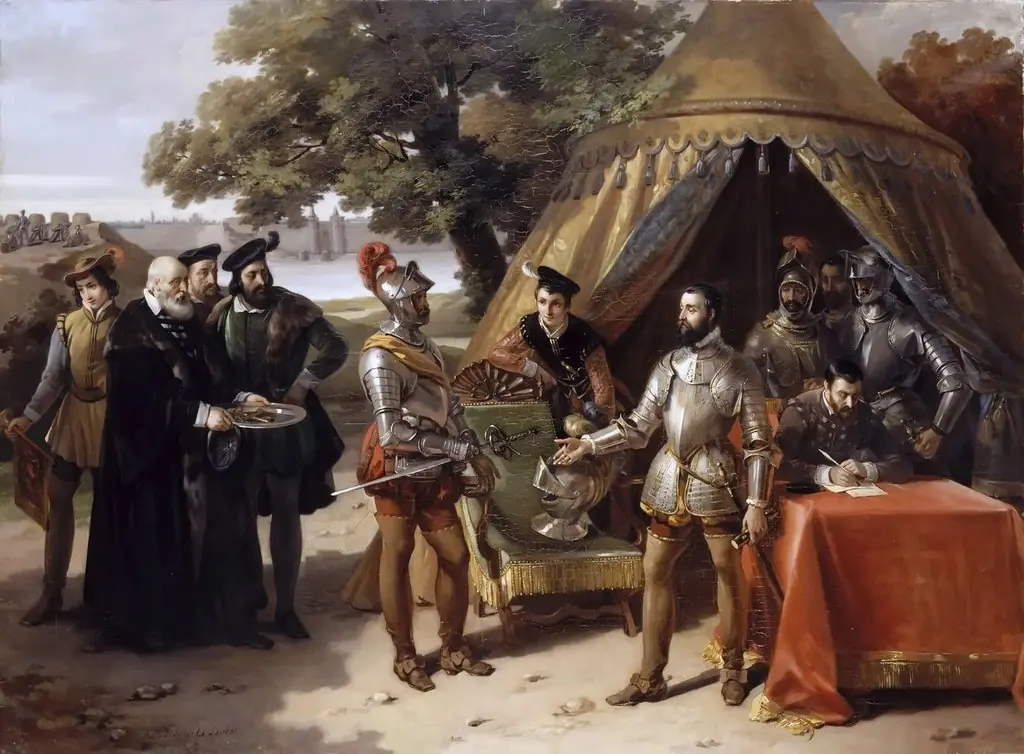 The Siege of Thionville, 23 June 1558
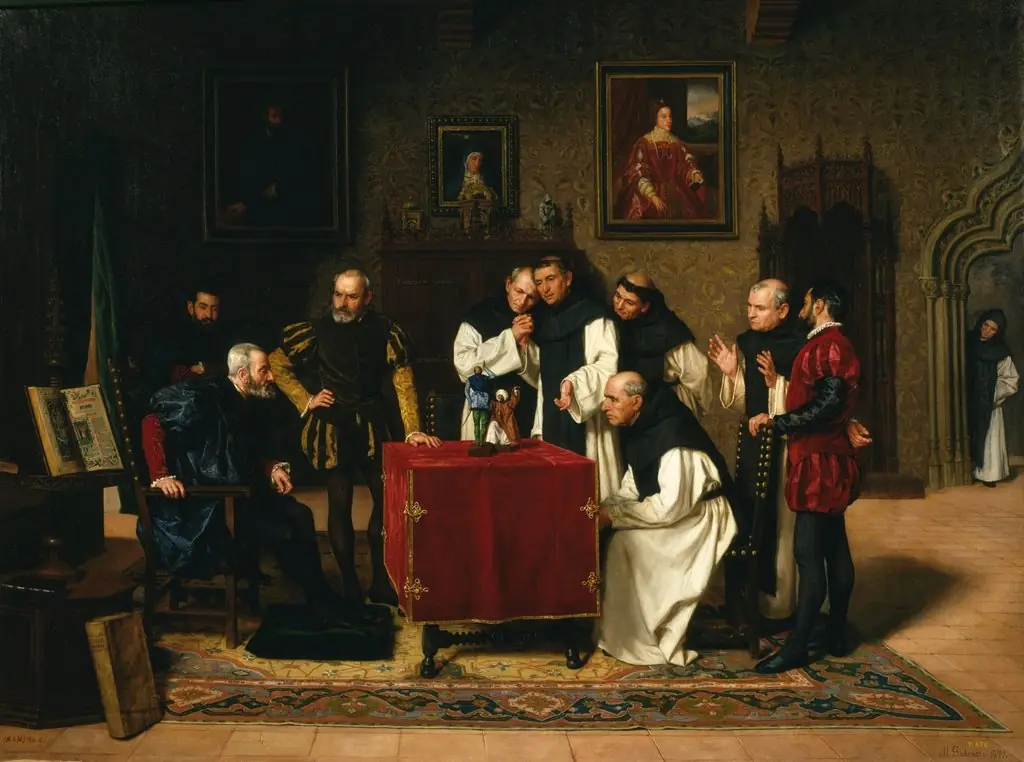 Charles V at Yuste
 Untitled
 King Jagiełło and the Teutonic Knights