Artwork
Adam and Eve
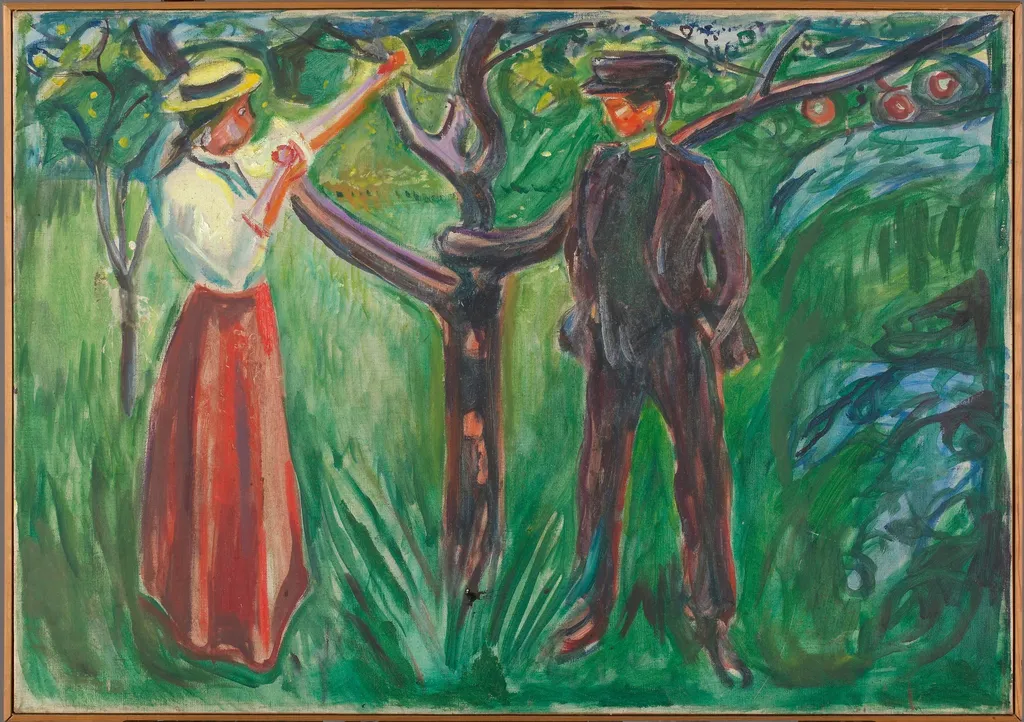
Adam and Eve is an oil painting by the Post-Impressionist artist Edvard Munch. It dates from 1928 and is held in the collection of the Munch Museum.
About this work
Overview
Edvard Munch painted *Adam and Eve* in 1928 using oil on canvas, marking one of his later explorations into biblical themes.
Edvard Munch painted *Adam and Eve* in 1928 using oil on canvas, marking one of his later explorations into biblical themes. Though best known for psychological intensity, this work presents a quieter, more contemplative mood. It resides in the Munch Museum in Oslo, part of a broader series of late-career works where the artist revisited mythic and spiritual subjects with reduced emotional volatility.
Subject & Meaning
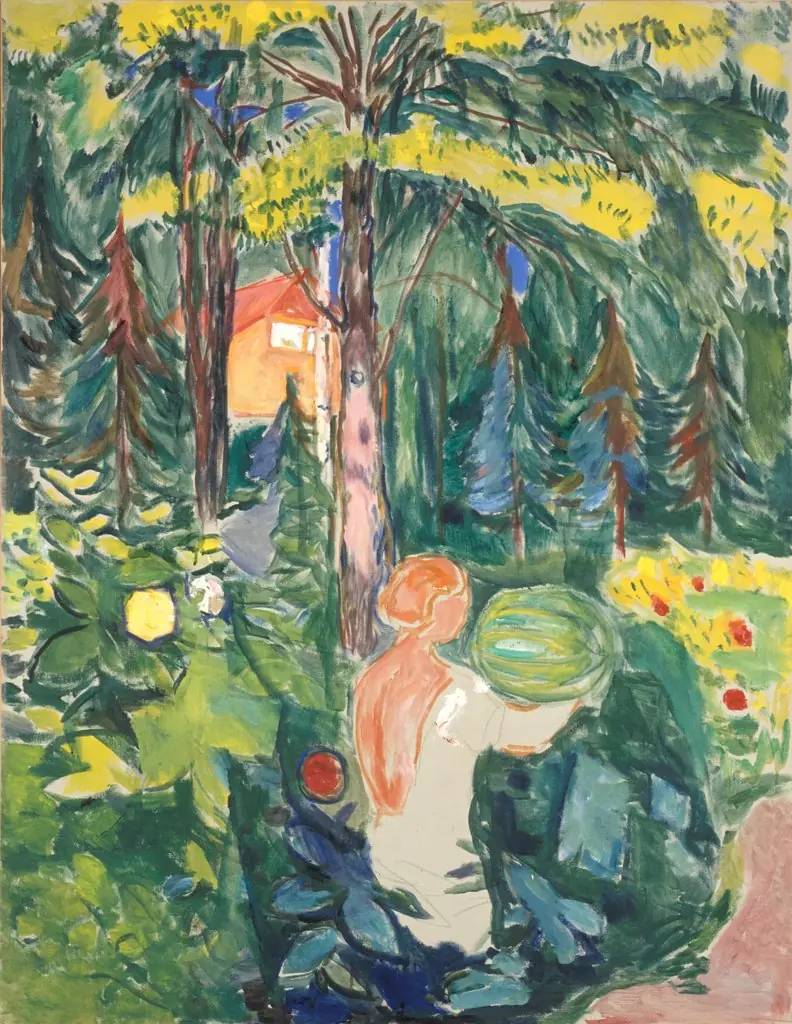
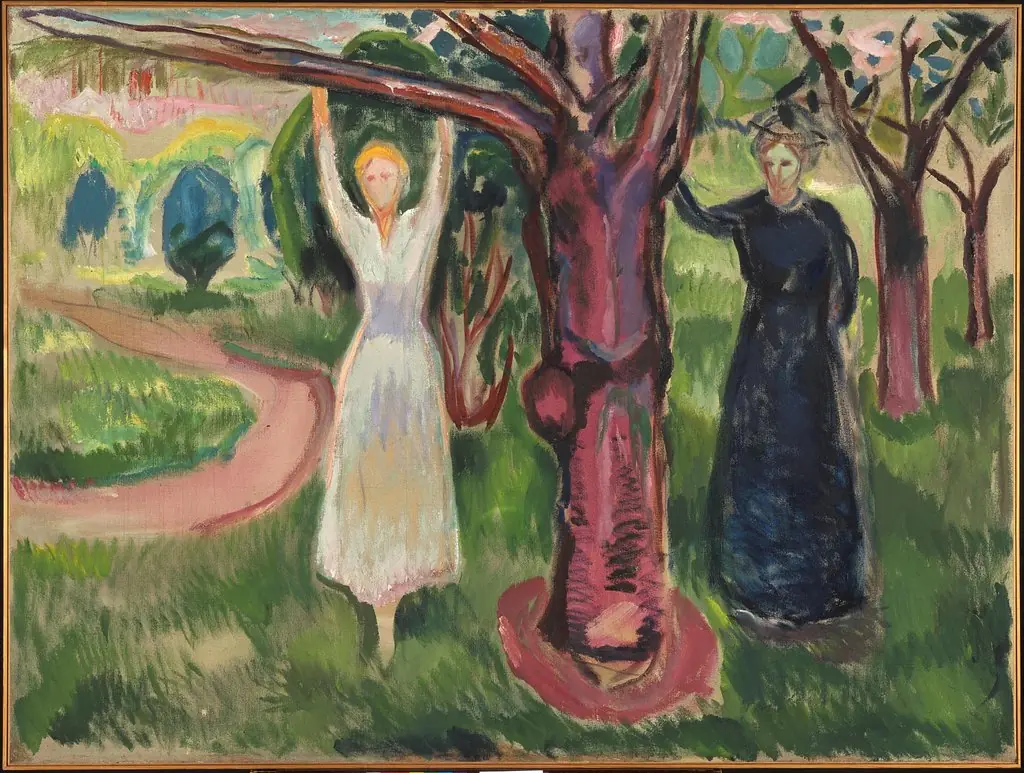
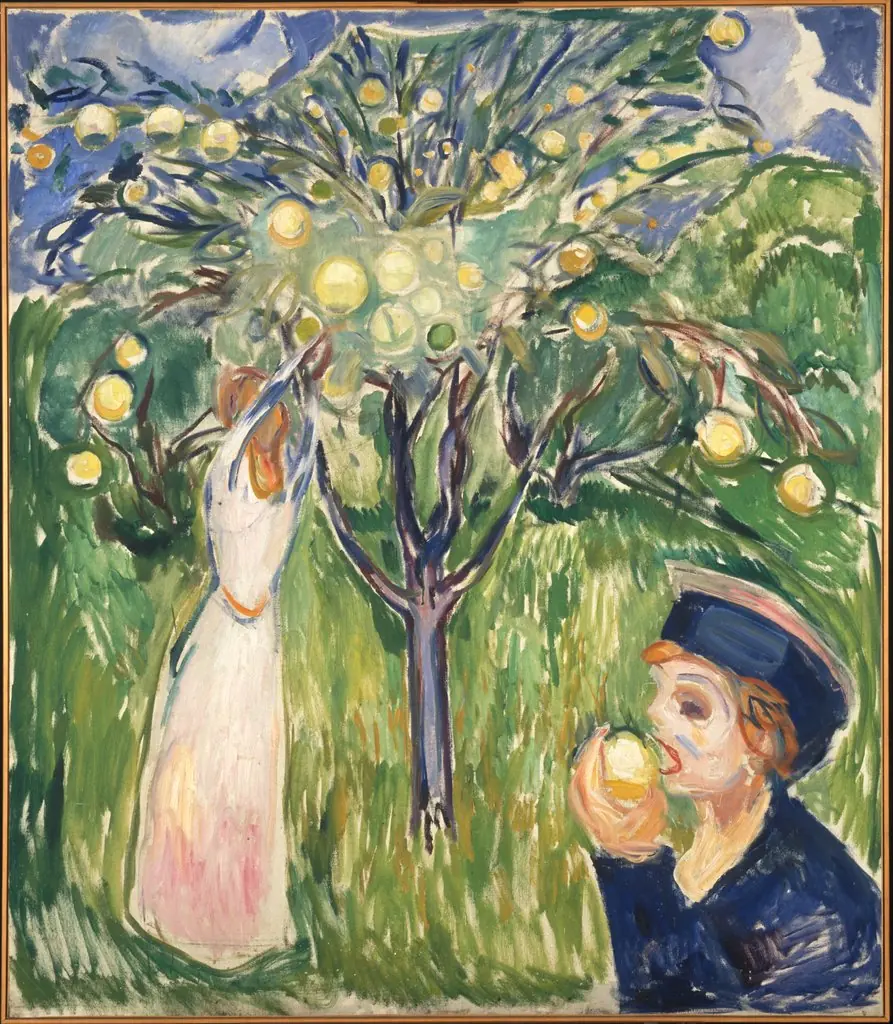
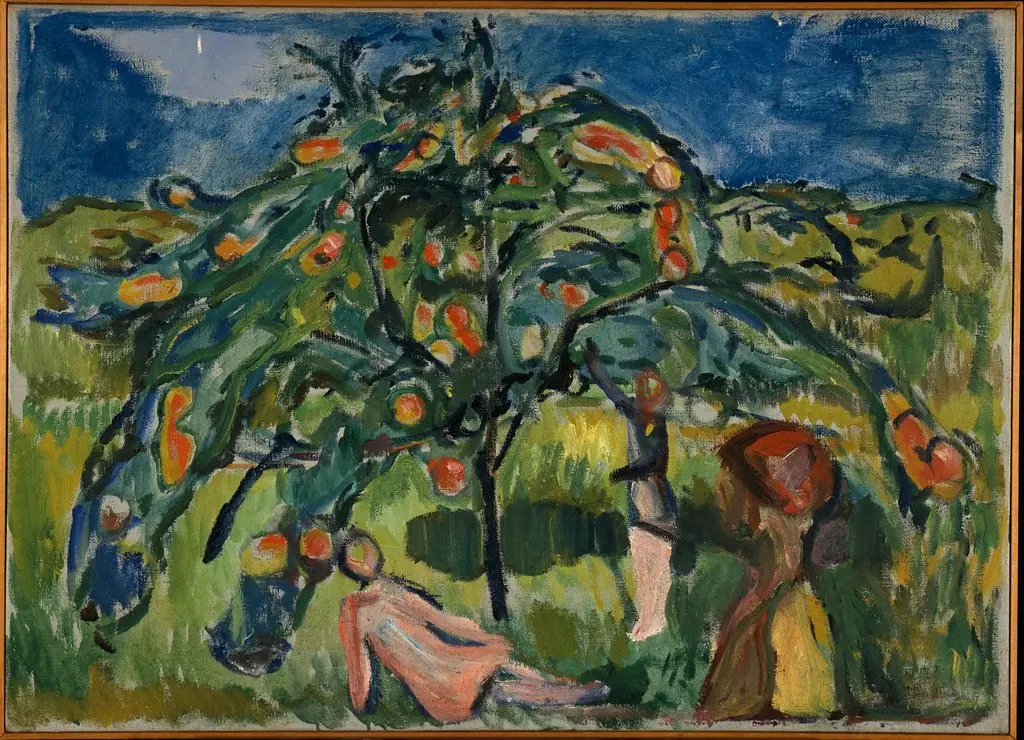
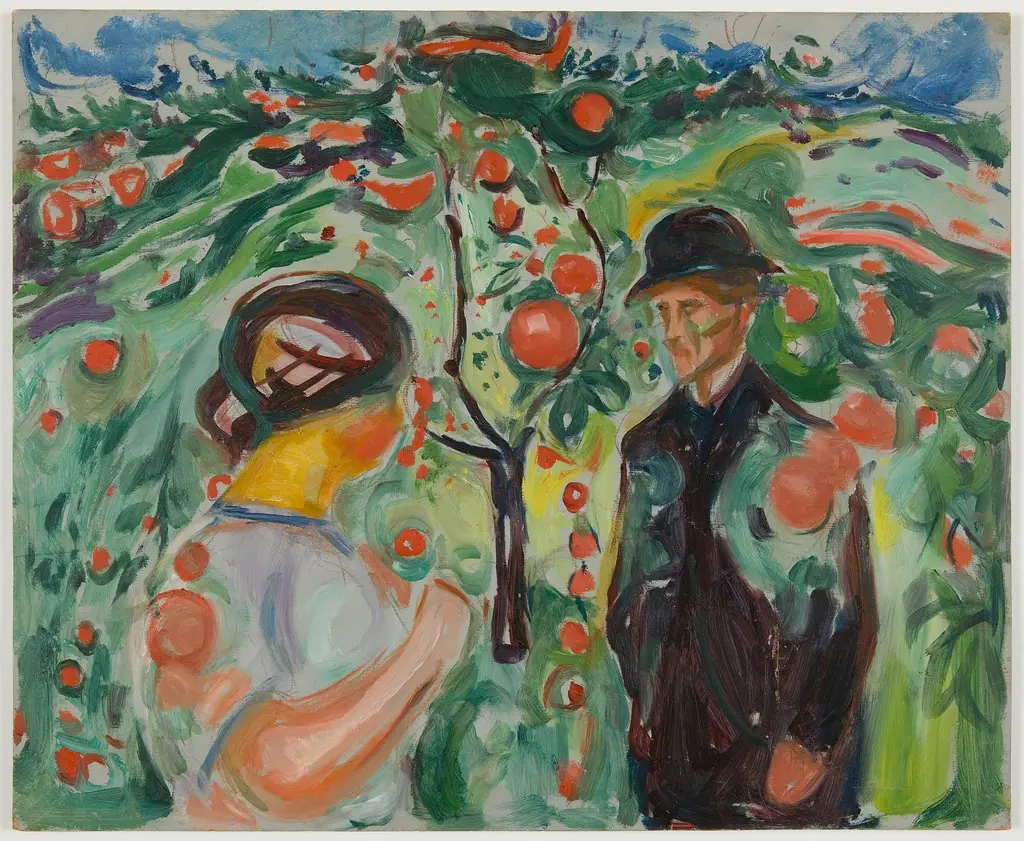
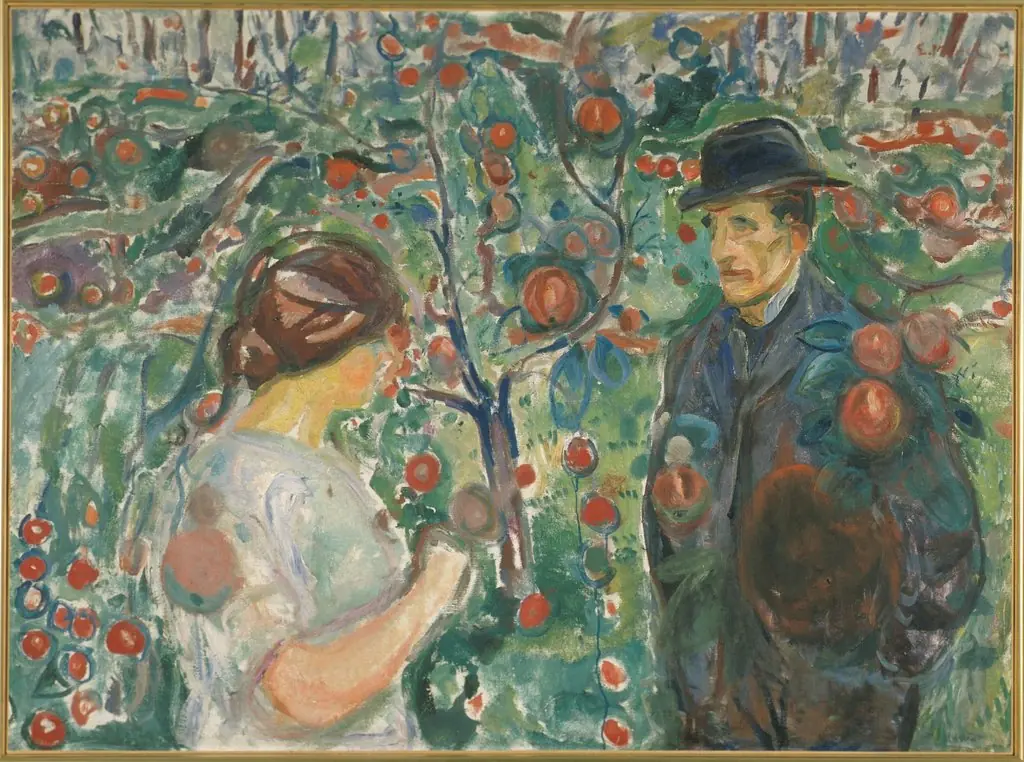
The painting portrays the biblical pair in a tranquil garden setting, free from overt narrative drama like the Fall or expulsion. Their calm postures and matching stillness suggest an idealized moment before sin, emphasizing unity and innocence. Munch avoids symbolic punishment or temptation, instead focusing on the human form within nature as a quiet meditation on origin and harmony.
Technique & Style
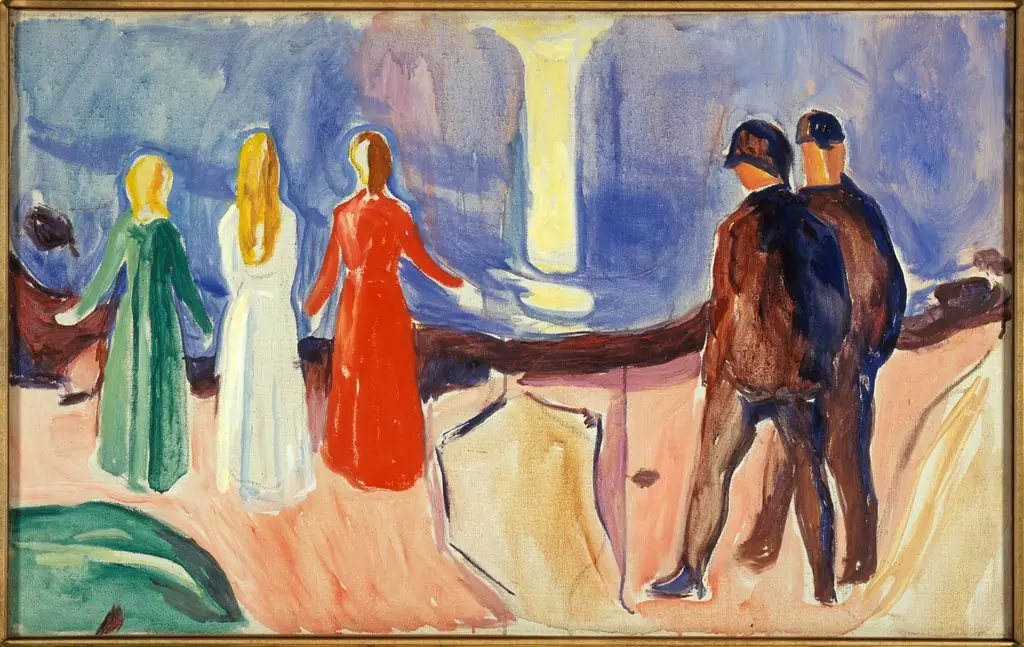
Munch employed thick, layered oil paint to build texture in the foliage and soft transitions in the figures' skin tones. The palette leans on muted greens, with subtle hints of blue and yellow suggesting dappled light. Forms are simplified, lacking detailed anatomy, yet balanced through rhythmic lines and color contrasts—Eve’s red skirt anchors the composition against Adam’s darker silhouette.
History & Provenance
Created during Munch’s final decade, the painting remained in his personal collection until his death in 1944. It was later transferred to the Munch Museum, established to preserve his legacy. Unlike his earlier, widely exhibited works, *Adam and Eve* was not publicly shown frequently in his lifetime, contributing to its quieter reception in art historical discourse.
Context
In the 1920s, Munch turned increasingly toward myth, religion, and nature as themes, distancing himself from the existential angst of his youth. *Adam and Eve* reflects this shift, aligning with broader European trends of spiritual renewal after World War I. Yet his treatment remains personal—neither doctrinal nor allegorical, but introspective and restrained.
Legacy
The painting is now recognized as a late, introspective chapter in Munch’s career, illustrating his enduring interest in human origins and emotional equilibrium. While less discussed than *The Scream*, it offers insight into his evolving relationship with symbolism and serenity. Its presence in the Munch Museum ensures continued scholarly attention as part of his full artistic trajectory.
Artist & collection

Artist
Edvard Munch ( MUUNK; Norwegian: ; 12 December 1863 – 23 January 1944) was a Norwegian painter.