Artwork
Anton Brünings
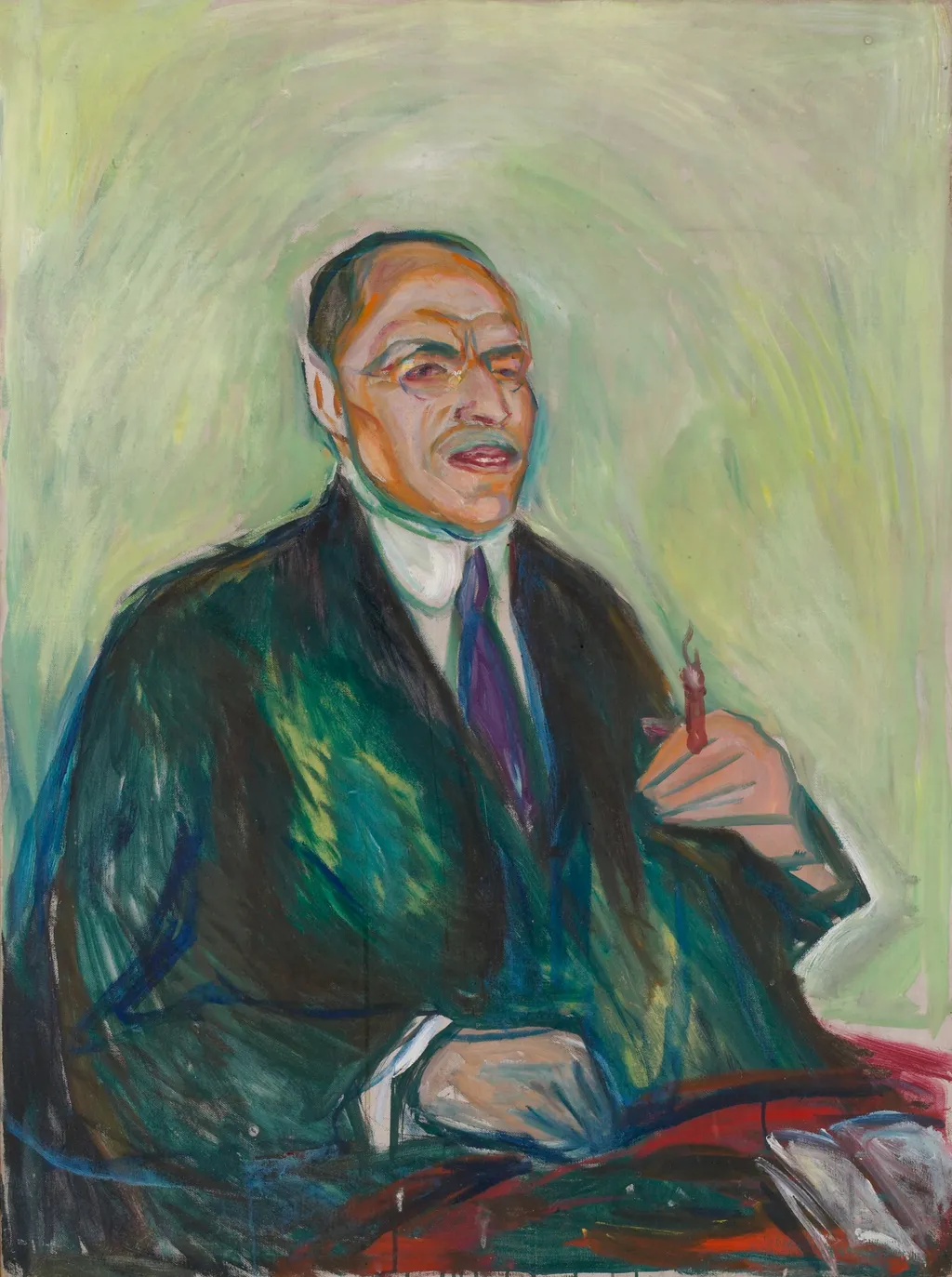
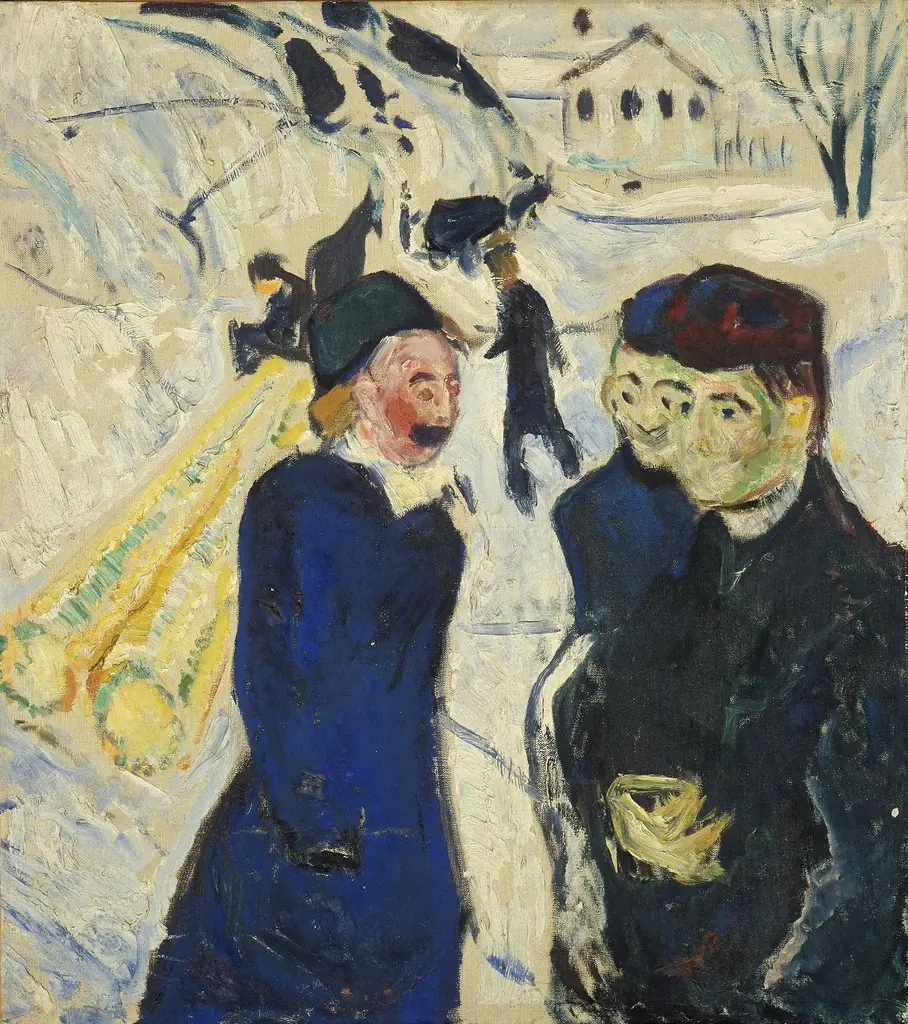
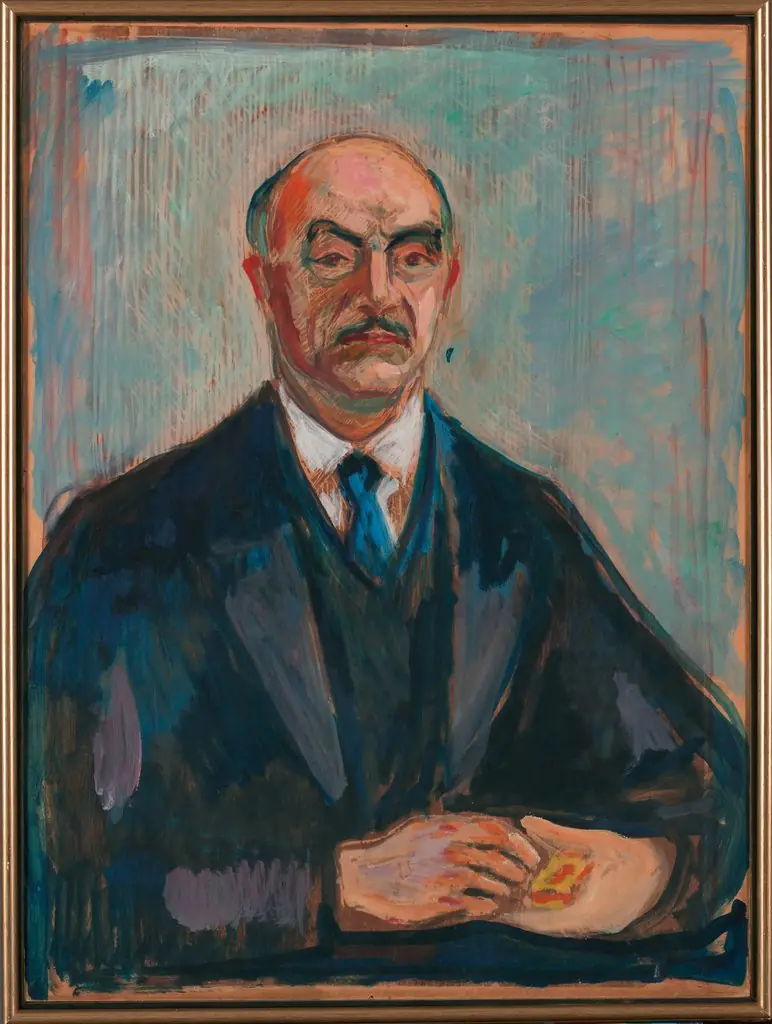
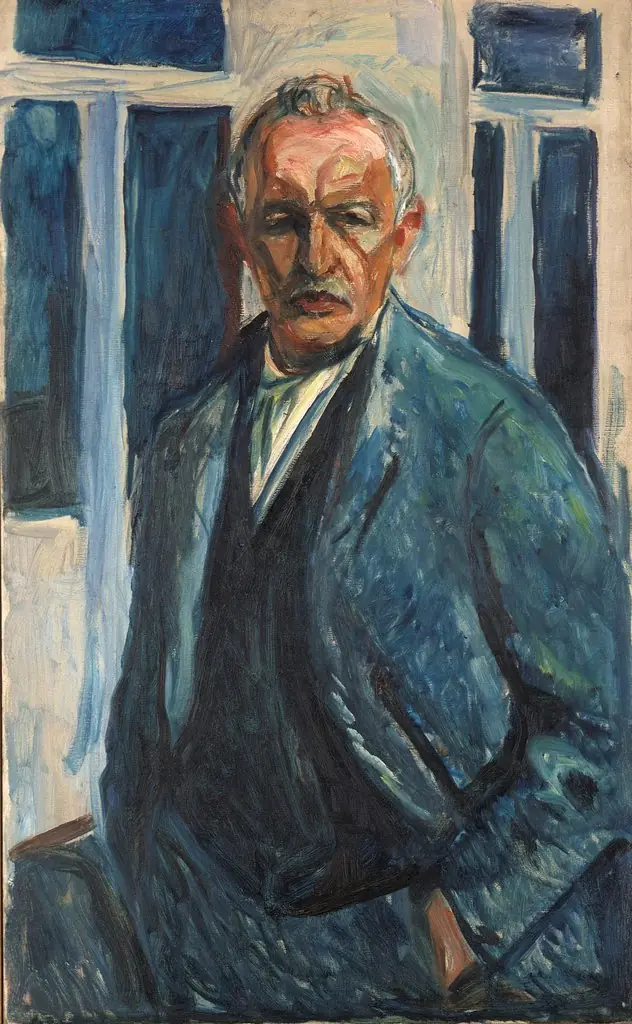
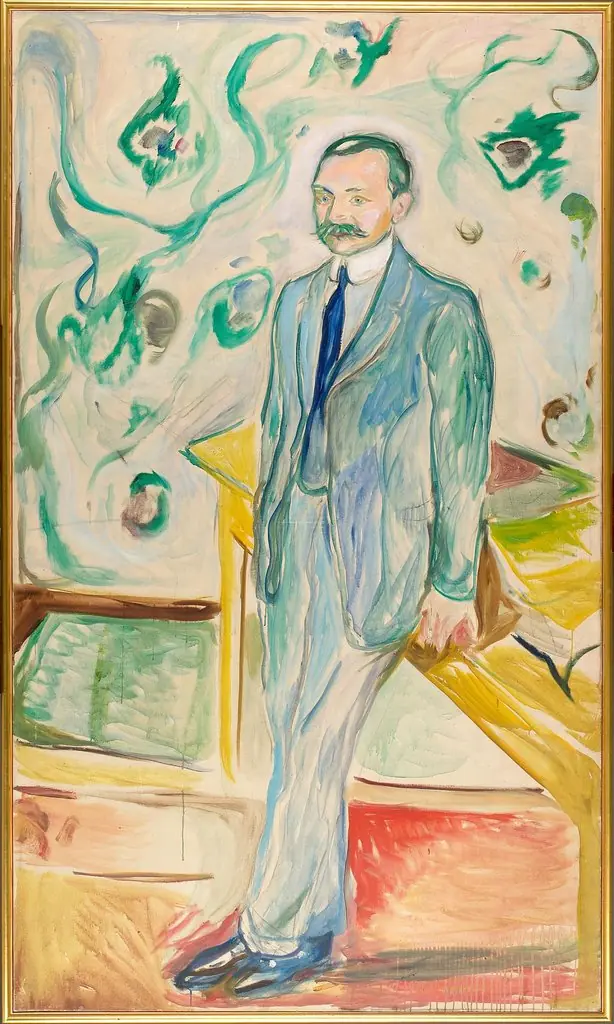
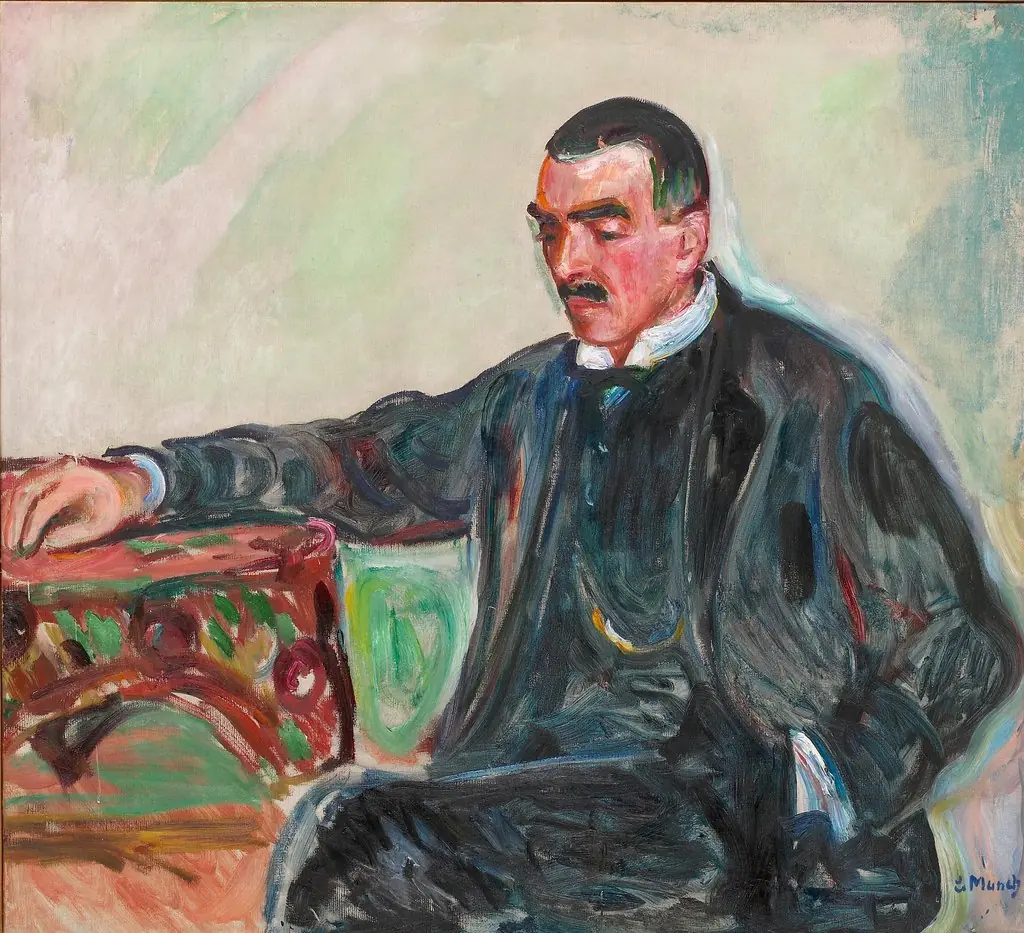
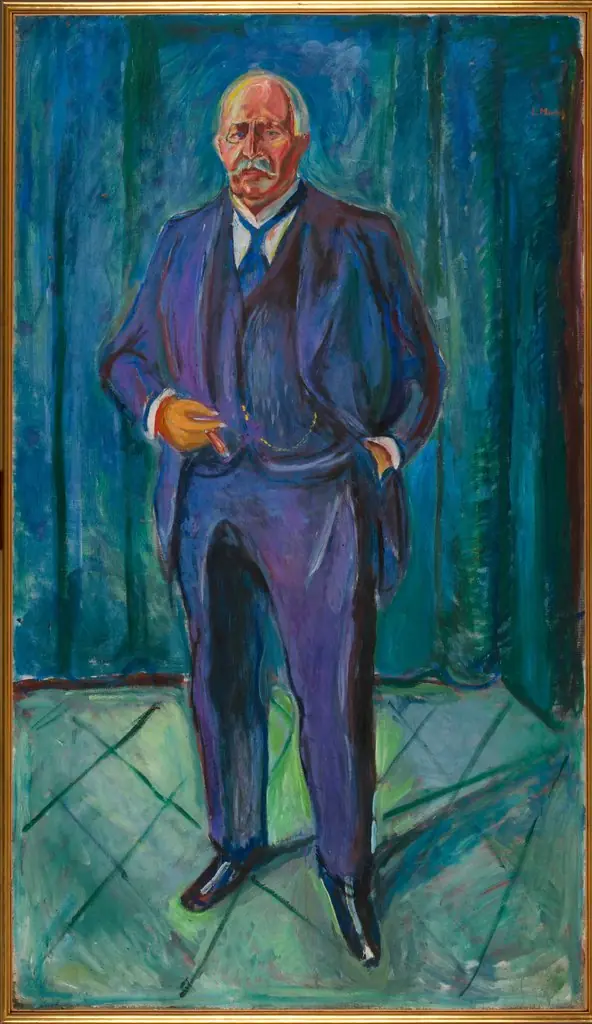
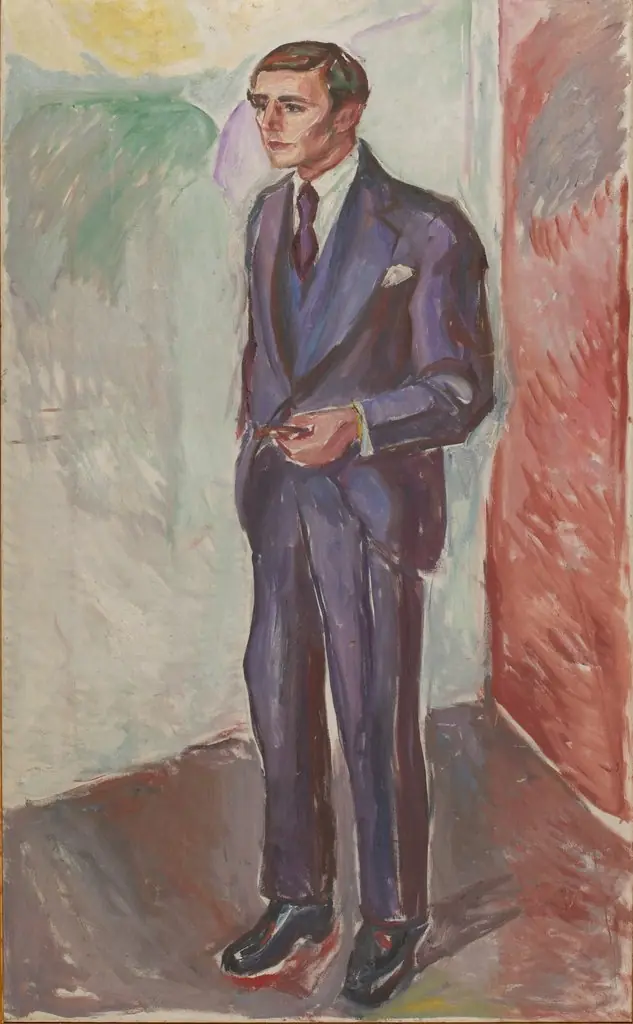
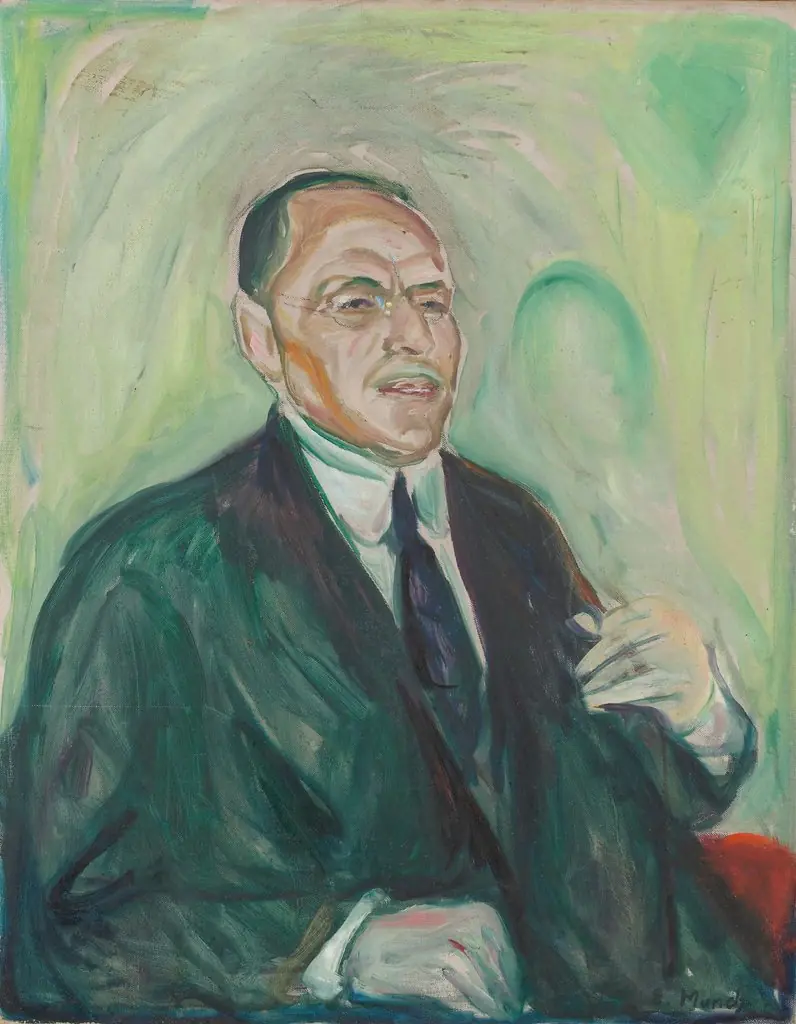
Anton Brünings is an oil painting by the Post-Impressionist artist Edvard Munch. It dates from 1919 and is held in the collection of the Munch Museum.
About this work
Overview
The work is part of the Munch Museum’s collection and reflects the artist’s sustained interest in psychological depth over physical accuracy.
Anton Brünings is a 1919 oil painting by Norwegian artist Edvard Munch. It is a portrait of a seated man, rendered with expressive brushwork and a non-naturalistic color palette. The work is part of the Munch Museum’s collection and reflects the artist’s sustained interest in psychological depth over physical accuracy. Its loose handling and emotional tone align with Munch’s broader post-impressionist approach.
Subject & Meaning
The subject is Anton Brünings, a Norwegian businessman and acquaintance of Munch. Rather than presenting a conventional likeness, the painting emphasizes mood and presence. The blurred facial features and ambiguous object in the subject’s hand—possibly a cigar or pen—suggest introspection or quiet tension. Munch avoids narrative clarity, inviting viewers to sense the inner state of the figure rather than identify it.
Technique & Style
Munch employed thick, visible brushstrokes and a restrained palette of greens, yellows, and dark tones to construct the figure and background. The impasto technique adds texture and dynamism, particularly in the clothing and chair. Facial details are intentionally softened, prioritizing emotional resonance over realism. The composition’s asymmetry and energetic strokes convey a sense of psychological unrest.
History & Provenance
Painted in 1919, the work entered the Munch Museum’s collection following the artist’s death in 1944, as part of his bequest of personal holdings. Munch maintained close ties to Norway’s cultural elite, and Brünings was among those he portrayed during his later years. The painting remained in private hands until its inclusion in the museum’s foundational acquisition, preserving its connection to the artist’s immediate circle.
Context
Created during Munch’s mature period, the painting reflects his shift from the intense symbolism of his youth toward more subdued, yet psychologically charged, portraiture. While World War I had ended, its emotional aftermath lingered in European art. Munch’s focus on internal states, rather than external detail, resonated with broader post-war tendencies to explore identity and alienation through abstraction and expression.
Legacy
Anton Brünings exemplifies Munch’s late style, where portraiture becomes a vehicle for emotional inquiry rather than social documentation. It influenced later Norwegian artists who sought to convey inner life through gesture and color. Though less widely known than The Scream, the painting remains a key example of how Munch transformed the portrait into a meditation on presence and solitude.
Own this work as a print
Artist & collection
Artist
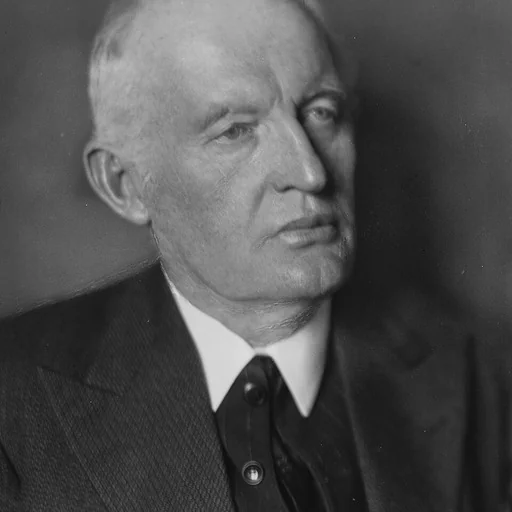
Edvard Munch ( MUUNK; Norwegian: ; 12 December 1863 – 23 January 1944) was a Norwegian painter.