Artwork
Black and Yellow Man in Snow
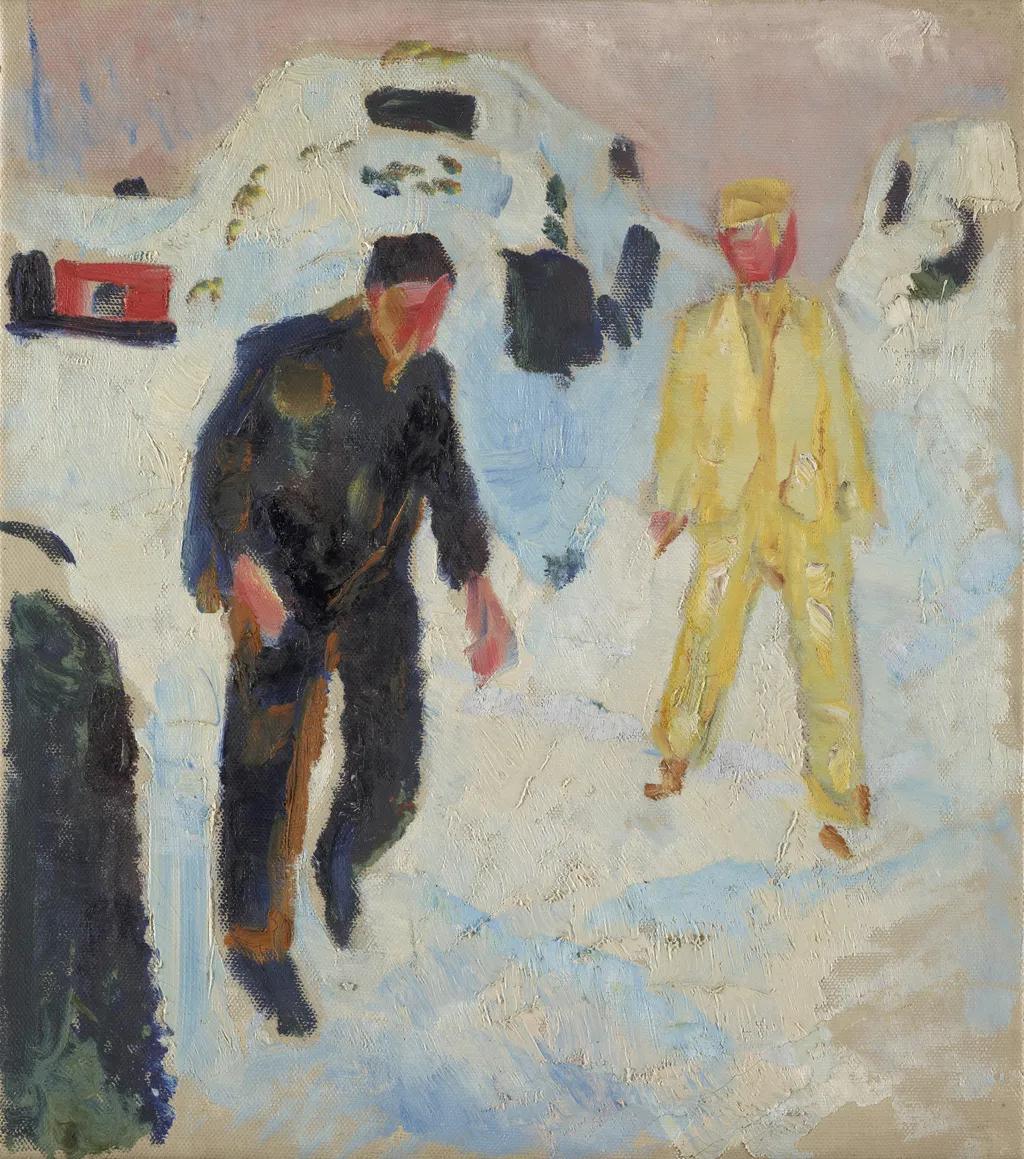
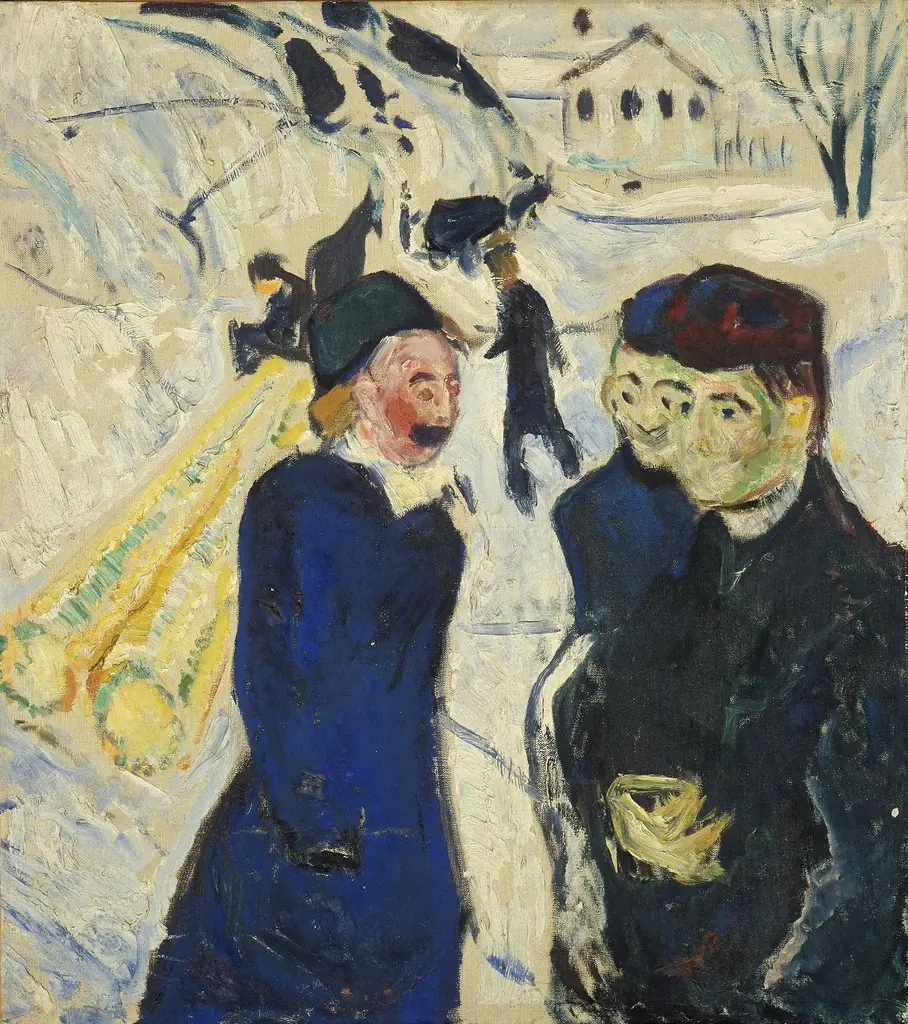
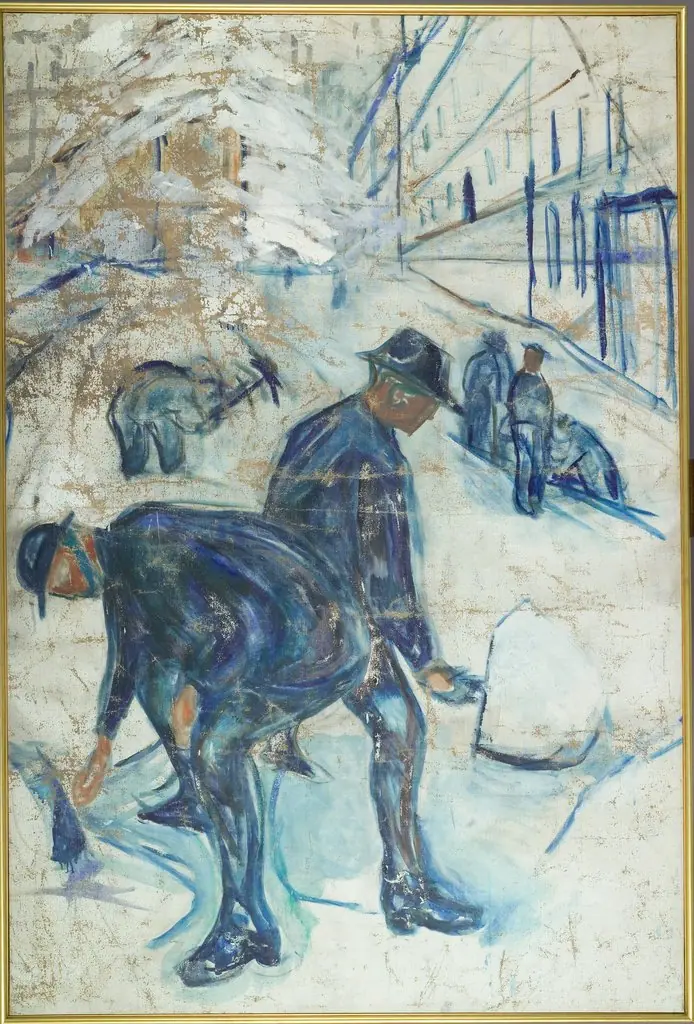
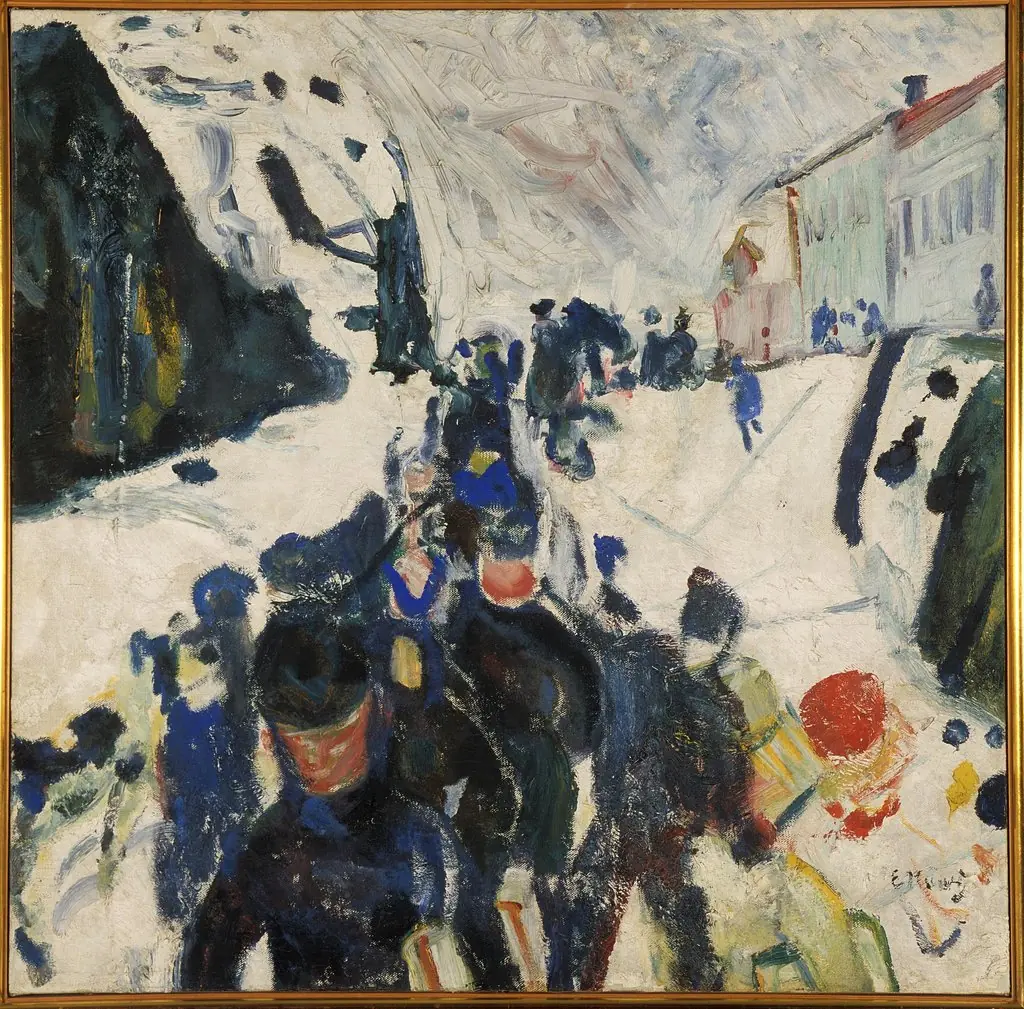
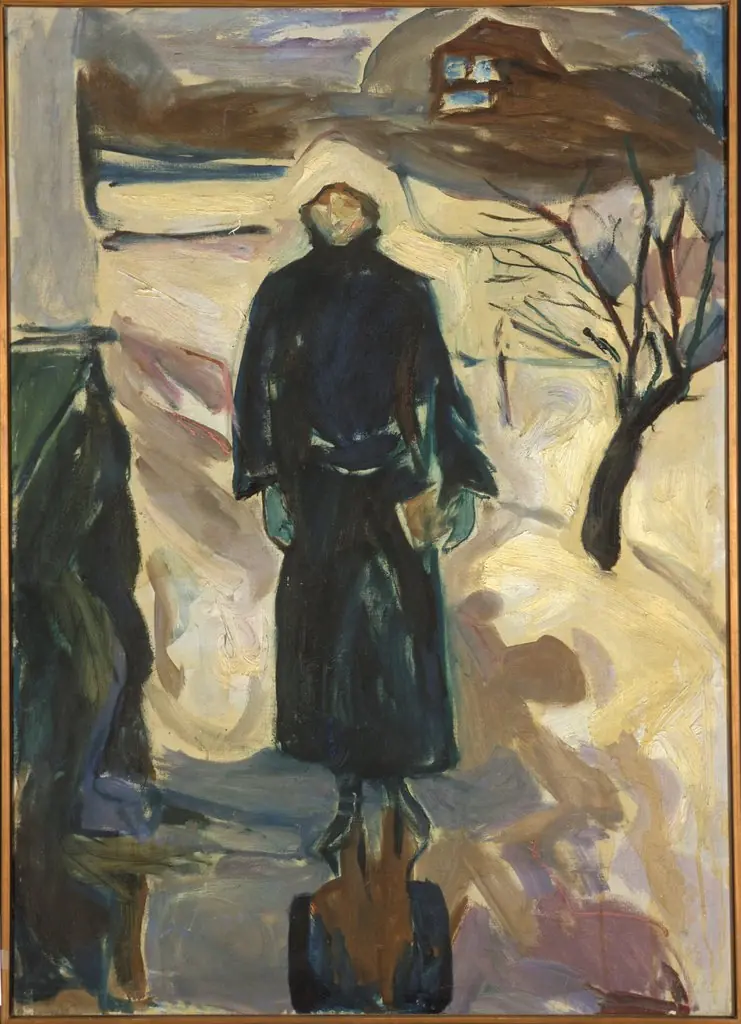
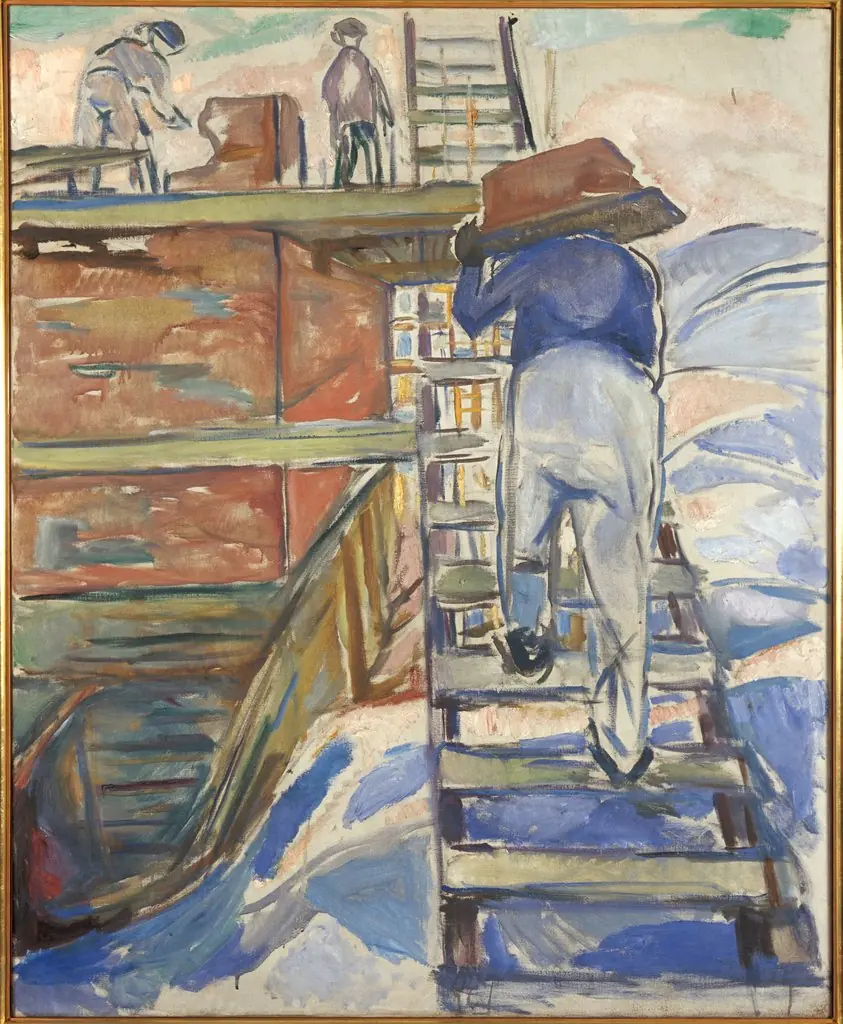
Black and Yellow Man in Snow is an oil painting by the Post-Impressionist artist Edvard Munch. It dates from 1910 and is held in the collection of the Munch Museum.
About this work
Overview
Munch’s use of stark color contrasts and simplified forms moves beyond naturalism, reflecting his long-standing interest in psychological states.
Painted in 1910 by Norwegian artist Edvard Munch, this oil on canvas work presents two masked figures traversing a snowy landscape. The composition is spare yet charged, emphasizing isolation and ambiguity. Munch’s use of stark color contrasts and simplified forms moves beyond naturalism, reflecting his long-standing interest in psychological states. The painting resides in the Munch Museum, Oslo, as part of the artist’s personal archive.
Subject & Meaning
Two men, their faces concealed by red masks, walk side by side through a wintry scene. Their anonymity invites speculation about identity, alienation, or shared burden. The absence of facial expression and the unnatural coloration suggest inner turmoil or social detachment. The snow, often a symbol of stillness, here feels oppressive, reinforcing a mood of quiet dread rather than peace.
Technique & Style
Munch employs bold, non-naturalistic hues—black, yellow, and crimson—to structure the composition rather than describe reality. Forms are flattened, contours simplified, and brushwork deliberate but unrefined. The pink sky and muted buildings create an unnatural atmosphere, distancing the scene from realism. This approach aligns with his expressionist tendencies, prioritizing emotional resonance over visual accuracy.
History & Provenance
Created during Munch’s mature period, the painting was retained by the artist until his death in 1944. It entered the Munch Museum’s collection through his bequest, which included thousands of works spanning his career. Unlike his more widely exhibited pieces, this painting remained relatively private, offering insight into his quieter, introspective explorations of human presence.
Context
Munch’s work in this era was shaped by personal grief, philosophical readings, and a rejection of academic norms. His association with thinkers like Hans Jæger encouraged a focus on existential themes. While influenced by post-impressionist color theory, Munch diverged by using color symbolically rather than optically, aligning his practice with emerging expressionist currents in Northern Europe.
Legacy
Though less known than 'The Scream,' this painting exemplifies Munch’s consistent engagement with psychological isolation and masked identity. Its restrained palette and enigmatic figures anticipate later 20th-century explorations of alienation in art. Scholars view it as a quiet but potent extension of his lifelong inquiry into the human condition beyond surface appearances.
Own this work as a print
Artist & collection
Artist
Edvard Munch ( MUUNK; Norwegian: ; 12 December 1863 – 23 January 1944) was a Norwegian painter.