Artwork
Cabaret
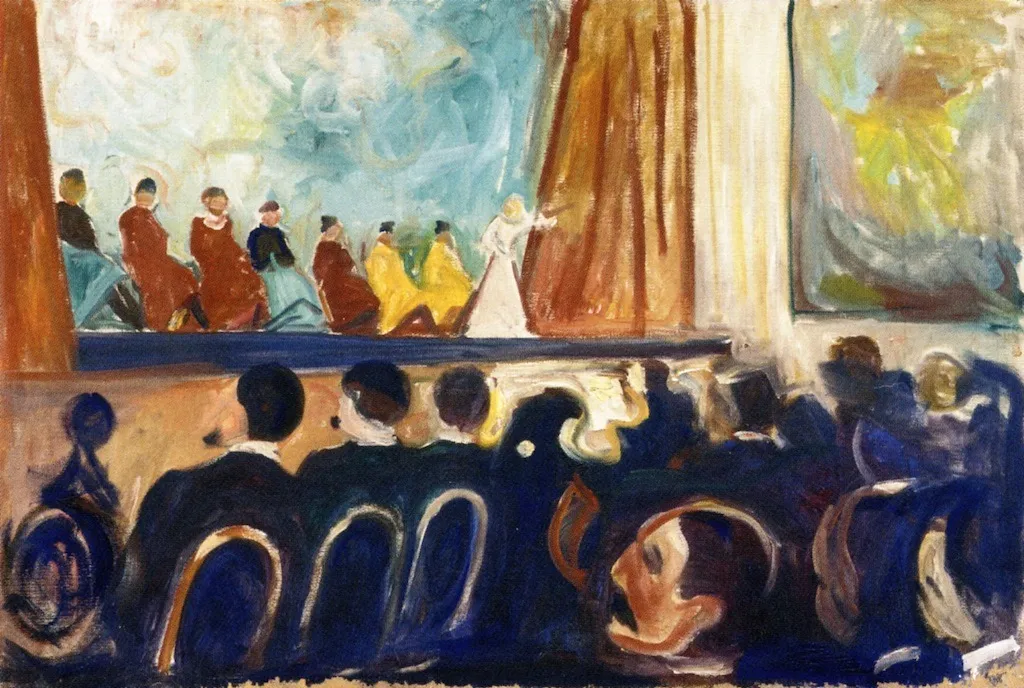
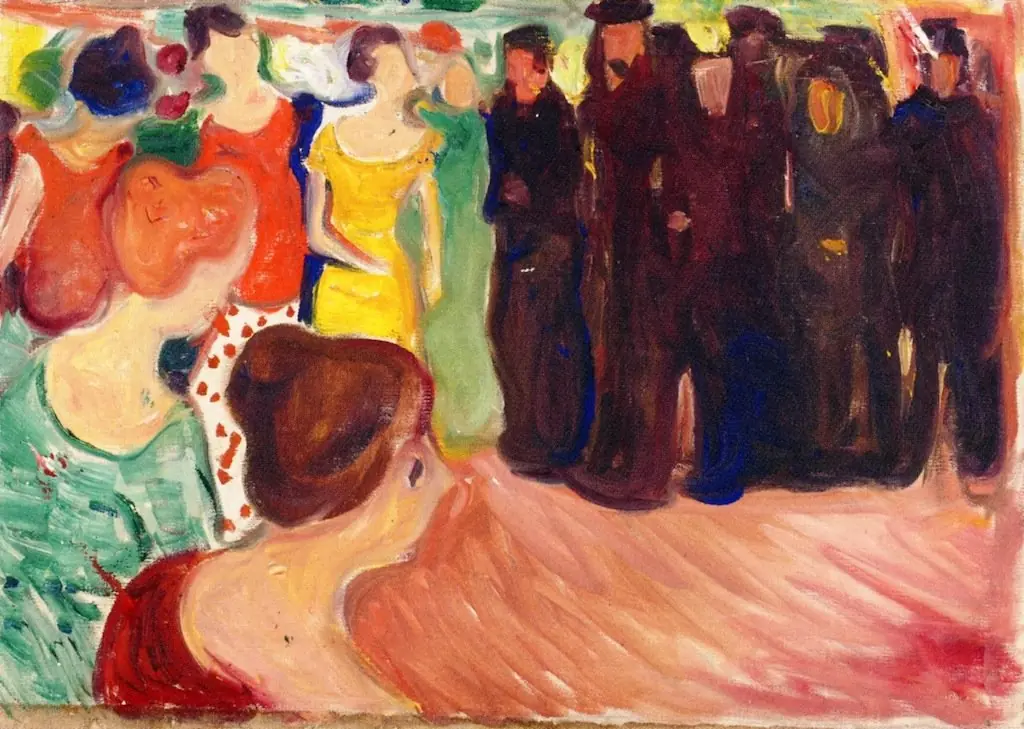
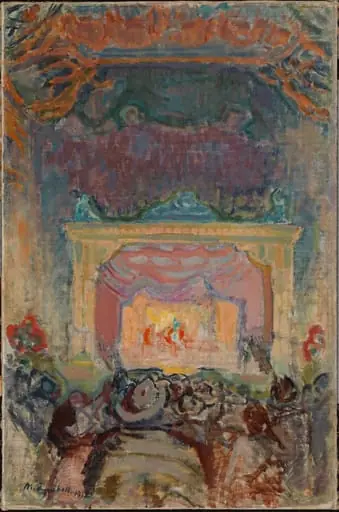
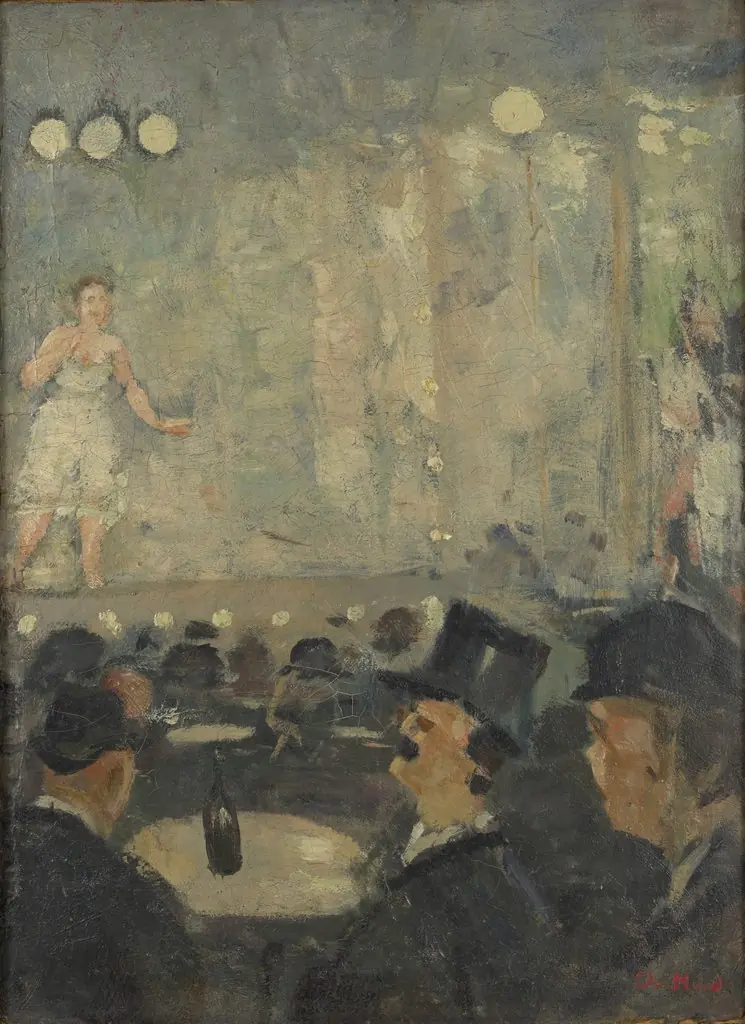
Cabaret is an oil painting by the Post-Impressionist artist Edvard Munch. It dates from 1898 and is held in the collection of the Munch Museum.
About this work
Overview
Painted in 1898 by Edvard Munch, *Cabaret* is an oil-on-canvas work that captures a quiet moment in a performance setting.
Painted in 1898 by Edvard Munch, *Cabaret* is an oil-on-canvas work that captures a quiet moment in a performance setting. Unlike his more overtly expressive pieces, this painting emphasizes stillness and detachment. The figures are arranged in a row, turned away from the viewer, creating a sense of distance and introspection. The composition avoids dramatic action, focusing instead on atmosphere and the subtle interplay of light and shadow.
Subject & Meaning
The scene depicts an audience seated before a stage where a woman in white stands as the sole performer. Their faces are hidden, suggesting anonymity and emotional withdrawal. The absence of individual expression shifts focus from narrative to mood—perhaps reflecting Munch’s interest in the isolation of modern urban life. The performer, isolated in her brightness, becomes a symbol of vulnerability amid passive observers.
Technique & Style
Munch employs simplified forms and flattened space, characteristic of his post-impressionist approach. Color is used expressively rather than naturally: muted blues, soft yellows, and faint oranges create a hushed tonality. Brushwork is restrained, with smooth transitions between areas of color. The lack of detail in faces and clothing reinforces emotional ambiguity, aligning with his broader interest in inner states over external realism.
History & Provenance
Created during a period when Munch was deeply engaged with themes of alienation and psychological tension, *Cabaret* entered the collection of the Munch Museum in Oslo, where it remains today. It was painted shortly after his involvement with the Berlin Secession and reflects his ongoing exploration of theatrical and social settings as metaphors for human disconnection. The work has been consistently attributed to Munch without dispute.
Context
In late 19th-century Europe, cabarets and music halls were sites of both entertainment and social observation. Munch, influenced by Symbolist literature and the anxieties of modernity, used such settings to explore emotional detachment. Unlike contemporaries who glorified nightlife, he portrayed it as a space of quiet solitude, where individuals coexist without connection—a reflection of his own preoccupations with loneliness and perception.
Legacy
While less famous than *The Scream*, *Cabaret* exemplifies Munch’s quieter, more contemplative mode. It influenced later artists interested in psychological depth over narrative clarity. Its restrained palette and compositional stillness prefigure elements of early 20th-century modernism, particularly in how emotion is conveyed through absence and atmosphere rather than overt expression.
Artist & collection
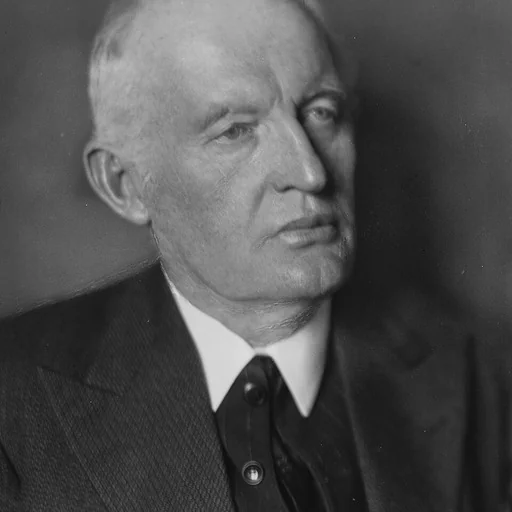
Artist
Edvard Munch ( MUUNK; Norwegian: ; 12 December 1863 – 23 January 1944) was a Norwegian painter.