Artwork
Cheek to Cheek
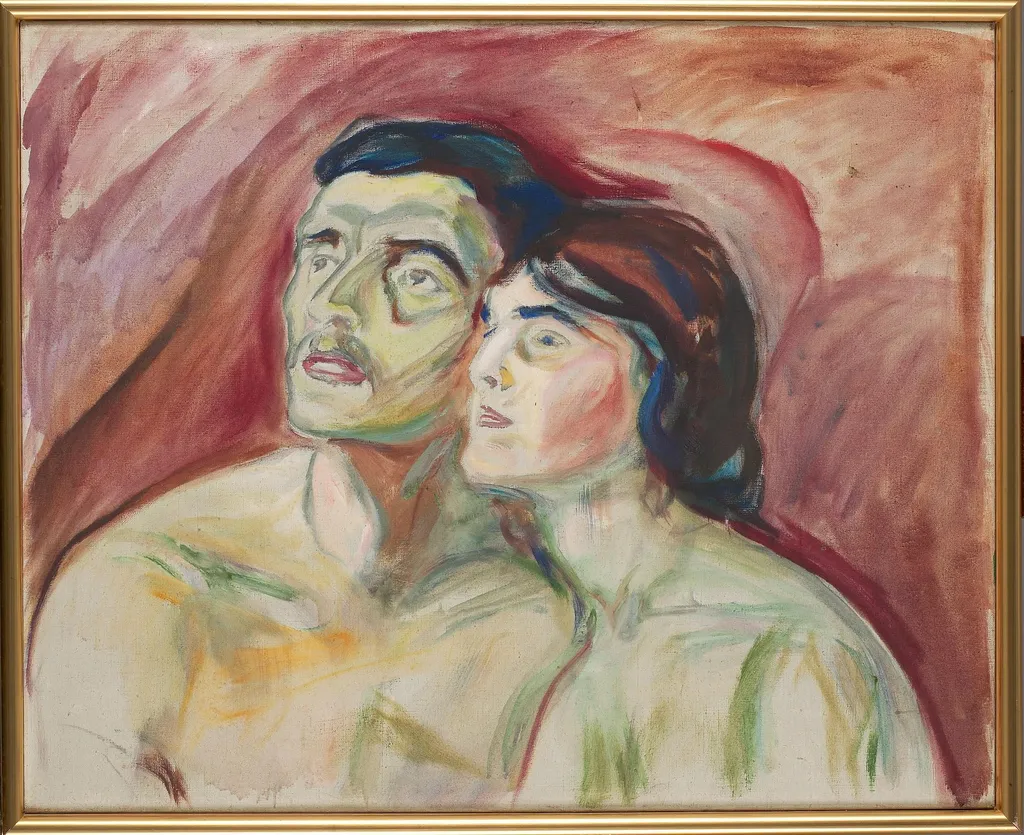
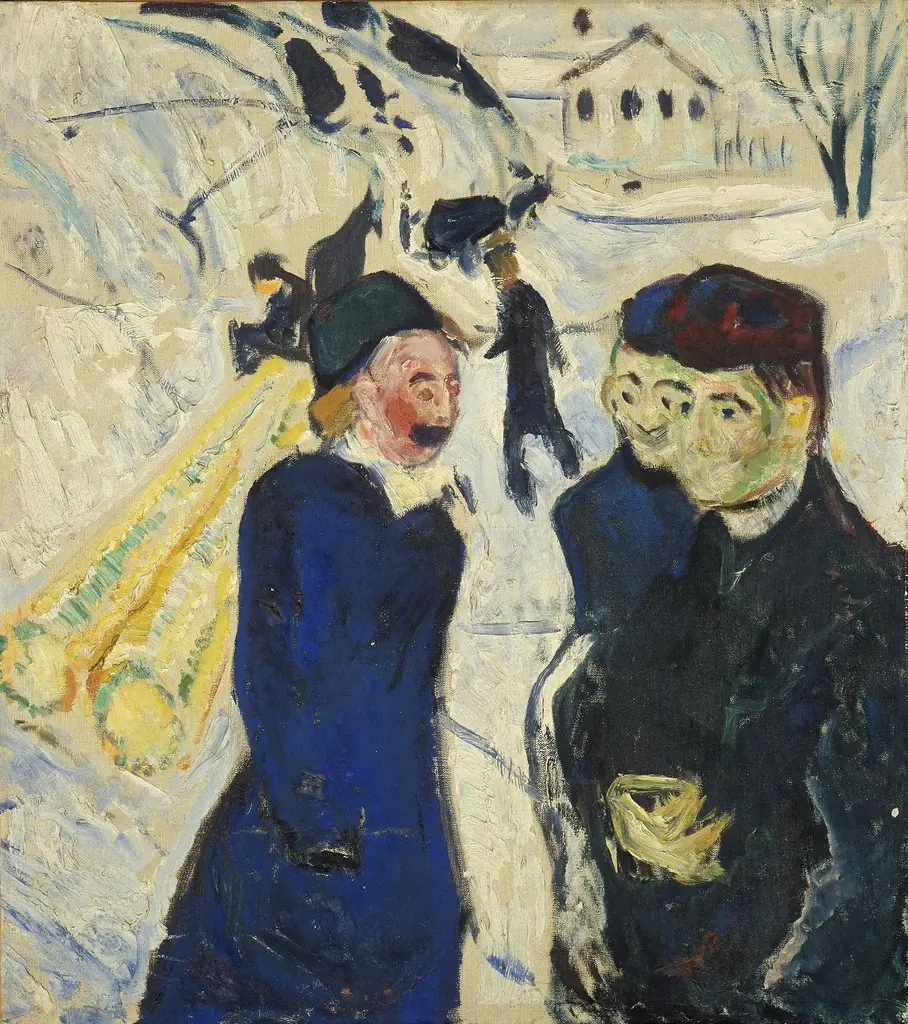
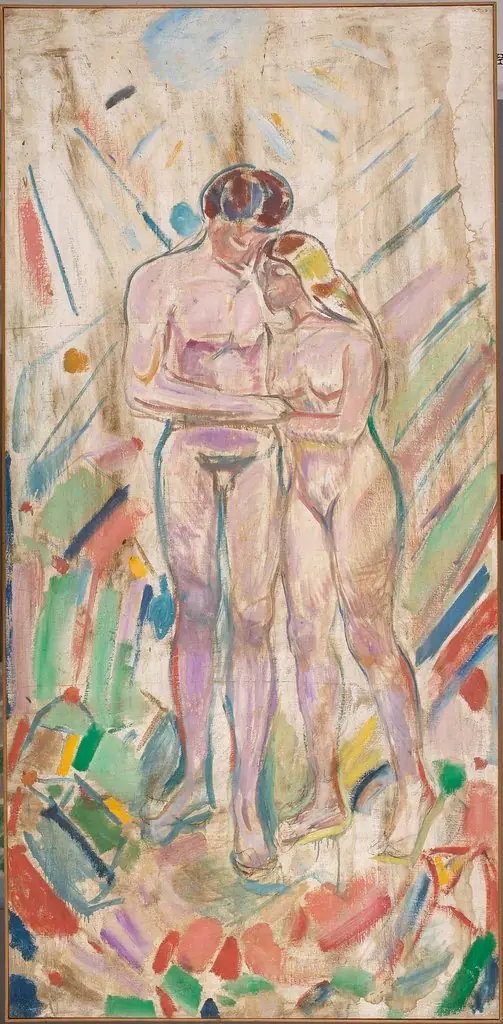
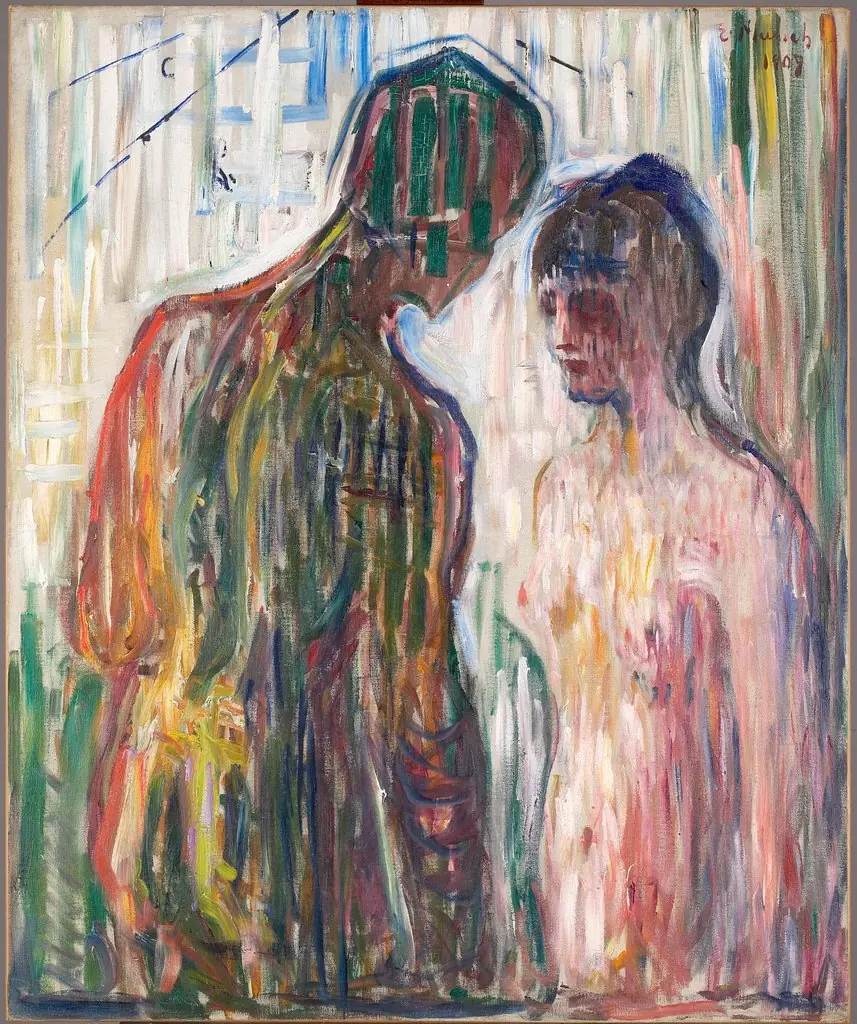
Cheek to Cheek is an oil painting by the Post-Impressionist artist Edvard Munch. It dates from 1919 and is held in the collection of the Munch Museum.
About this work
Overview
The work reflects his sustained interest in intimate human dynamics, rendered through a style that prioritizes emotional resonance over naturalistic detail.
Painted in 1919, *Cheek to Cheek* is an oil portrait by Norwegian artist Edvard Munch, capturing two figures in close proximity. The work reflects his sustained interest in intimate human dynamics, rendered through a style that prioritizes emotional resonance over naturalistic detail. Its raw surface and heightened color palette distinguish it from academic traditions, aligning with Munch’s broader exploration of psychological tension in personal relationships.
Subject & Meaning
The painting presents a man and woman seated near each other, their faces nearly touching yet emotionally distant. The man’s averted gaze and the woman’s direct stare suggest an unspoken tension, perhaps between connection and isolation. Munch avoids narrative clarity, instead using posture and expression to evoke the ambiguity of intimacy—how closeness can coexist with inner separation.
Technique & Style
Munch employed thick, uneven brushwork, particularly in the hair and fabric, using impasto to build texture and movement. The figures’ skin is rendered in muted, warm tones, contrasting with the vivid, almost violent reds and pinks of the background. Faces are softly blurred, reducing detail to emphasize mood over likeness. The deliberate lack of polish heightens the sense of immediacy and emotional unease.
History & Provenance
Created during Munch’s later period, the painting remained in his personal collection until his death in 1944. It was later transferred to the Munch Museum in Oslo, established to preserve and display his oeuvre. The work’s provenance is well-documented, with no significant gaps in ownership, reflecting its importance within his artistic legacy.
Context
Munch’s approach in this piece stems from his engagement with post-Impressionist ideals and his early association with the radical thinker Hans Jæger, who encouraged introspective, emotionally honest art. Though influenced by Symbolism and Expressionism, Munch resisted formal movements, instead developing a personal visual language rooted in psychological observation and existential themes prevalent in early 20th-century Nordic culture.
Legacy
*Cheek to Cheek* exemplifies Munch’s enduring focus on the inner life of individuals within relationships. Its unidealized portrayal of intimacy influenced later Expressionist painters who sought to convey emotional truth through distorted form and bold color. The painting remains a key example of his mature style, studied for its psychological depth and technical experimentation.
Artist & collection
Artist
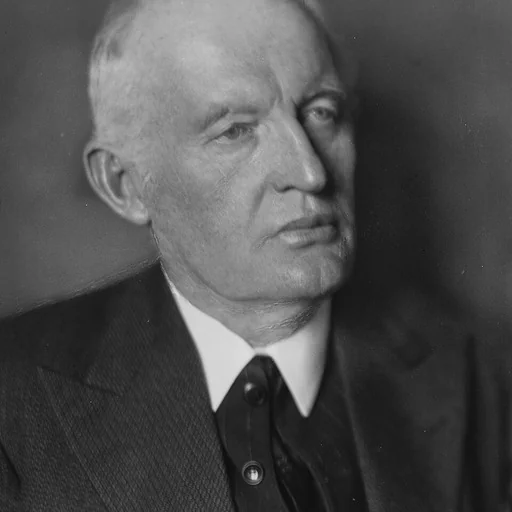
Edvard Munch ( MUUNK; Norwegian: ; 12 December 1863 – 23 January 1944) was a Norwegian painter.