Artwork
From Thüringerwald
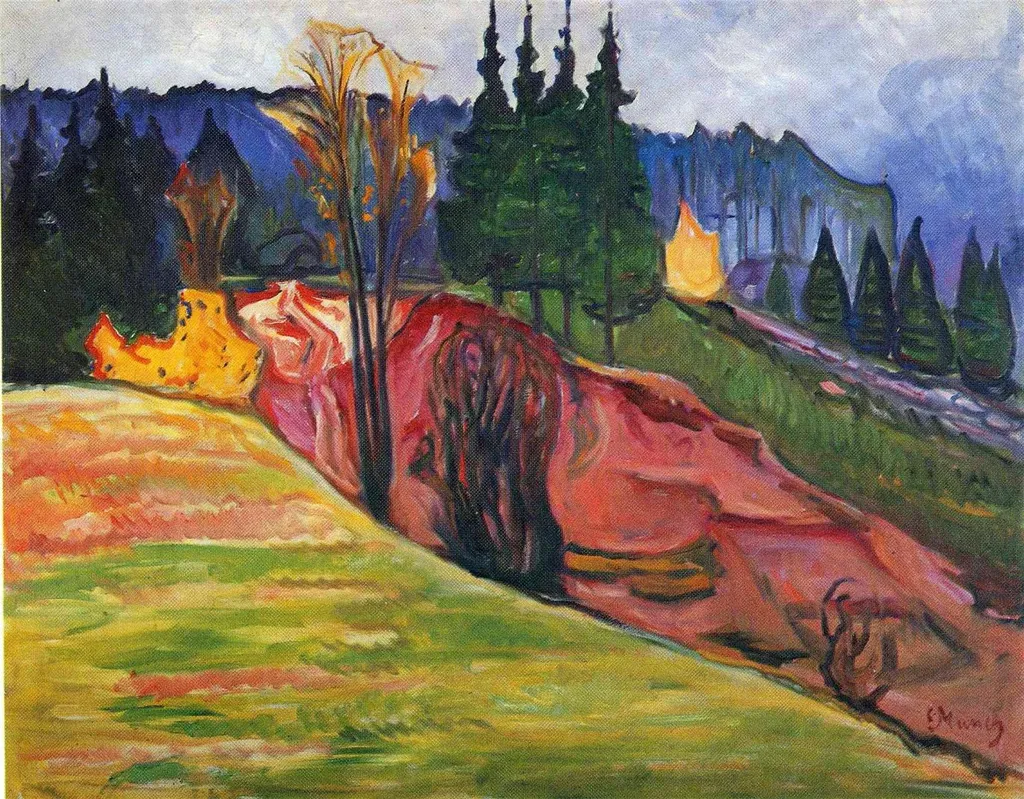
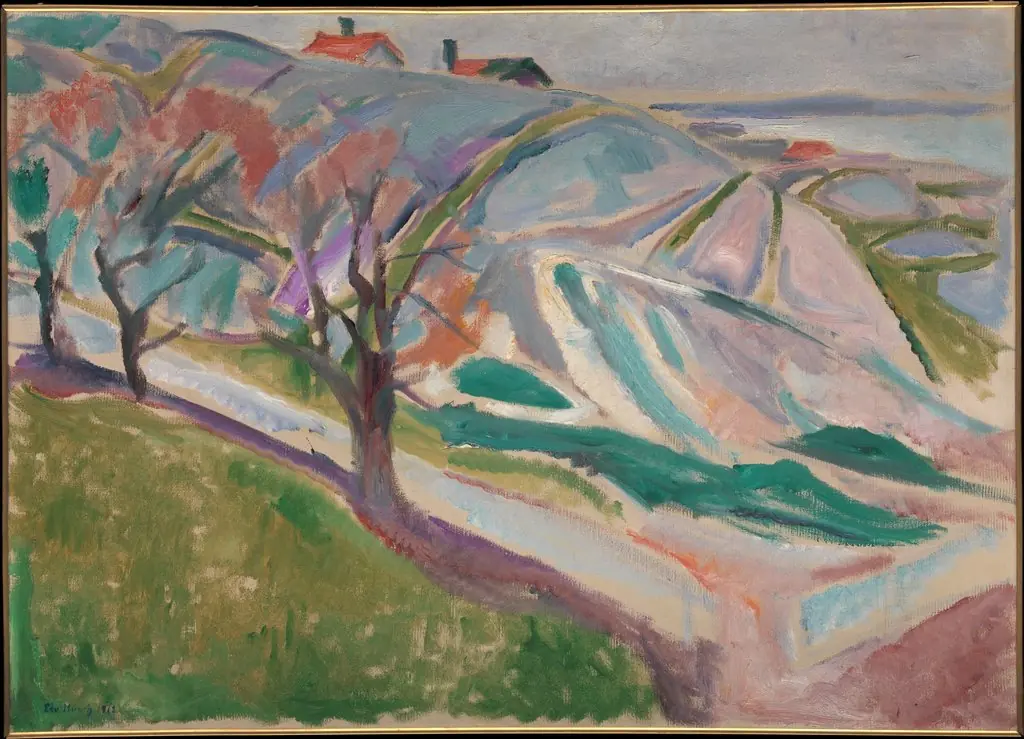
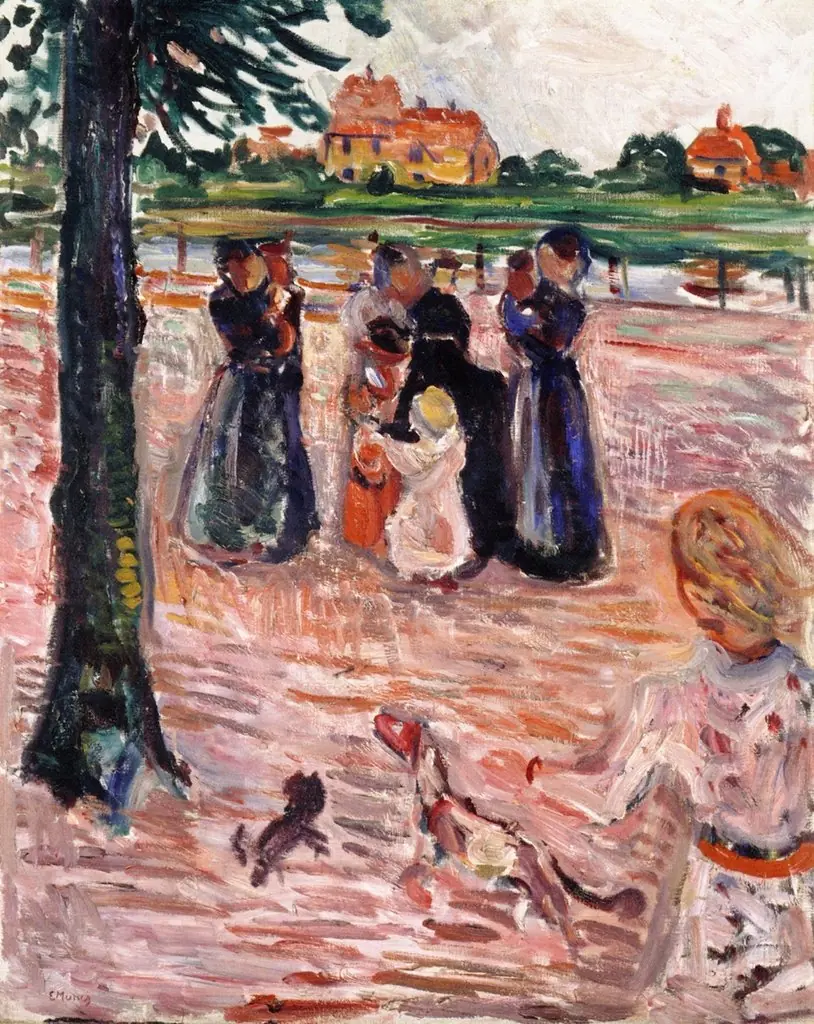
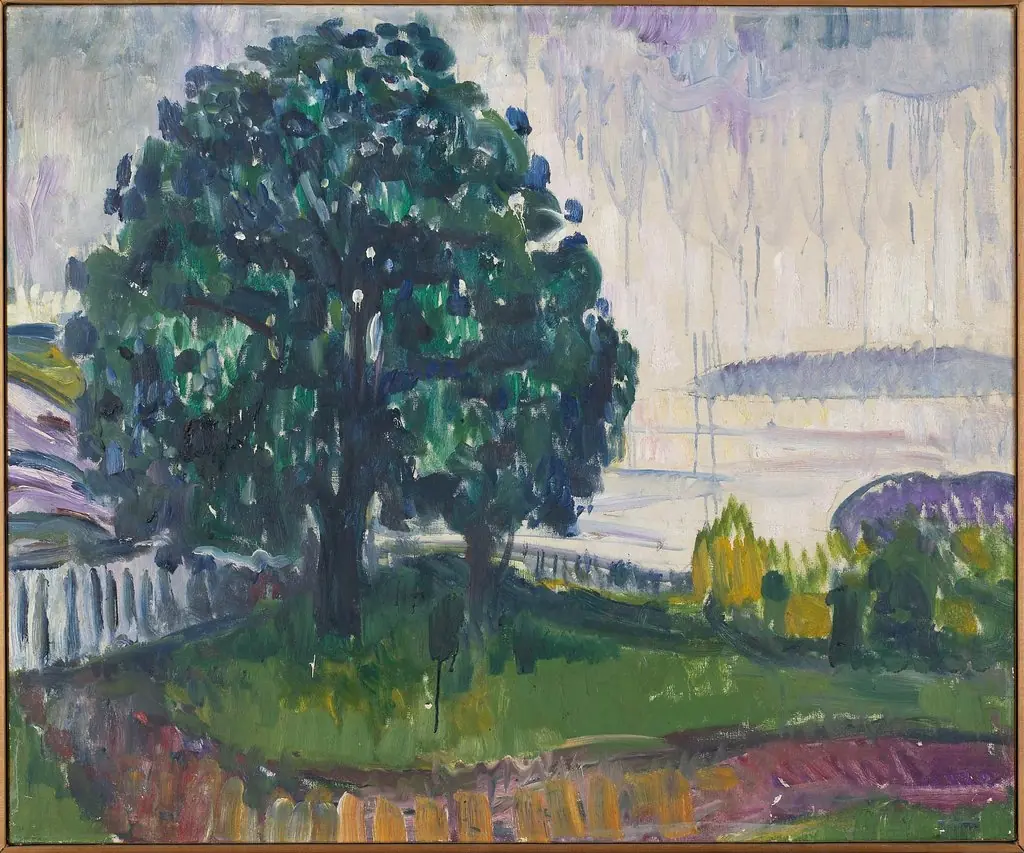
From Thüringerwald is an oil painting by the Post-Impressionist artist Edvard Munch. It dates from 1905 and is held in the collection of the Munch Museum.
About this work
Overview
Painted in 1905, *From Thüringerwald* is an oil landscape by Norwegian artist Edvard Munch. Though less known than his psychological portraits, this work reflects his ongoing engagement with nature as a vessel for inner experience. Executed during a period of travel in Germany, the painting captures a quiet rural scene with a distinctive emotional texture, distinct from pure realism.
Subject & Meaning
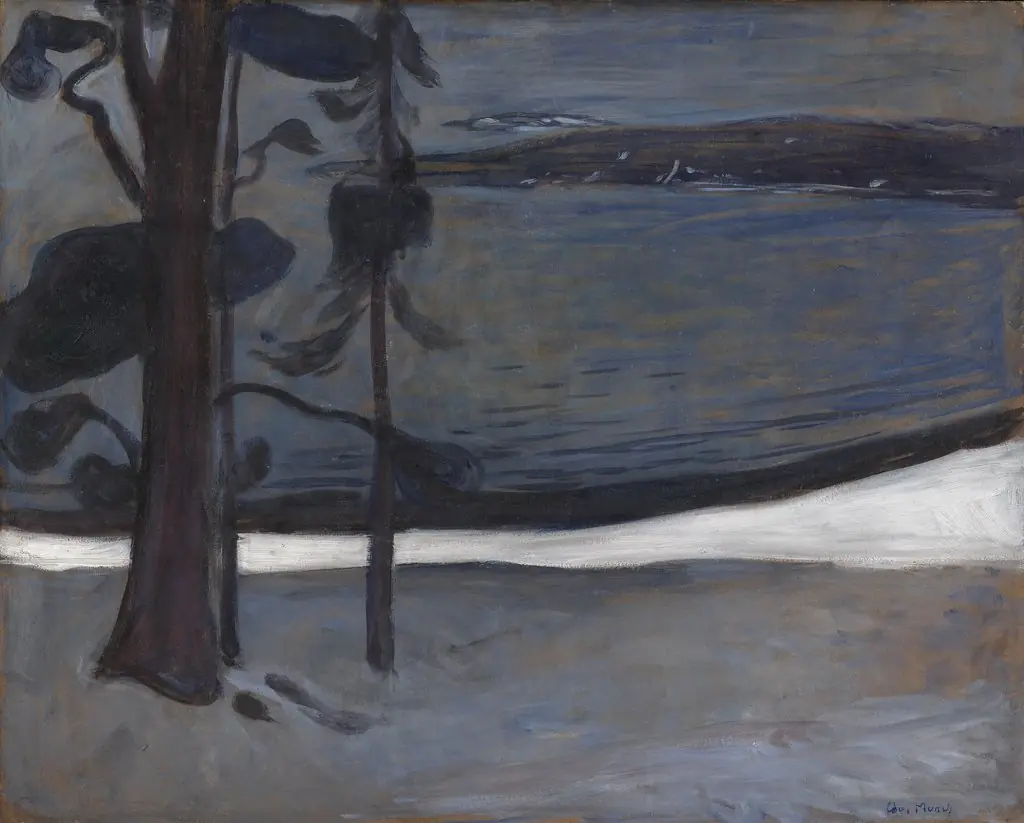
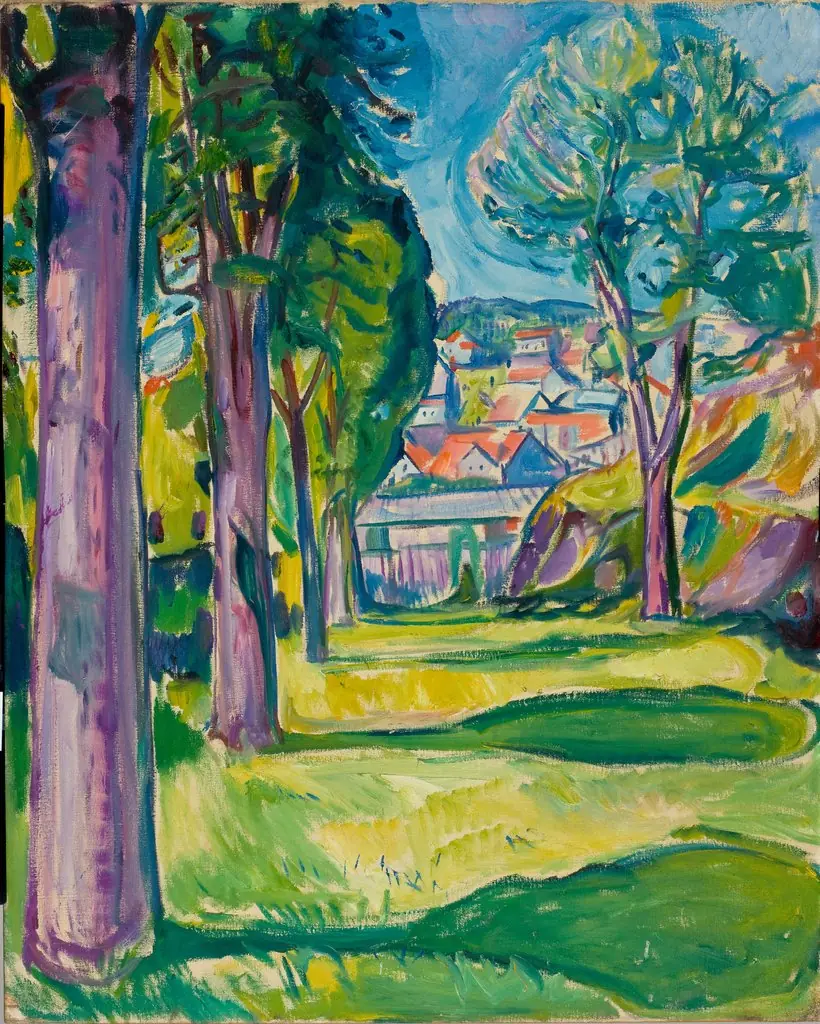
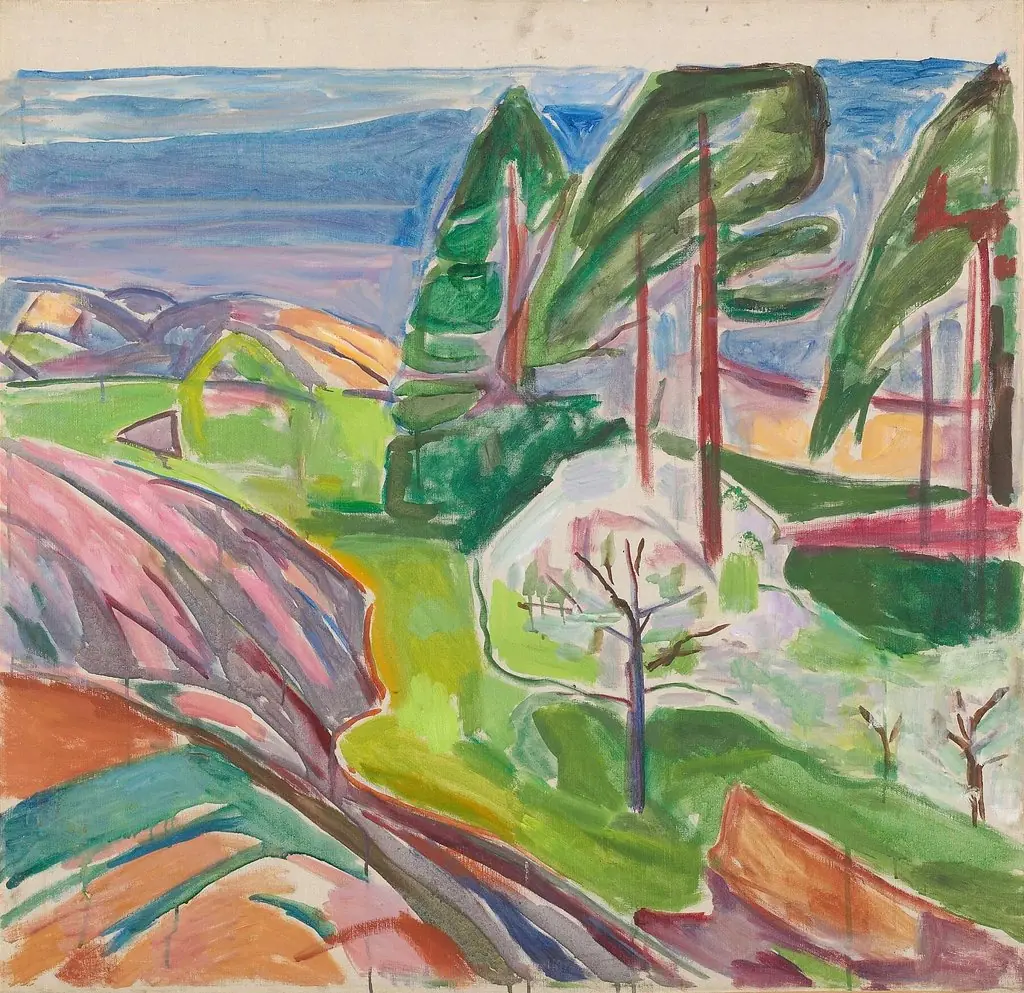
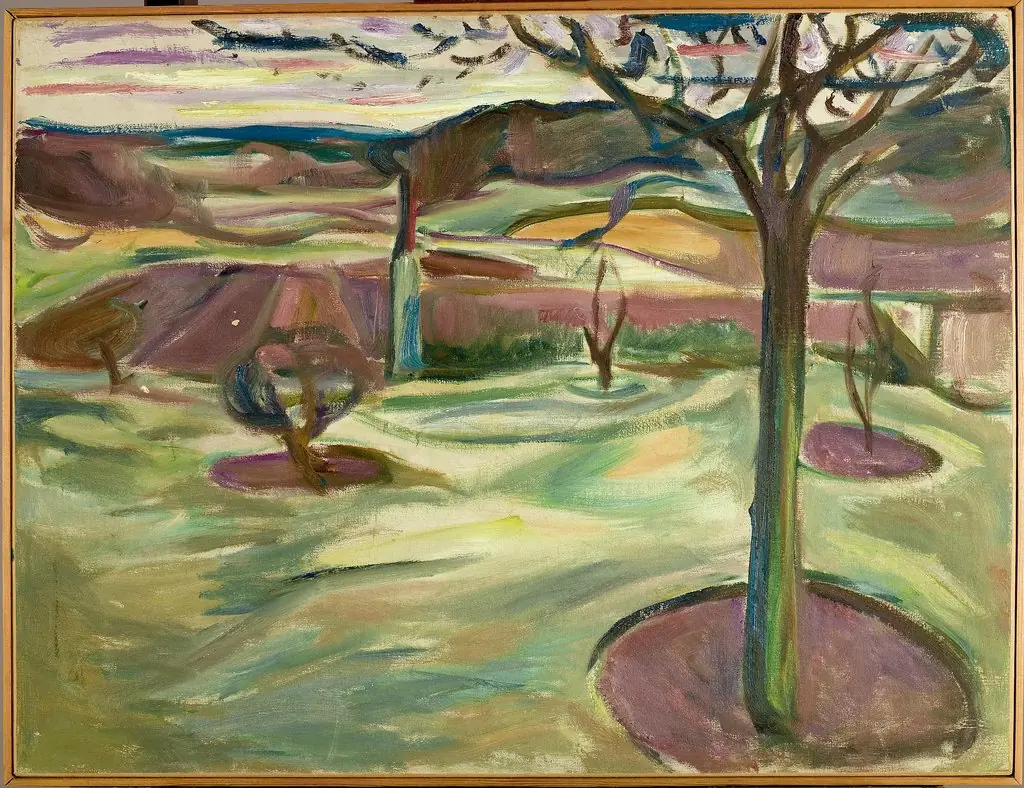
The painting presents a tranquil woodland vista—grassy slopes, a solitary tree, and distant hills under a muted sky.
The painting presents a tranquil woodland vista—grassy slopes, a solitary tree, and distant hills under a muted sky. Unlike Munch’s more overtly anxious compositions, this scene suggests contemplation rather than distress. The landscape may reflect a moment of respite, yet the heightened color and rhythmic brushwork imply an underlying emotional resonance, aligning with his belief that nature mirrors the soul.
Technique & Style
Munch employed bold, expressive brushstrokes and saturated hues to animate the natural forms. Greens and yellows in the foreground contrast with warmer browns in the central tree, while the background mountains use layered, muted tones to suggest depth. The sky, softly gray with scattered clouds, grounds the composition without dominating it. His technique merges observation with emotional inflection, characteristic of his post-impressionist approach.
History & Provenance
Created during Munch’s time in Thuringia, Germany, the painting entered the collection of the Munch Museum in Oslo, where it remains today. It was produced in the years following his most intense psychological works, suggesting a shift toward quieter, more reflective subjects. Its provenance is well-documented, with no known prior ownership outside the artist’s circle.
Context
In 1905, Munch was experimenting beyond his earlier themes of anxiety and isolation, exploring landscapes as conduits for mood. This period coincided with broader European interest in nature’s emotional potential, influenced by Symbolism and early modernism. *From Thüringerwald* reflects his personal engagement with the German countryside, distinct from his Norwegian settings but consistent in its psychological undercurrents.
Legacy
Though not among Munch’s most widely exhibited works, *From Thüringerwald* contributes to understanding his evolving relationship with landscape. It demonstrates how his signature expressive style could be applied beyond human figures, revealing his belief that environment and emotion are inseparable. The painting remains a quiet but significant part of his oeuvre within the Munch Museum’s comprehensive collection.
Artist & collection
Artist
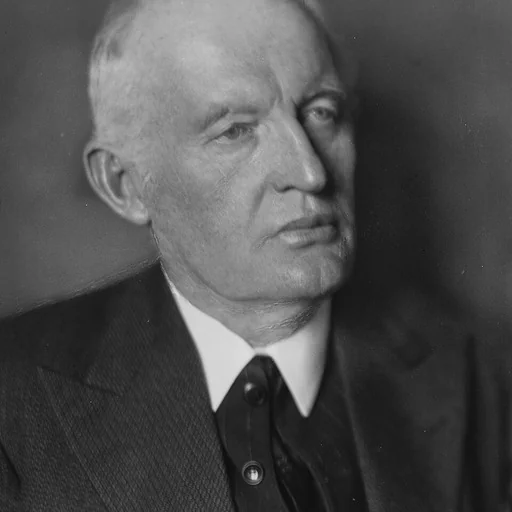
Edvard Munch ( MUUNK; Norwegian: ; 12 December 1863 – 23 January 1944) was a Norwegian painter.