Artwork
Elgersburg
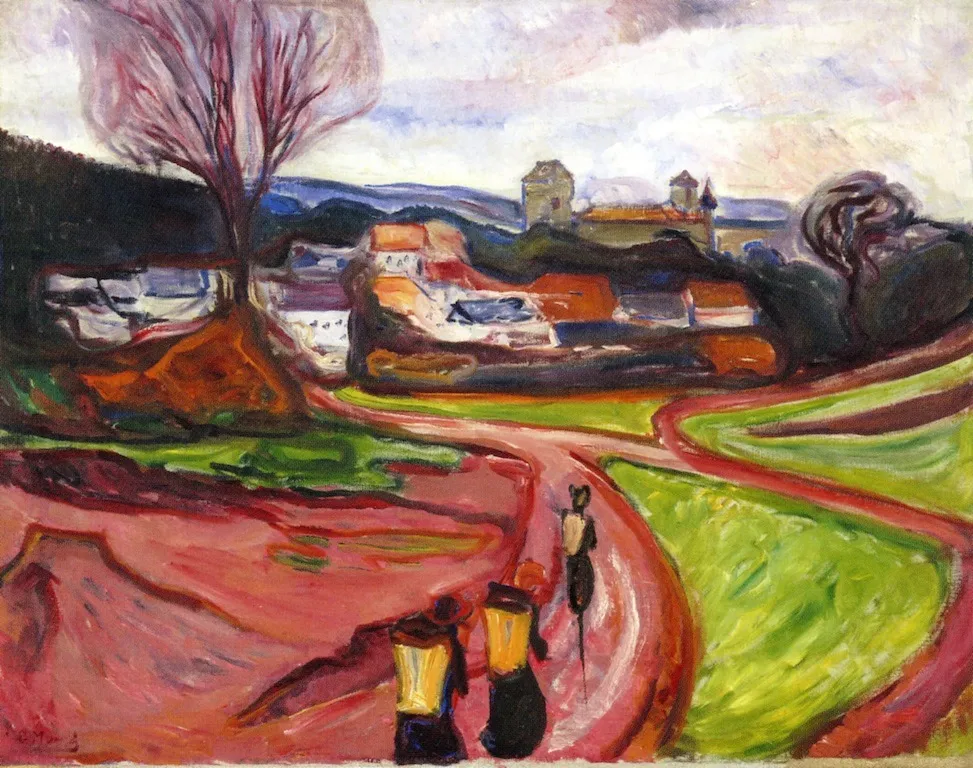
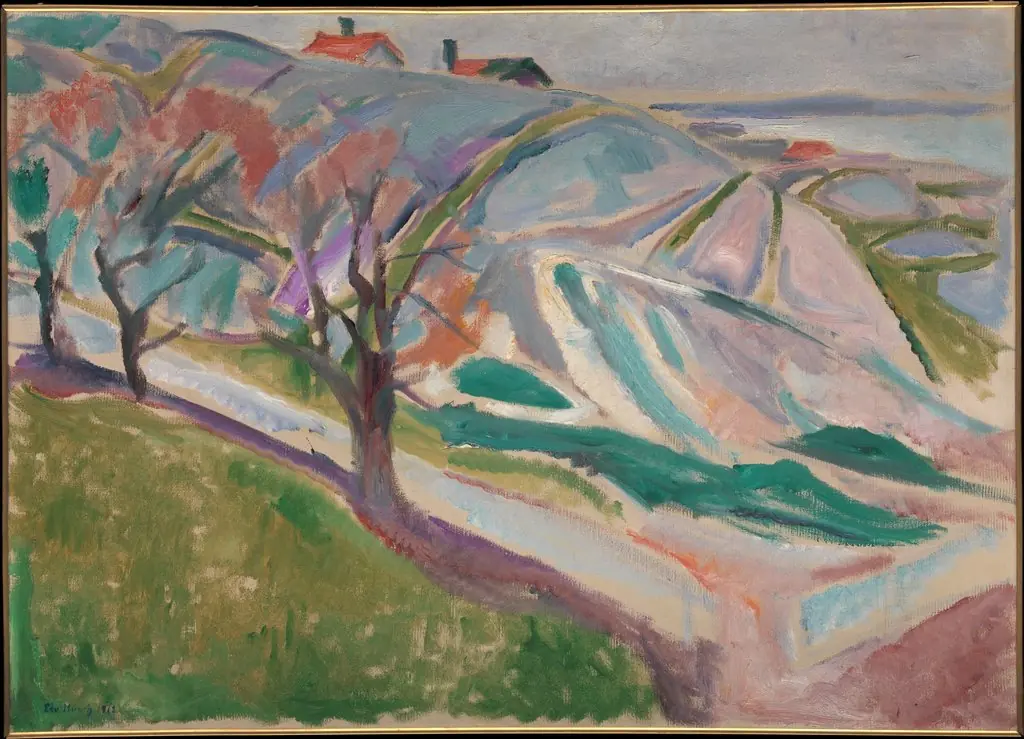
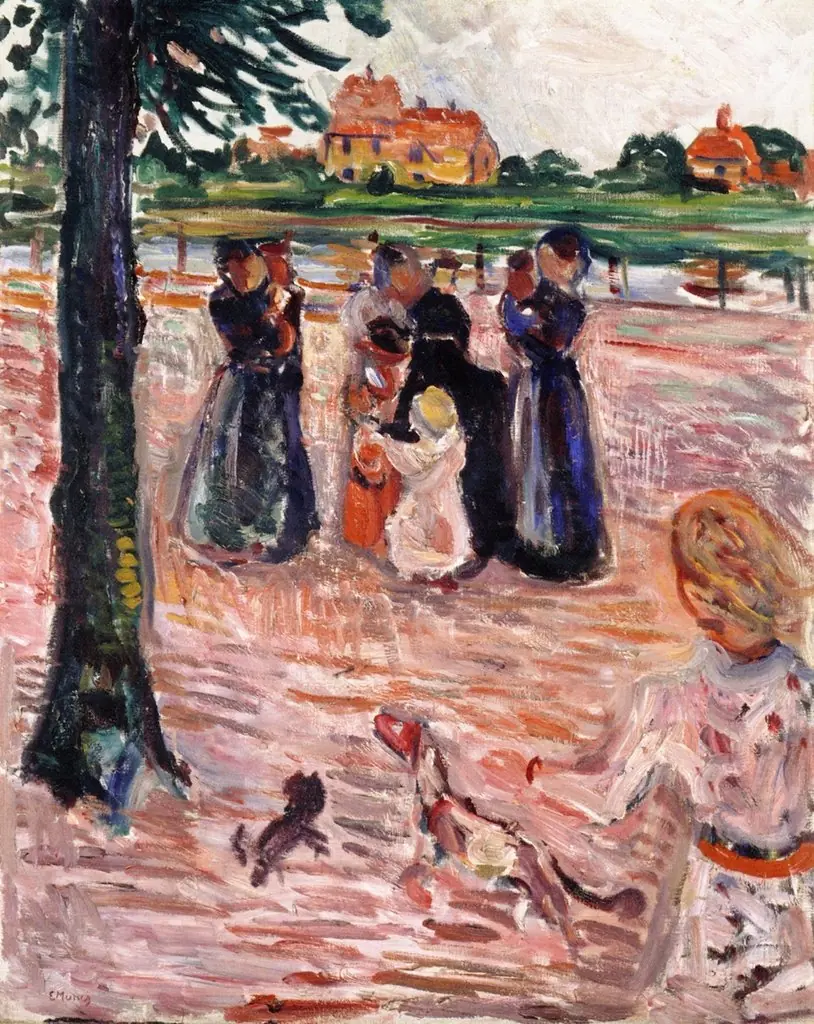
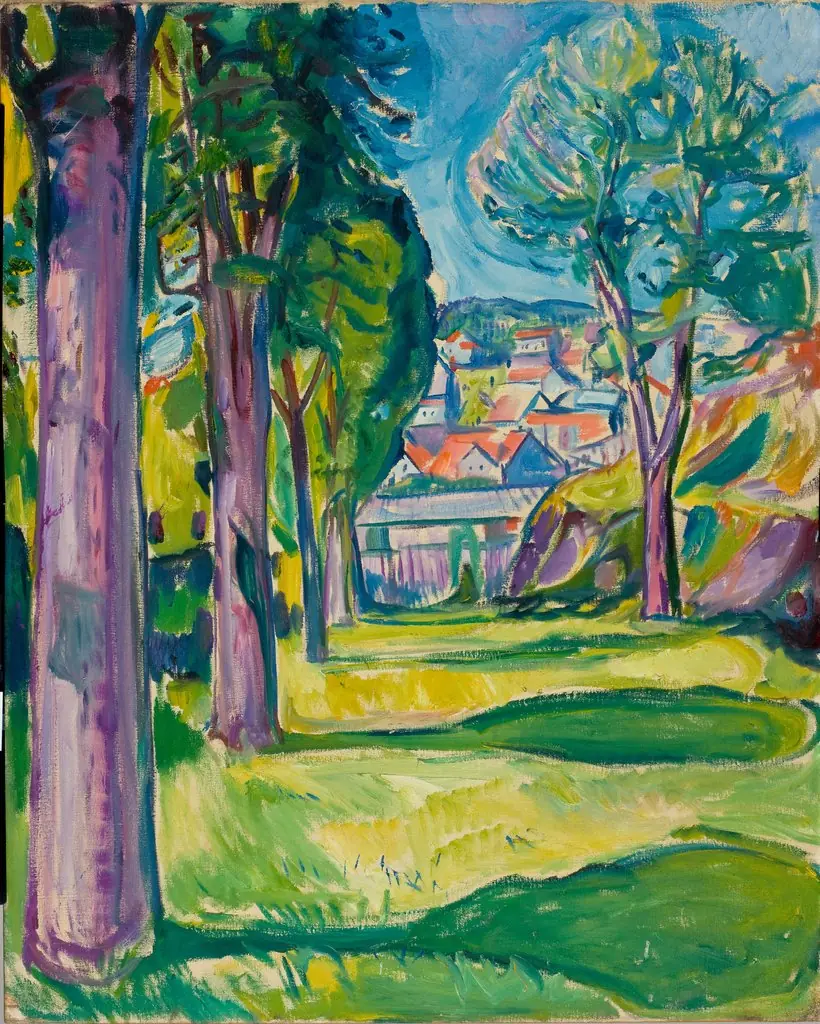
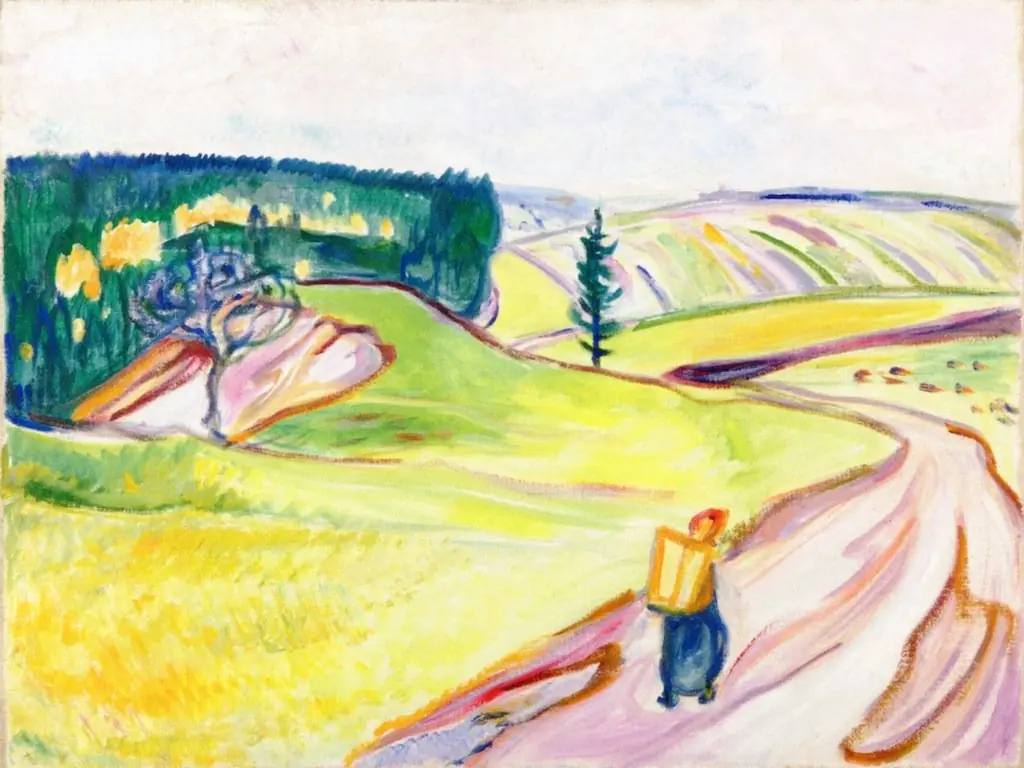
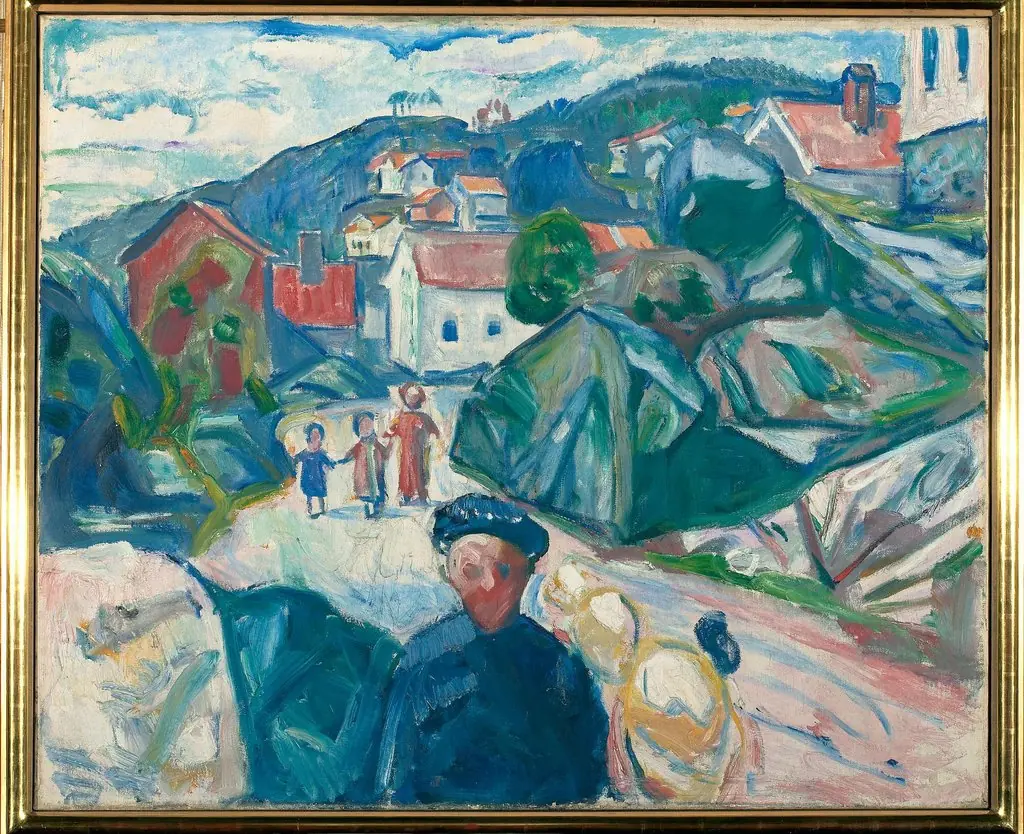
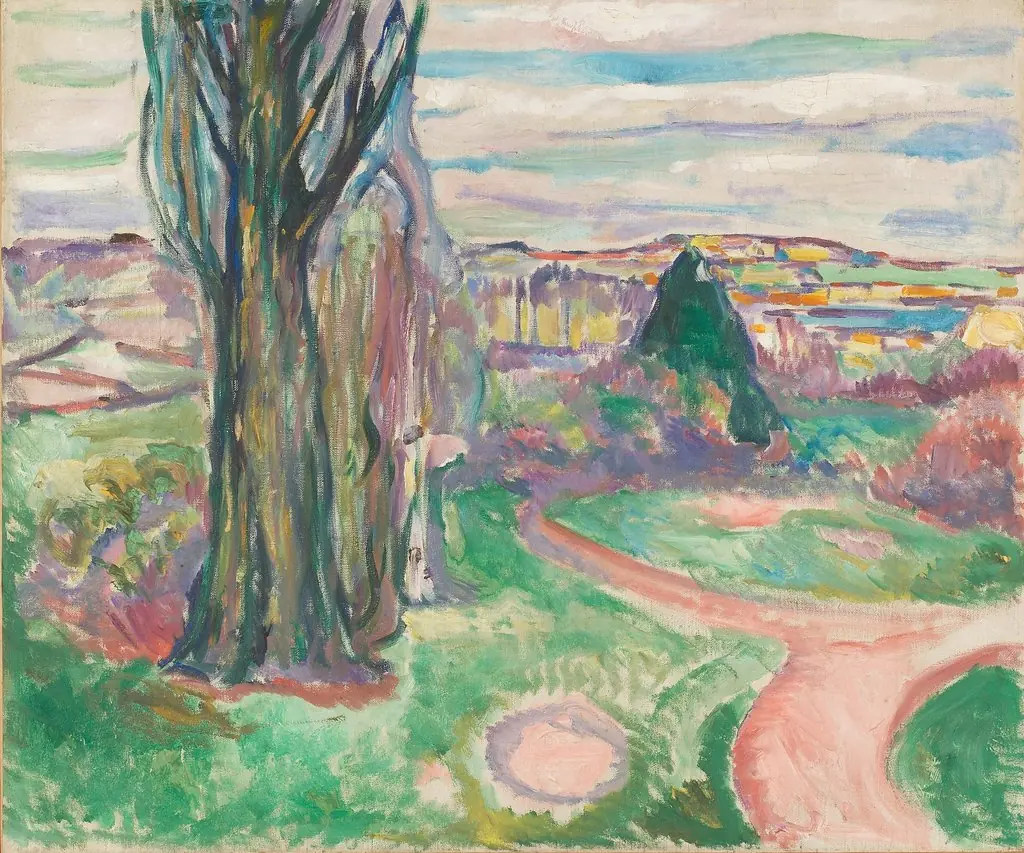
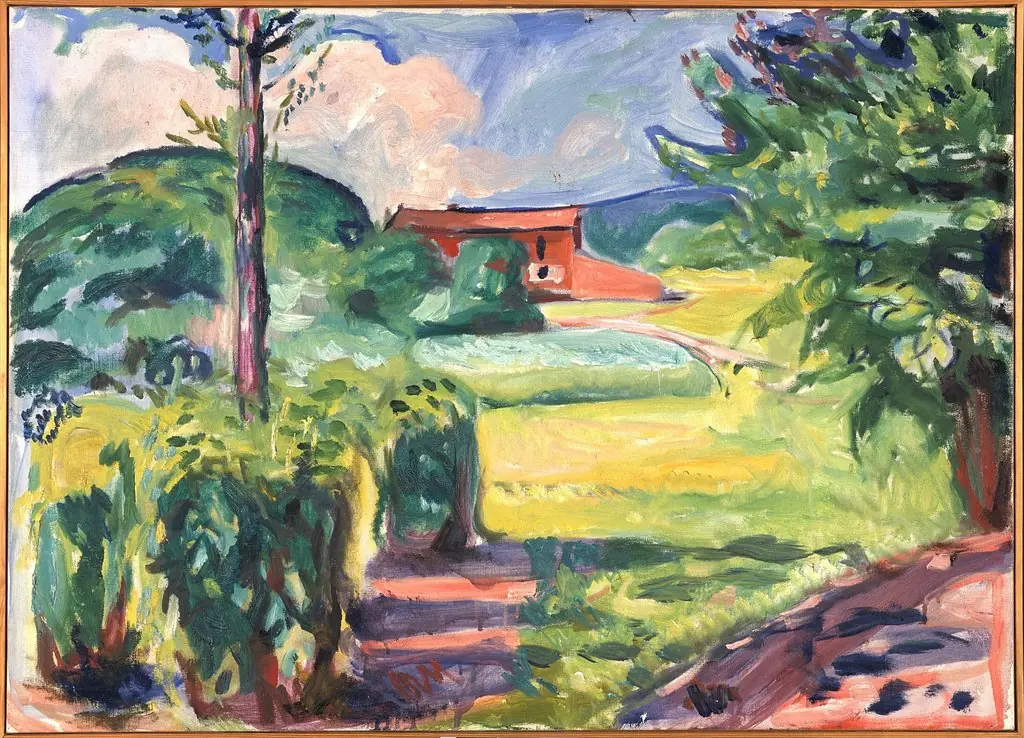
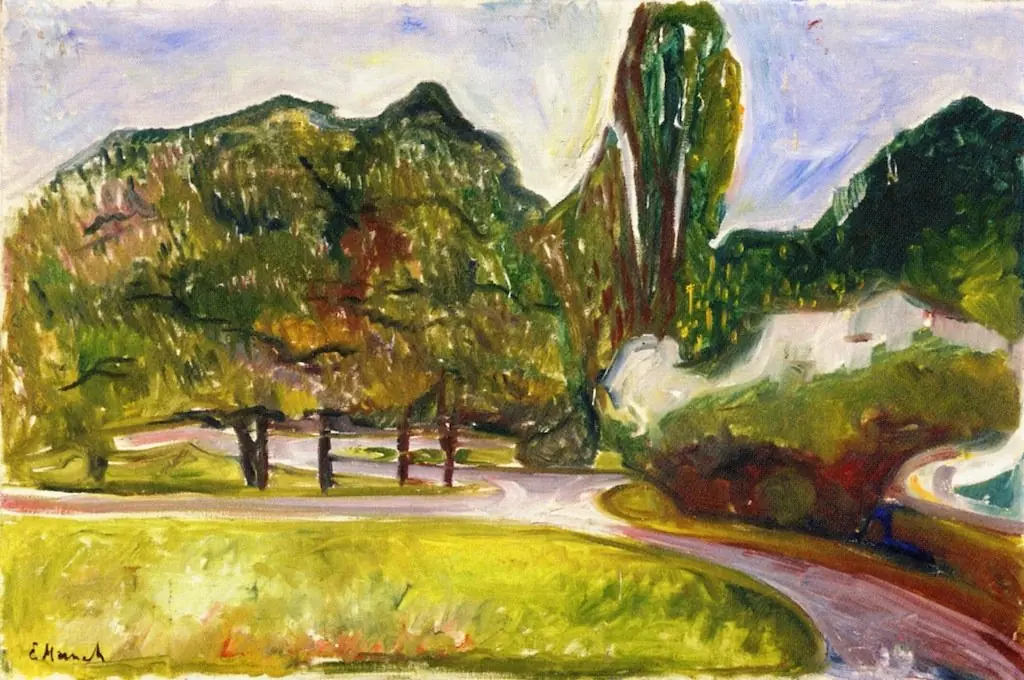
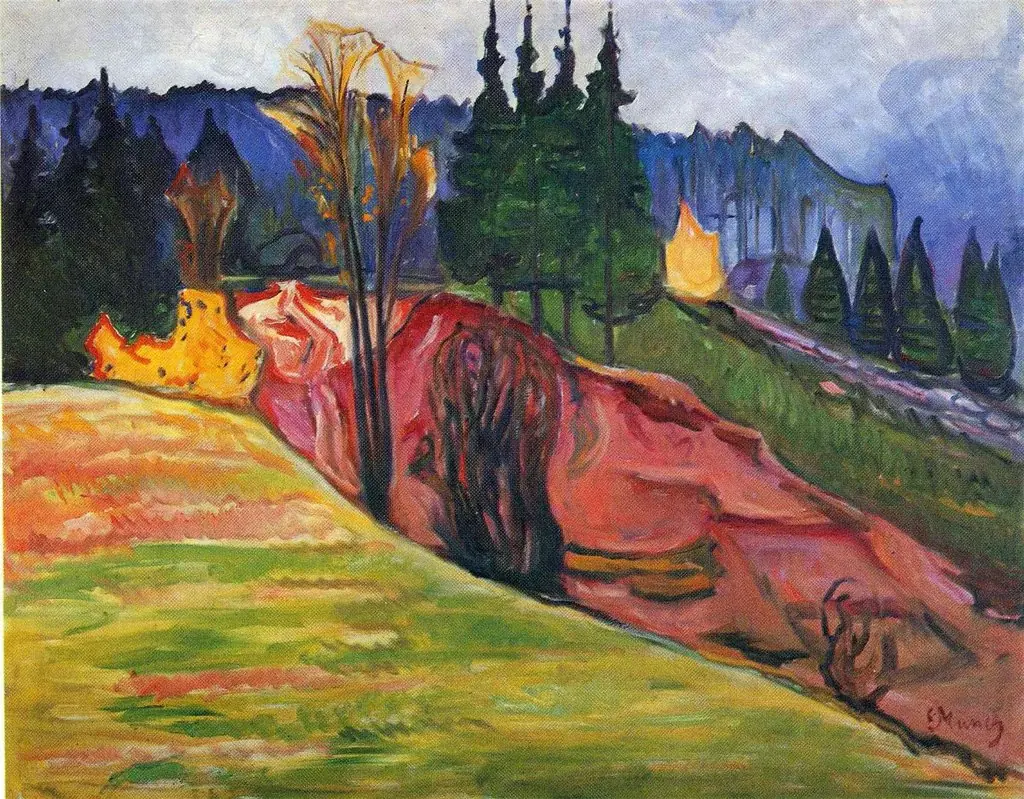
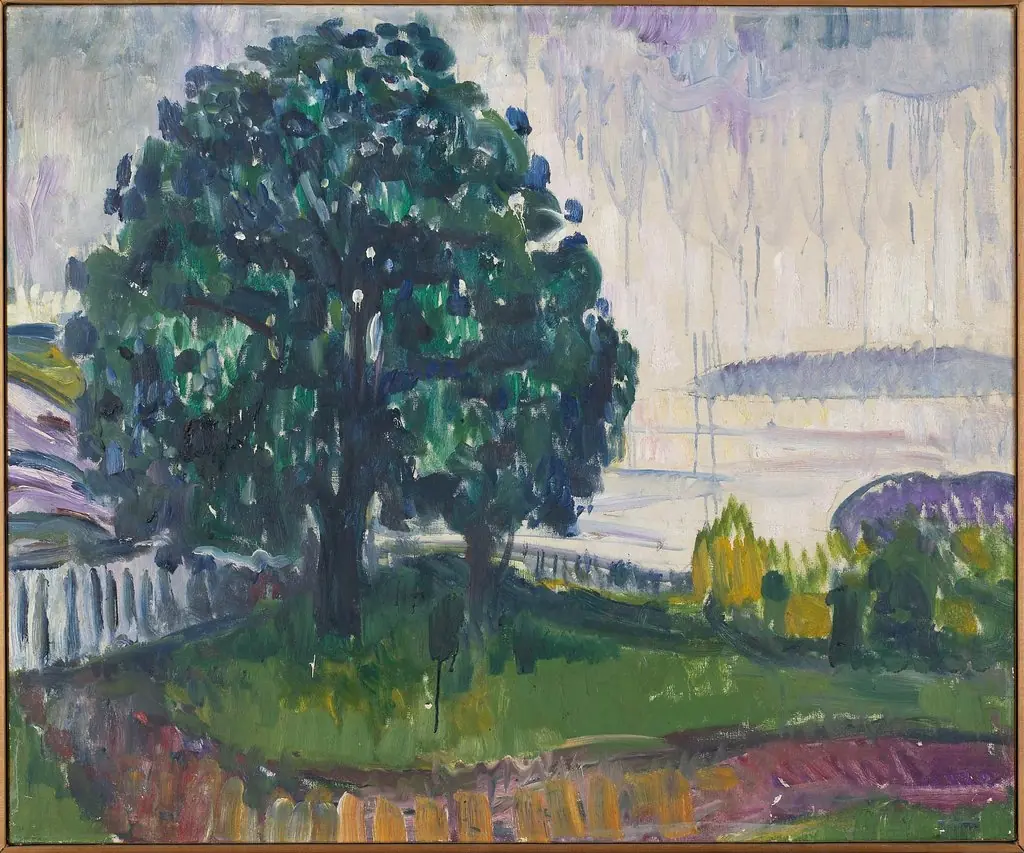
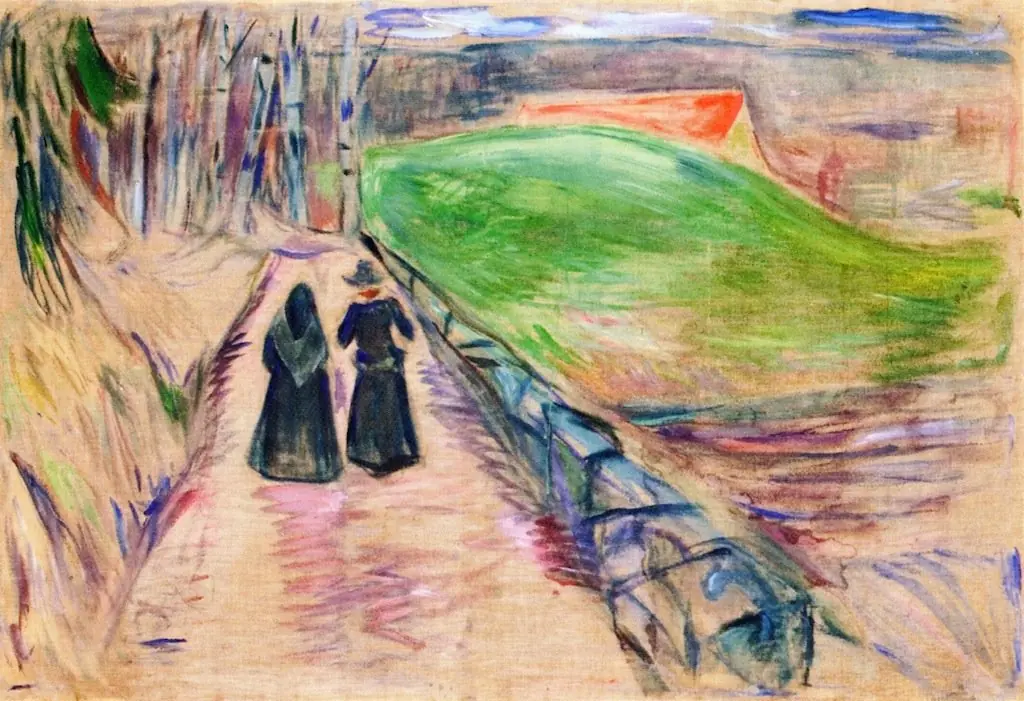
Elgersburg is an oil painting by the Post-Impressionist artist Edvard Munch. It dates from 1905 and is held in the collection of the Munch Museum.
About this work
Overview
Unlike traditional landscapes, the work prioritizes mood over topographical accuracy, reflecting Munch’s interest in conveying inner states through visual form.
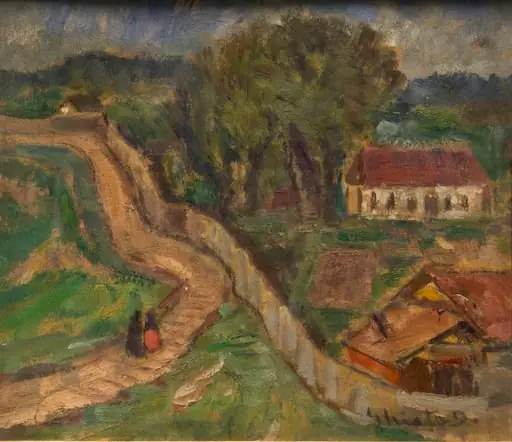
Painted in 1905, Elgersburg is an oil-on-canvas landscape by Norwegian artist Edvard Munch. It depicts a quiet rural scene with a winding path, a distant village, and two figures carrying burdens. Unlike traditional landscapes, the work prioritizes mood over topographical accuracy, reflecting Munch’s interest in conveying inner states through visual form. The painting resides in the Munch Museum’s permanent collection.
Subject & Meaning
The two figures trudging along the path, burdened by heavy loads, suggest themes of labor, isolation, or existential weight. The path’s sinuous curve and the muted, dreamlike atmosphere evoke a sense of quiet resignation. The simplified village in the distance feels distant and indifferent, reinforcing a tone of solitude. These elements align with Munch’s recurring preoccupations with human vulnerability and emotional endurance.
Technique & Style
Munch employed loose, expressive brushwork and a restrained palette of earth tones, with subtle accents of red and green in the path. Forms are softened and blurred, avoiding sharp definition. The composition emphasizes rhythm over detail, with the curving path guiding the eye toward the hazy horizon. This approach aligns with post-impressionist tendencies, favoring emotional resonance over literal representation.
History & Provenance
Elgersburg was created during a period when Munch was living in Germany and traveling through rural Scandinavia. It entered the collection of the Munch Museum in Oslo after his death, as part of the extensive body of work he bequeathed to the Norwegian state. The painting has remained in institutional care since, with no known private ownership after its creation.
Context
In 1905, Munch was deeply engaged with themes of mortality and psychological strain, shaped by personal losses and his own mental health challenges. While he was gaining recognition in Europe, his landscapes like Elgersburg offered quieter counterpoints to his more dramatic works. They reflect a broader European shift toward subjective expression in art, away from academic realism.
Legacy
Elgersburg exemplifies Munch’s ability to infuse ordinary scenes with psychological depth. Though less known than The Scream, it contributes to understanding his range as a painter who found meaning in stillness and solitude. The work continues to be studied for its emotional nuance and its role in the evolution of modern Nordic art.
Artist & collection
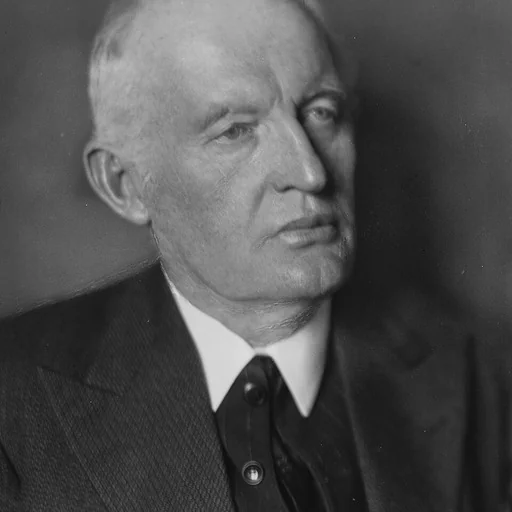
Artist
Edvard Munch ( MUUNK; Norwegian: ; 12 December 1863 – 23 January 1944) was a Norwegian painter.