Artwork
Hanna Brieschke in Åsgårdstrand
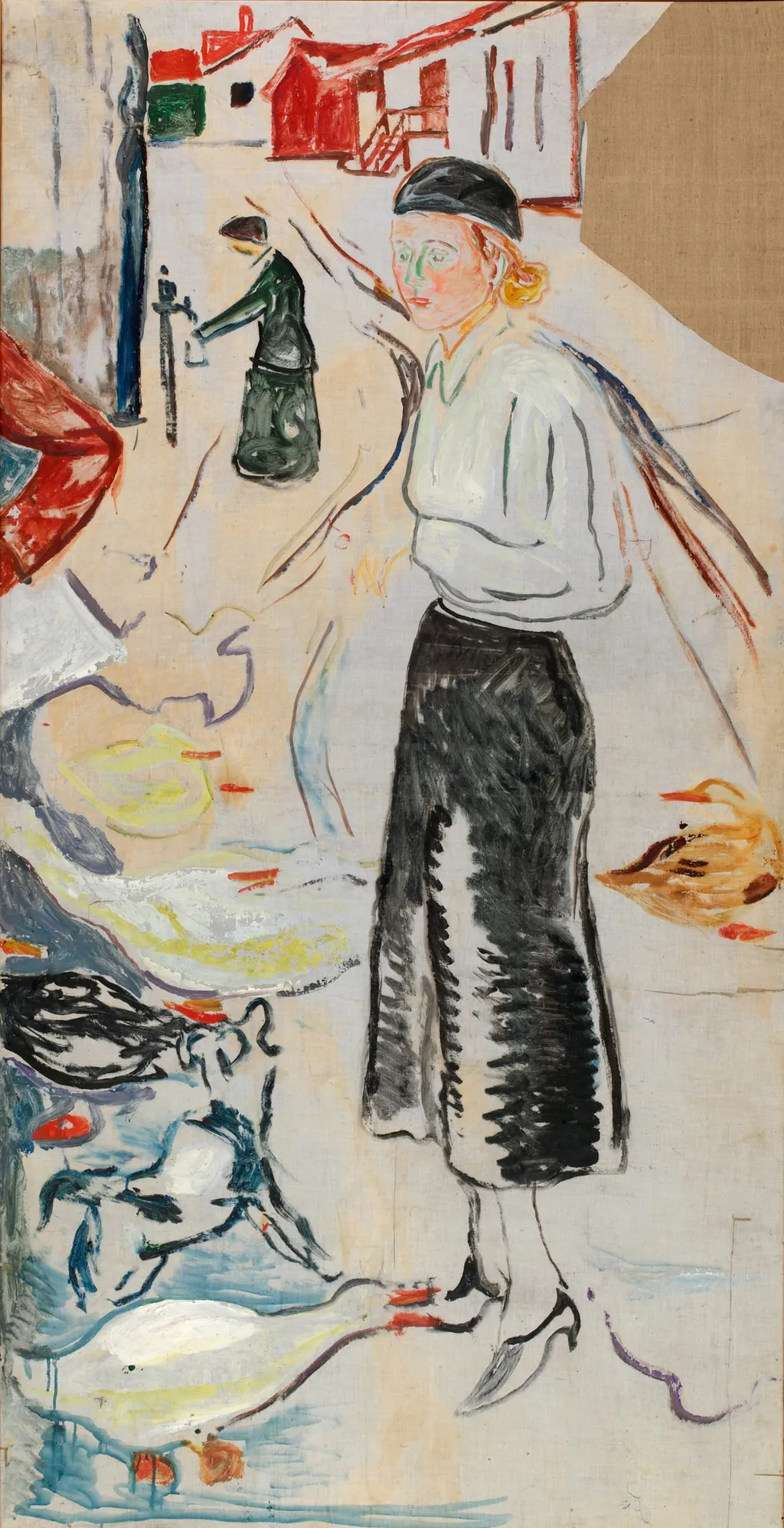
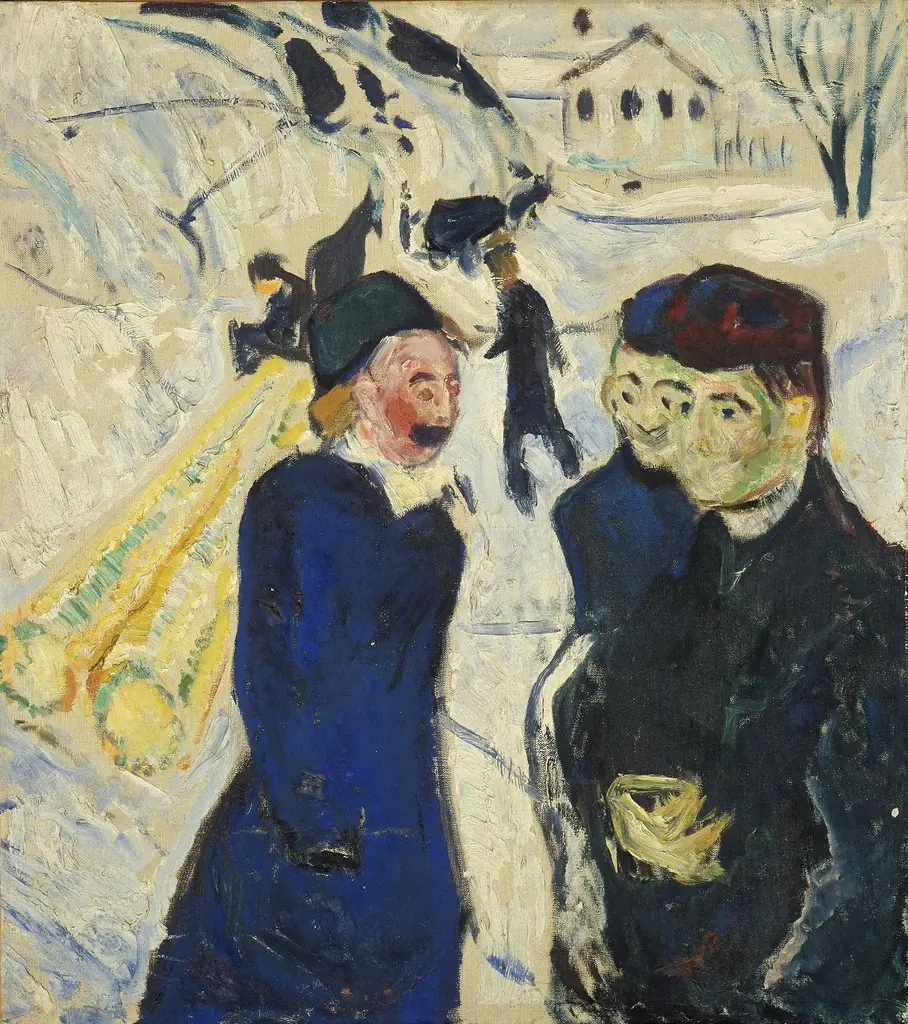
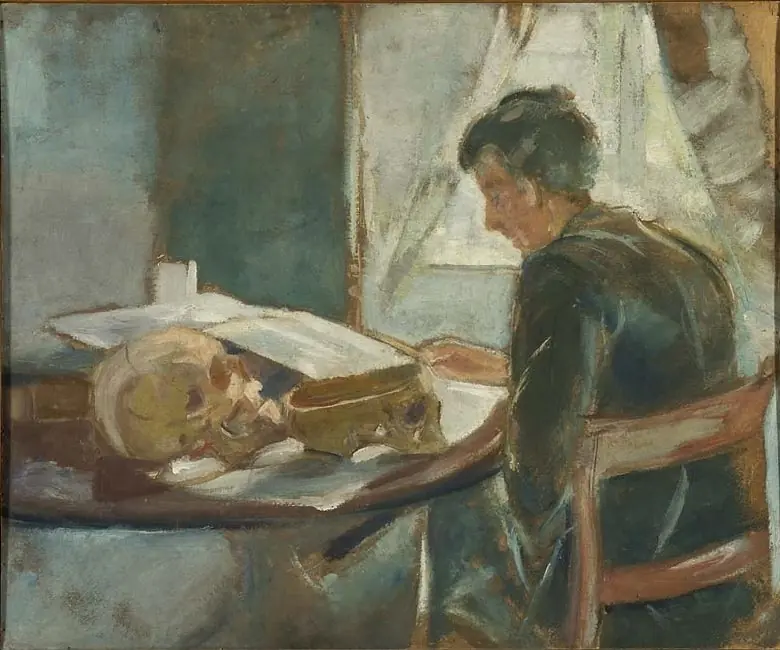
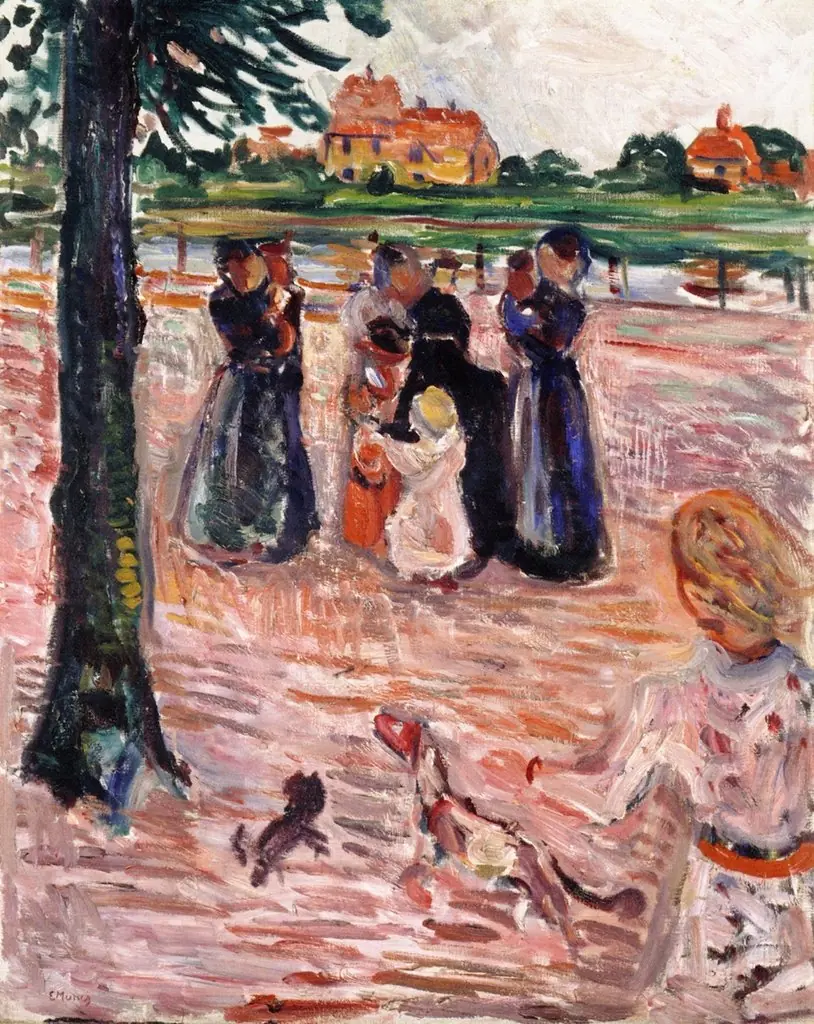
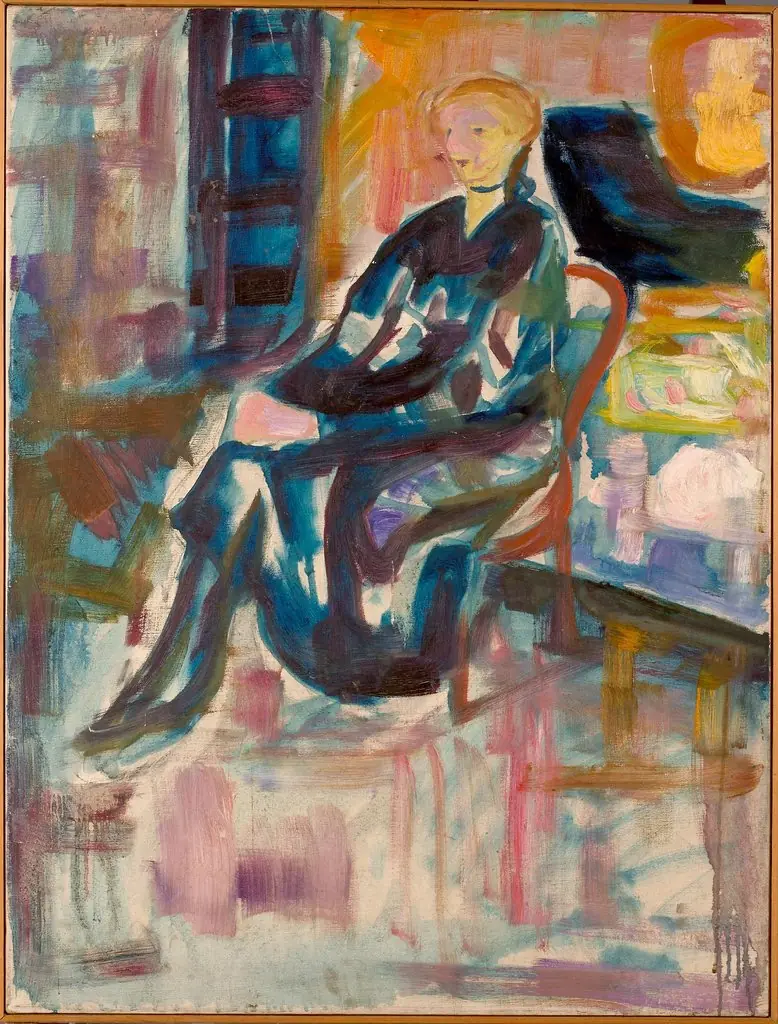
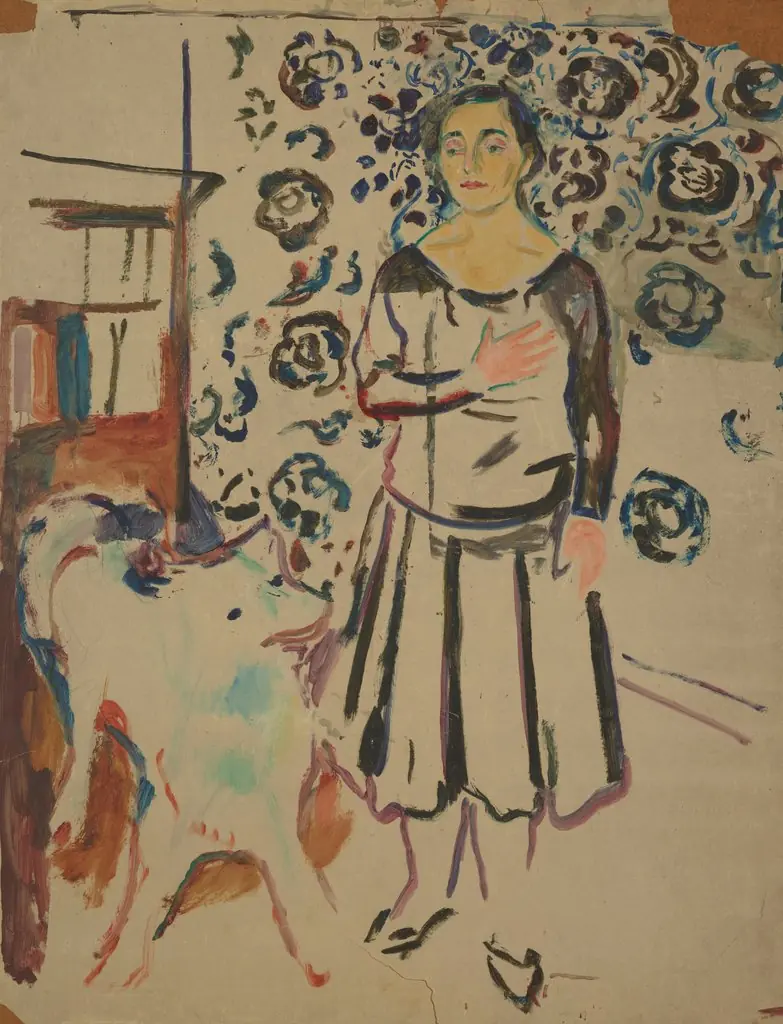
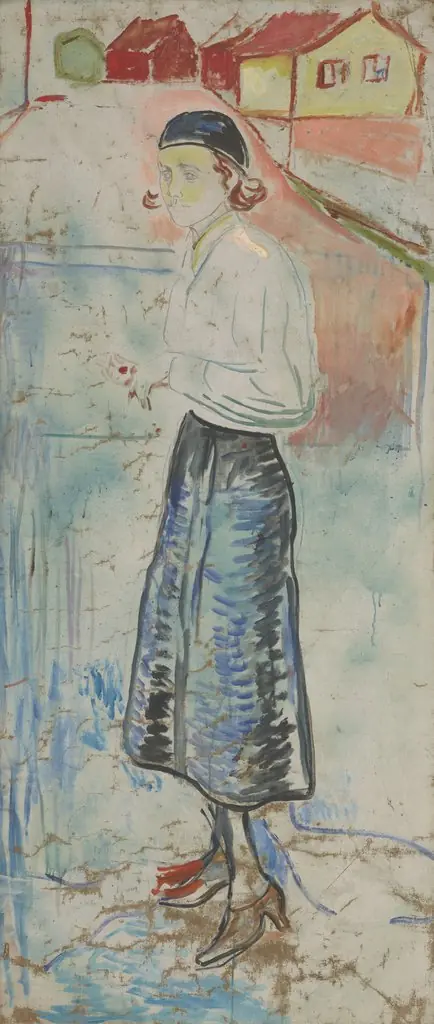
Hanna Brieschke in Åsgårdstrand is an oil painting by the Post-Impressionist artist Edvard Munch. It dates from 1932 and is held in the collection of the Munch Museum.
About this work
Overview
Painted in 1932, *Hanna Brieschke in Åsgårdstrand* is an oil on canvas portrait by Norwegian artist Edvard Munch.
Painted in 1932, *Hanna Brieschke in Åsgårdstrand* is an oil on canvas portrait by Norwegian artist Edvard Munch. It captures a woman standing before a modest seaside house in the coastal village where Munch spent many summers. The work reflects his continued engagement with intimate, everyday scenes in his later years, distinct from the more overtly psychological themes of his earlier career. The painting resides in the Munch Museum’s collection.
Subject & Meaning
The subject, Hanna Brieschke, was a German visitor to Åsgårdstrand and a friend of Munch’s. She is depicted in a quiet, unposed stance, gazing beyond the frame, suggesting contemplation or detachment. The absence of dramatic gesture or narrative cues shifts focus to presence rather than emotion. The figure’s stillness and the muted environment evoke a sense of solitude, consistent with Munch’s recurring interest in human isolation within domestic or natural settings.
Technique & Style
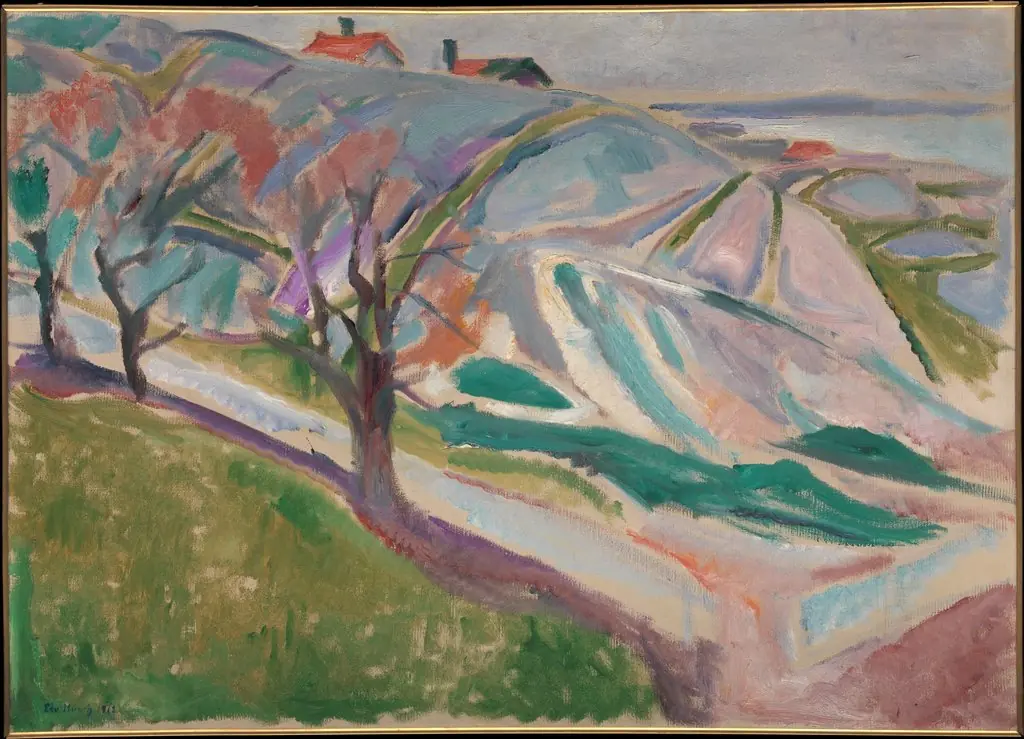
Munch employed loose, visible brushwork and a restrained palette dominated by earth tones and soft contrasts. The white house with its red roof stands out against the hazy background, while the figure’s black hat and skirt anchor the composition. Facial features are simplified, and the distant figure in the background is rendered with minimal detail. These choices reflect a move toward expressive economy, prioritizing mood over realism, a hallmark of his mature style.
History & Provenance
Created during Munch’s later period in Åsgårdstrand, the painting was part of his personal archive of portraits and landscapes from the village. It remained in his possession until his death in 1944, after which it passed to the Munch Museum, established according to his wishes to preserve his oeuvre. The work has been consistently cataloged and displayed as part of the museum’s core holdings since its founding.
Context
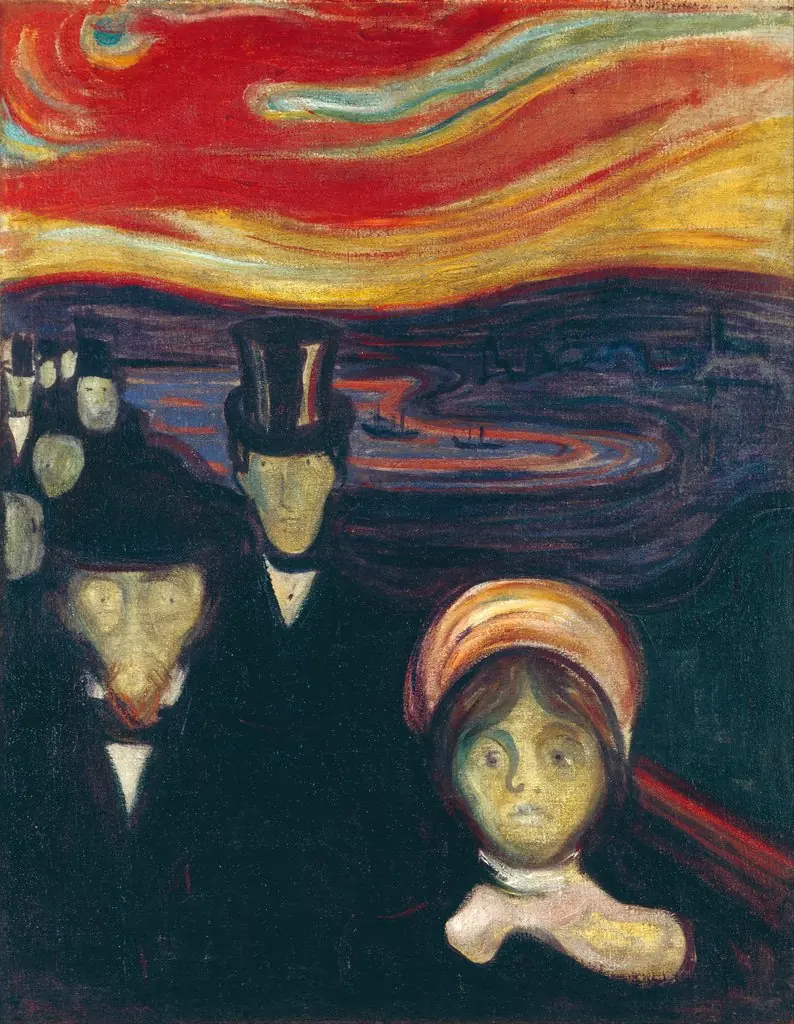
By the 1930s, Munch had largely moved away from the symbolic intensity of works like *The Scream*. He focused instead on quiet observations of daily life in Åsgårdstrand, where he lived seasonally for decades. These later paintings often feature friends, neighbors, and local architecture, reflecting a shift toward personal documentation rather than universal psychological themes.
Legacy
Though less widely known than his earlier expressions of anxiety, *Hanna Brieschke in Åsgårdstrand* exemplifies Munch’s enduring ability to convey emotional resonance through simplicity. It contributes to the understanding of his late career as a period of reflective observation, where the ordinary became a vessel for subtle, enduring human presence. The painting remains a key example of his lifelong engagement with place and person.
Artist & collection
Artist
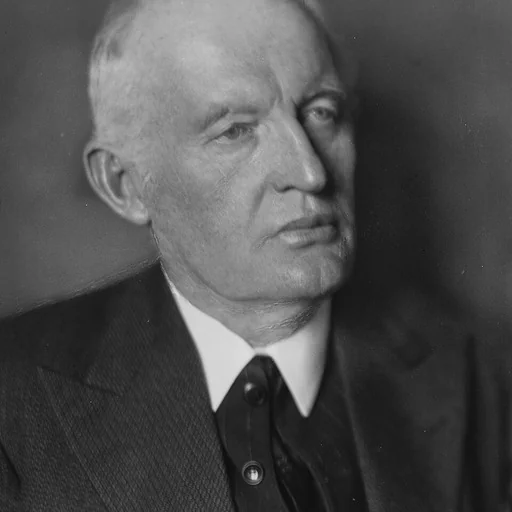
Edvard Munch ( MUUNK; Norwegian: ; 12 December 1863 – 23 January 1944) was a Norwegian painter.