Artwork
Jealousy
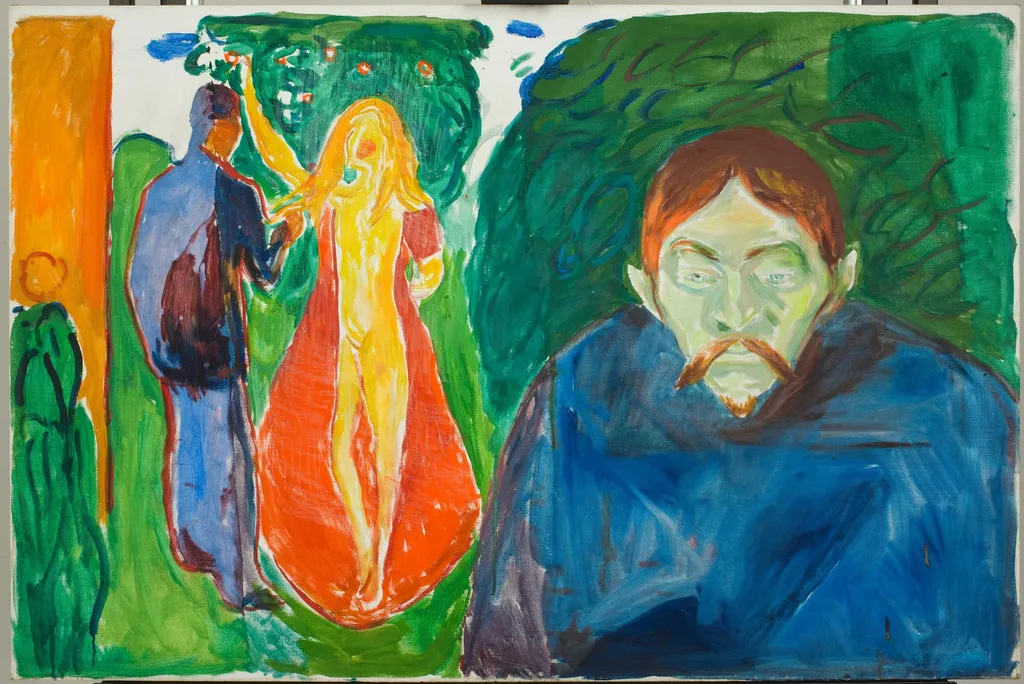
Jealousy is an oil painting by the Post-Impressionist artist Edvard Munch. It dates from 1927 and is held in the collection of the Munch Museum.
About this work
Overview
Jealousy is an oil painting created by Norwegian artist Edvard Munch in 1927. Characterized by vibrant colors and expressive brushwork, the piece captures a dynamic scene with three central figures set against a predominantly green background with orange accents.
Subject & Meaning
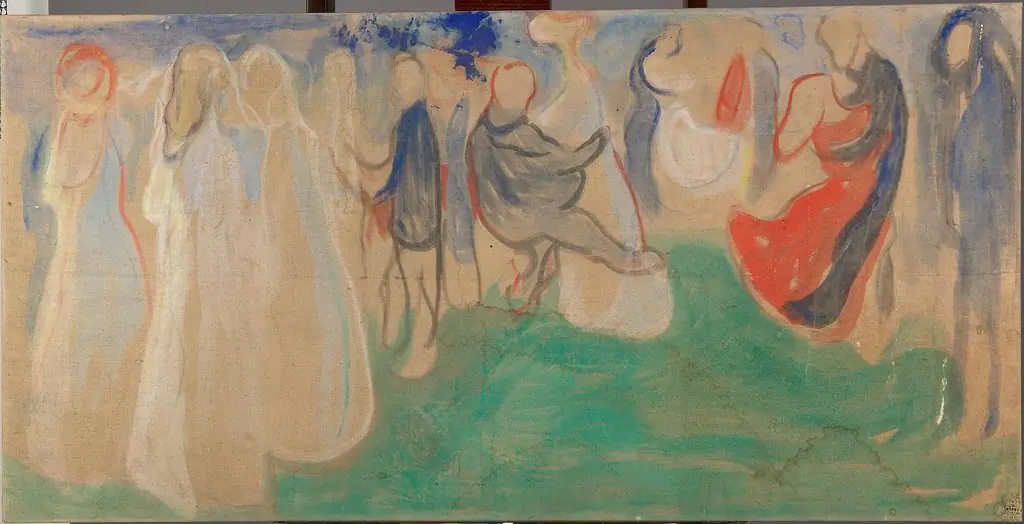
The painting depicts a man in a blue shirt on the right, observing a couple in the background. The woman, in a red dress with long blonde hair, and her companion, in dark attire, form the focal point. The composition conveys a sense of emotional tension, likely embodying the theme of jealousy through the contrast between the isolated observer and the engaged couple.
Technique & Style
Munch's post-impressionist style is evident in the bold, expressive brushstrokes and the vivid color palette. The juxtaposition of cool tones (blues and greens) with warm accents (red, orange) enhances the emotional intensity of the scene, drawing the viewer's eye through the canvas.
History & Provenance
Jealousy is part of the collection at the Munch Museum, reflecting the artist's significant contribution to Norwegian cultural heritage. Created in 1927, it aligns with Munch's later works that continued to explore psychological themes.
Context
Influenced by nihilist ideologies and his own experiences with illness and personal loss, Munch's work, including Jealousy, explores deep-seated emotional and psychological states. This piece, while less known than The Scream, contributes to the artist's broader thematic preoccupations.
Own this work as a print
Artist & collection
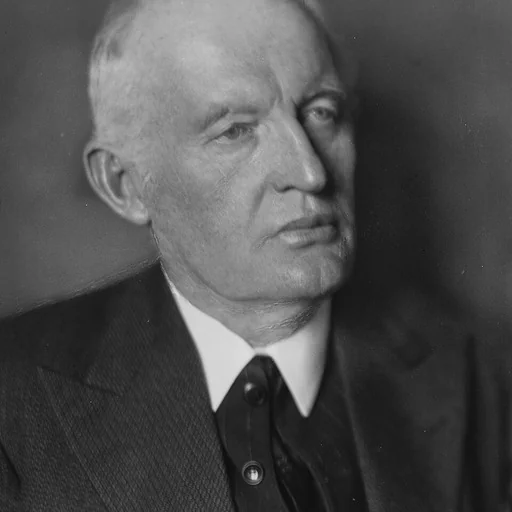
Artist
Edvard Munch ( MUUNK; Norwegian: ; 12 December 1863 – 23 January 1944) was a Norwegian painter.