Artwork
Woman
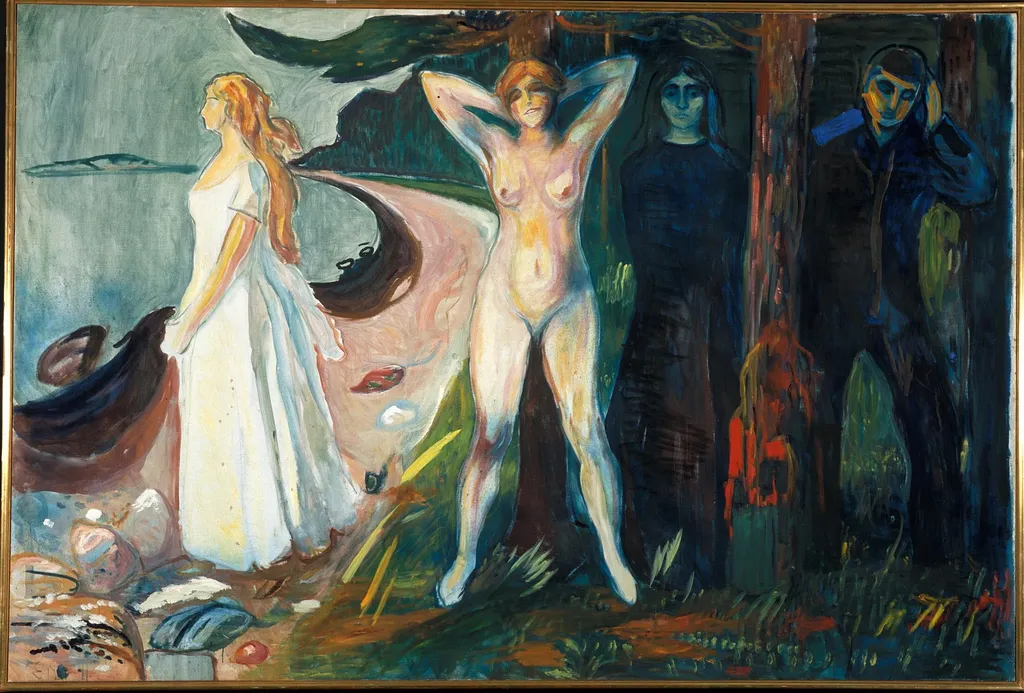
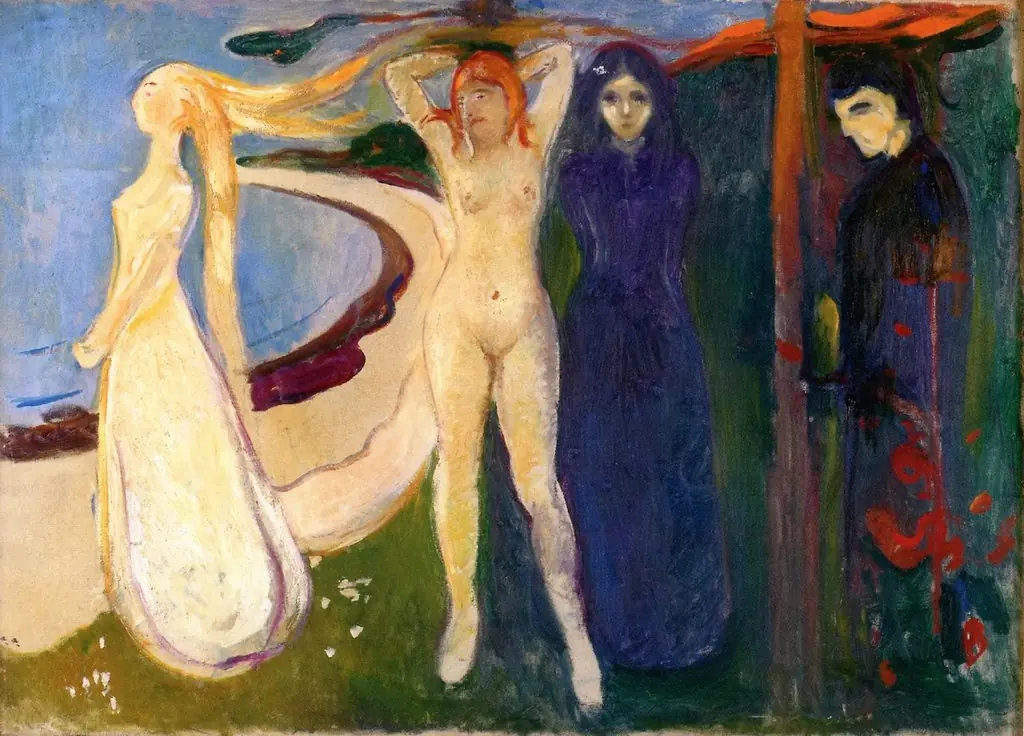
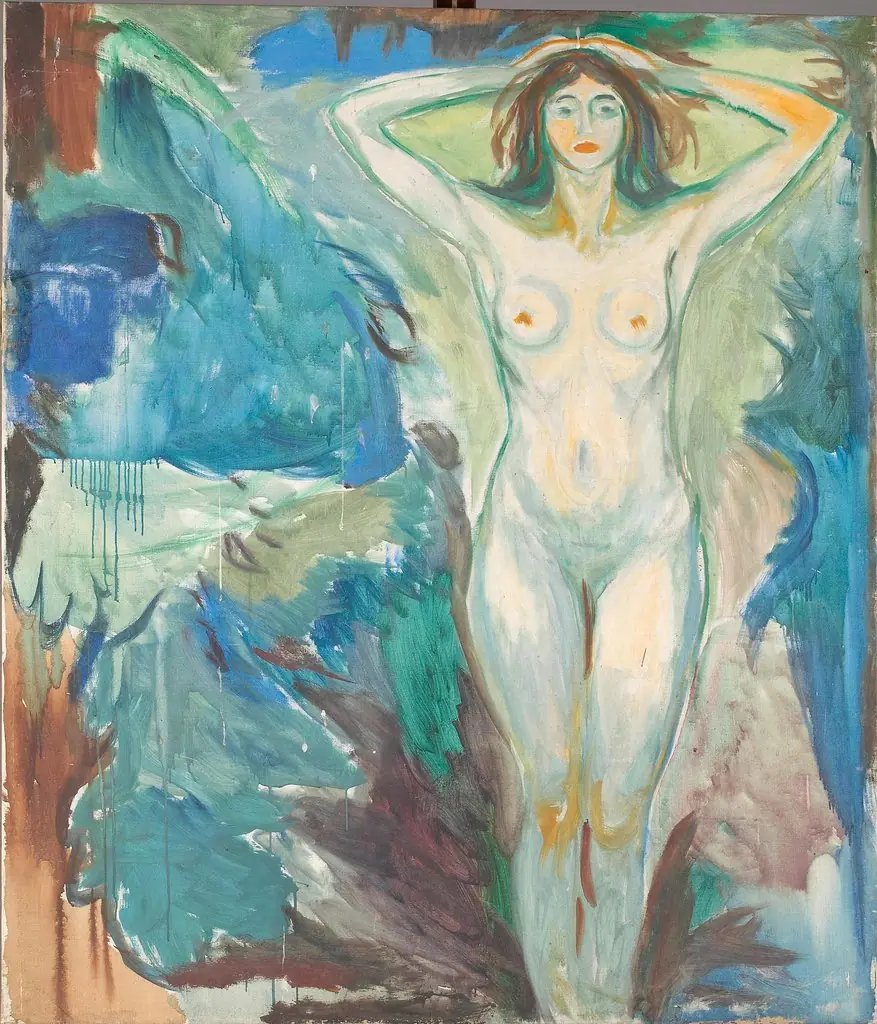
Woman is an oil painting by the Post-Impressionist artist Edvard Munch. It dates from 1925 and is held in the collection of the Munch Museum.
About this work
Overview
The painting resides in the Munch Museum in Oslo, part of a broader body of work that evolved from expressionist intensity toward more meditative compositions.
Painted in 1925, *Woman* is an oil on canvas work by Norwegian artist Edvard Munch. It depicts a solitary female figure in a full-length nude pose, rendered with restrained emotion and deliberate simplicity. Munch, known for his psychological depth, turned to the human form late in his career as a means of quiet introspection. The painting resides in the Munch Museum in Oslo, part of a broader body of work that evolved from expressionist intensity toward more meditative compositions.
Subject & Meaning
The figure stands alone, arms raised and hands clasped, her posture relaxed yet composed. Her calm expression and stillness suggest an inward focus rather than external narrative. Munch avoids overt symbolism, instead inviting contemplation of the body as a vessel of quiet presence. The lack of context or environment isolates the figure, emphasizing vulnerability and self-possession. The work reflects a late-career shift toward stillness, away from the anxiety of his earlier pieces.
Technique & Style
Munch employs subtle chiaroscuro to model the figure’s form, with pale skin emerging from a dark, muted background of blues and greens. Brushwork is loose but controlled, avoiding detail in favor of atmospheric suggestion. The figure’s contours are softened, and the background lacks defined edges, creating a sense of immersion rather than separation. This approach aligns with post-impressionist tendencies, prioritizing emotional resonance over naturalistic precision.
History & Provenance
Created during Munch’s later years, *Woman* was painted after his return to Norway following years abroad. It entered the collection of the Munch Museum shortly after its completion, preserved as part of the artist’s personal archive. Unlike his more famous works, this piece was not widely exhibited in his lifetime, reflecting its intimate, non-public nature. Its preservation underscores Munch’s enduring interest in the human form as a subject of personal reflection.
Context
In the 1920s, Munch distanced himself from the psychological turmoil of his earlier works, turning instead to themes of solitude and bodily presence. *Woman* emerges against a backdrop of European modernism, where artists increasingly explored the figure beyond narrative or symbolism. While contemporaries pursued abstraction or fragmentation, Munch retained figuration, using it to convey stillness rather than agitation — a quiet counterpoint to the era’s upheavals.
Legacy
Though less known than *The Scream*, *Woman* exemplifies Munch’s late-period refinement. Its understated power influenced later Scandinavian artists interested in emotional restraint and the dignity of the nude. The painting’s quietude has been noted in scholarly discussions of aging and artistic evolution, offering a counter-narrative to the myth of the tormented genius. It remains a touchstone for those seeking depth in simplicity.
Artist & collection
Artist
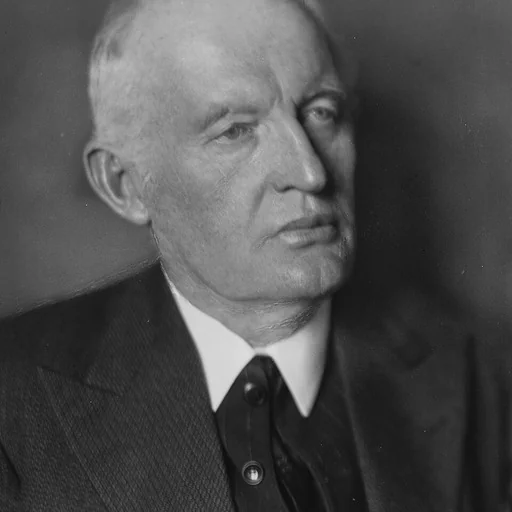
Edvard Munch ( MUUNK; Norwegian: ; 12 December 1863 – 23 January 1944) was a Norwegian painter.