Artwork
Ludvig Ravensberg
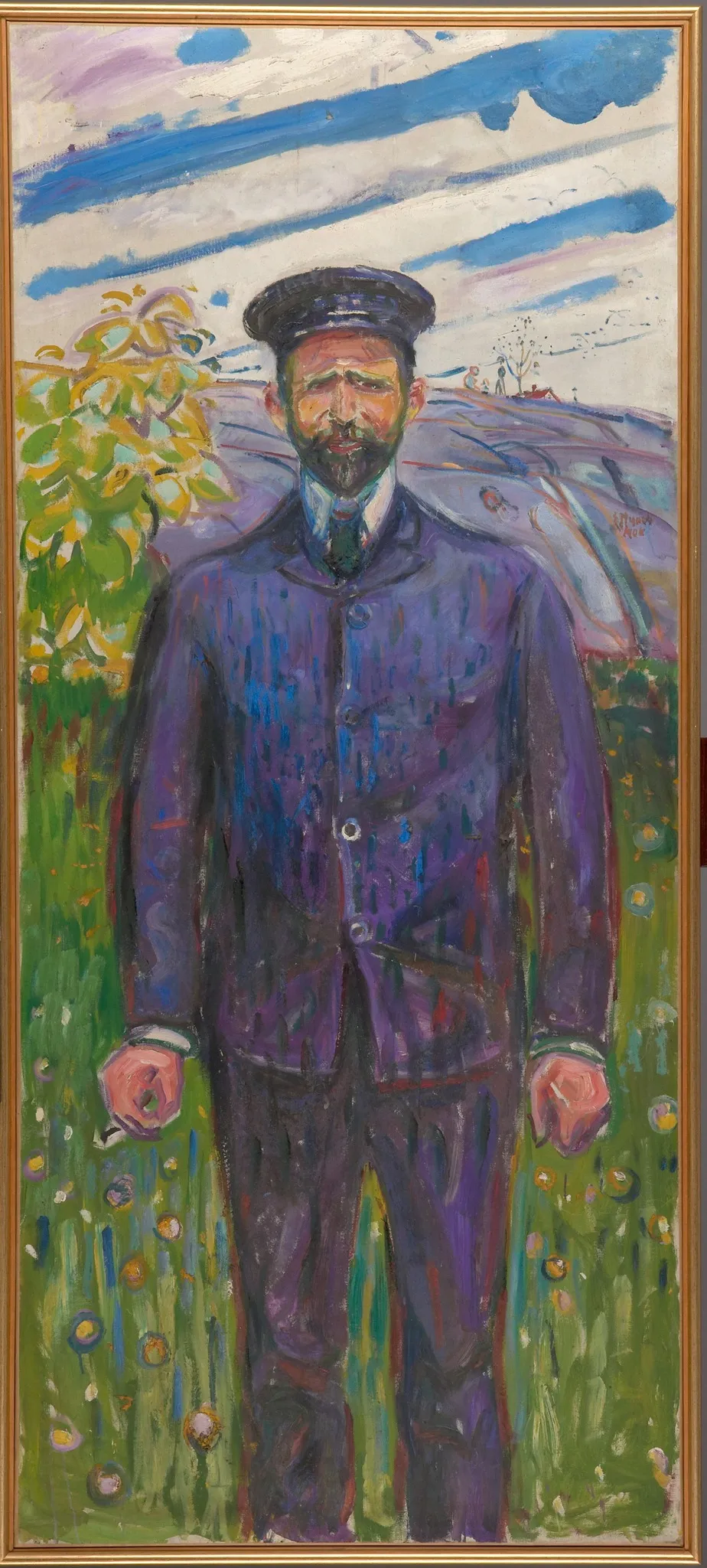
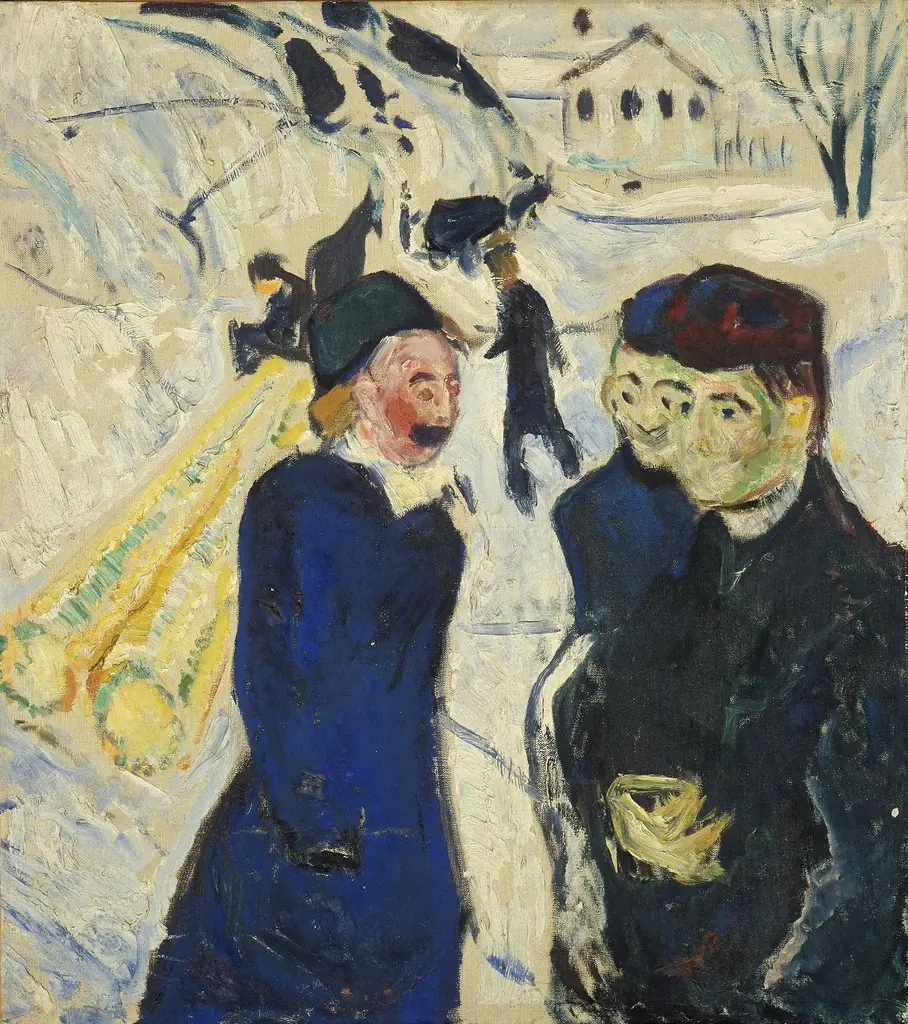
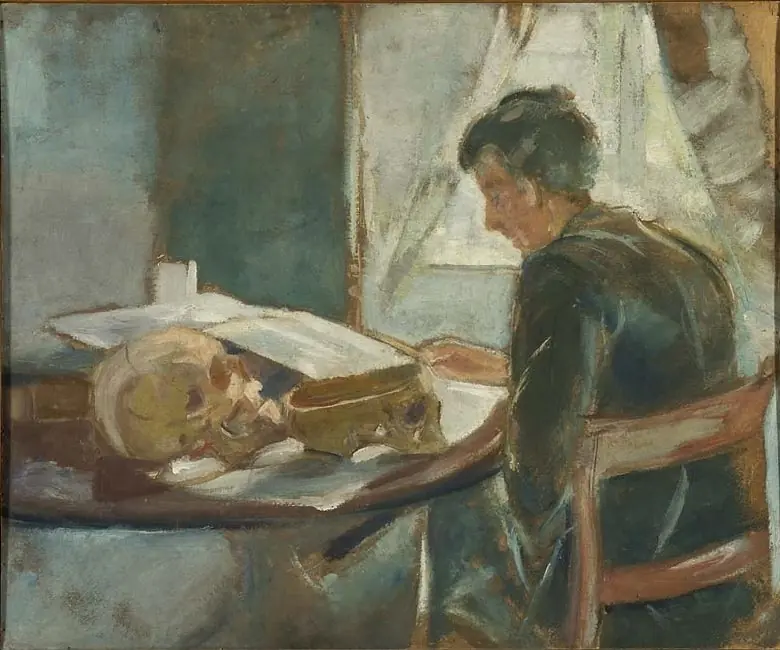
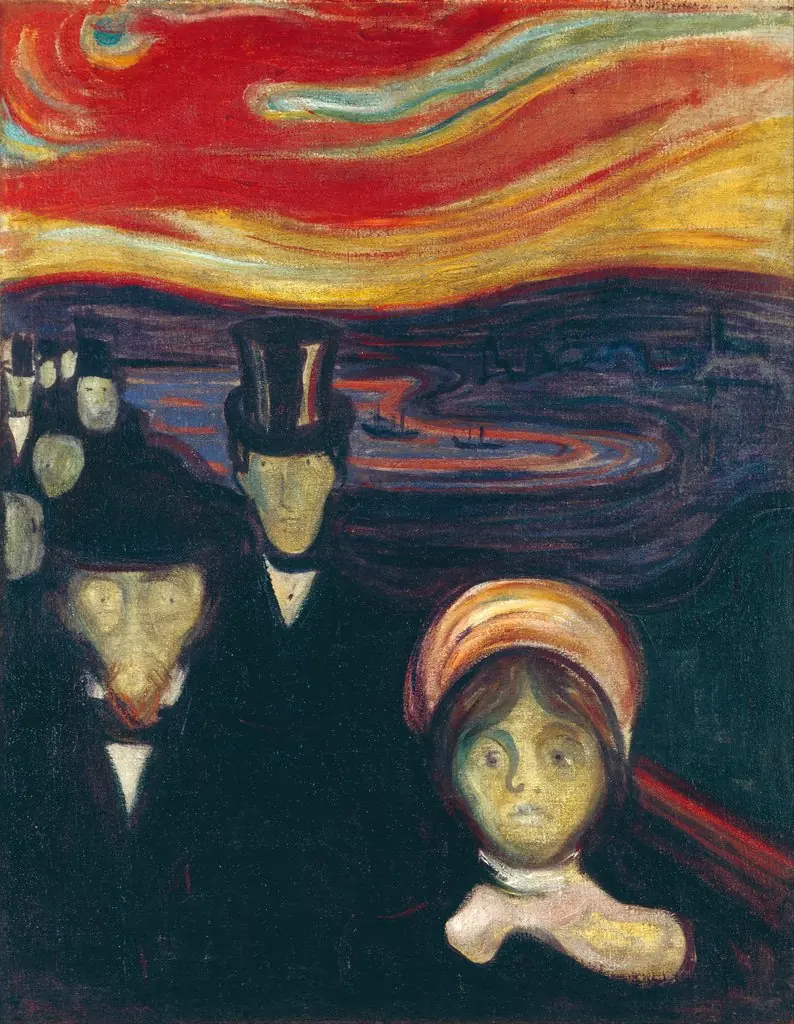
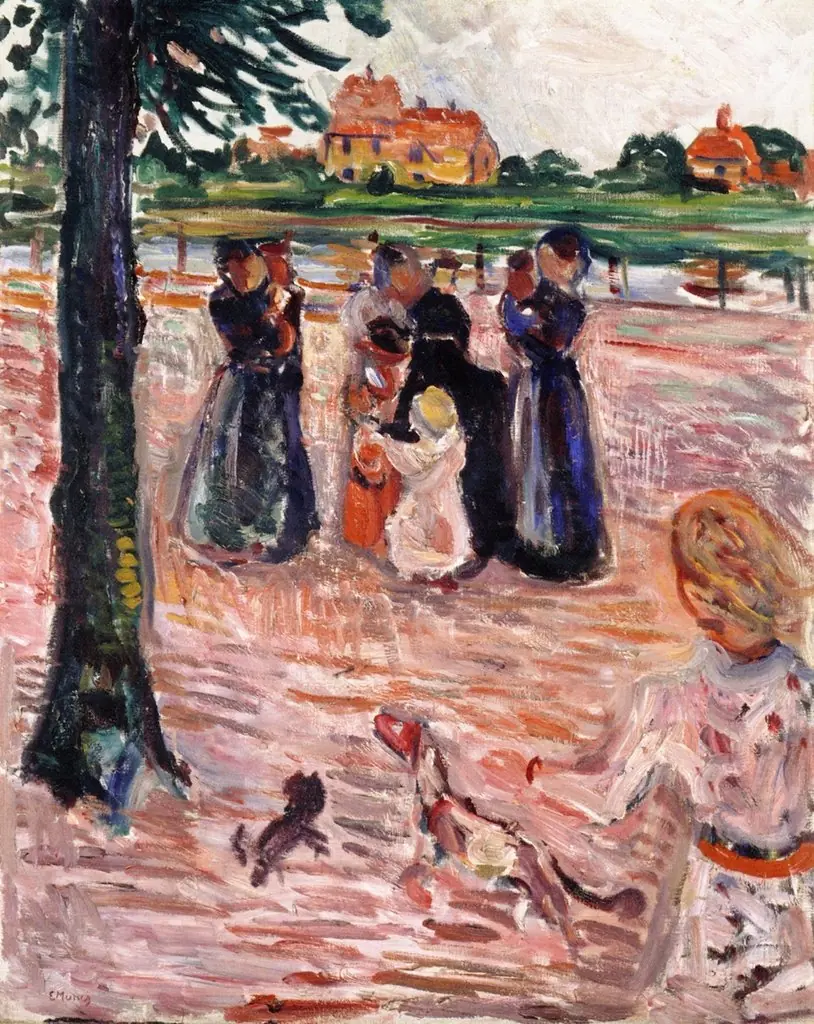
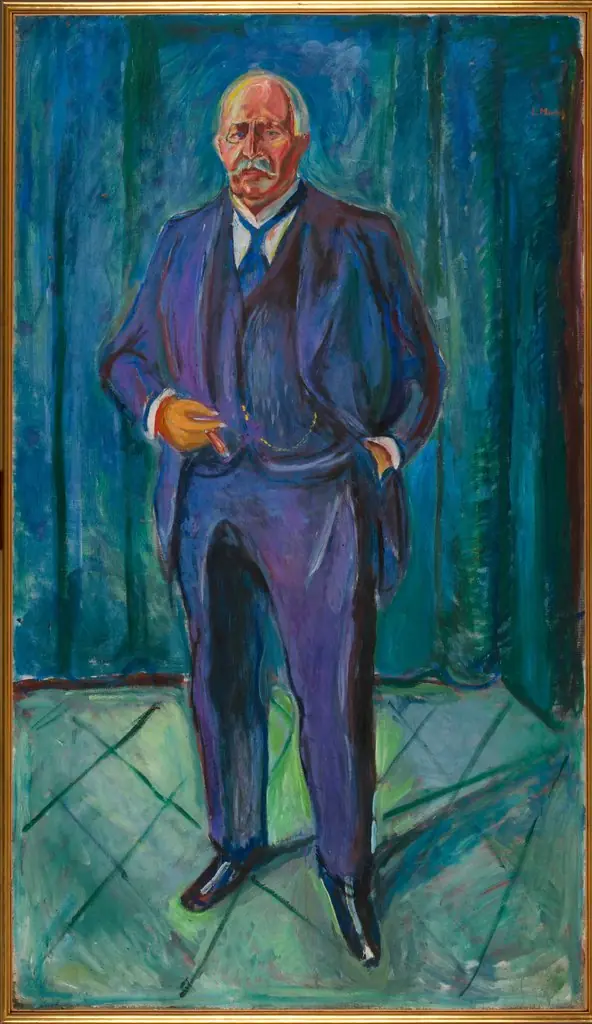
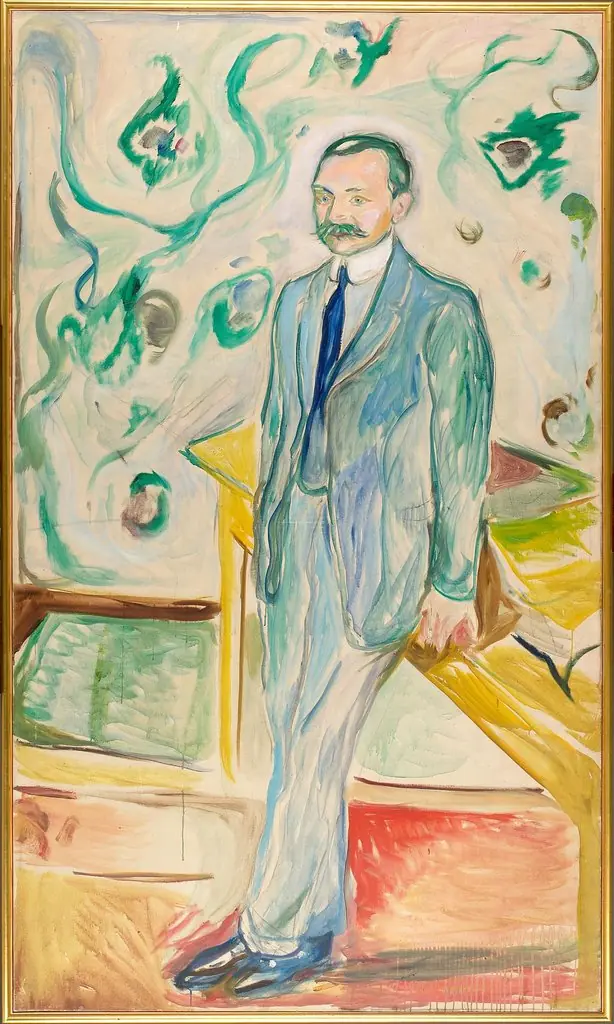
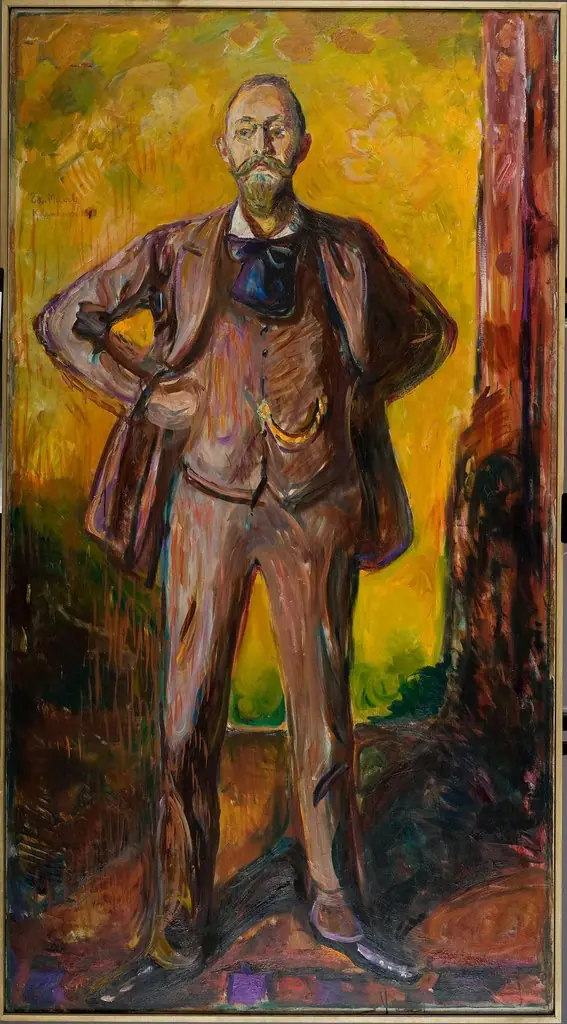
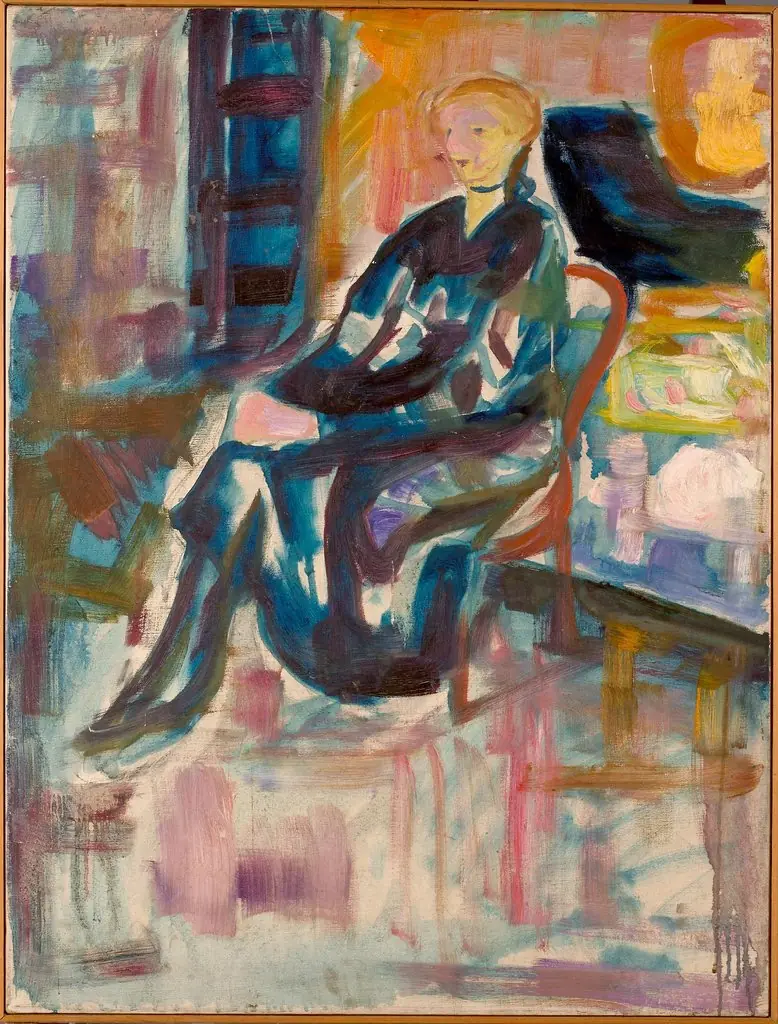
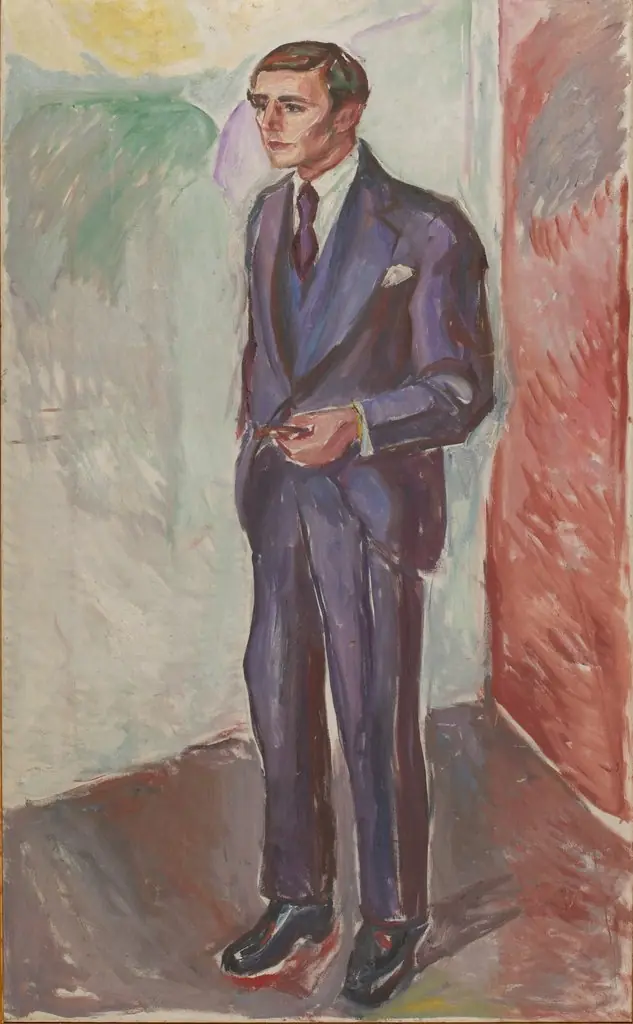
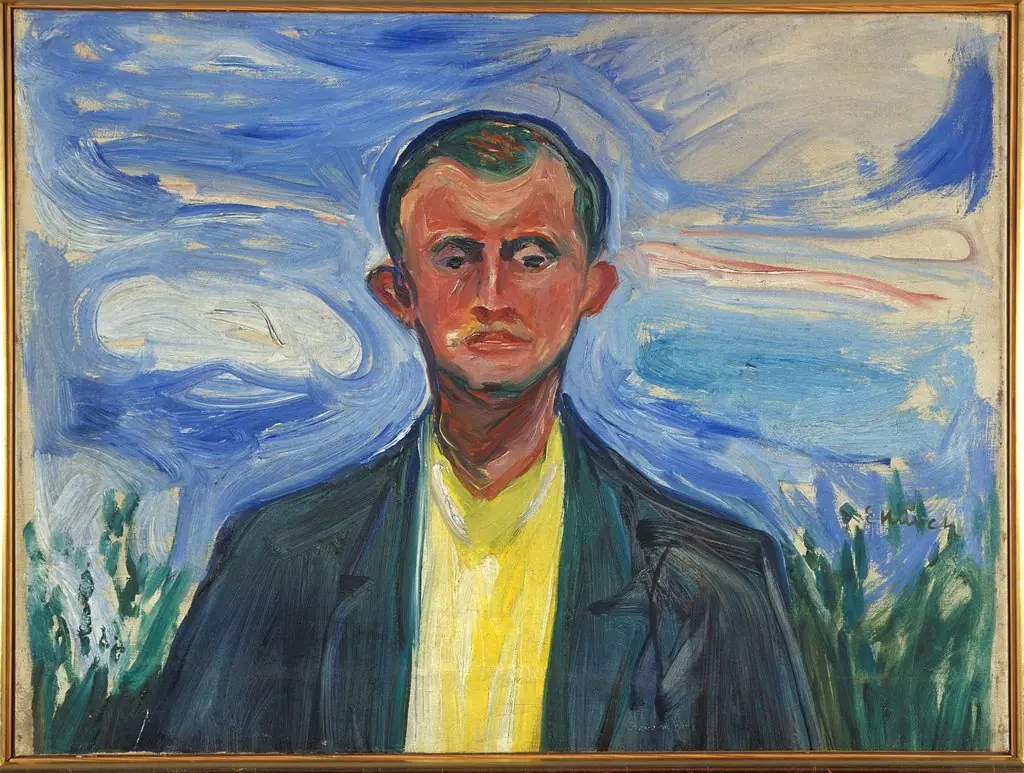
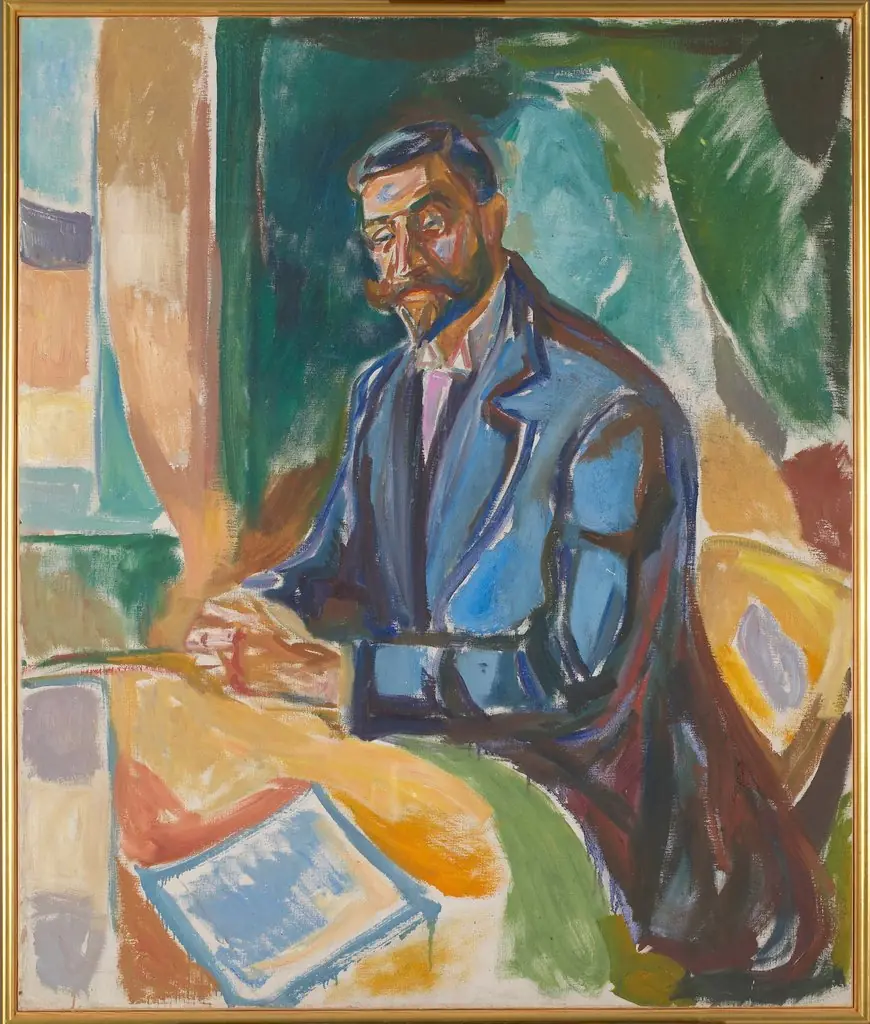
Ludvig Ravensberg is an oil painting by the Post-Impressionist artist Edvard Munch. It dates from 1909 and is held in the collection of the Munch Museum.
About this work
Overview
Painted in 1909, *Ludvig Ravensberg* is an oil portrait by Norwegian artist Edvard Munch, created during a period of mature artistic development.
Painted in 1909, *Ludvig Ravensberg* is an oil portrait by Norwegian artist Edvard Munch, created during a period of mature artistic development. The work belongs to the Munch Museum’s permanent collection and reflects the artist’s ongoing exploration of psychological states through figurative representation. Unlike traditional portraiture, it prioritizes emotional resonance over physical accuracy.
Subject & Meaning
The subject, Ludvig Ravensberg, is depicted standing rigidly in an open landscape, clad in a blue uniform with clenched fists and a solemn gaze. His posture and expression suggest inner tension, possibly reflecting personal or societal pressures. The absence of narrative context invites interpretation rooted in mood rather than biography, aligning with Munch’s broader interest in human anxiety and isolation.
Technique & Style
Munch employs visible, deliberate brushwork and a restrained palette of blues, greens, and yellows to construct a sense of unease. Forms are simplified yet subtly distorted, particularly in the figure’s stance and the flattened landscape. The sky and ground merge through loose strokes, enhancing the painting’s emotional weight over spatial realism, characteristic of Expressionist tendencies in his later work.
History & Provenance
The painting entered the Munch Museum’s collection following the artist’s death, as part of his extensive bequest of personal works. Munch retained many of his portraits of contemporaries, suggesting personal significance. While little is documented about Ravensberg’s identity, the painting’s preservation indicates Munch’s regard for the subject, even if not widely known.
Context
Created during Munch’s time in Oslo, this portrait emerged amid broader European shifts toward psychological art. While Impressionism emphasized light and perception, Expressionism sought inner experience. Munch’s use of color and form here aligns with contemporaries like Kirchner or Schiele, though his approach remains distinctly personal, rooted in his lifelong preoccupations with vulnerability and presence.
Legacy
*Ludvig Ravensberg* contributes to the understanding of Munch’s later portraiture, where psychological depth supersedes social documentation. It illustrates his sustained commitment to conveying emotional truth through simplified forms and charged color. Though less famous than *The Scream*, it exemplifies his quiet, persistent exploration of the human condition in everyday subjects.
Artist & collection
Artist
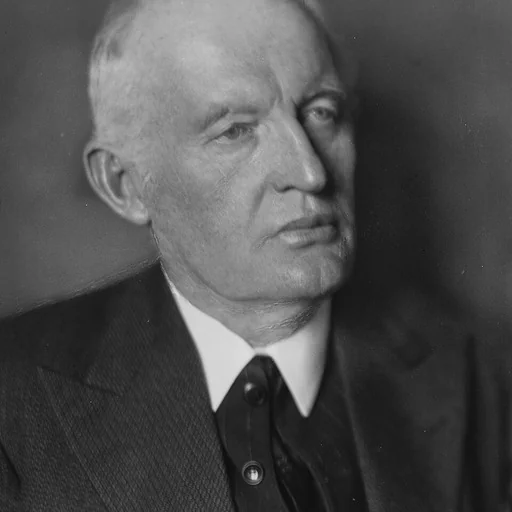
Edvard Munch ( MUUNK; Norwegian: ; 12 December 1863 – 23 January 1944) was a Norwegian painter.