Artwork
Naked men in the Woods
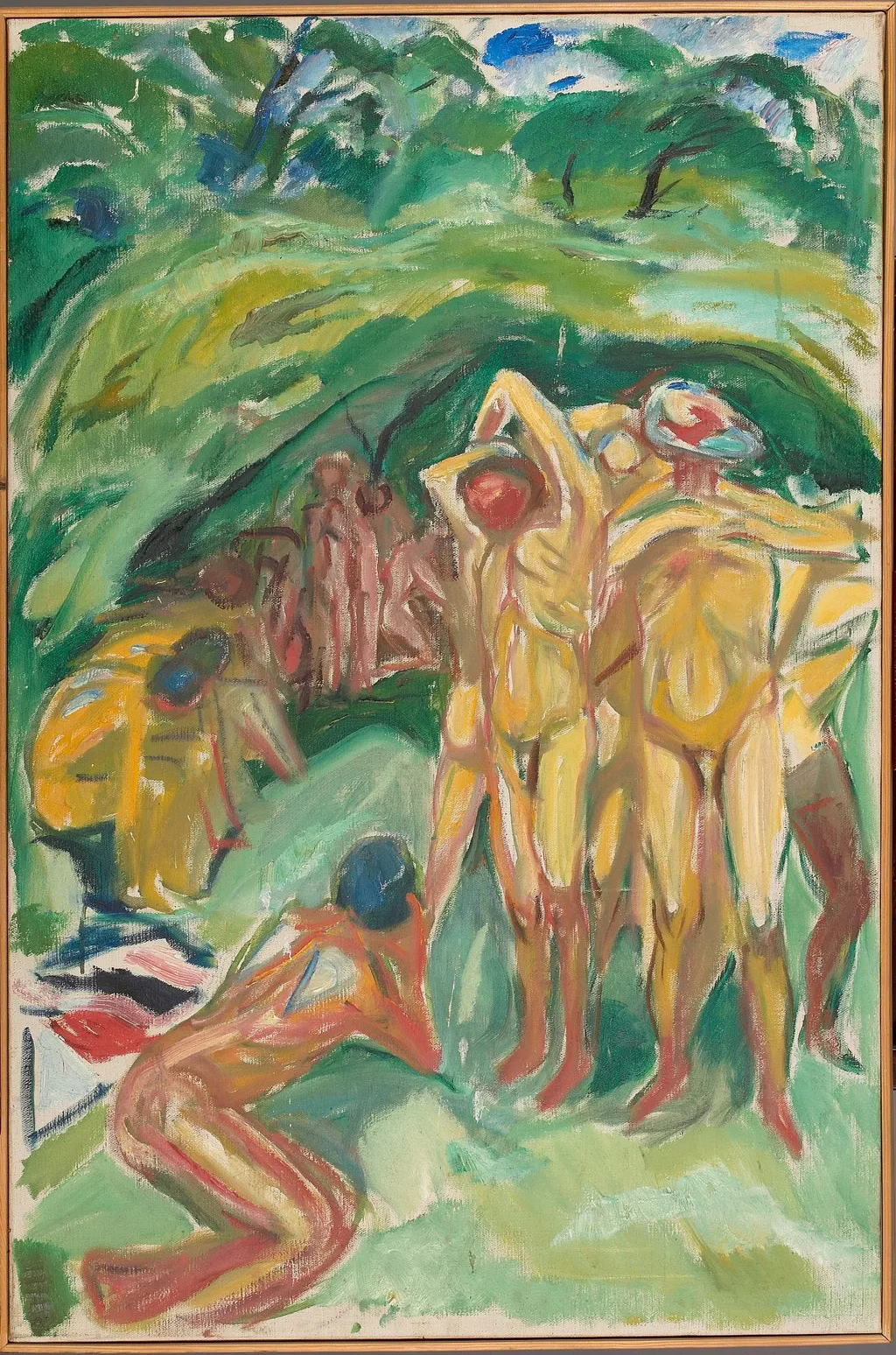
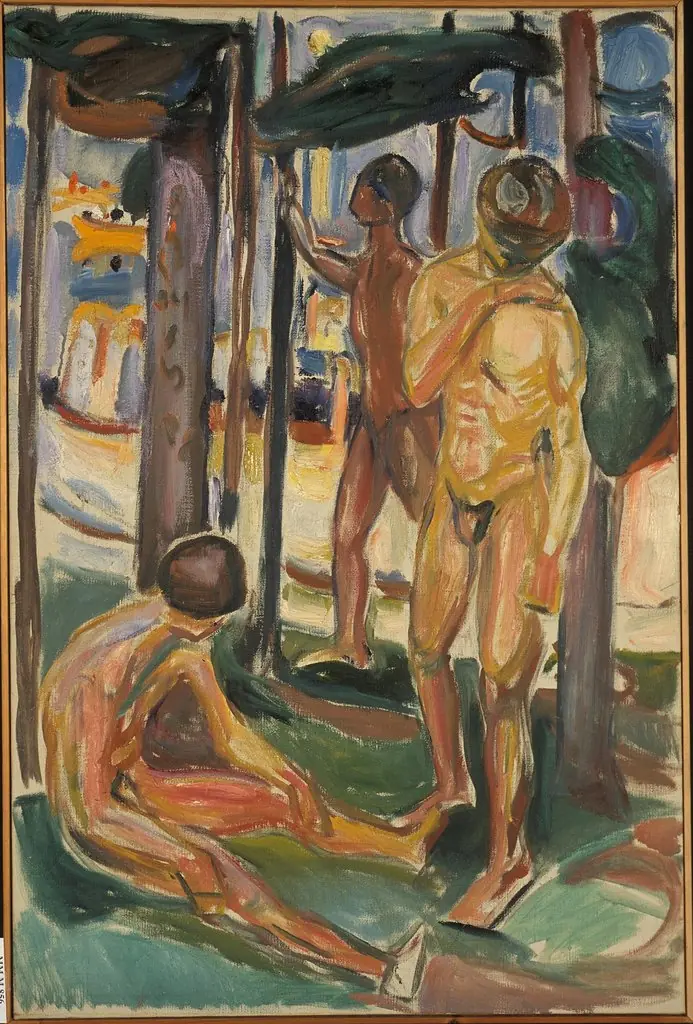
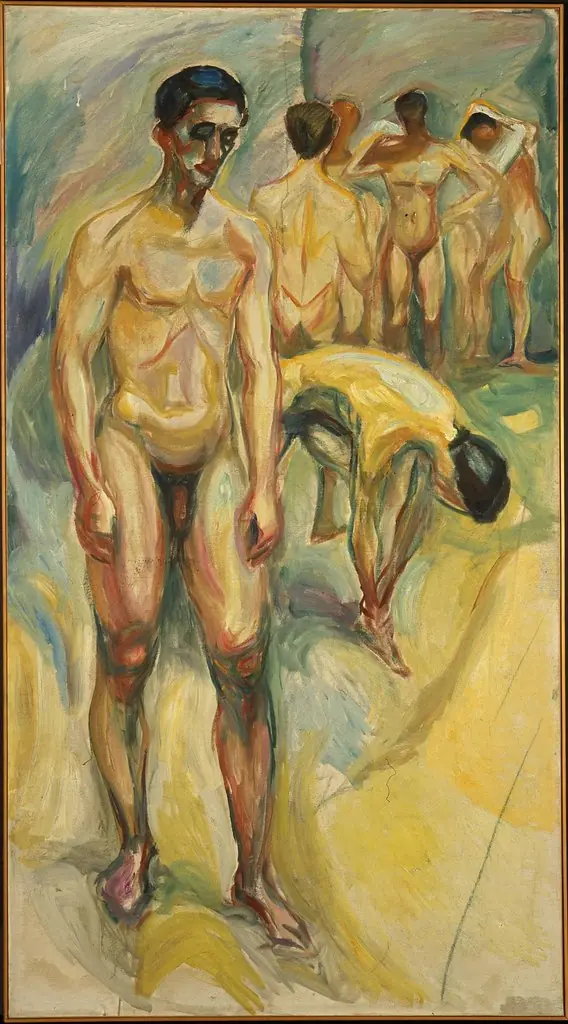
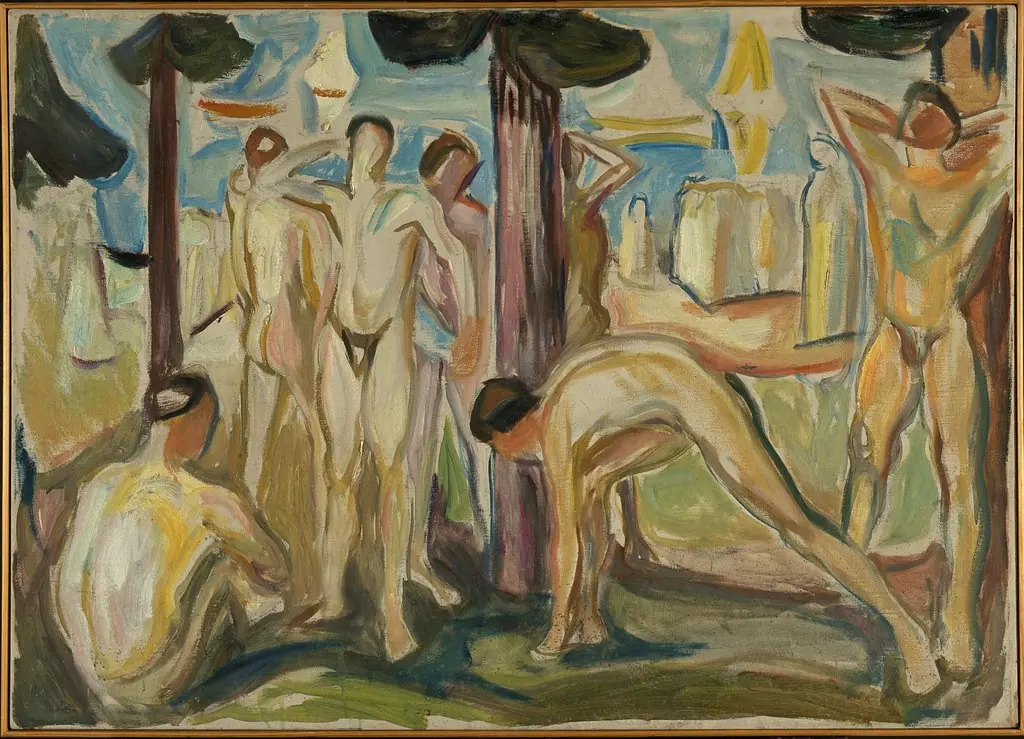
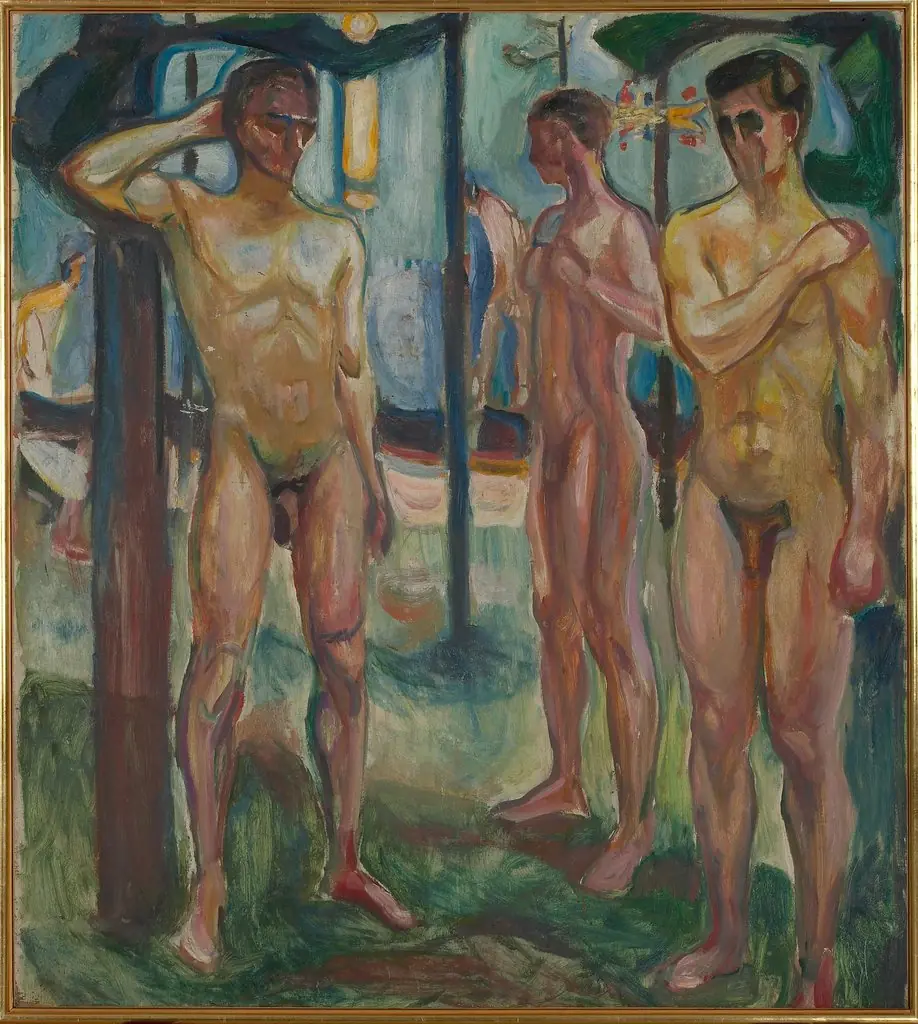
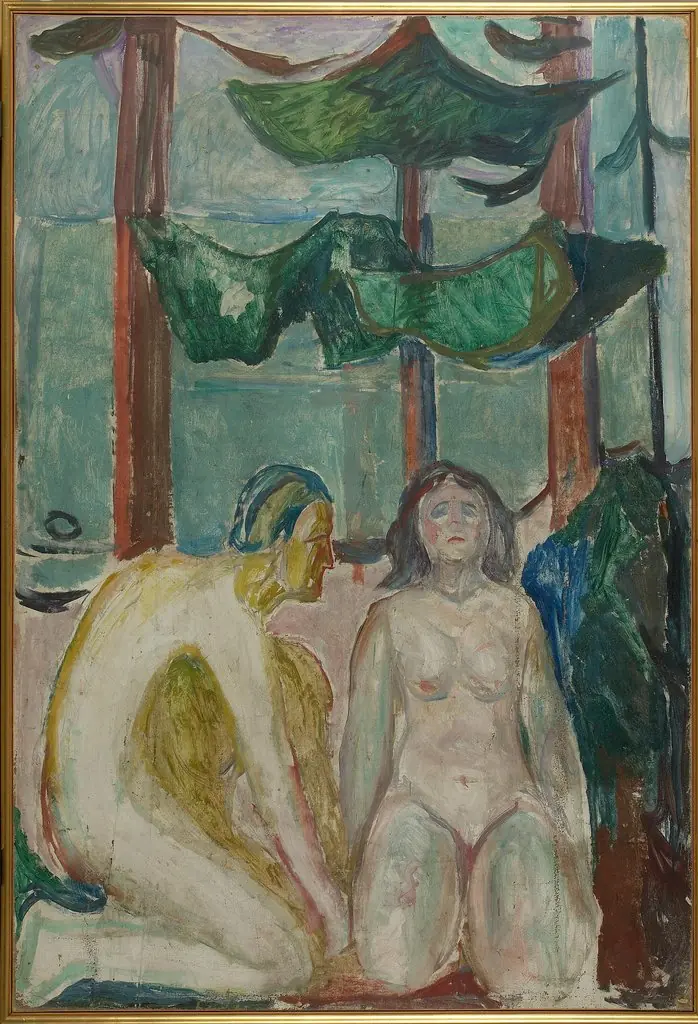
Naked men in the Woods is an oil painting by the Post-Impressionist artist Edvard Munch. It dates from 1919 and is held in the collection of the Munch Museum.
About this work
Overview
Painted in 1919 by Norwegian artist Edvard Munch, this oil-on-canvas work presents a group of nude men in a forest setting. It reflects Munch’s sustained interest in human vulnerability and the relationship between the body and nature. Though less widely known than his earlier works, this piece continues his exploration of psychological states through intimate, unidealized figures.
Subject & Meaning
The absence of narrative or dramatic tension invites contemplation rather than interpretation, emphasizing presence over action.
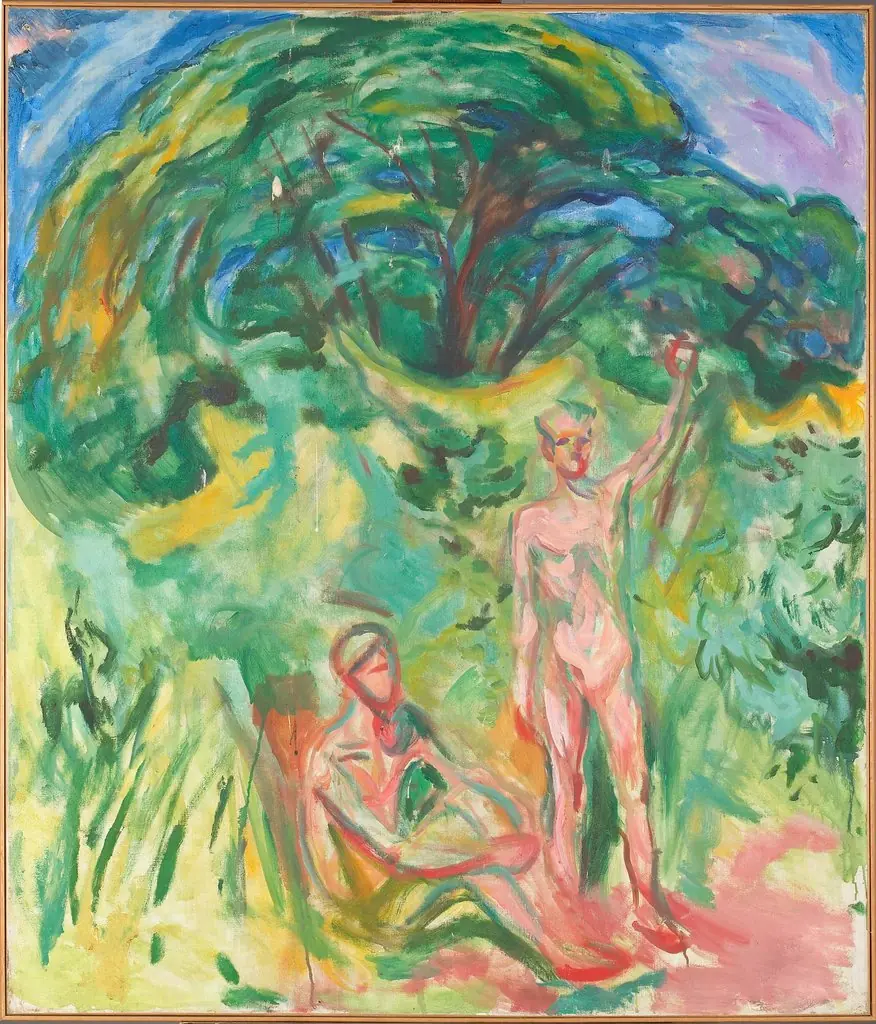
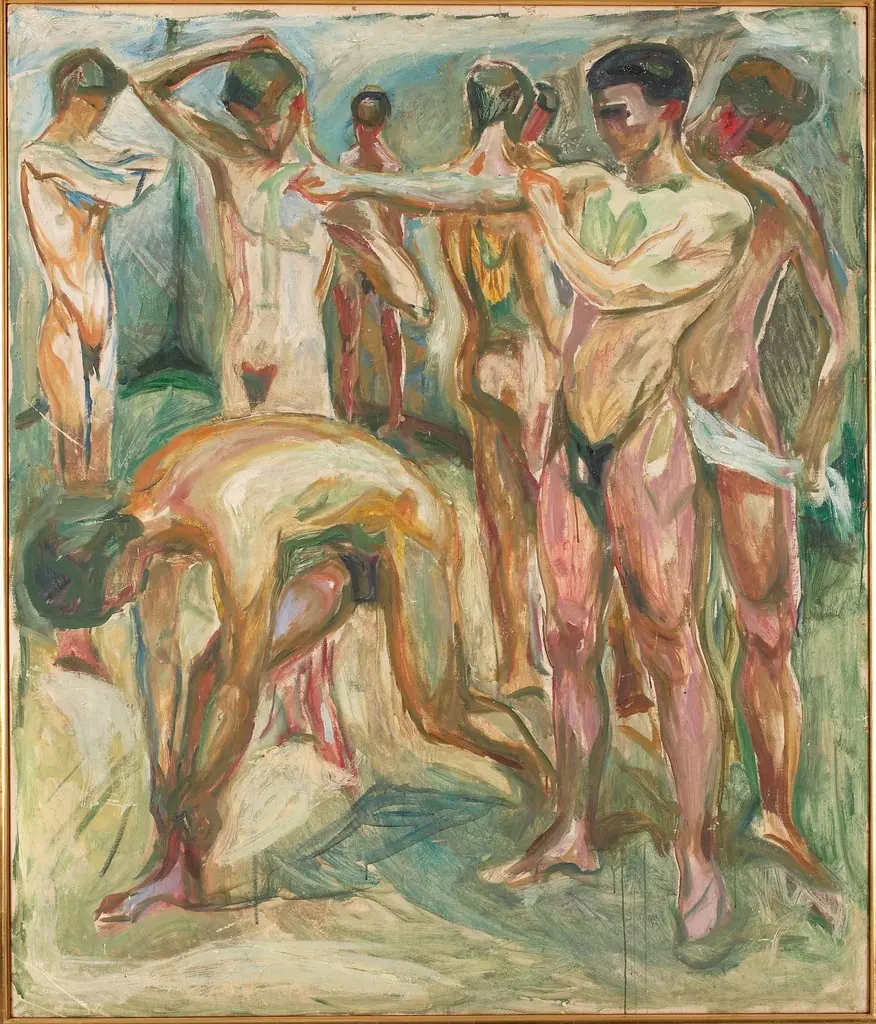
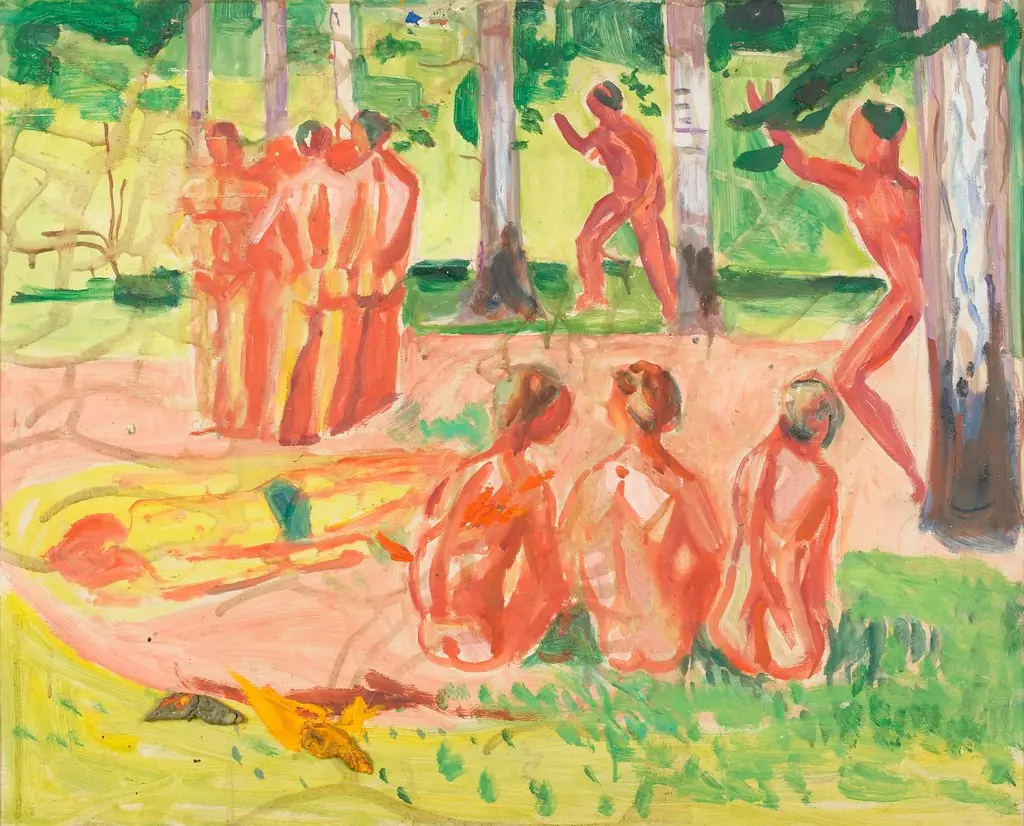
The painting shows several men in varied postures—standing, seated, reclining—within a dense woodland. Their nudity suggests a return to naturalness, free from social constraint. The absence of narrative or dramatic tension invites contemplation rather than interpretation, emphasizing presence over action. The scene may reflect Munch’s personal reflections on solitude, aging, or the human condition in harmony with the wild.
Technique & Style
Munch employed loose, expressive brushwork and a palette of warm earth tones—pale skin, golden browns, muted greens—to merge the figures with their surroundings. The paint is applied with visible texture, avoiding smooth blending. This approach aligns with his concept of 'soul painting,' where emotional resonance takes precedence over realism. Light filters unevenly through the trees, casting soft contrasts that deepen the sense of quiet intimacy.
History & Provenance
Created during Munch’s later years, the painting remained in his personal collection until his death in 1944. It was subsequently transferred to the Munch Museum in Oslo, established to preserve his legacy. Unlike his more famous works, this piece was not exhibited widely in his lifetime, contributing to its quieter reception in art historical discourse.
Context
Painted after World War I, the work emerges from a period when Munch increasingly turned to nature and personal reflection. His earlier themes of anxiety and isolation gave way to quieter, more contemplative subjects. The depiction of male nudes in nature contrasts with the dominant European tradition of idealized classical forms, instead embracing raw, unadorned humanity.
Legacy
Though not central to Munch’s public reputation, this painting exemplifies his late-period shift toward introspection and naturalism. It contributes to a broader understanding of his artistic evolution beyond 'The Scream.' Scholars recognize it as part of a series of works where the human form becomes a vessel for quiet, unspoken emotion, influencing later Nordic expressions of existential solitude.
Artist & collection
Artist
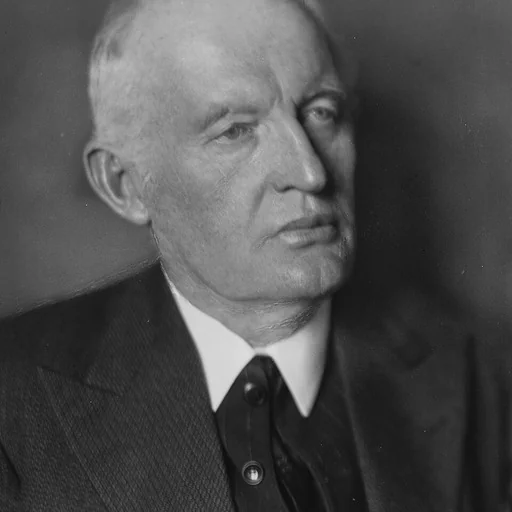
Edvard Munch ( MUUNK; Norwegian: ; 12 December 1863 – 23 January 1944) was a Norwegian painter.