Artwork
Naked Men in the Woods
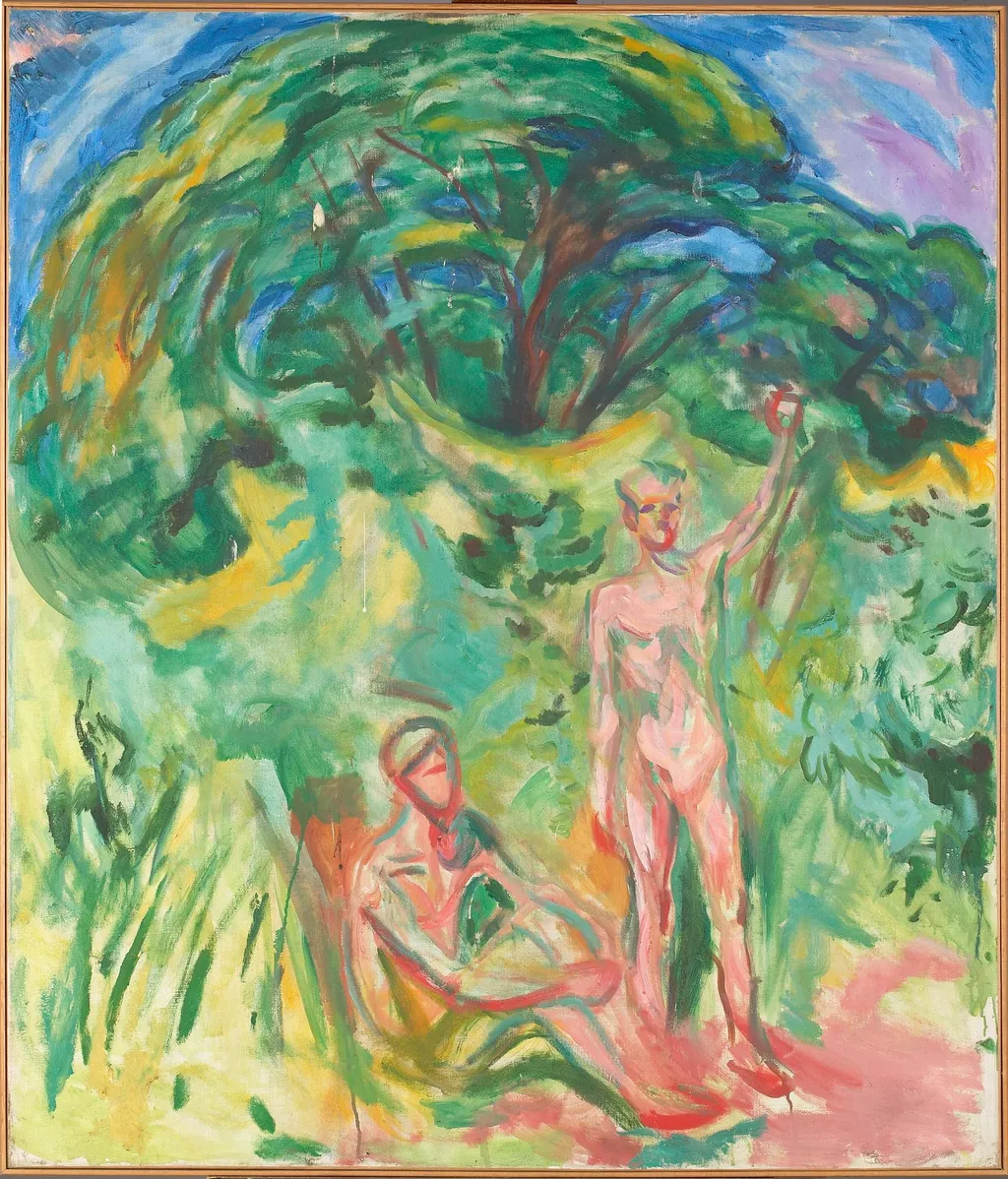
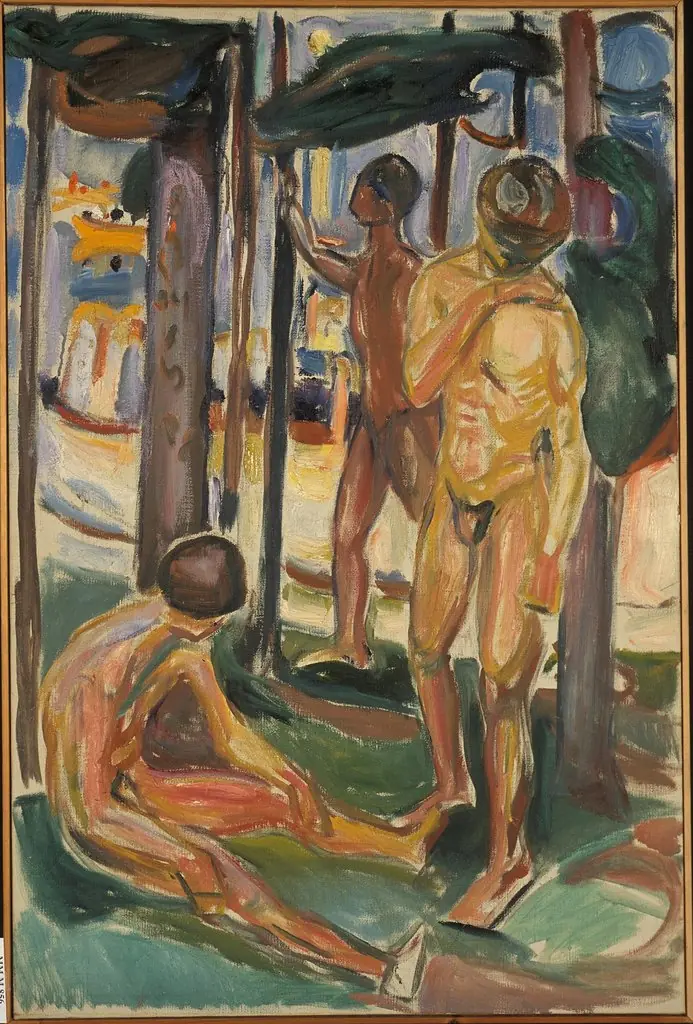
Naked Men in the Woods is an oil painting by the Post-Impressionist artist Edvard Munch. It dates from 1919 and is held in the collection of the Munch Museum.
About this work
Overview
It reflects his continued exploration of human presence within natural environments, a theme that evolved alongside his personal and artistic development.
Painted in 1919, *Naked Men in the Woods* is an oil on canvas work by Norwegian artist Edvard Munch. It reflects his continued exploration of human presence within natural environments, a theme that evolved alongside his personal and artistic development. The painting belongs to the Munch Museum’s permanent collection, where it is preserved as part of his later oeuvre, distinct from his earlier symbolic works but still grounded in psychological intensity.
Subject & Meaning
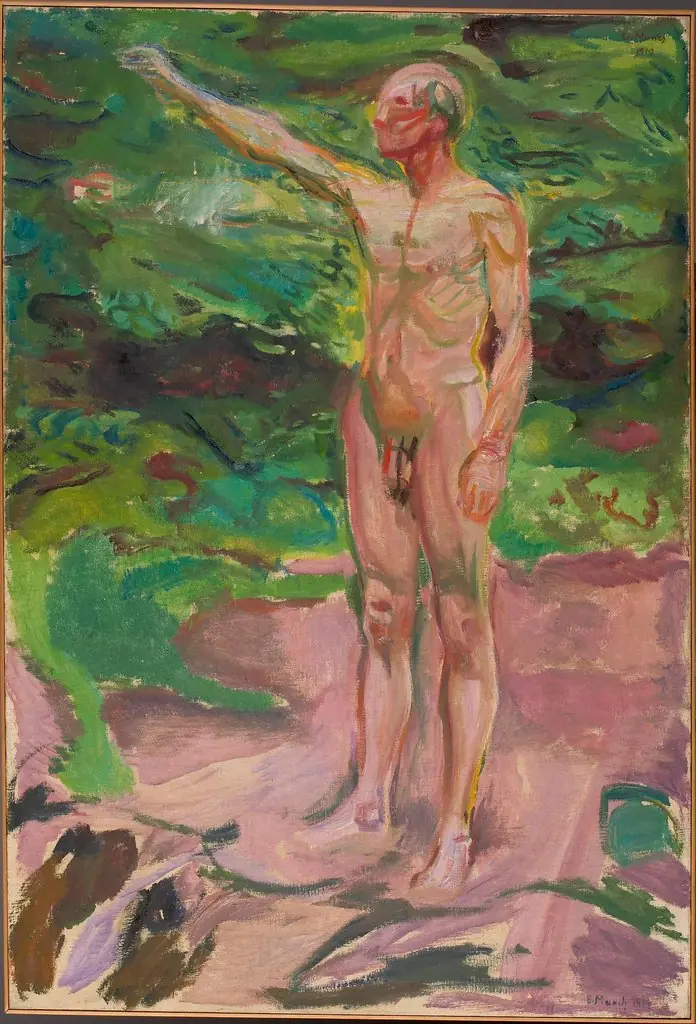
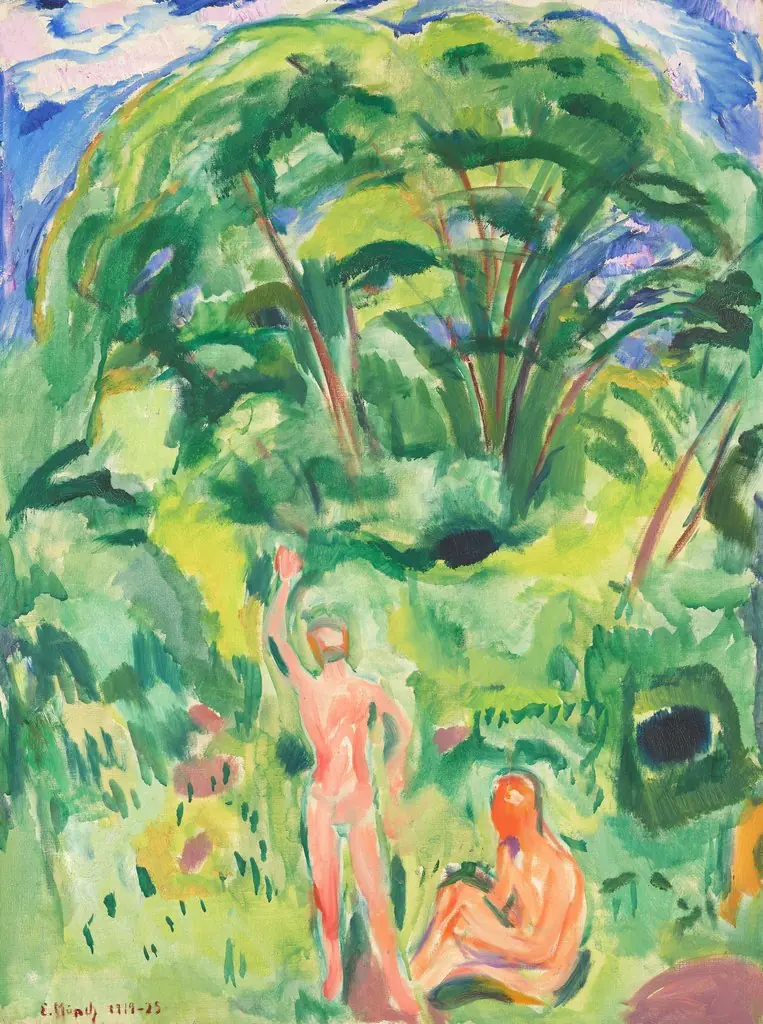
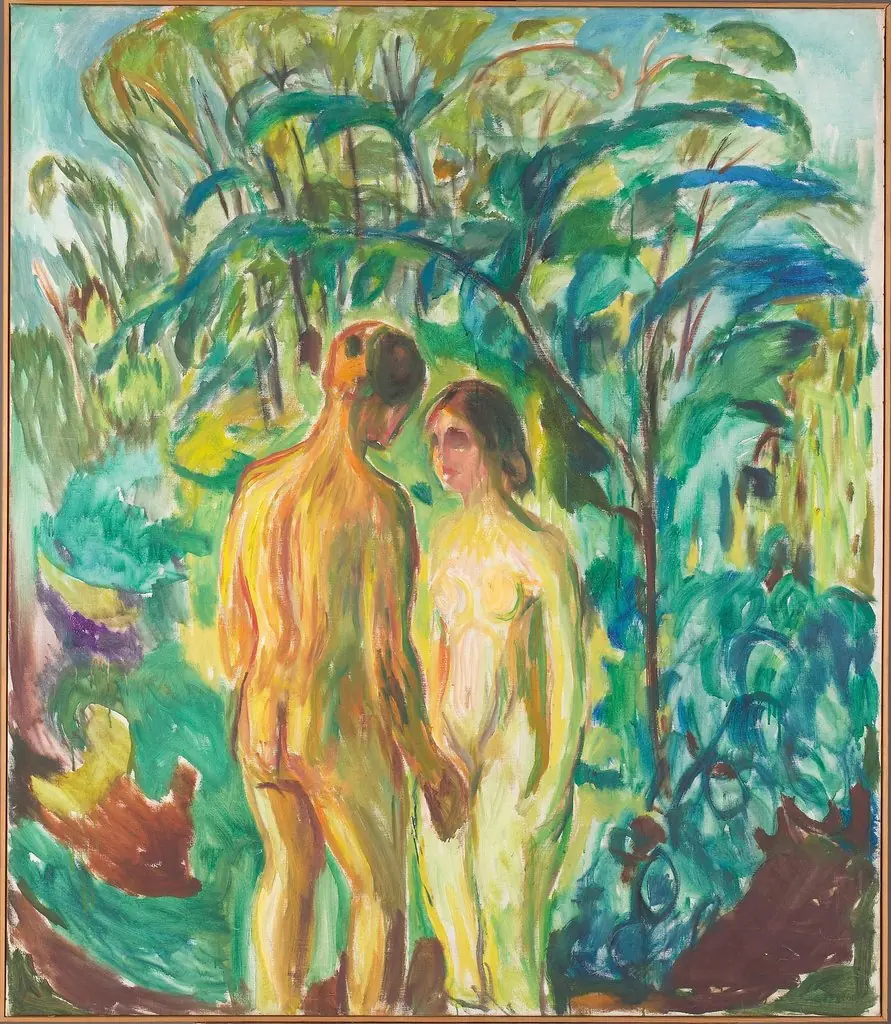
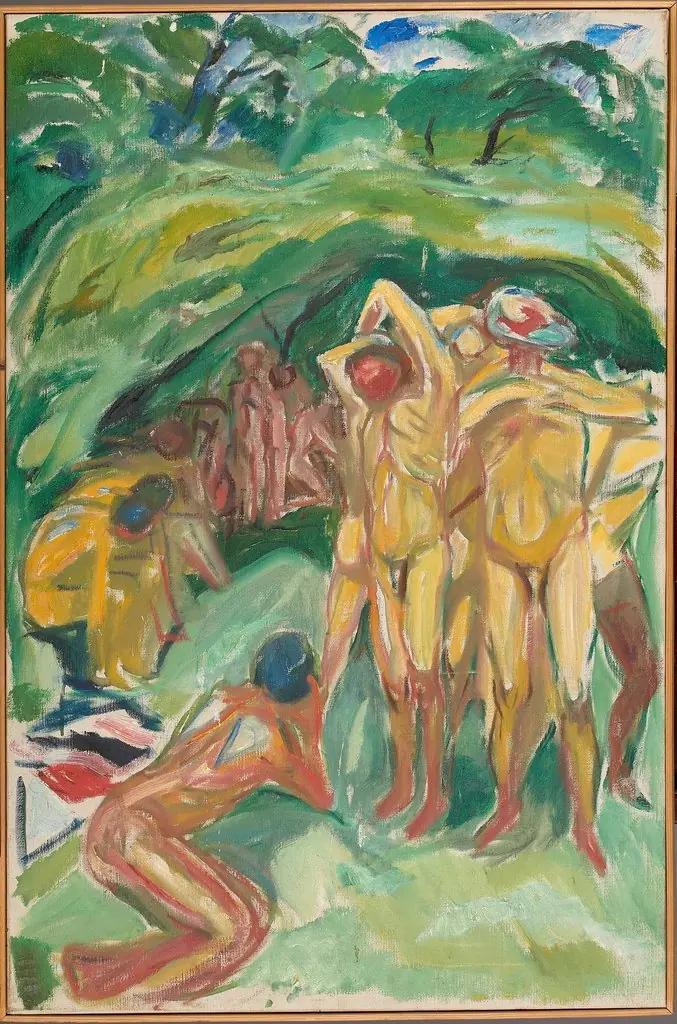
Two nude male figures are depicted in a forest: one seated, the other standing with an outstretched arm. Their postures suggest introspection or communication, though no narrative is explicitly defined. Munch avoids idealization, presenting the bodies as unadorned and grounded in the landscape. The absence of context invites interpretation around vulnerability, solitude, or human connection, consistent with his broader interest in inner states over external realism.
Technique & Style
Munch employs bold, fluid brushwork and heightened color—vivid greens for the trees, stark blues for the sky—to convey emotional resonance rather than optical accuracy. Forms are simplified, edges blurred, and spatial depth flattened, aligning with post-impressionist tendencies. The dynamic strokes generate a sense of motion, as if the figures and environment are in subtle flux, reinforcing the painting’s psychological undercurrents without relying on detailed realism.
History & Provenance
Created in 1919, the painting emerged during a period when Munch was refining his style after decades of experimentation. It remained in his personal possession until his death in 1944, after which it was transferred to the Munch Museum in Oslo, established to house his legacy. The work has been consistently exhibited as part of his mature output, reflecting his enduring engagement with the human figure in nature.
Context
Munch’s later works, including this one, reflect a shift from the overt symbolism of his youth toward more subdued, yet still charged, depictions of human experience. Influenced by his early exposure to existential thinkers like Hans Jæger and his own lifelong preoccupations with mortality and isolation, this painting continues his exploration of emotional truth, even as his technique became more expressive and less narrative-driven.
Legacy
While less widely known than *The Scream*, *Naked Men in the Woods* exemplifies Munch’s sustained commitment to portraying psychological states through form and color. It contributes to the understanding of his later period, where emotional expression remained central even as his imagery grew more abstract. The work remains a quiet but significant part of his artistic trajectory, valued for its introspective tone and formal innovation.
Artist & collection
Artist
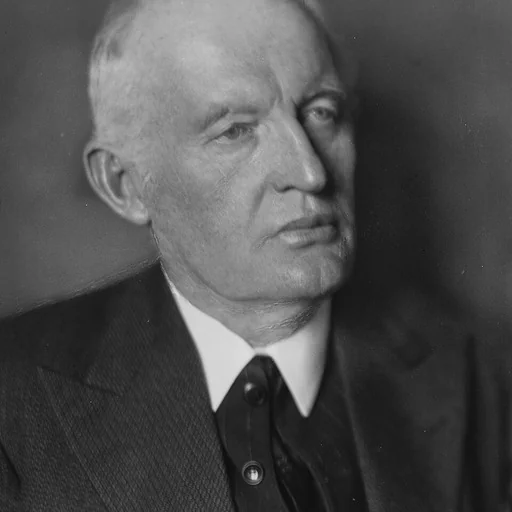
Edvard Munch ( MUUNK; Norwegian: ; 12 December 1863 – 23 January 1944) was a Norwegian painter.