Artwork
Woman with Red Hair and Green Eyes (The Sin)
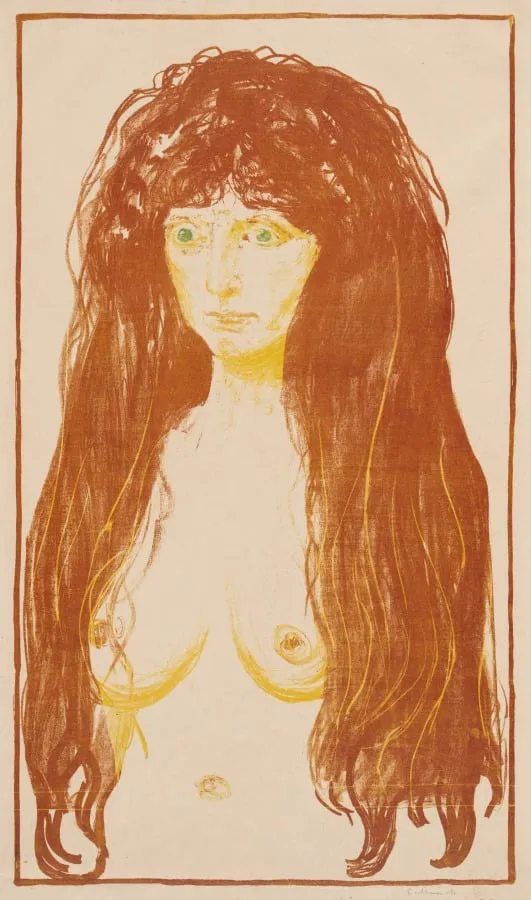
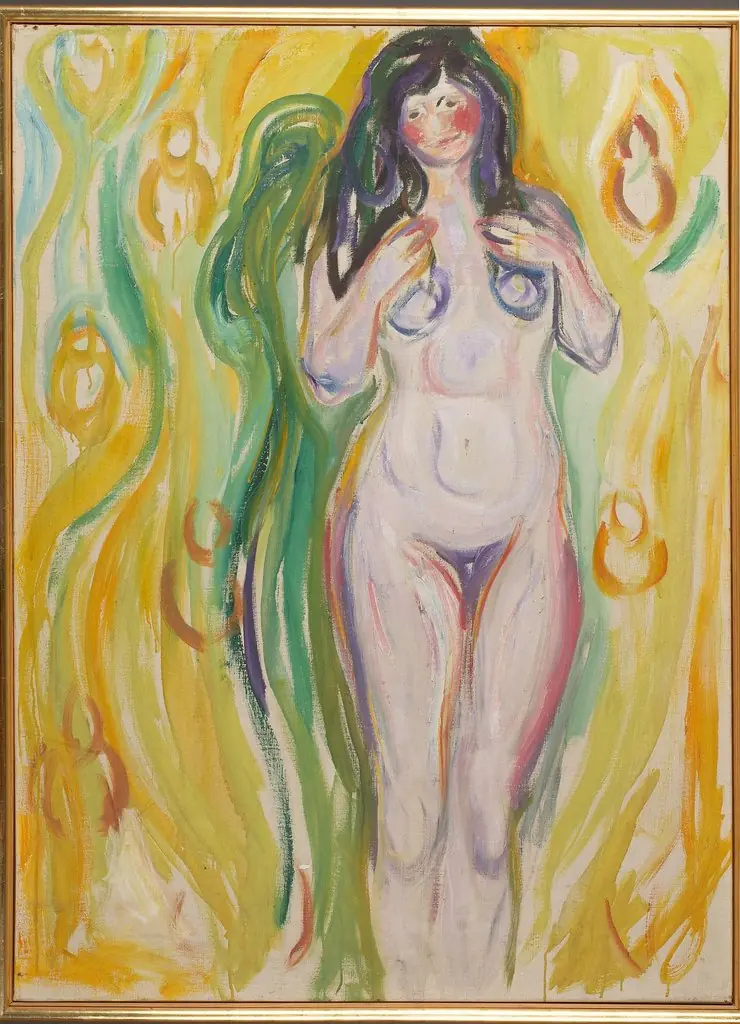
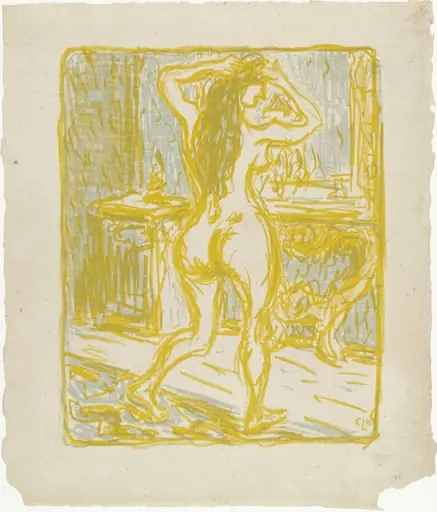
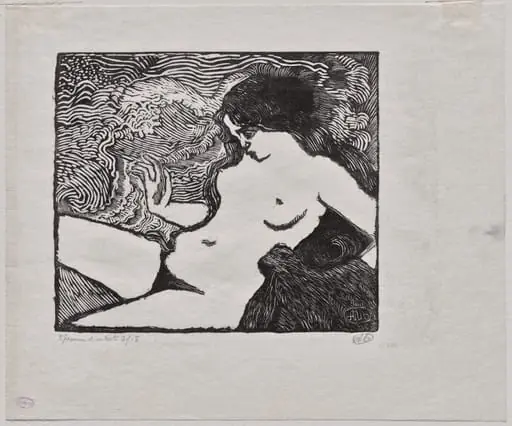
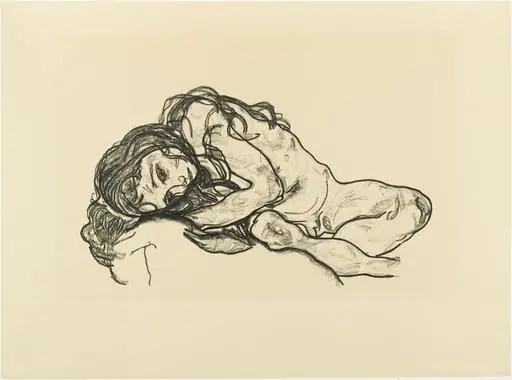
Woman with Red Hair and Green Eyes (The Sin) is a print by Edvard Munch. It dates from 1901 and is held in the collection of the Cleveland Museum of Art.
About this work
If you like this, look up *impasto*—a technique where paint is laid on thickly, giving a rough, textured feel that Munch sometimes used in his paintings.
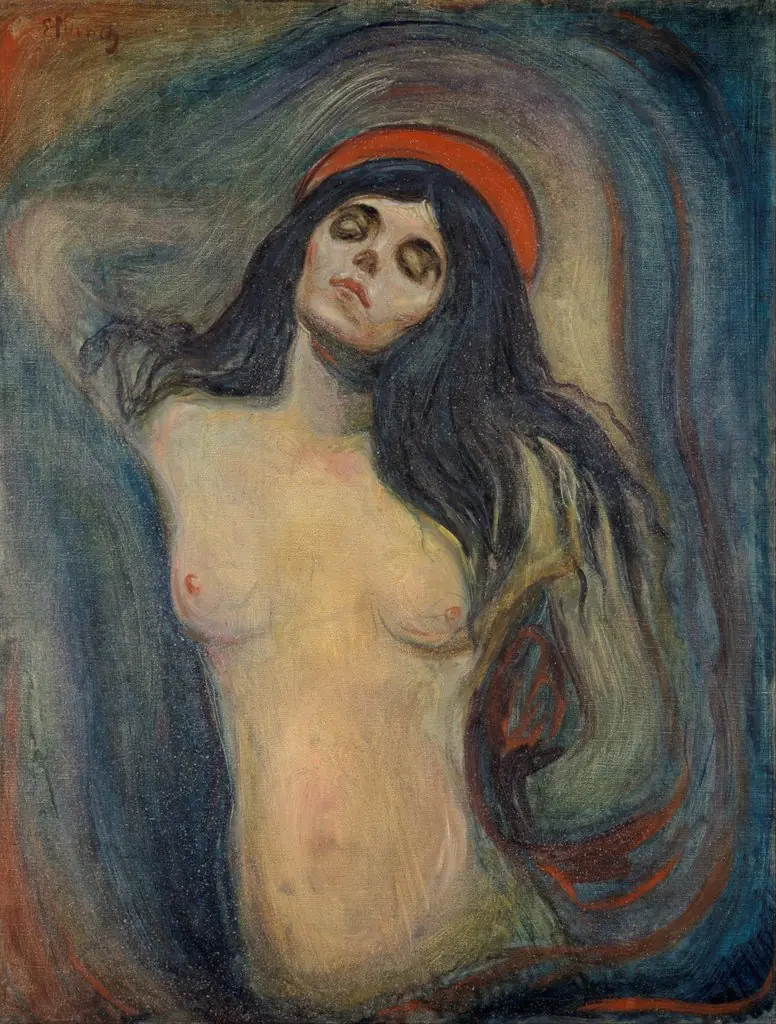
A woman with fiery red hair stares straight at you, her green eyes sharp and unblinking. Her face is pale, almost glowing against the dark background.
Munch often painted women who seemed dangerous or mysterious—what people at the time called "fatal women." This print is from 1901, when he was obsessed with the idea of love as something wild and even destructive. The long, loose hair wasn’t just a style; it was a symbol of raw, untamed passion.
If you like this, look up *impasto*—a technique where paint is laid on thickly, giving a rough, textured feel that Munch sometimes used in his paintings.
Overview
Edvard Munch’s lithograph *Woman with Red Hair and Green Eyes* (1901) presents a solitary female figure rendered in stark contrast. The woman’s vivid red hair and penetrating green eyes dominate the composition, while her pallid skin glows against a deep, almost black background, creating a sense of immediacy and focus.
Subject & Meaning
The work belongs to Munch’s series of depictions of the so‑called “fatal woman,” a motif that conveys both allure and danger. In this image, the untamed hair functions as a visual metaphor for uncontrolled passion, reflecting the artist’s preoccupation with love as a potentially destructive force.
Technique & Style
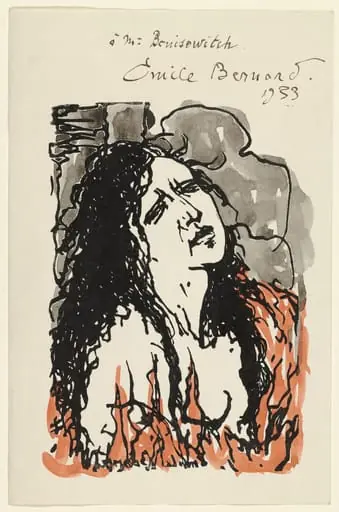
Executed as a lithograph, the print relies on the bold, graphic qualities of the medium. Munch employs strong line work and high contrast to emphasize the figure’s features, while the limited tonal range heightens the dramatic tension between the luminous face and the surrounding darkness.
History & Provenance
Munch’s prints circulated widely in early‑20th‑century Paris, appearing in exhibitions and being distributed through dealers and fellow artists. This particular lithograph, produced in 1901, reflects the period when Munch’s symbolic imagery resonated with contemporary avant‑garde circles.
Context
The motif of the fatal woman appears across European Symbolism, linking Munch’s work to contemporaneous explorations of eroticism and psychological anxiety. The emphasis on hair as a symbol of sexual power aligns with similar visual strategies employed by Picasso and other modernists of the era.
Artist & collection

Artist
Edvard Munch ( MUUNK; Norwegian: ; 12 December 1863 – 23 January 1944) was a Norwegian painter.