Artwork
Untitled
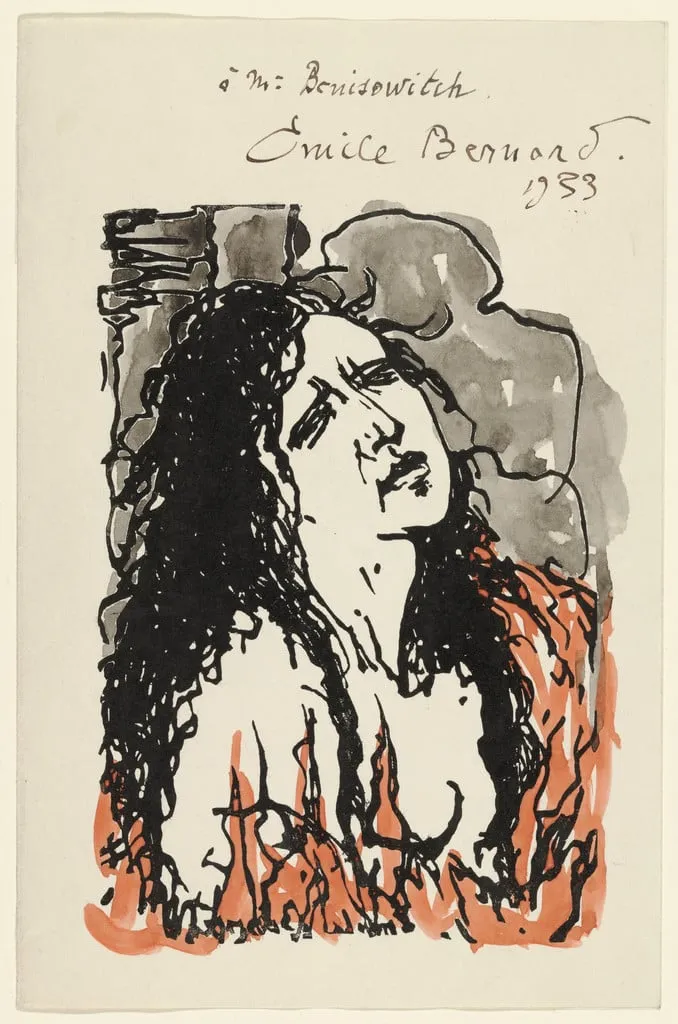
Untitled is a watercolor print by Émile Bernard. It dates from 1933 and is held in the collection of the Museum of Modern Art.
About this work
The red in her dress looks like it was painted on after the black lines, almost like a splash.
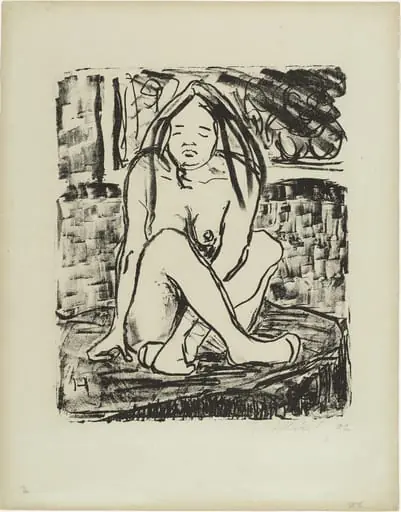
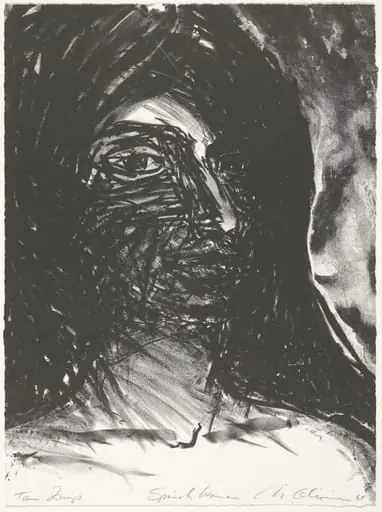
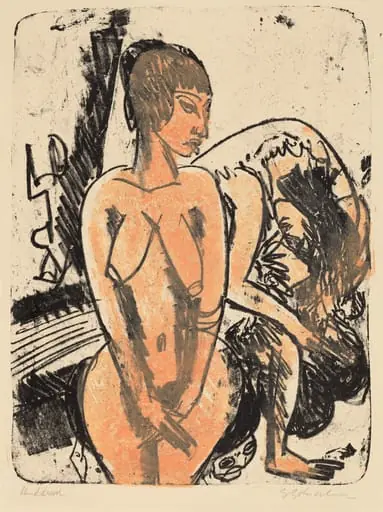
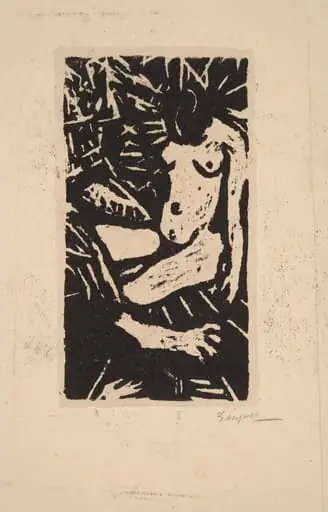
This sketch shows a dark-haired woman standing near a tree. She’s facing sideways, her body partly hidden by the tree’s trunk. The background is mostly gray, but her red dress pops out at the bottom. The lines are rough, like they were drawn fast.
The artist signed it in the top corner—*Émile Bernard, 1933*. The red in her dress looks like it was painted on after the black lines, almost like a splash.
Want to see more of this artist’s work? Check out Émile Bernard.
Overview
Created in 1933, this woodcut with watercolor additions is one of Émile Bernard’s later works. Though best known for his role in late 19th-century avant-garde movements, Bernard continued exploring printmaking into his final decades. The piece combines the bold, linear quality of woodcut with spontaneous color applications, reflecting his enduring interest in material experimentation and expressive simplicity.
Subject & Meaning
A woman with dark hair stands beside a tree, her form partially obscured by its trunk. Her sideways orientation and the tree’s intervening presence suggest a quiet, introspective moment. The limited narrative and absence of context invite contemplation rather than storytelling. The red dress, sharply contrasting with the muted background, draws attention to the figure’s presence without imposing symbolic meaning.
Technique & Style
Bernard employed a rough, swiftly carved woodcut to define the forms, with uneven lines suggesting urgency or improvisation. Watercolor was applied afterward, notably the vivid red of the dress, which appears as a deliberate, unblended accent. The method echoes his earlier Cloisonnist tendencies—flat areas of color bounded by dark contours—but here, the execution is looser, more immediate, and less structured.
History & Provenance
This work dates from the final years of Bernard’s life, following decades of involvement with Symbolist and Post-Impressionist circles. While it lacks a widely documented exhibition history, its signature and date confirm its origin in his personal practice. The piece aligns with his later focus on intimate, small-scale prints, often made outside formal commissions, reflecting a return to private artistic inquiry.
Context
By 1933, Bernard had long moved beyond the radical innovations of his youth with Gauguin and van Gogh. Yet his continued use of woodcut and bold color reflects a persistent engagement with the principles of Synthetism. In an era dominated by modernist abstraction, his work retained a figurative, hand-crafted quality, positioning him as a bridge between 19th-century symbolism and 20th-century print revival.
Legacy
Bernard’s late prints, including this one, demonstrate his sustained commitment to printmaking as a vehicle for personal expression. Though overshadowed by his earlier contributions, these works reveal a consistent aesthetic philosophy: the power of simplified form, intentional color contrast, and the tactile nature of handmade marks. They remain important for understanding the evolution of modern print practices beyond mainstream movements.
Artist & collection
Artist
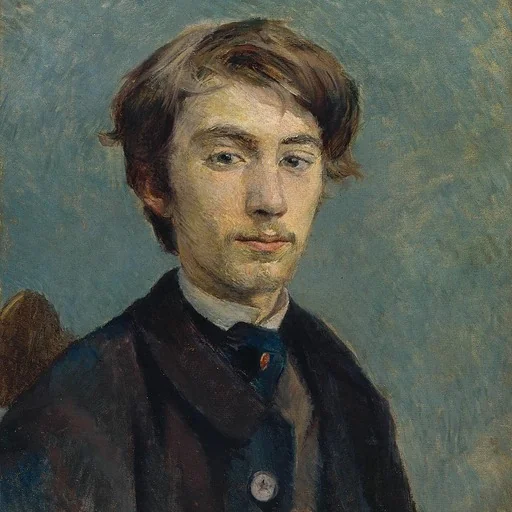
Émile Henri Bernard (French pronunciation: ; 28 April 1868 – 16 April 1941) was a French Post-Impressionist painter and writer, who had artistic friendships with Vincent van Gogh, Paul Gauguin and Eugène Boch, and at a later time, Paul…