Artwork
Red House and Spruces
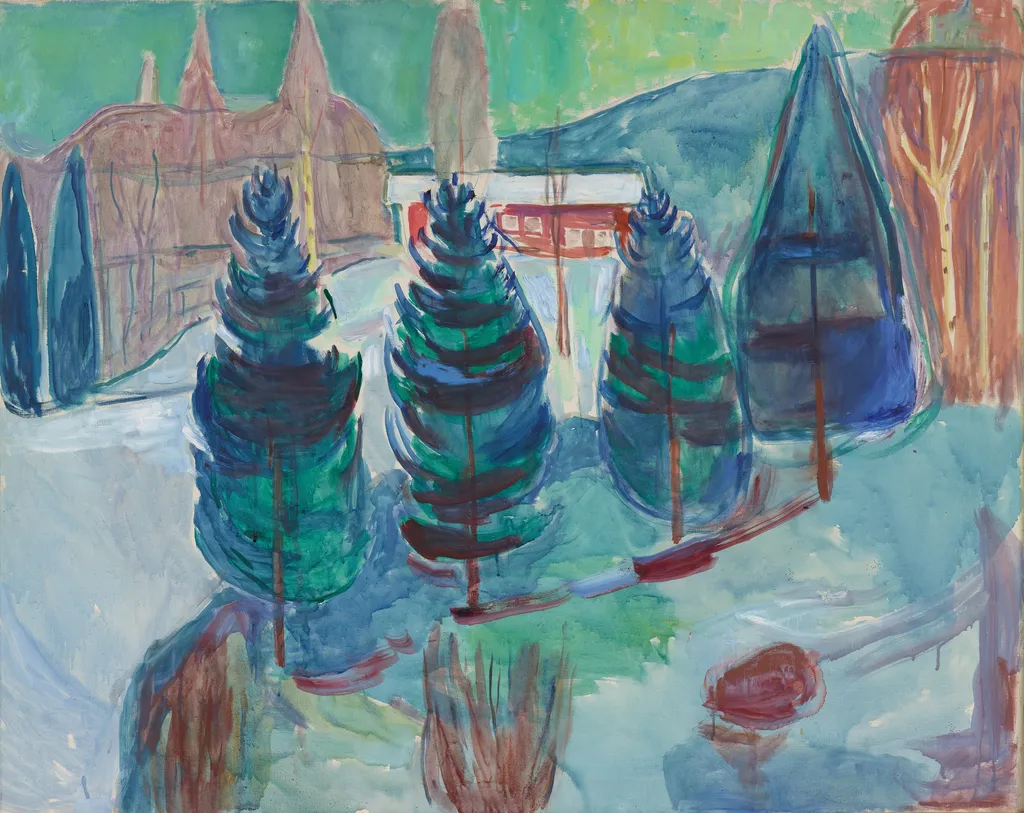
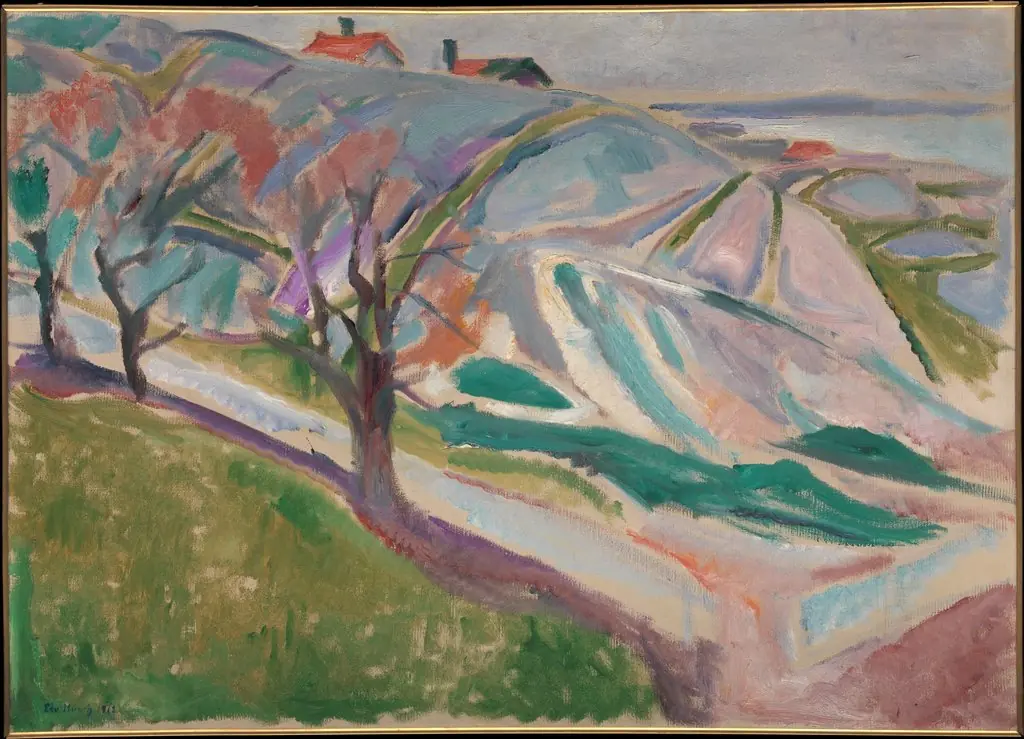
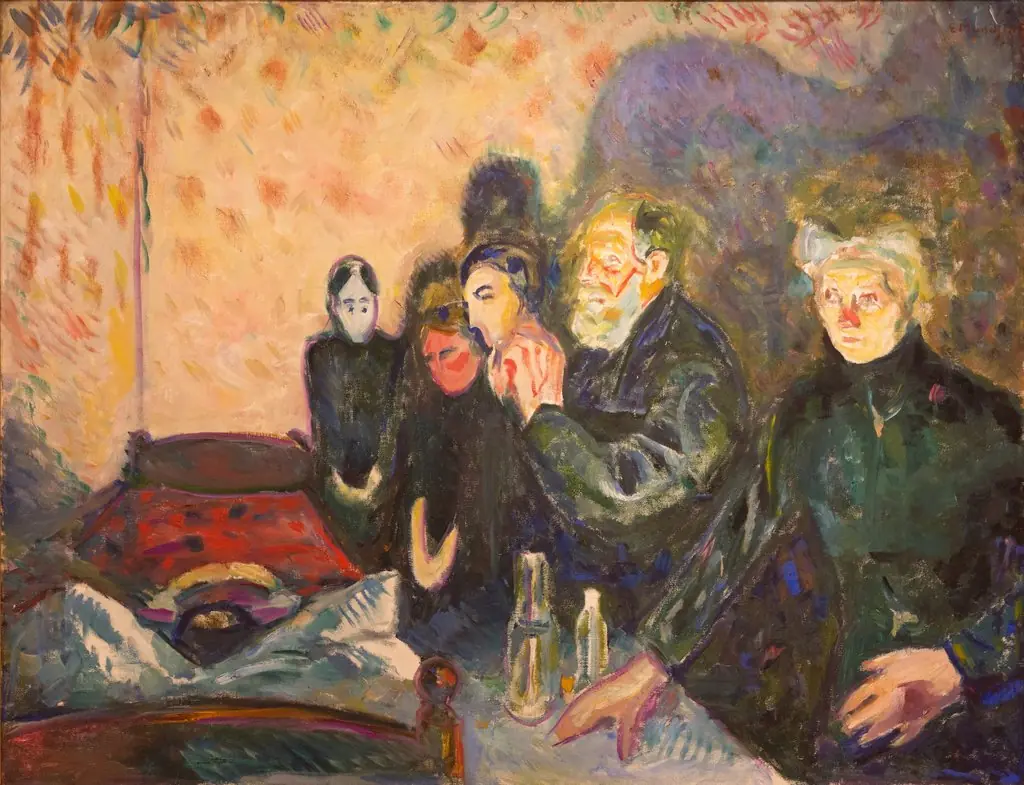
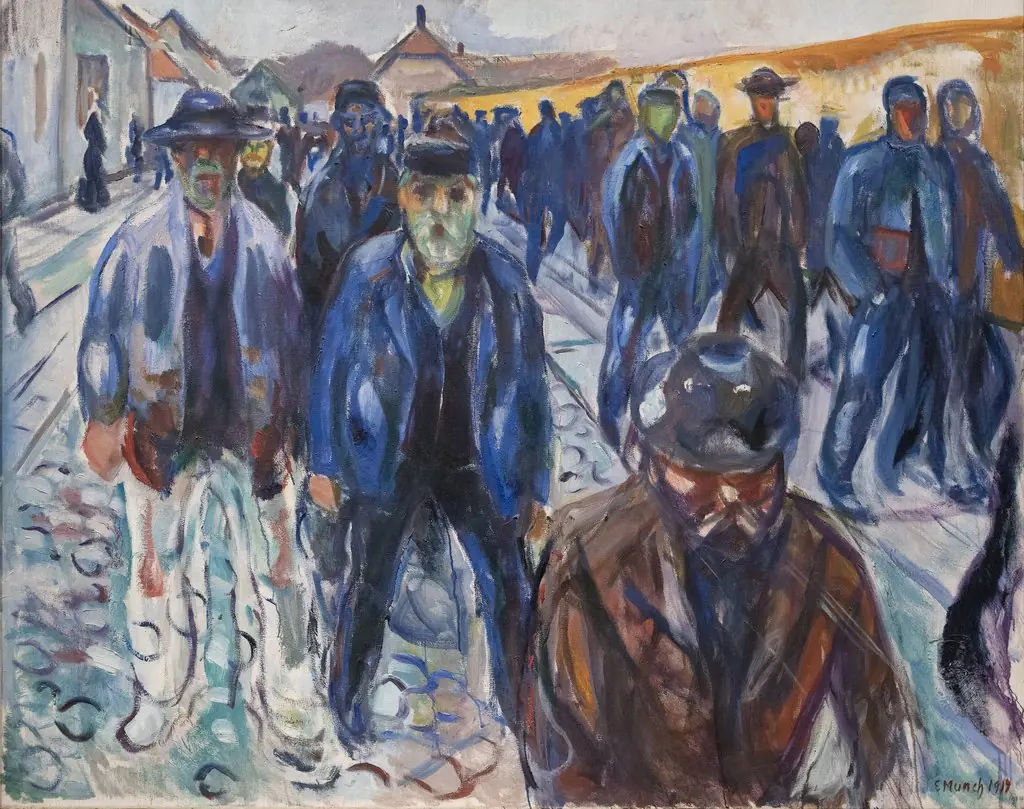
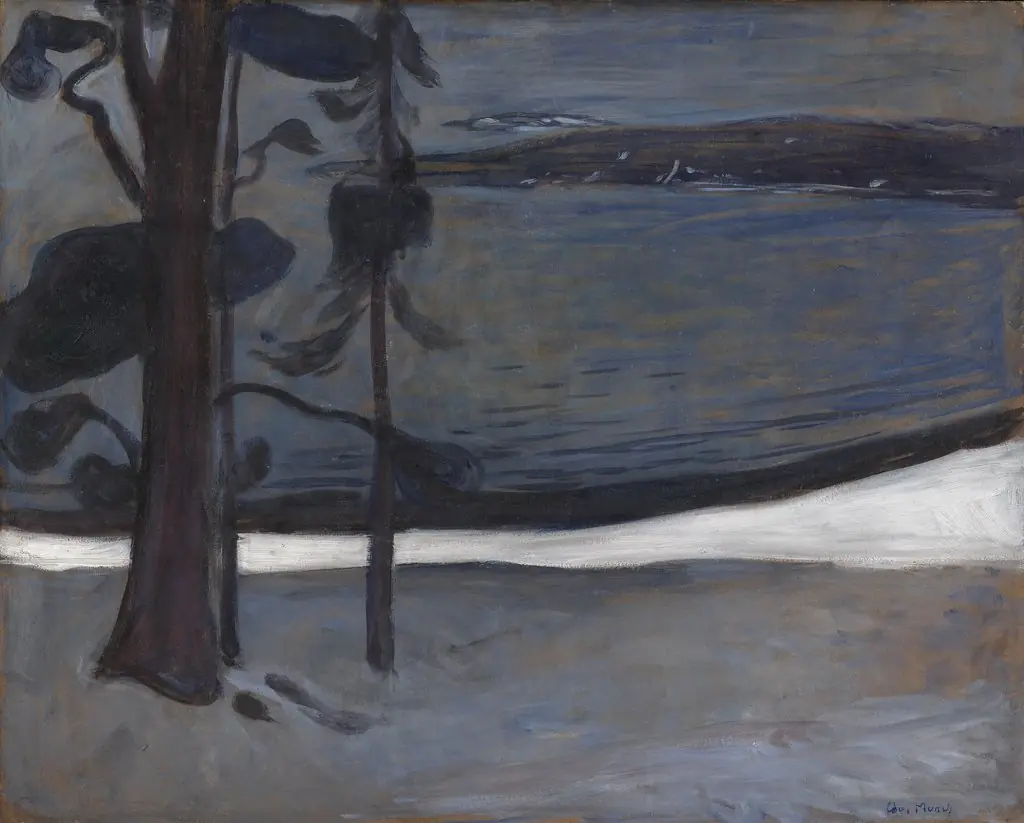
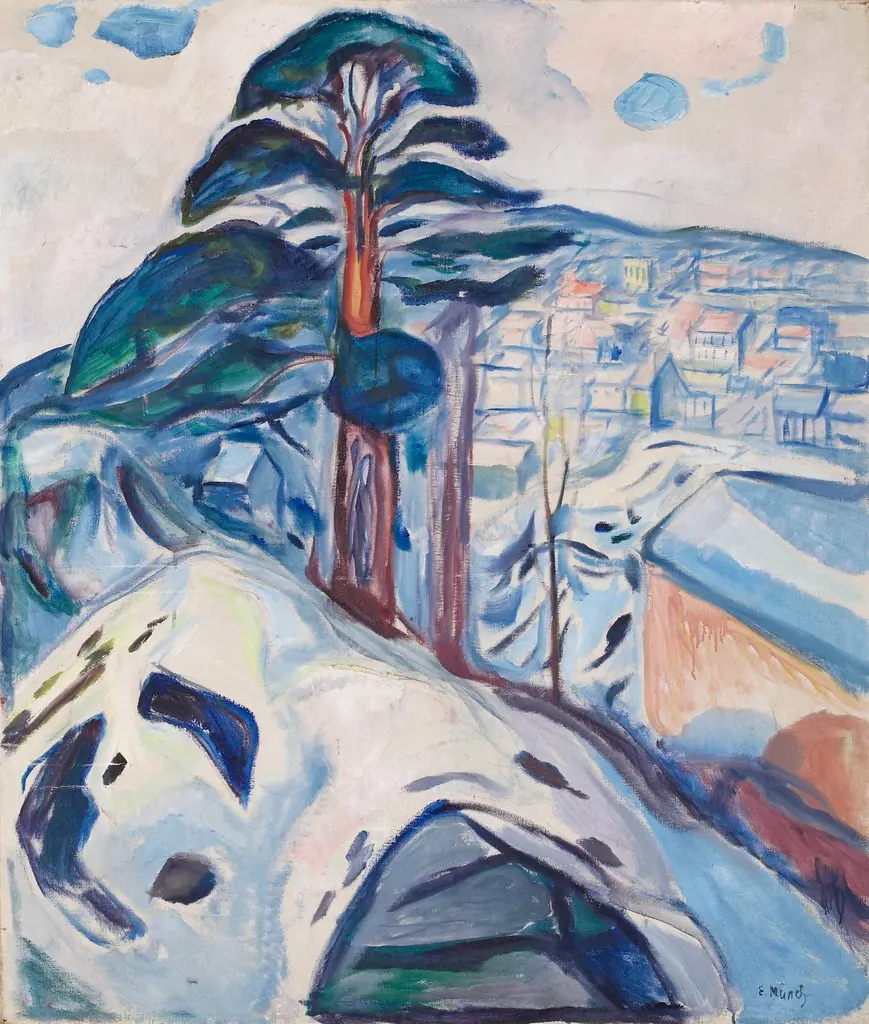
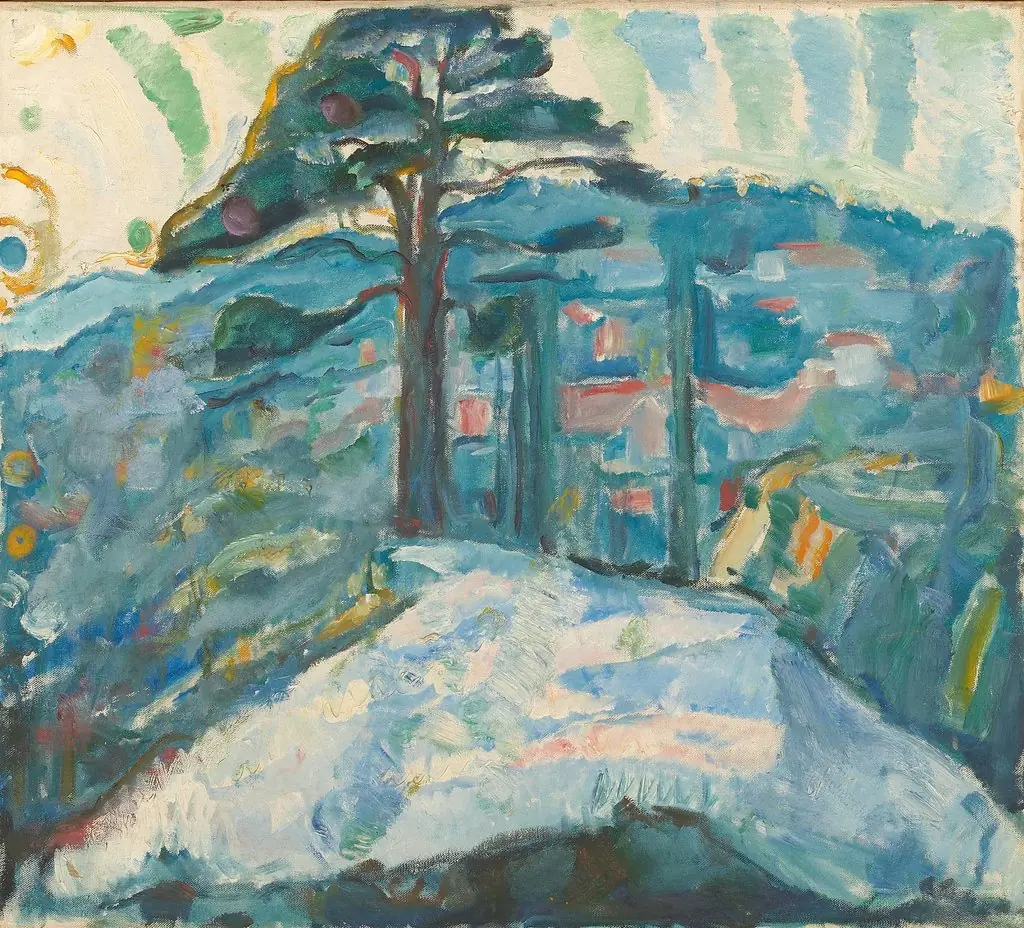
Red House and Spruces is an oil painting by the Post-Impressionist artist Edvard Munch. It dates from 1940 and is held in the collection of the Munch Museum.
About this work
Overview
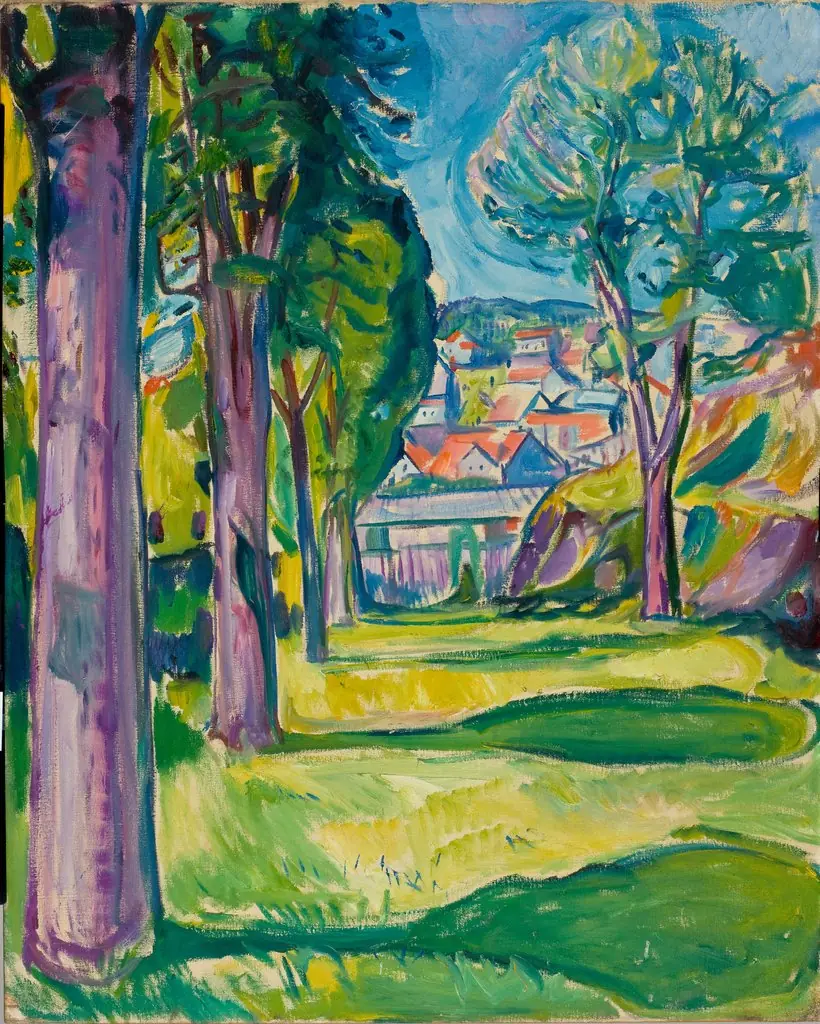
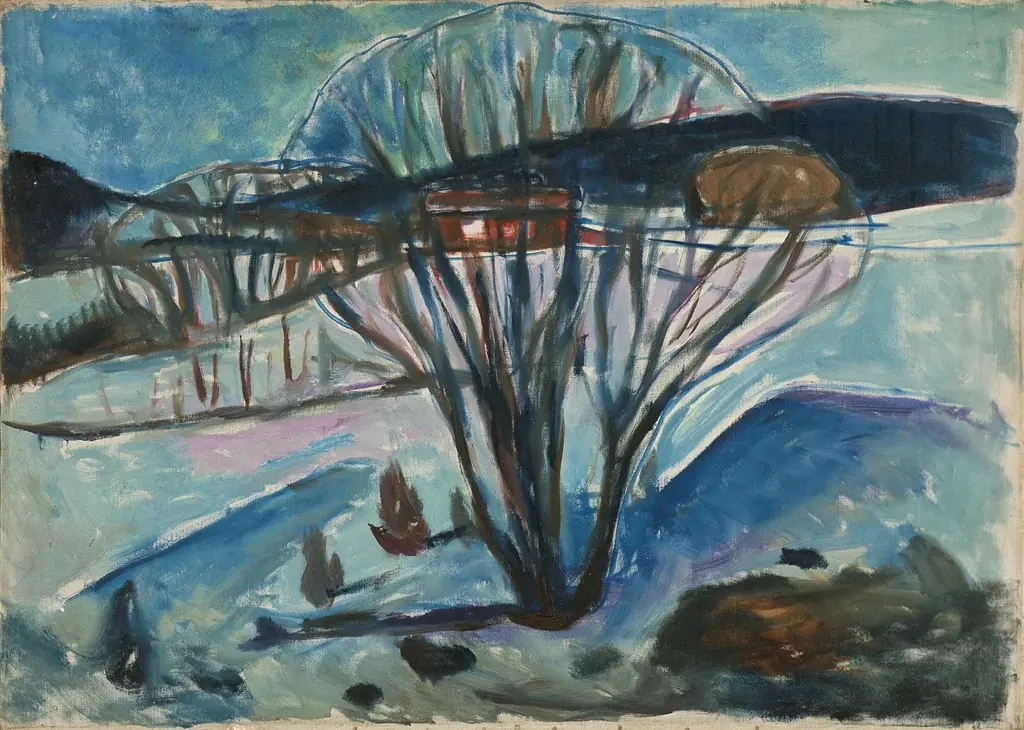
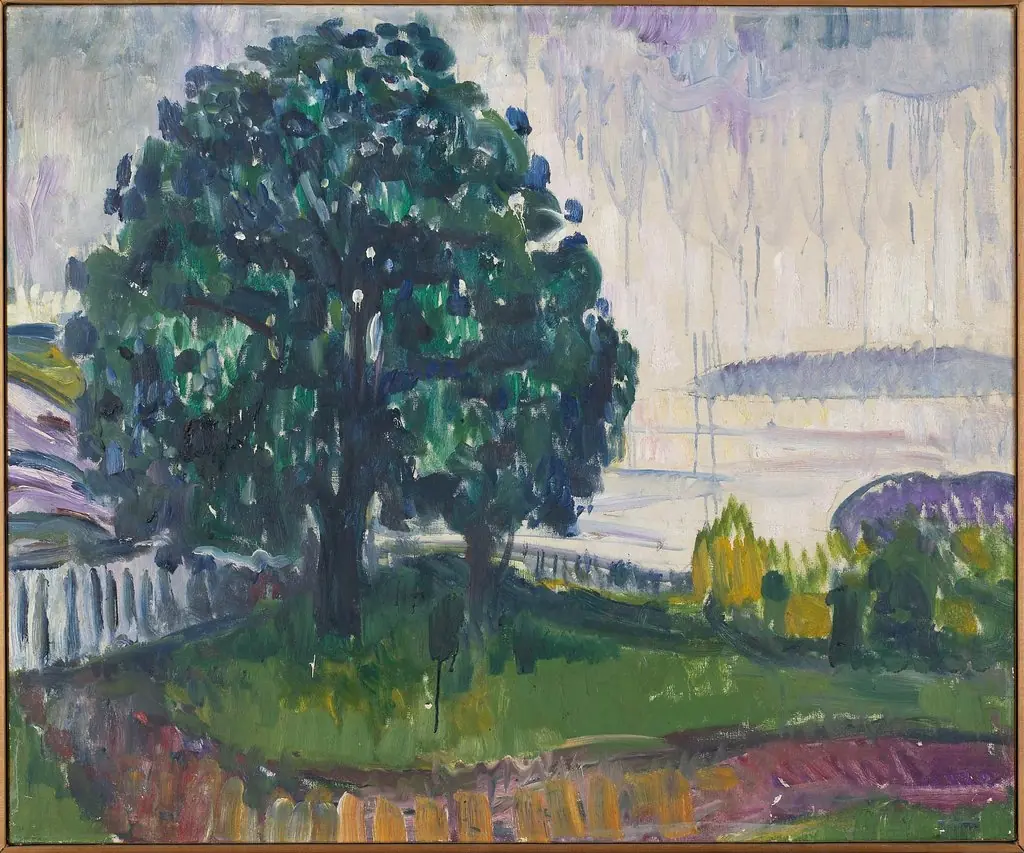
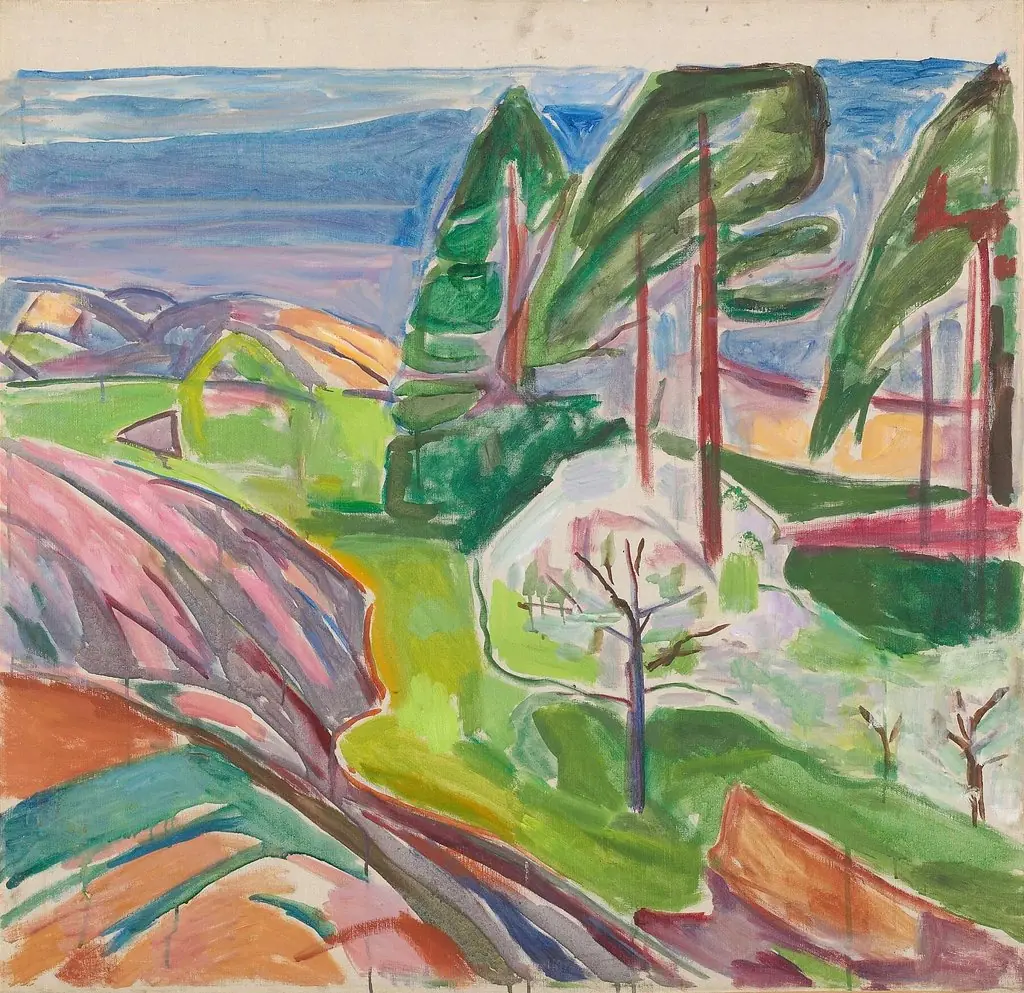
Painted in 1940, *Red House and Spruces* is an oil-on-canvas landscape by Norwegian artist Edvard Munch. It belongs to his later period, when his focus shifted toward quiet, introspective natural scenes. The work reflects his enduring interest in the emotional resonance of environment, rendered with simplified forms and expressive color rather than precise detail.
Subject & Meaning
The painting centers on a solitary red house nestled among dense spruce trees, with a winding path leading toward it. The house, positioned in the background, feels distant and quiet, suggesting themes of isolation or memory. The trees, dominant and varied in hue, may symbolize resilience or the passage of time, echoing Munch’s lifelong preoccupation with inner states expressed through nature.
Technique & Style
Munch employed loose, textured brushwork and a restrained palette of greens, browns, and blues, with the red house serving as a subtle focal point.
Munch employed loose, textured brushwork and a restrained palette of greens, browns, and blues, with the red house serving as a subtle focal point. Forms are flattened and outlines softened, avoiding realism in favor of emotional tone. The composition directs attention toward the trees, whose layered pigments suggest depth without detailed rendering, characteristic of his post-impressionist approach.
History & Provenance
Created near the end of Munch’s life, the painting remained in his personal collection until his death in 1944. It was later transferred to the Munch Museum in Oslo, established to preserve and exhibit his artistic legacy. The work has been consistently included in scholarly surveys of his later landscapes, reflecting its significance within his oeuvre.
Context
Painted during World War II, *Red House and Spruces* emerges from a period when Munch withdrew from public life and turned inward. His landscapes from this time often avoid political or social commentary, instead focusing on solitude and the enduring presence of nature. This retreat from external turmoil underscores a personal meditation on permanence and quietude.
Legacy
The painting contributes to the understanding of Munch’s evolution beyond his earlier psychological dramas. It demonstrates how his mature style used landscape not as backdrop but as emotional conduit. Today, it remains a key example of his late work, illustrating his ability to convey depth and mood through minimal means.
Own this work as a print
Artist & collection
Artist
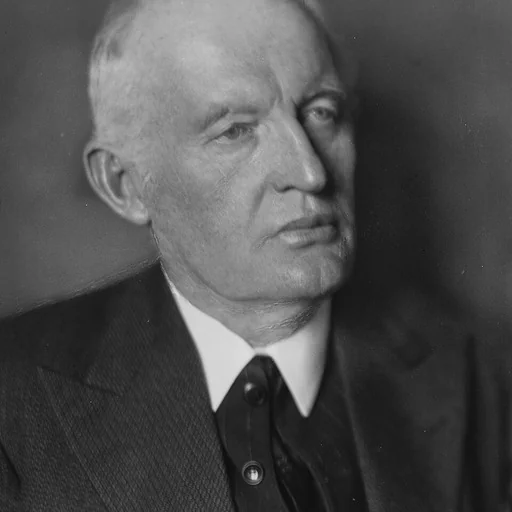
Edvard Munch ( MUUNK; Norwegian: ; 12 December 1863 – 23 January 1944) was a Norwegian painter.