Artwork
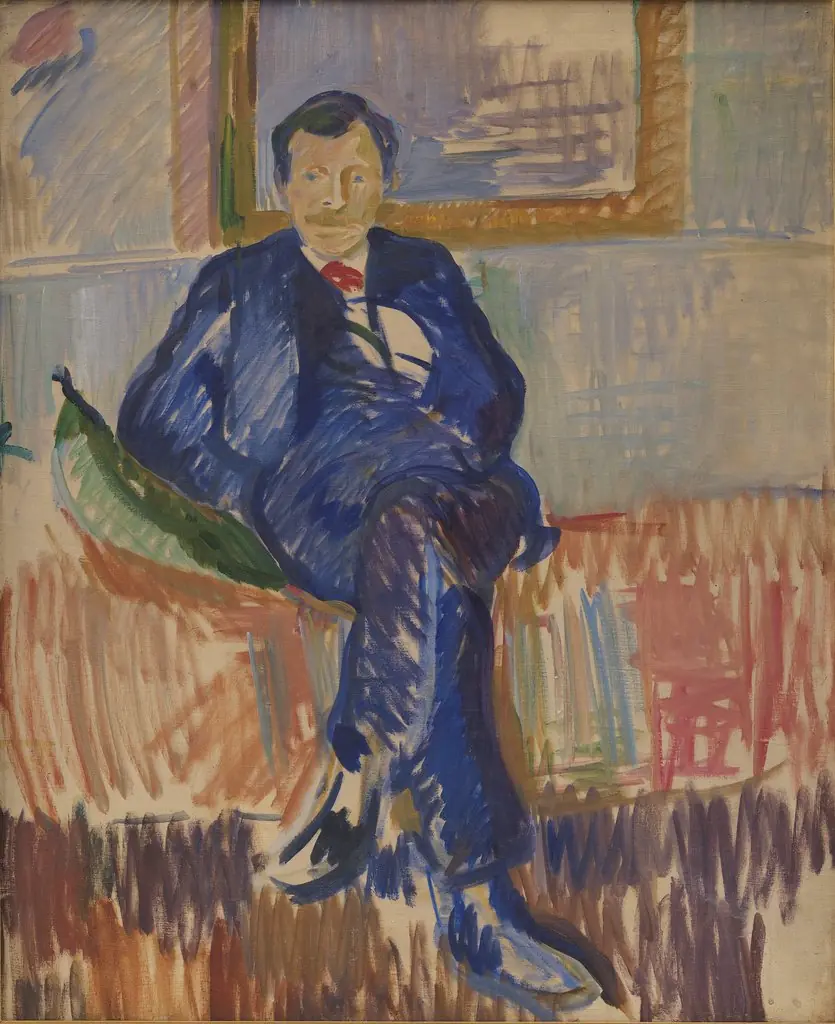
Portrait of the Painter Edvard Weie
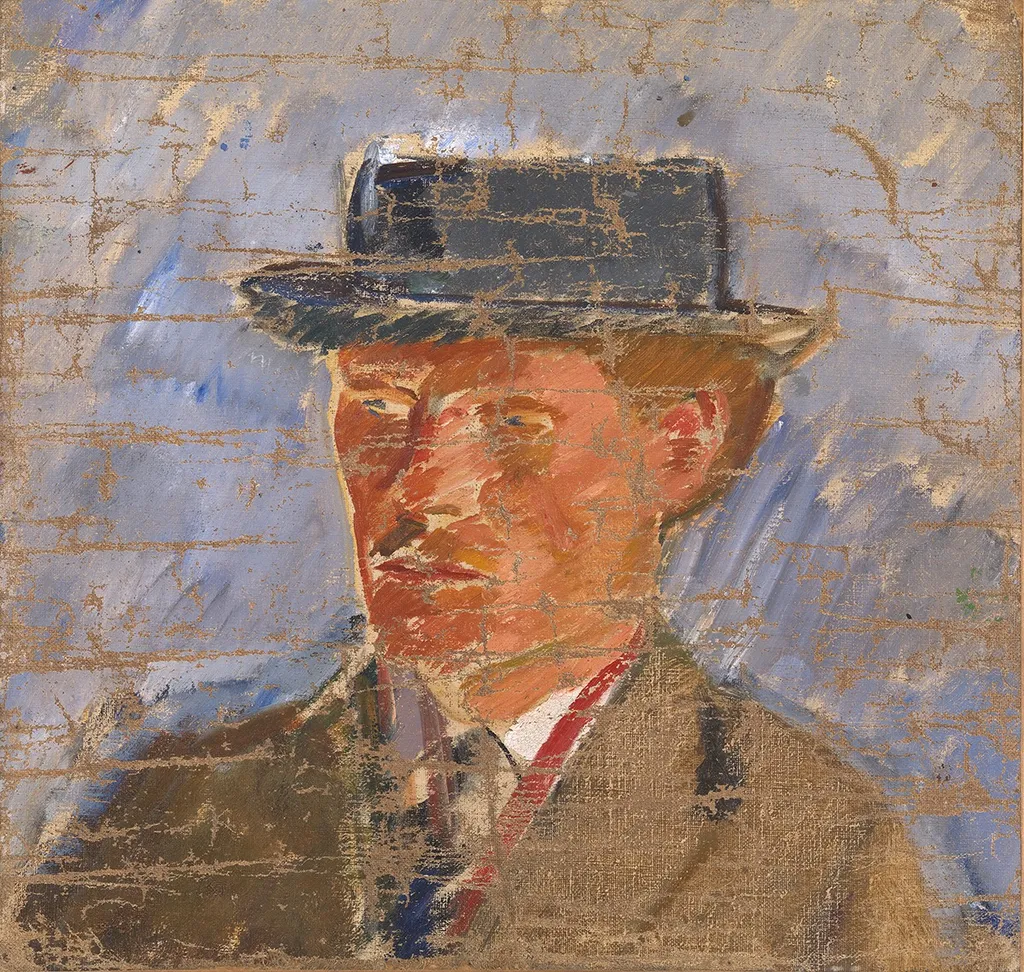
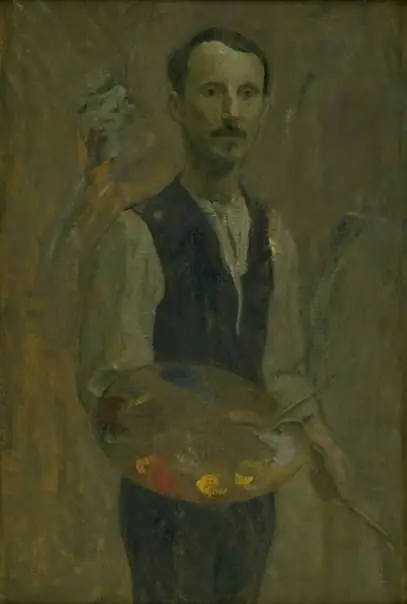
Portrait of the Painter Edvard Weie is an oil painting by the Post-Impressionist artist Karl Isakson. It dates from 1907 and is held in the collection of the Statens Museum for Kunst.
About this work
Overview
Created in 1907, the oil painting titled *Portrait of the Painter Edvard Weie* presents a seated figure rendered with vigorous color and texture. The work belongs to the post‑impressionist current of the early twentieth century and is currently part of the collection of Denmark’s Statens Museum for Kunst.
Subject & Meaning
The sitter is the Swedish artist Edvard Weie, shown wearing a low‑tilted dark hat that partially obscures his features. The portrait captures his likeness through simplified, expressive forms rather than detailed realism, suggesting an interest in conveying character and mood over exact physical description.
Technique & Style
Isakson employs thick impasto brushwork, especially around the hat and neck, creating a tactile surface that emphasizes the materiality of the paint. Bold red‑orange patches define the skin, while a cracked‑looking wall of blues and grays forms a stark, contrasting backdrop, exemplifying the post‑impressionist emphasis on color and texture.
History & Provenance
Karl Isakson, a Stockholm‑born painter who settled in Denmark, produced the portrait during his most active period in the country's modernist circles. The painting entered the holdings of Statens Museum for Kunst, where it remains on display as part of the museum’s representation of early Danish modernism.
Context
Isakson’s career intersected with the Bornholm school of painters, a group noted for its experimental approach to color and form. This portrait reflects the broader Scandinavian shift toward modernist aesthetics in the first decade of the twentieth century, linking individual portraiture to collective artistic developments.
Artist & collection
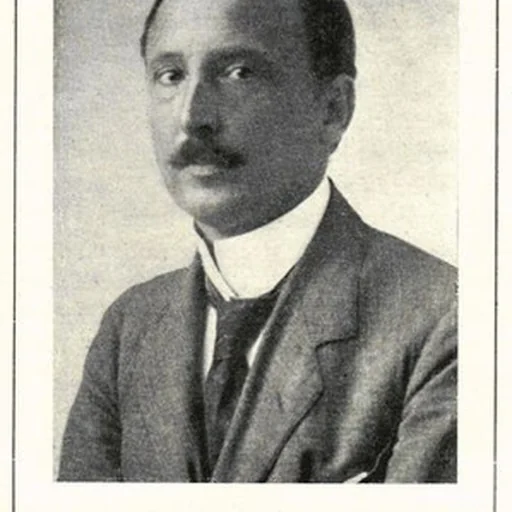
Artist
Karl Oscar Isakson (16 January 1878, in Stockholm – 19 February 1922) was a Swedish painter who spent much of his professional life in Denmark where he is considered to be one of the fathers of Modernism.

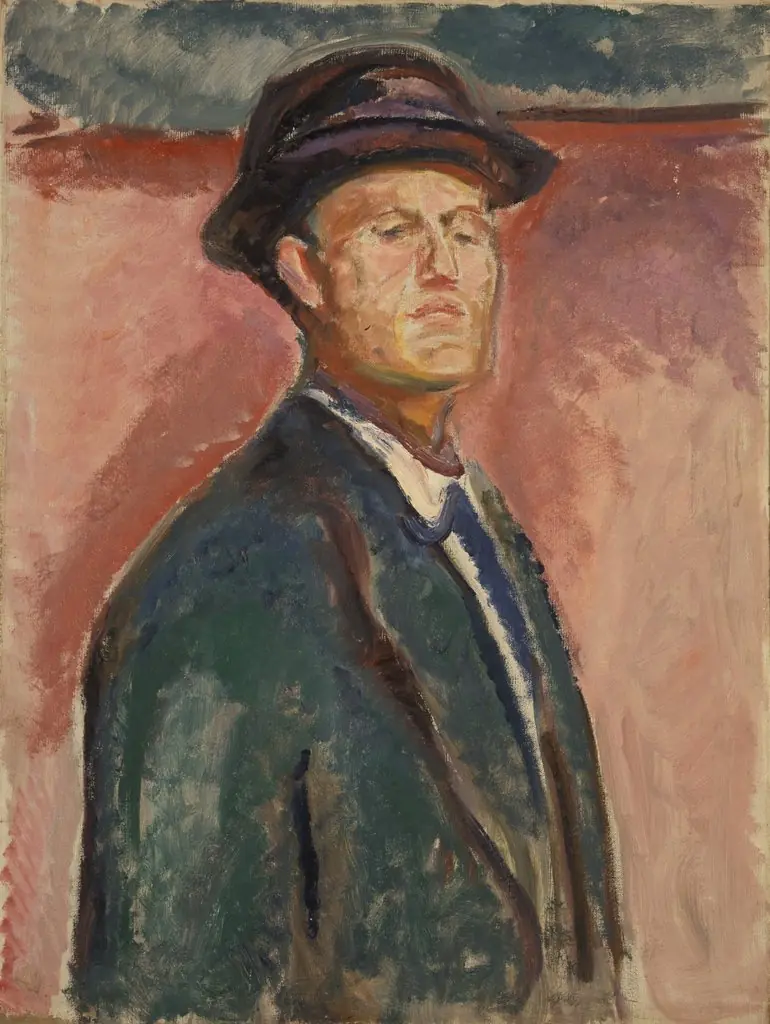 Self-Portrait with Hat
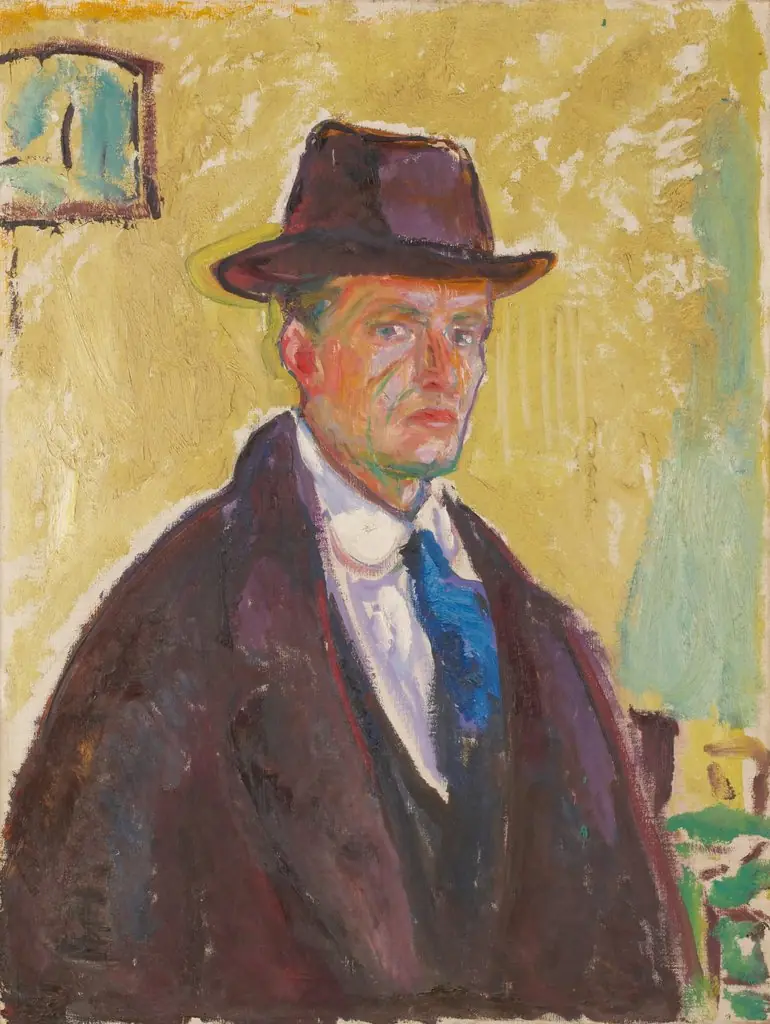 Self-Portrait in Hat and Coat
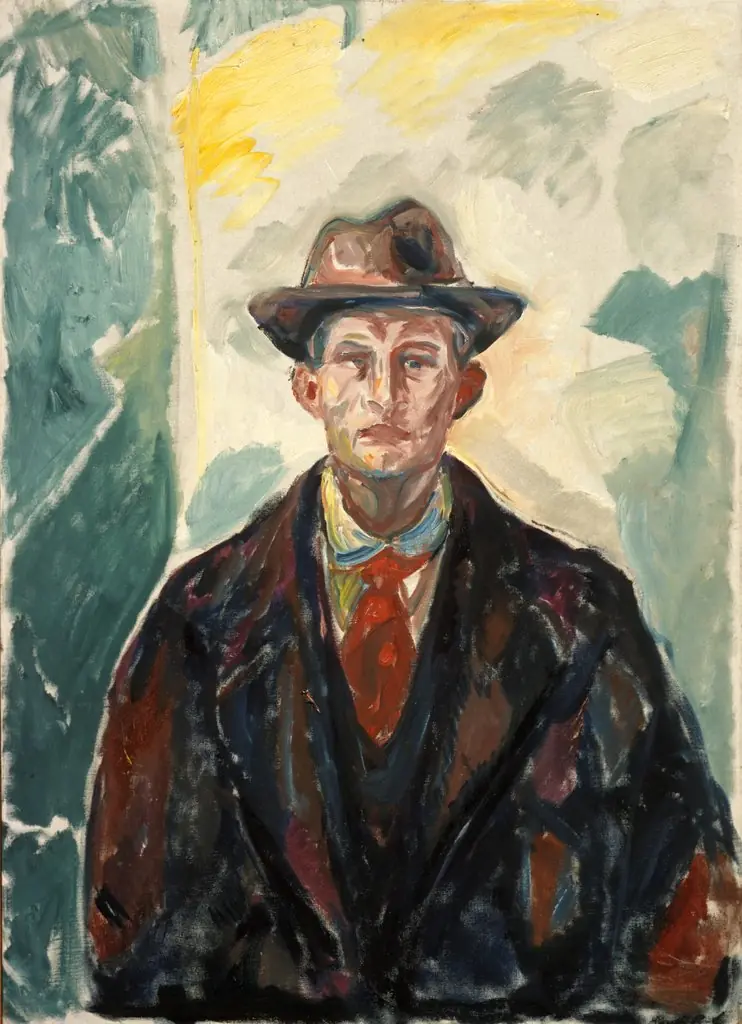 Self-Portrait with Hat and Red Tie
 Self-Portrait
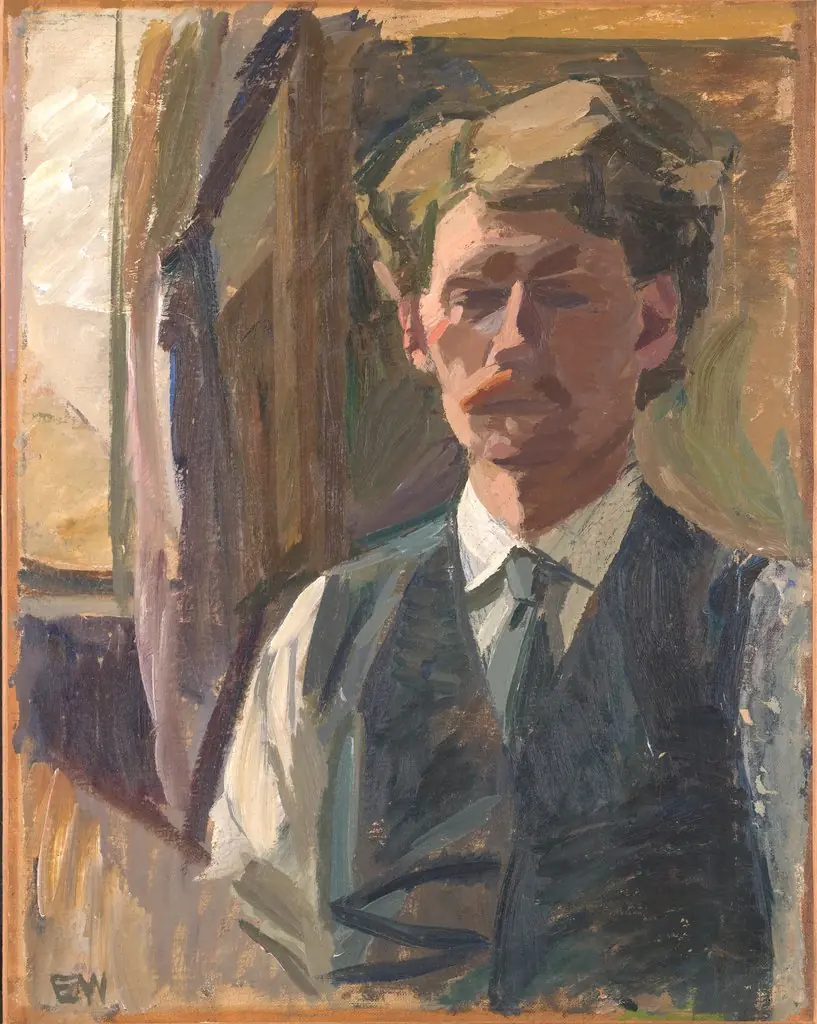 Self-Portrait
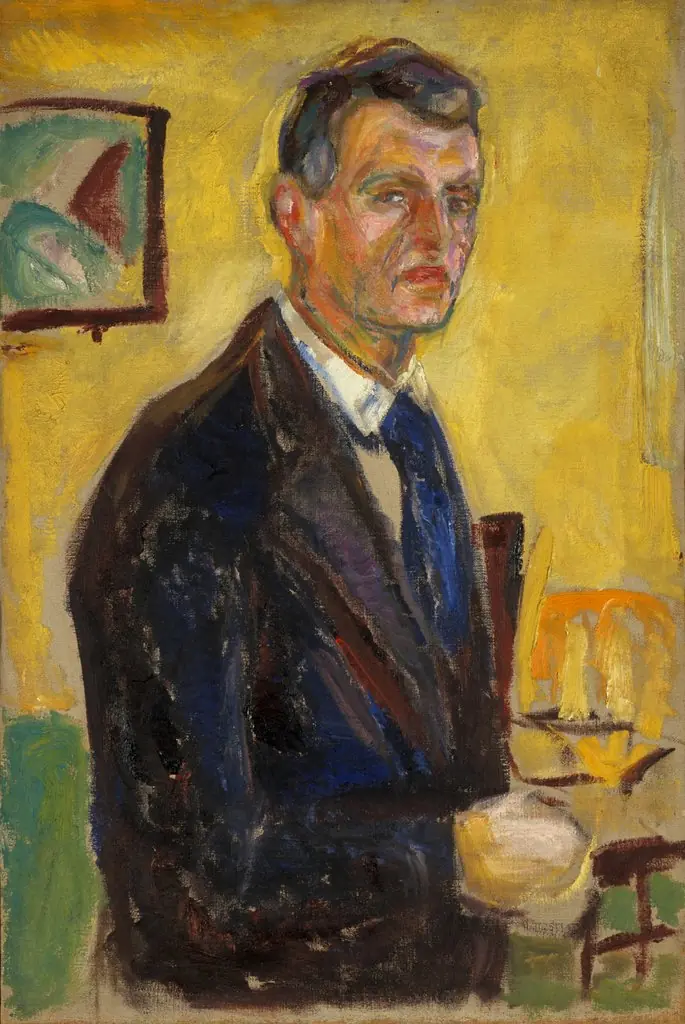 Self-Portrait against Yellow Background
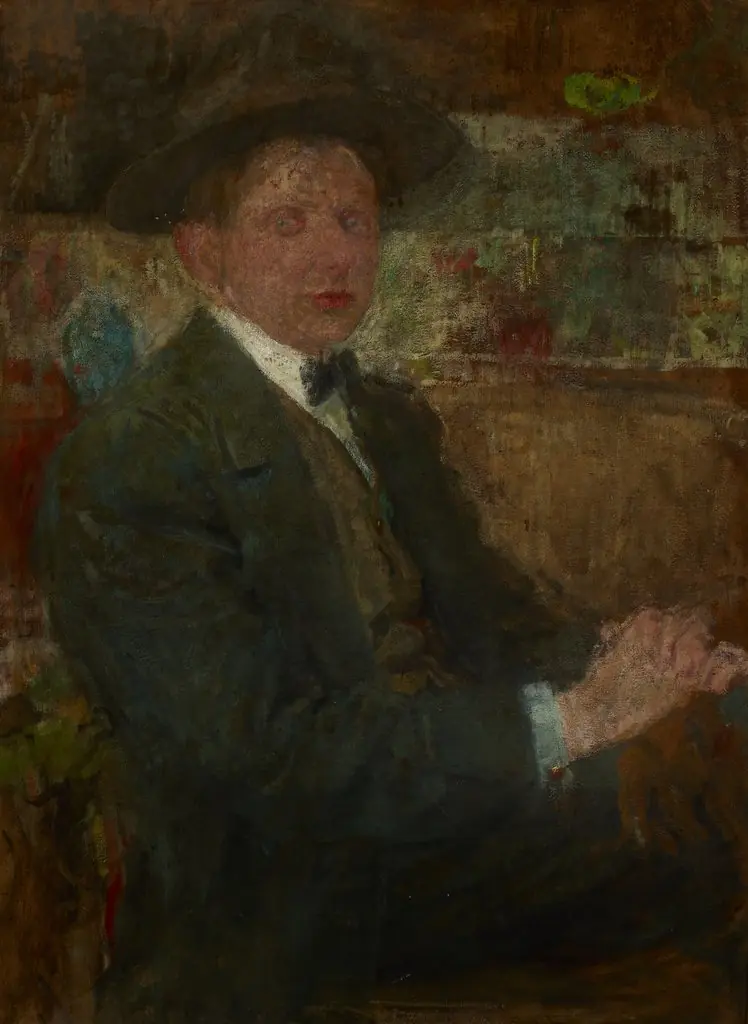 Portrait of a Man in a Hat
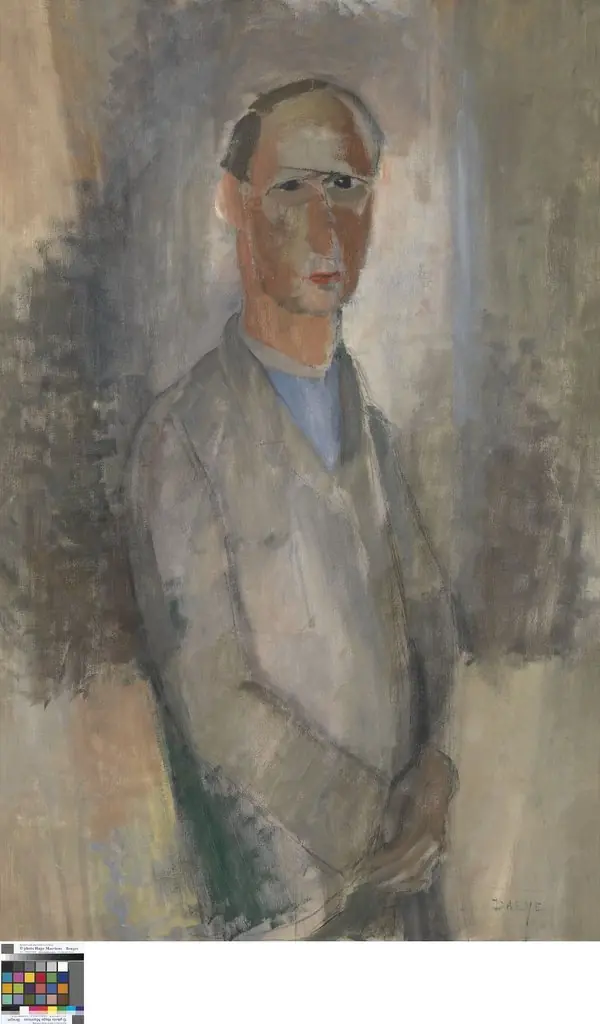 Zelfportret
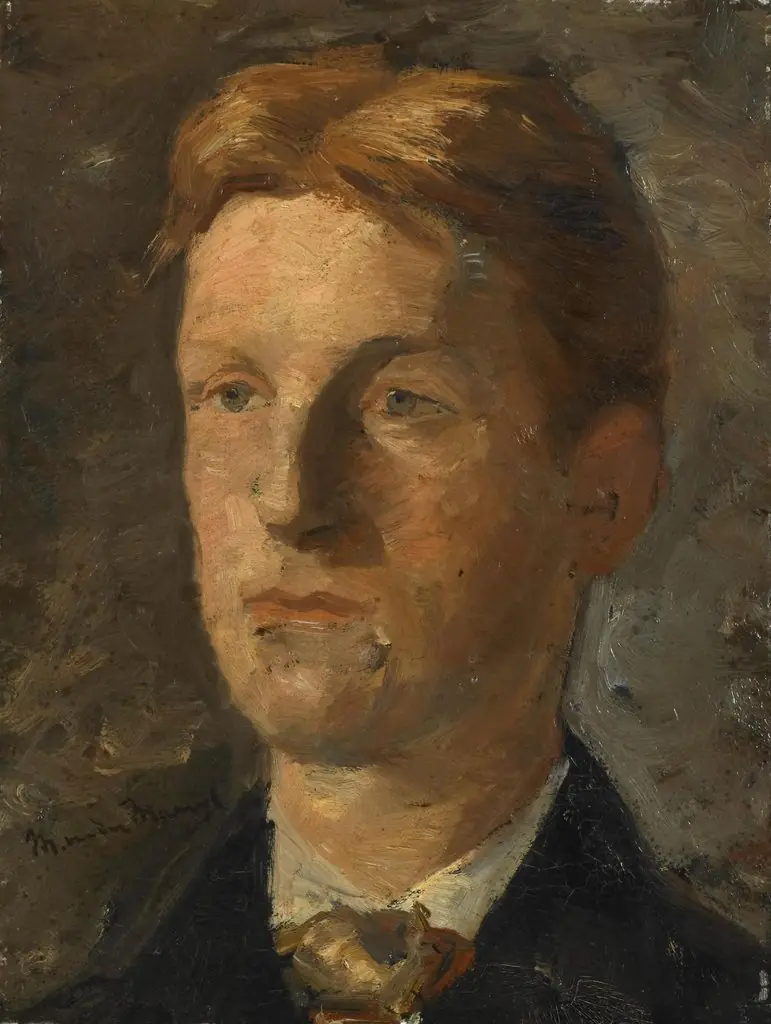 Adriaan Pit (1860-1944). Director of the Dutch Museum for Art and History in Amsterdam
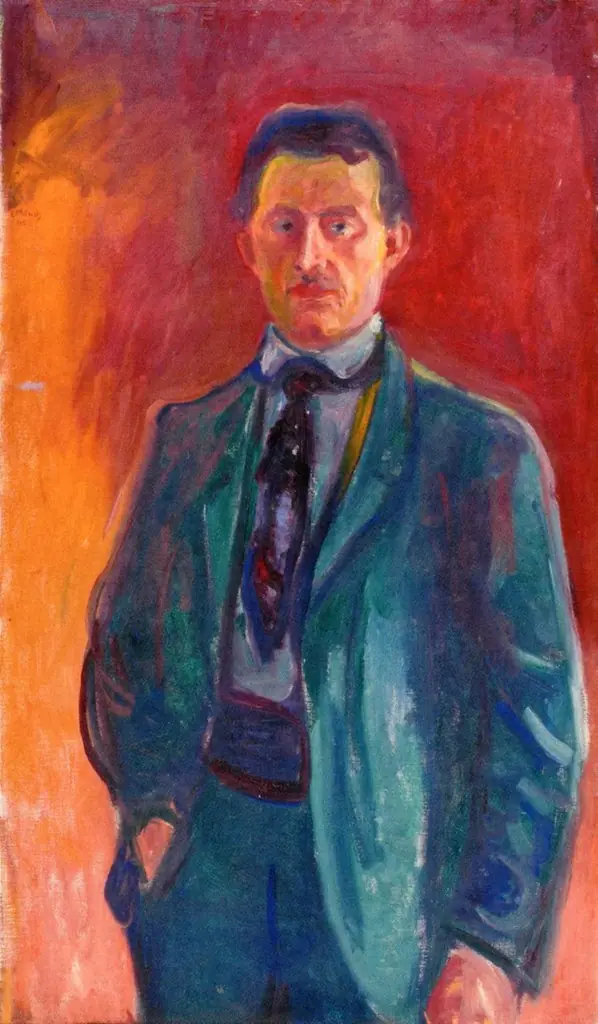 Self-Portrait against Red Background
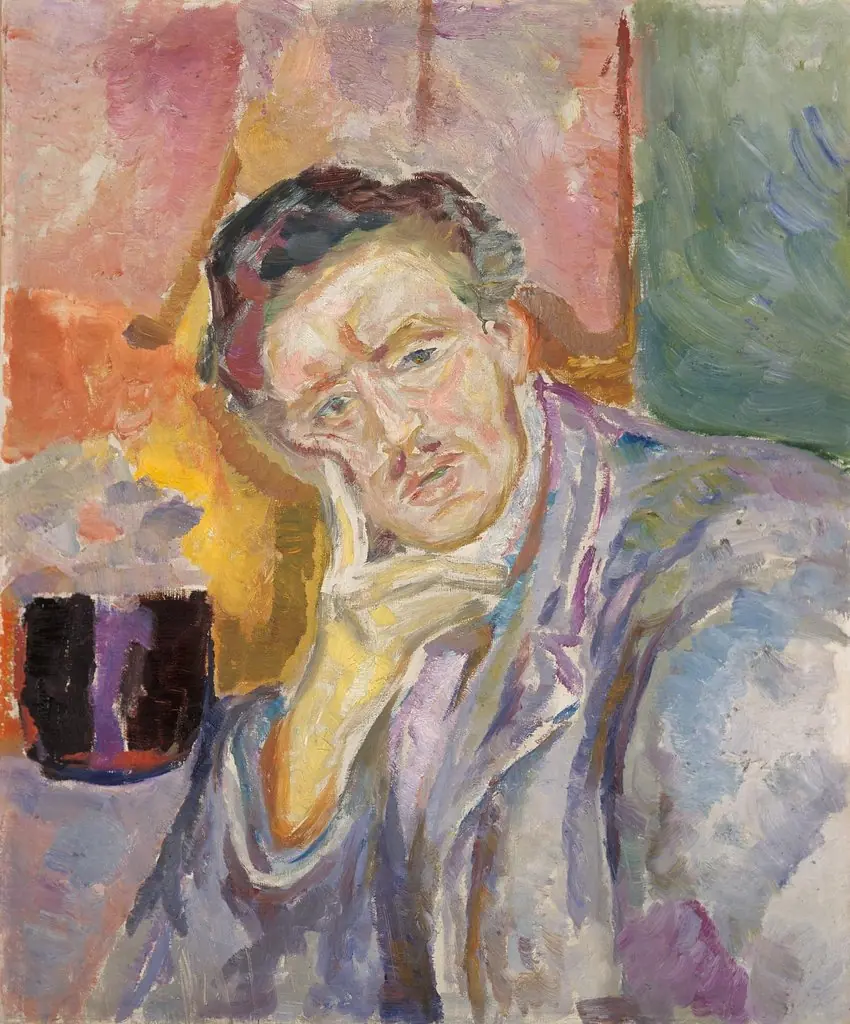 Self-Portrait with Hand under Cheek
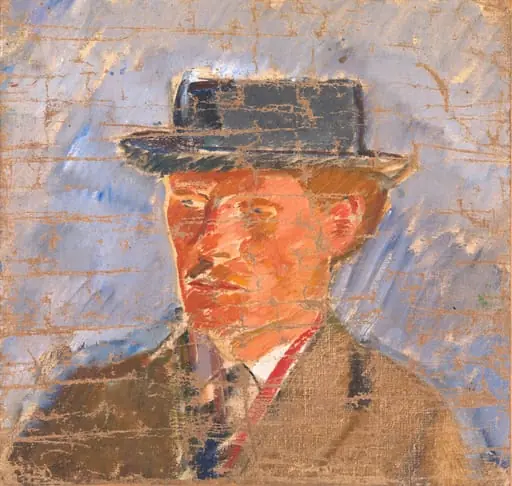 Portrait of the Painter Edvard Weie