Artwork
Self-Portrait, with a Cod's Head on the Plate
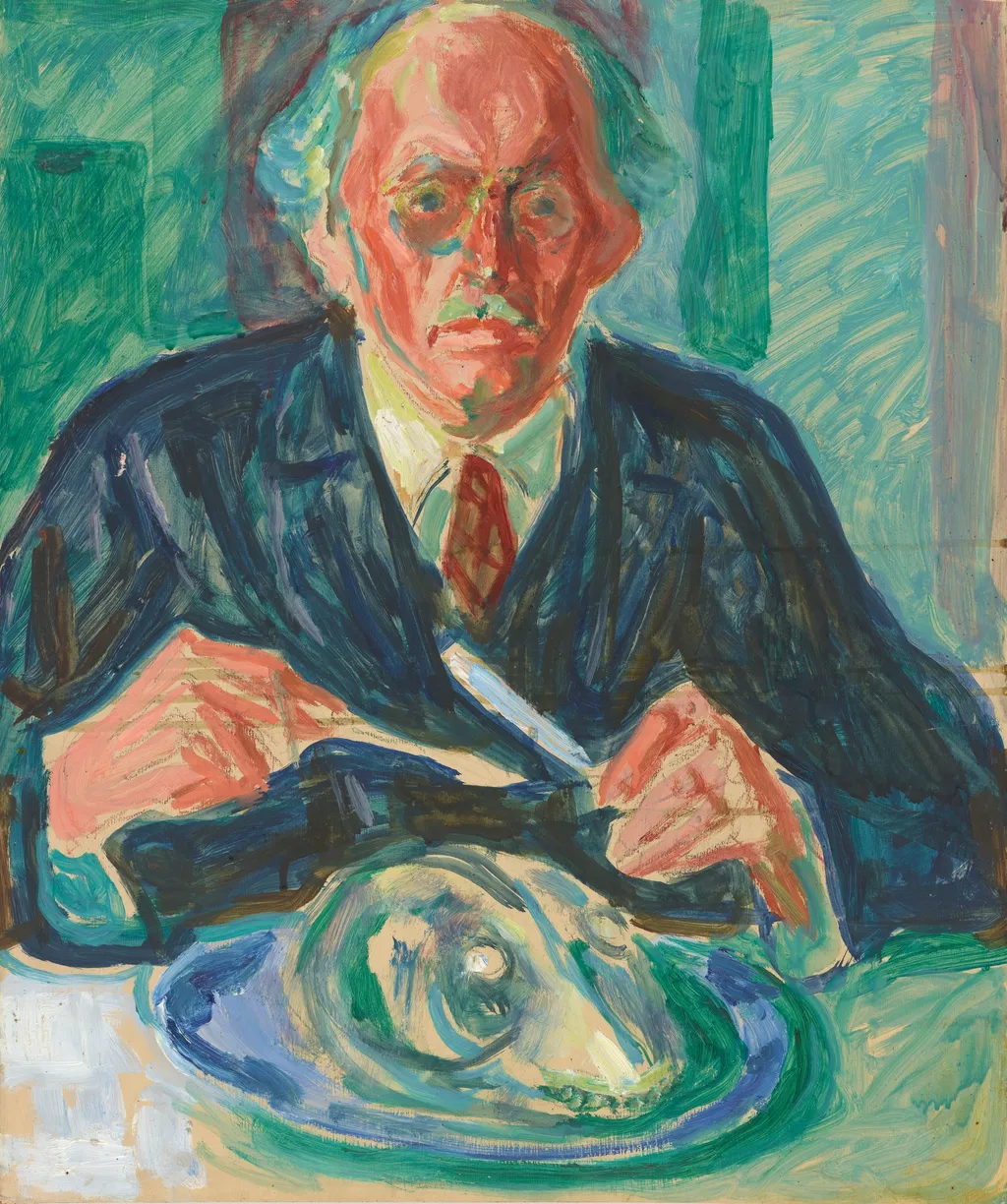
Self-Portrait, with a Cod's Head on the Plate is an oil painting by the Post-Impressionist artist Edvard Munch. It dates from 1940 and is held in the collection of the Munch Museum.
About this work
The painting is called Self-Portrait, with a Cod's Head on the Plate.
It was made by Edvard Munch in 1940.
The artist used mahogany wood as the medium, which is an unusual choice for a portrait, and this fact makes the work interesting because it shows Munch's experimentation with different materials.
You can learn more about the artist's other works at the Munch Museum.
Overview
Edvard Munch painted this self-portrait in 1940 on a panel of mahogany wood, a departure from the canvas he typically used. At age 76, nearing the end of his life, he turned inward, producing works that reflected solitude and physical decline. The choice of wood as a support suggests a deliberate shift in material, emphasizing texture and permanence over traditional painting surfaces.
Subject & Meaning
The portrait shows Munch facing the viewer directly, his expression somber and unflinching. A cod’s head rests on a plate before him, its presence neither decorative nor literal but unsettling. The fish may symbolize mortality, sustenance, or the starkness of existence—themes recurring in his later years. The image resists easy interpretation, inviting contemplation rather than narrative.
Technique & Style
The style aligns with late expressionism: forms are simplified, emotion conveyed through posture and tone rather than detail.
Munch applied pigment directly to the dense grain of mahogany, allowing the wood’s natural texture to influence the surface. Brushwork is restrained, colors muted—ochres, grays, and browns dominate. The style aligns with late expressionism: forms are simplified, emotion conveyed through posture and tone rather than detail. The medium’s rigidity contrasts with the psychological intensity of the gaze.
History & Provenance
Created in 1940, the work remained in Munch’s possession until his death in 1944. It entered the collection of the Munch Museum in Oslo, established to preserve his legacy. The museum holds the largest assembly of his works, including this piece, which reflects his final artistic phase. No significant ownership changes or restorations are documented.
Context
In his final years, Munch lived in relative isolation near Oslo, producing fewer but more introspective works. The cod’s head may reference Norwegian coastal life, but its inclusion also echoes medieval vanitas motifs—reminders of decay and transience. His earlier fame from *The Scream* had faded; this portrait is a quiet confrontation with aging and death.
Legacy
This work stands as one of Munch’s last self-representations, revealing an artist uninterested in idealization. Its use of wood as support influenced later artists exploring materiality in portraiture. Though less known than his earlier pieces, it is valued for its unvarnished honesty and material innovation, contributing to a broader understanding of his late-period practice.
Own this work as a print
Artist & collection
Artist
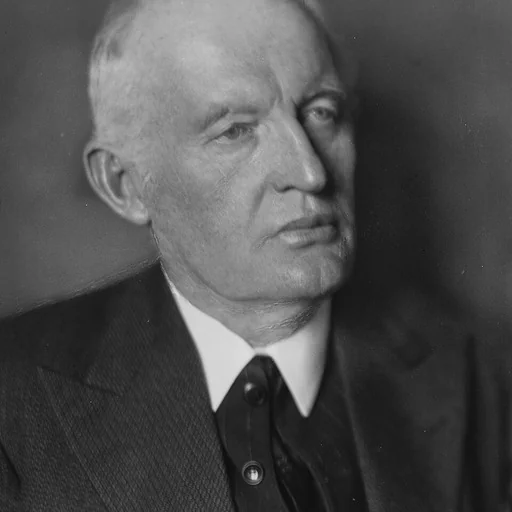
Edvard Munch ( MUUNK; Norwegian: ; 12 December 1863 – 23 January 1944) was a Norwegian painter.

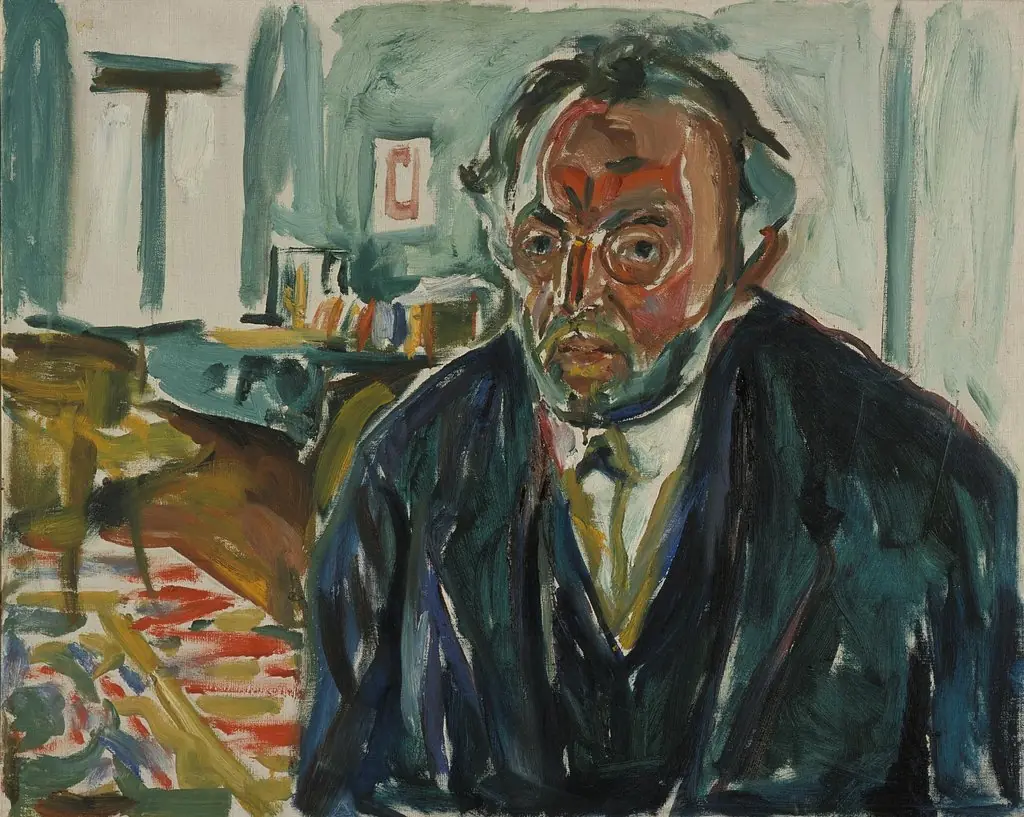 Self-Portrait after the Spanish Flu
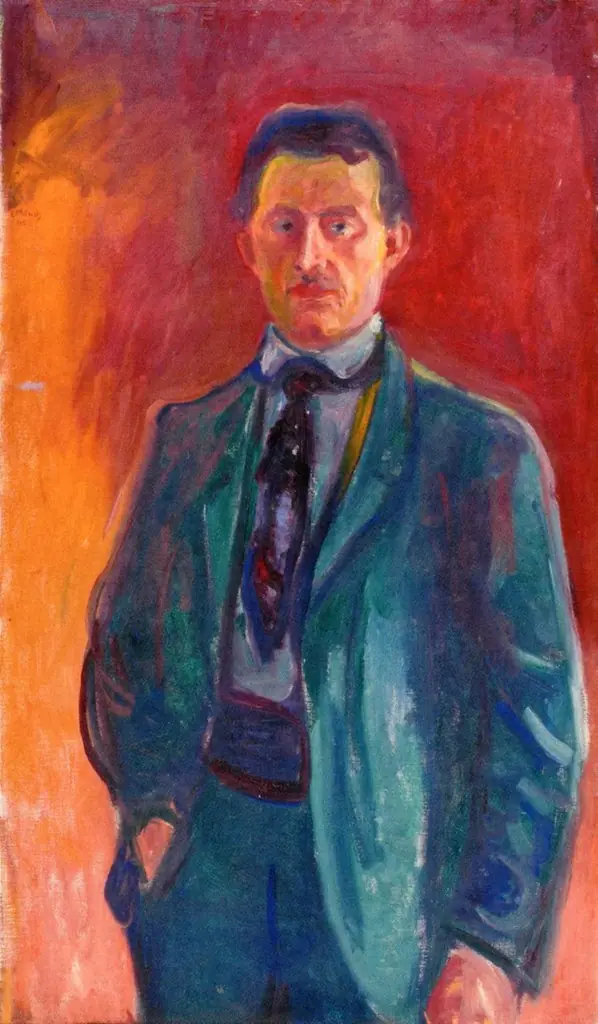 Self-Portrait against Red Background
 Self-Portrait with Hand under Cheek
 Self-Portrait in Hat and Coat
 Self-Portrait
 Self-Portrait
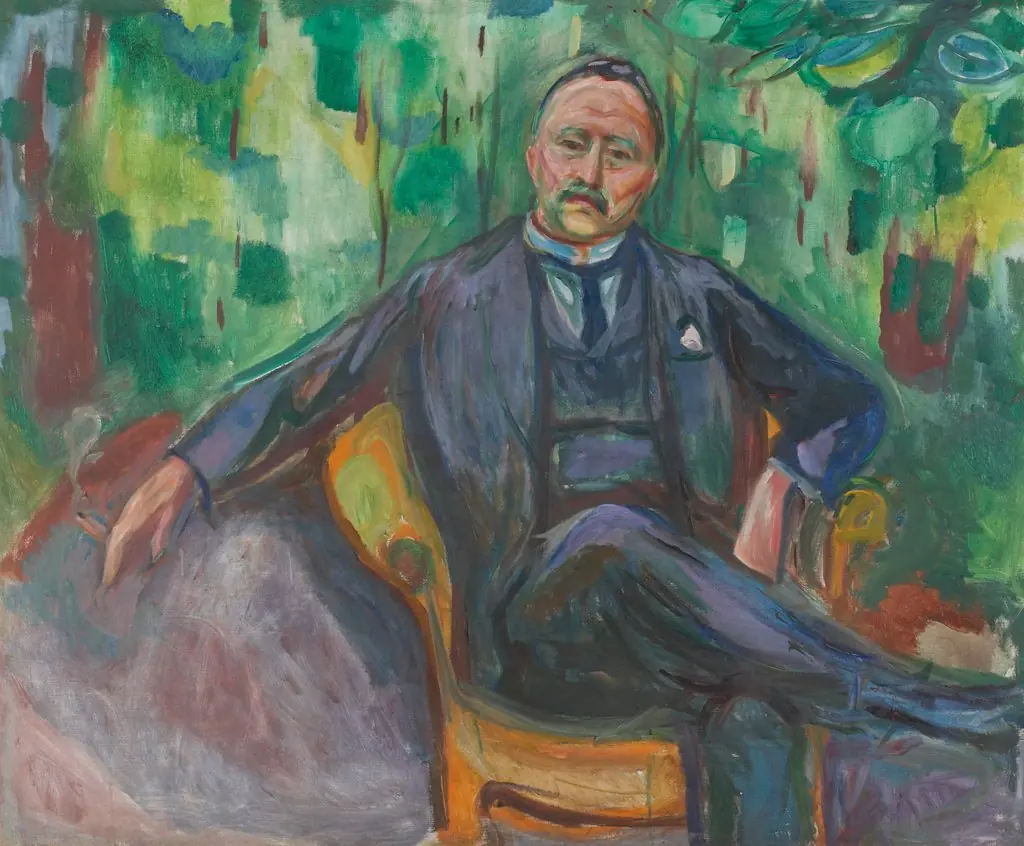 Heinrich C. Hudtwalcker
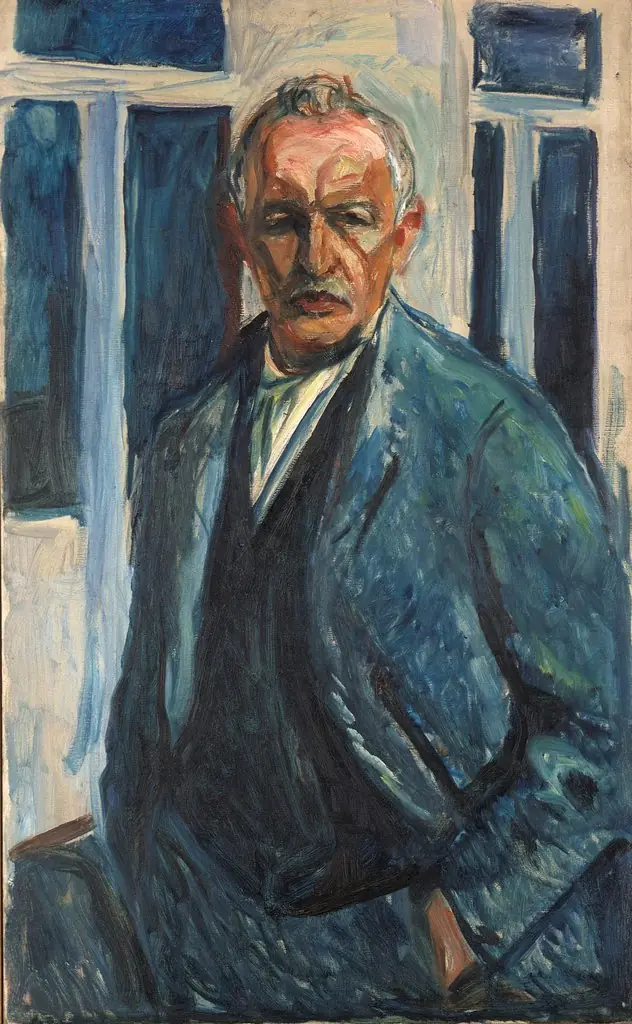 Self-Portrait with Hands in Pockets
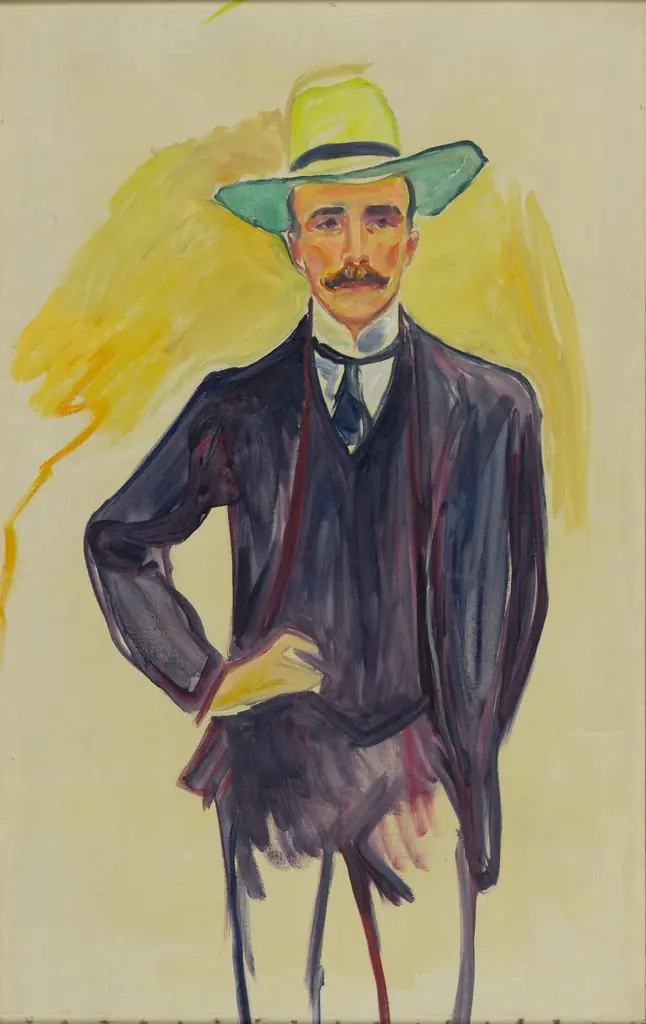 Harry Graf Kessler
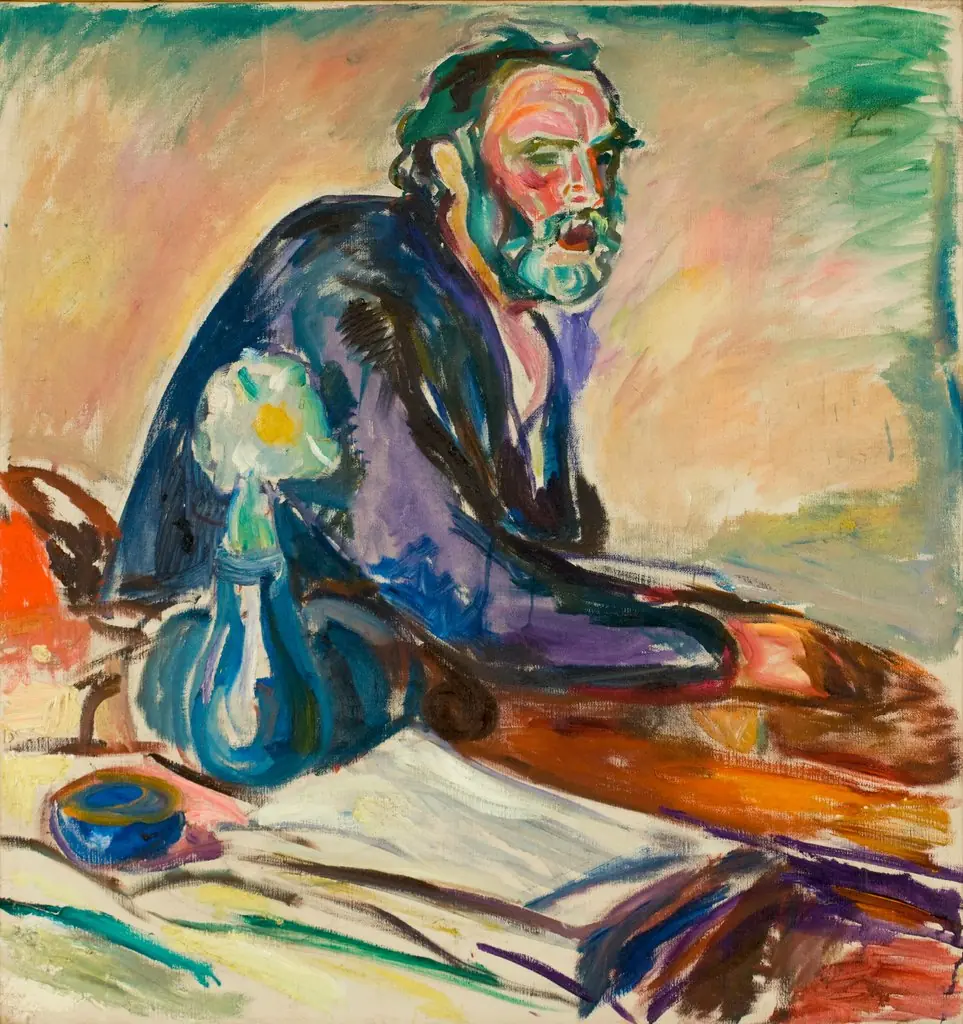 Man with Bronchitis
 Self-Portrait at the Wedding Table
 Self-Portrait