Artwork
Set Design for Henrik Ibsen's "Ghosts"
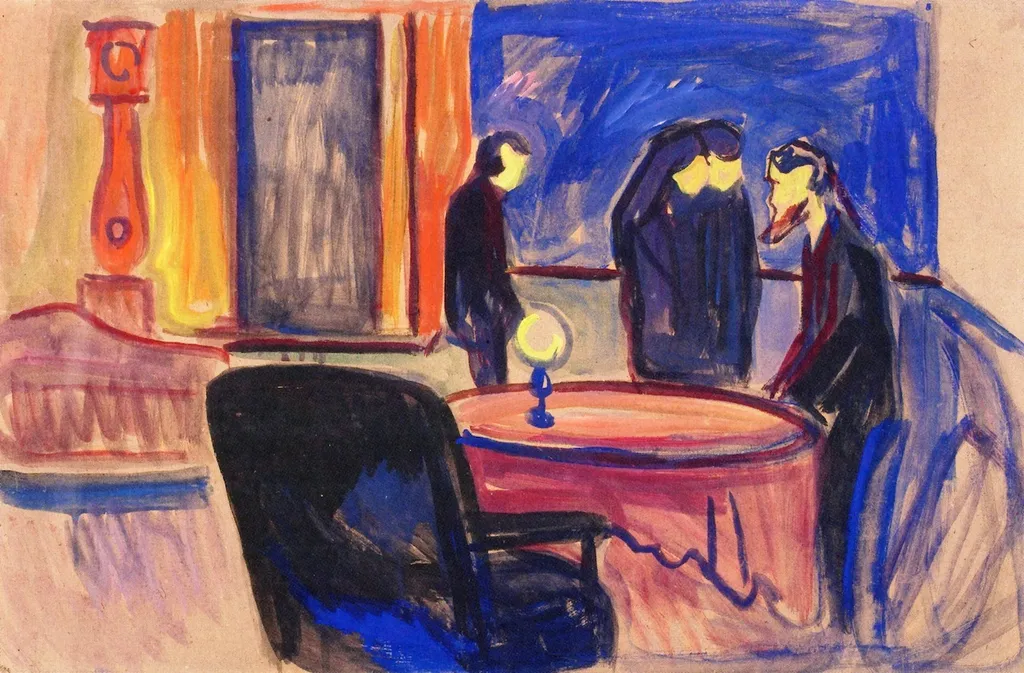
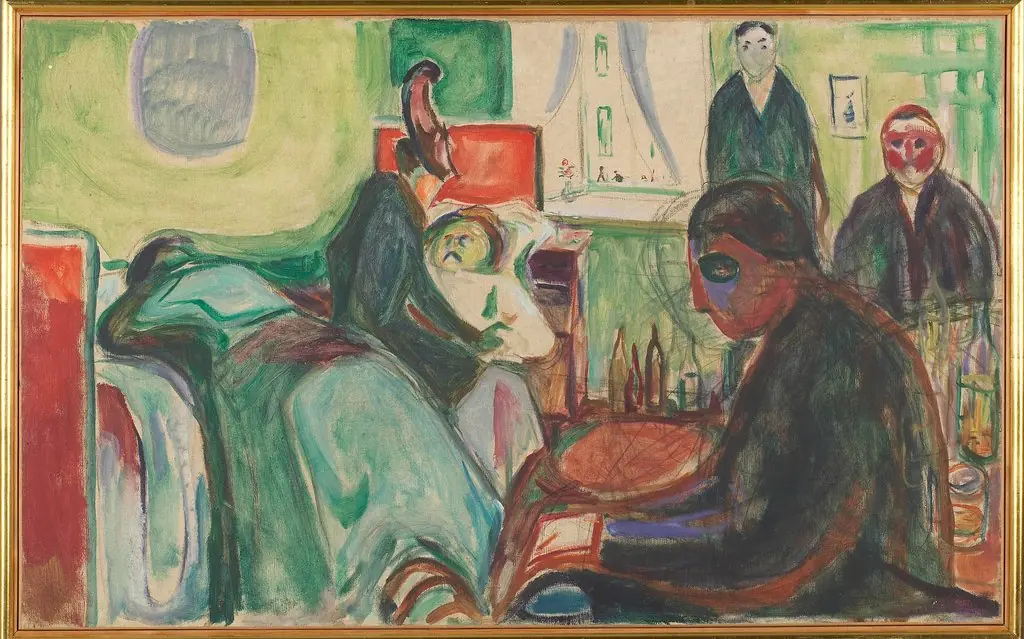
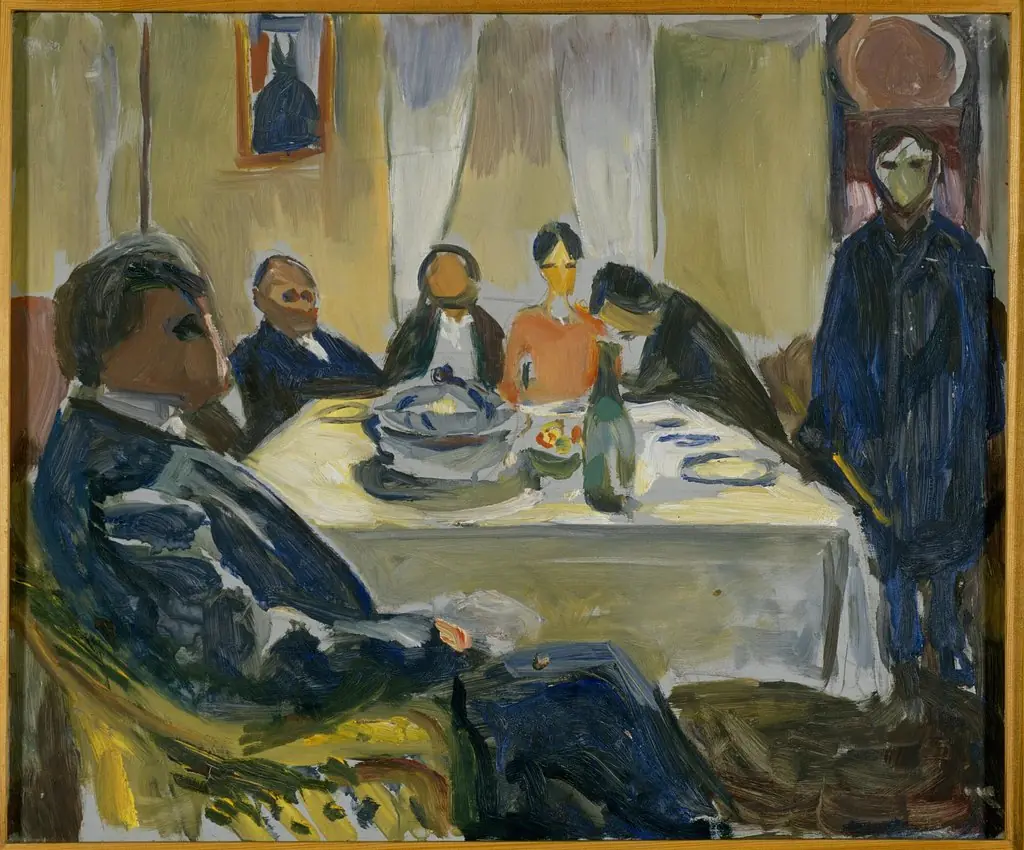
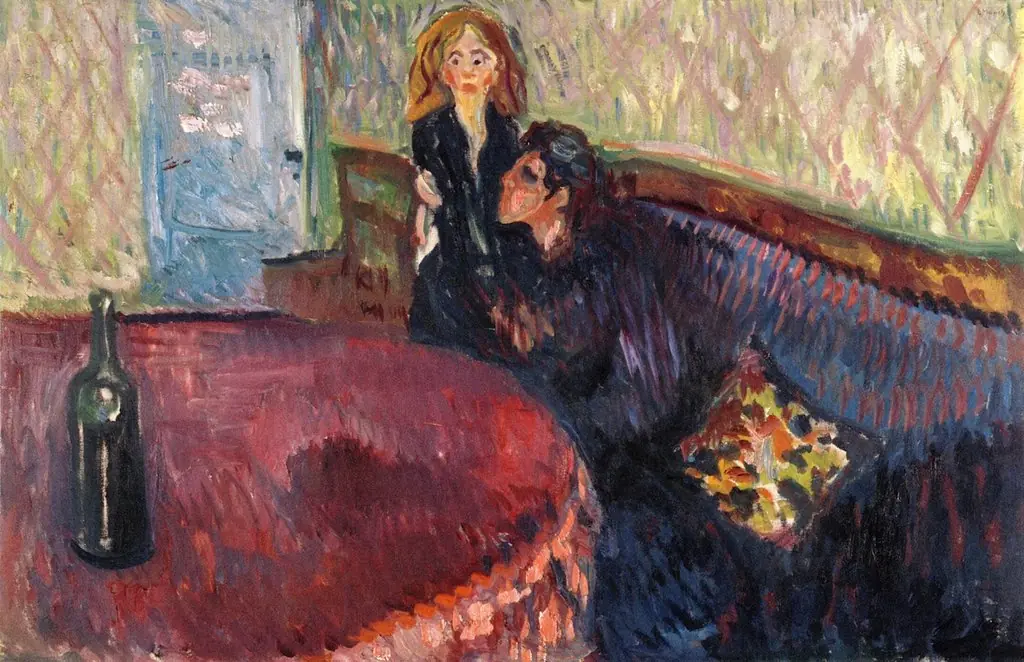
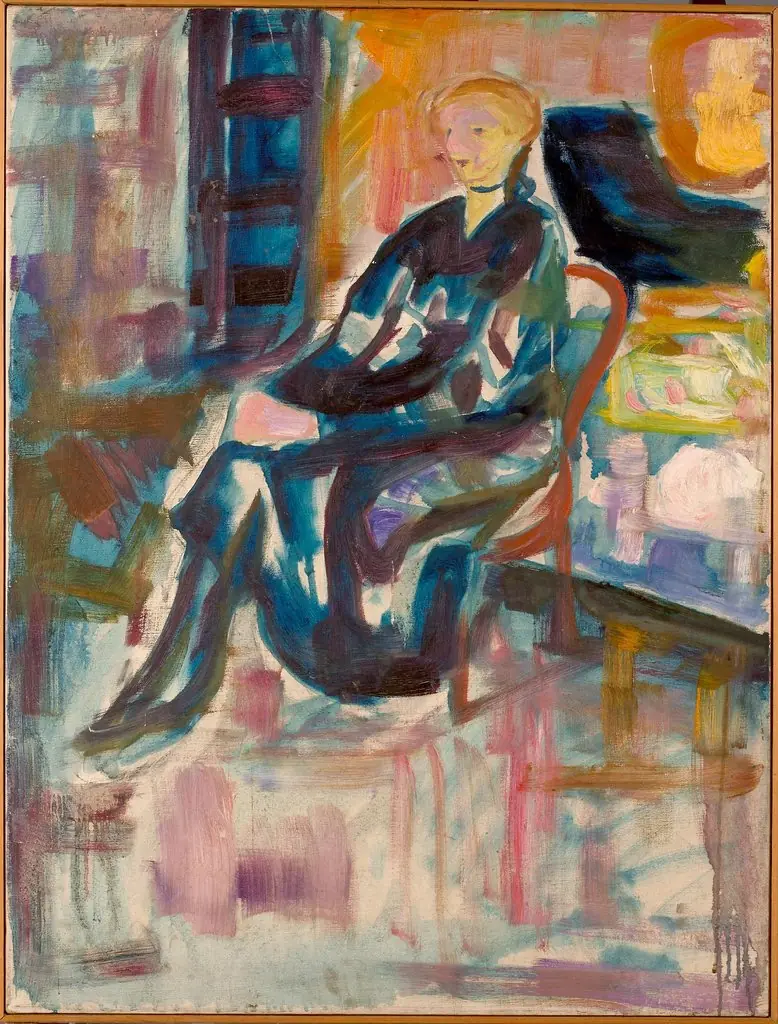
Set Design for Henrik Ibsen's "Ghosts" is a tempera painting by the Post-Impressionist artist Edvard Munch. It dates from 1906 and is held in the collection of the Munch Museum.
About this work
Overview
The composition reflects Munch’s interest in psychological tension, rendered through simplified forms and a restrained palette of blues, reds, and yellows.
Edvard Munch designed the stage setting for Henrik Ibsen’s play “Ghosts” in 1906, executing it in tempera on panel. Though best known for his symbolic canvases, this work served a functional theatrical purpose, translating the play’s oppressive atmosphere into a visual environment. The composition reflects Munch’s interest in psychological tension, rendered through simplified forms and a restrained palette of blues, reds, and yellows.
Subject & Meaning
The scene depicts three figures gathered around a red table in a sparse interior, their dark clothing and rigid postures suggesting emotional confinement. The tall orange object in the corner may symbolize an unseen force or repressed truth, echoing the play’s themes of inherited guilt and moral decay. Munch avoided literal narrative, instead using spatial tension and color to evoke the psychological weight of Ibsen’s drama.
Technique & Style
Tempera allowed Munch to build thin, opaque layers with sharp edges, enhancing the flatness and intensity of the design. Brushwork is deliberate yet energetic, with loose strokes defining forms without detail. The muted tones and geometric simplification reflect post-impressionist tendencies, prioritizing emotional resonance over realism. The composition’s asymmetry and elevated horizon line heighten the sense of unease.
History & Provenance
Created for a 1906 production of “Ghosts” in Oslo, the design was used briefly before being archived. It remained in Munch’s possession until his death, later entering the collection of the Munch Museum in Oslo. Its survival as a standalone work is rare, as most theatrical designs were discarded after performances.
Context
Munch’s involvement with Ibsen’s play coincided with his deepening engagement with modernist theater and the psychological themes prevalent in Scandinavian literature. His association with radical thinkers like Hans Jæger reinforced his focus on inner turmoil. This design reflects a broader trend among artists of the time to blur boundaries between fine art and stagecraft.
Legacy
Though not widely exhibited during Munch’s lifetime, the set design is now recognized as a rare example of his applied art. It demonstrates how his expressive language extended beyond canvas into spatial environments, influencing later stage designers who sought to convey emotion through environment rather than realism.
Artist & collection
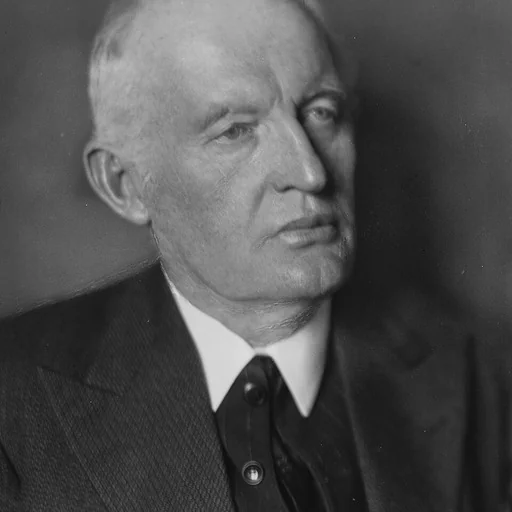
Artist
Edvard Munch ( MUUNK; Norwegian: ; 12 December 1863 – 23 January 1944) was a Norwegian painter.