Artwork
The Beggar
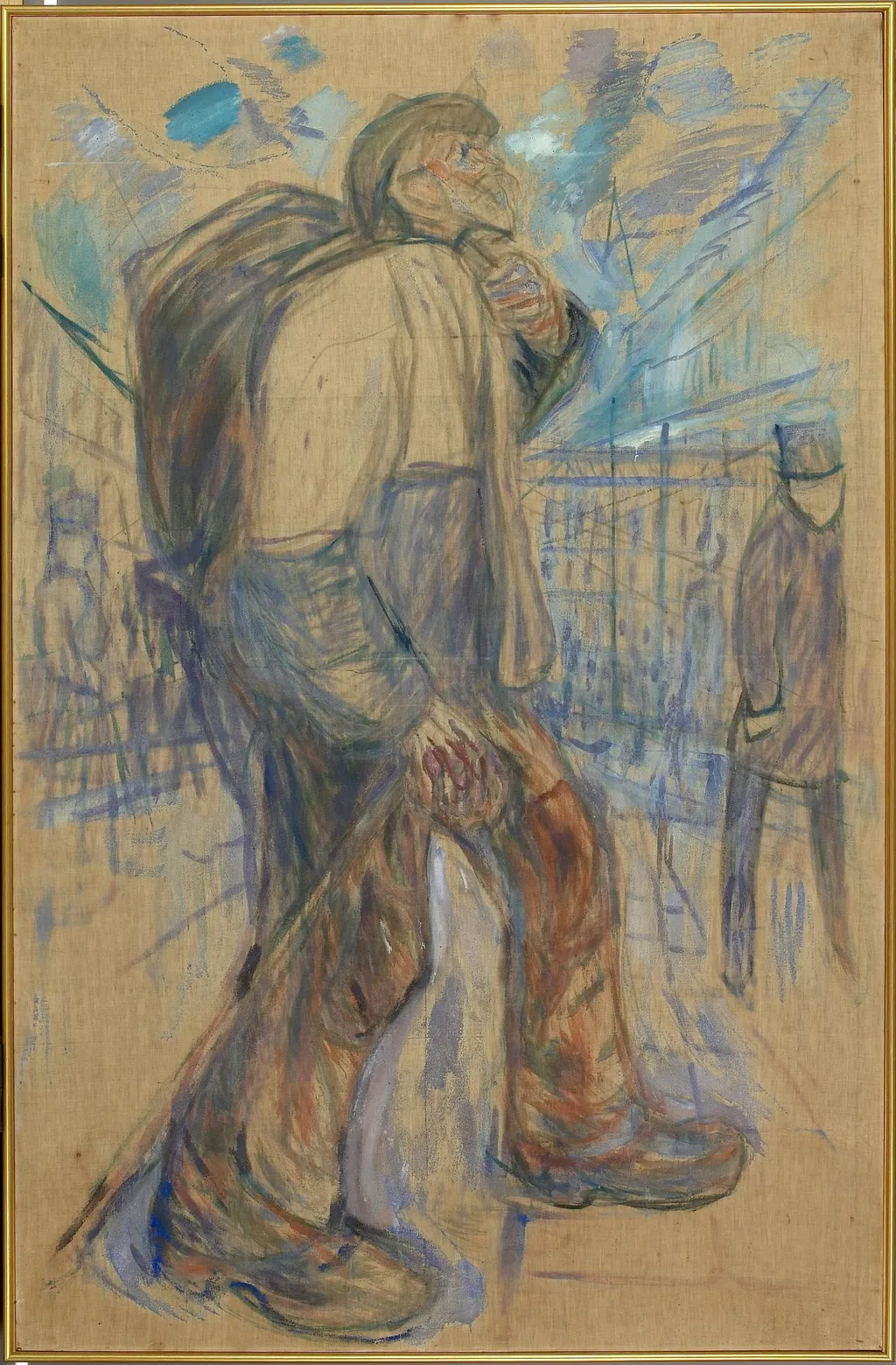
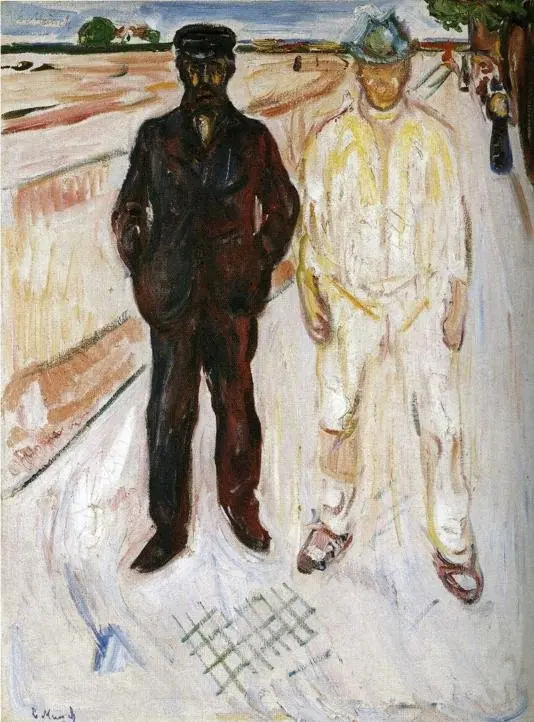
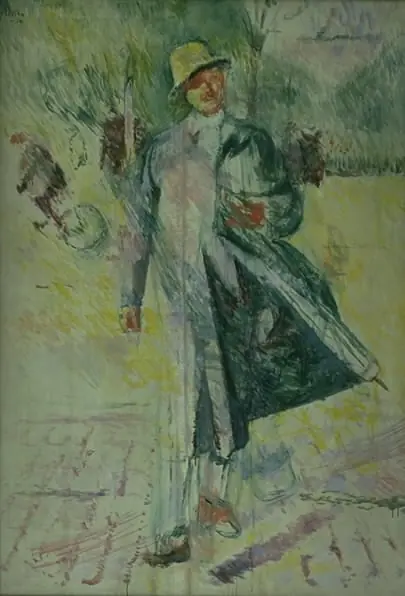
The Beggar is a charcoal painting by the Post-Impressionist artist Edvard Munch. It dates from 1909 and is held in the collection of the Munch Museum.
About this work
Overview
The Beggar, a 1909 oil painting by Edvard Munch, is a character study of a solitary figure conveying poverty and vulnerability. Characterized by loose, expressive brushstrokes and muted colors, the work captures a sense of movement in a moment frozen in time.
Subject & Meaning
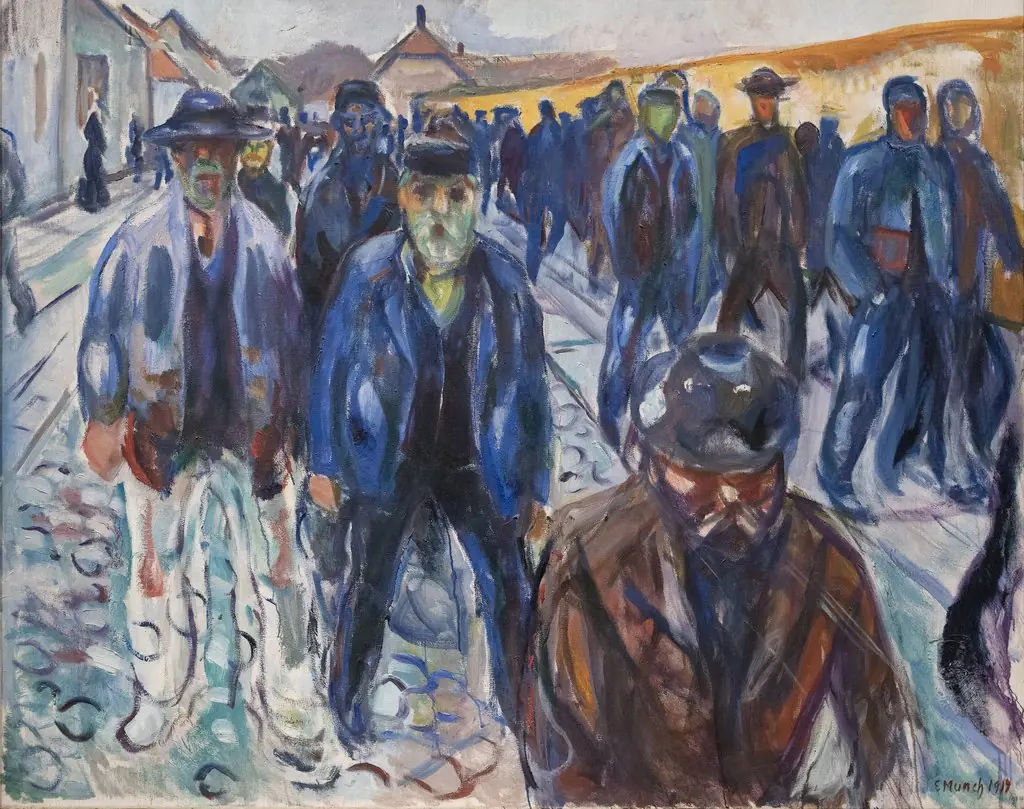
The painting depicts a hunched, tattered man in a white shirt and dark pants, walking down a street with buildings in the background. His right hand is raised to his chin, embodying emotional and psychological introspection amidst evident hardship.
Technique & Style
Munch's Post-Impressionist style is evident in the expressive, loose brushwork and the muted color palette, which contrasts the figure with its subdued surroundings. The technique effectively conveys inner turmoil and a sense of dynamic movement.
History & Provenance
Created in 1909, The Beggar is part of Munch's exploration of emotional states, influenced by his artistic training in Oslo and associations with nihilist circles. The work is currently held in the Munch Museum's collection.
Context
The painting reflects Munch's broader thematic concerns with human vulnerability and psychological depth, characteristic of his oeuvre influenced by personal experiences of illness and loss.
Artist & collection
Artist
Edvard Munch ( MUUNK; Norwegian: ; 12 December 1863 – 23 January 1944) was a Norwegian painter.