Artwork
The Human Mountain: Sphinx
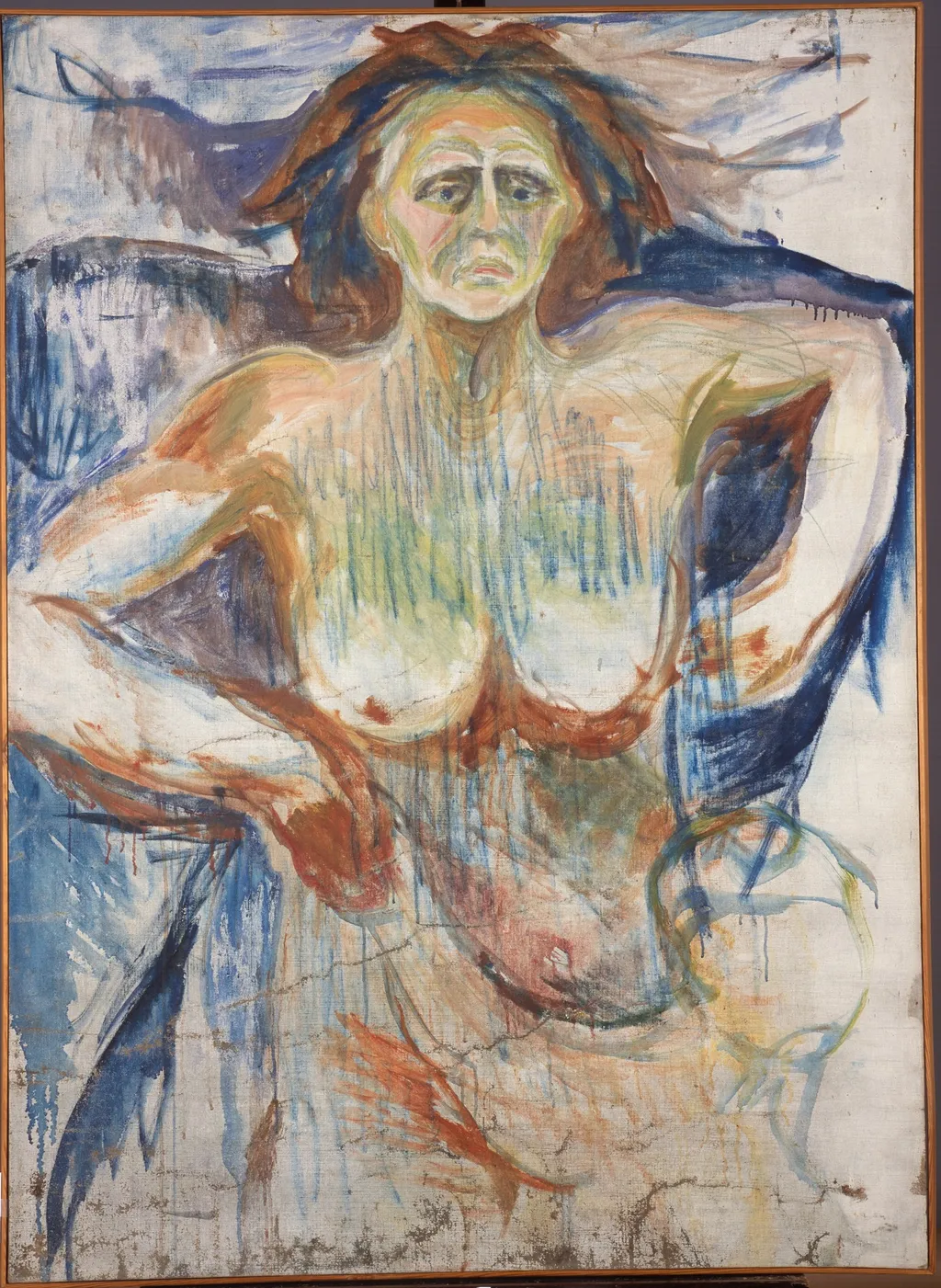
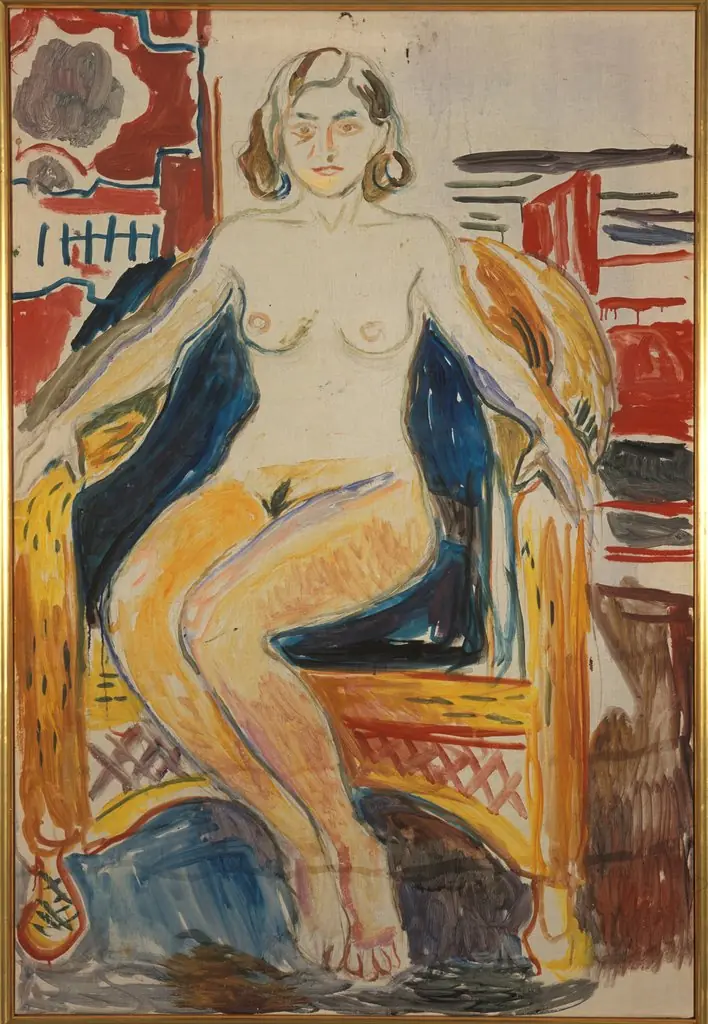
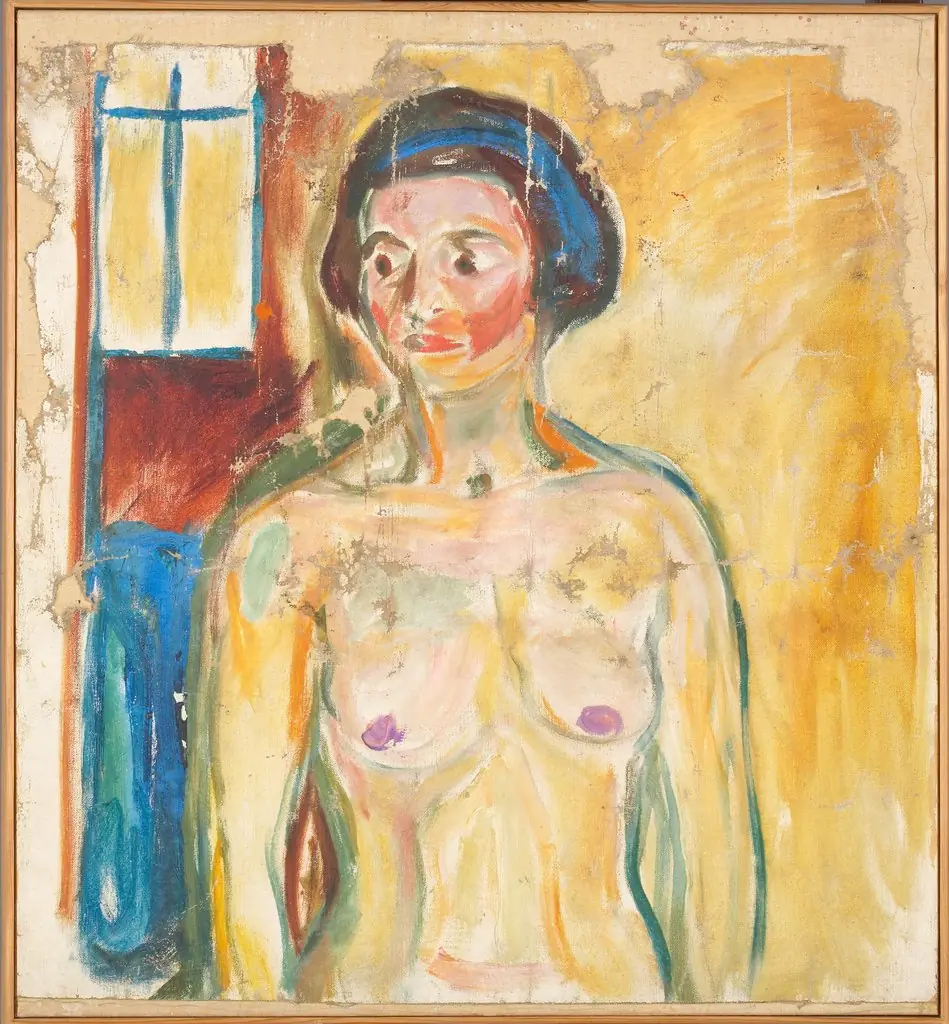
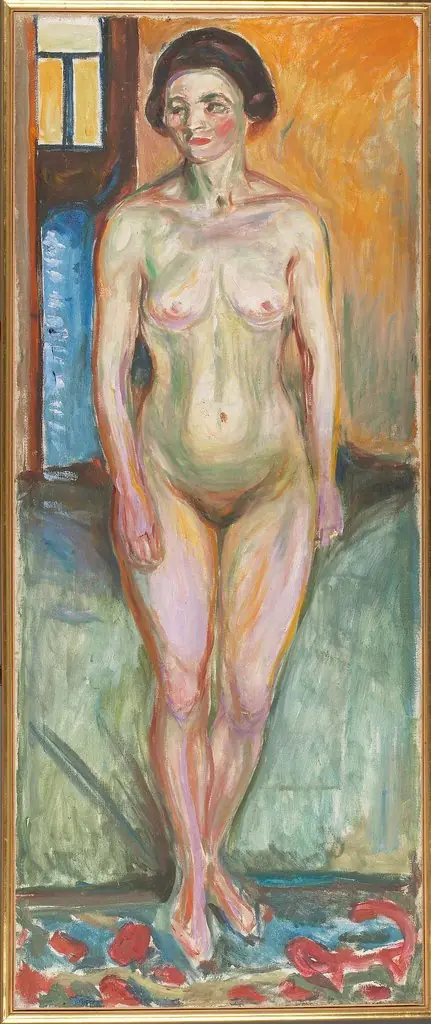
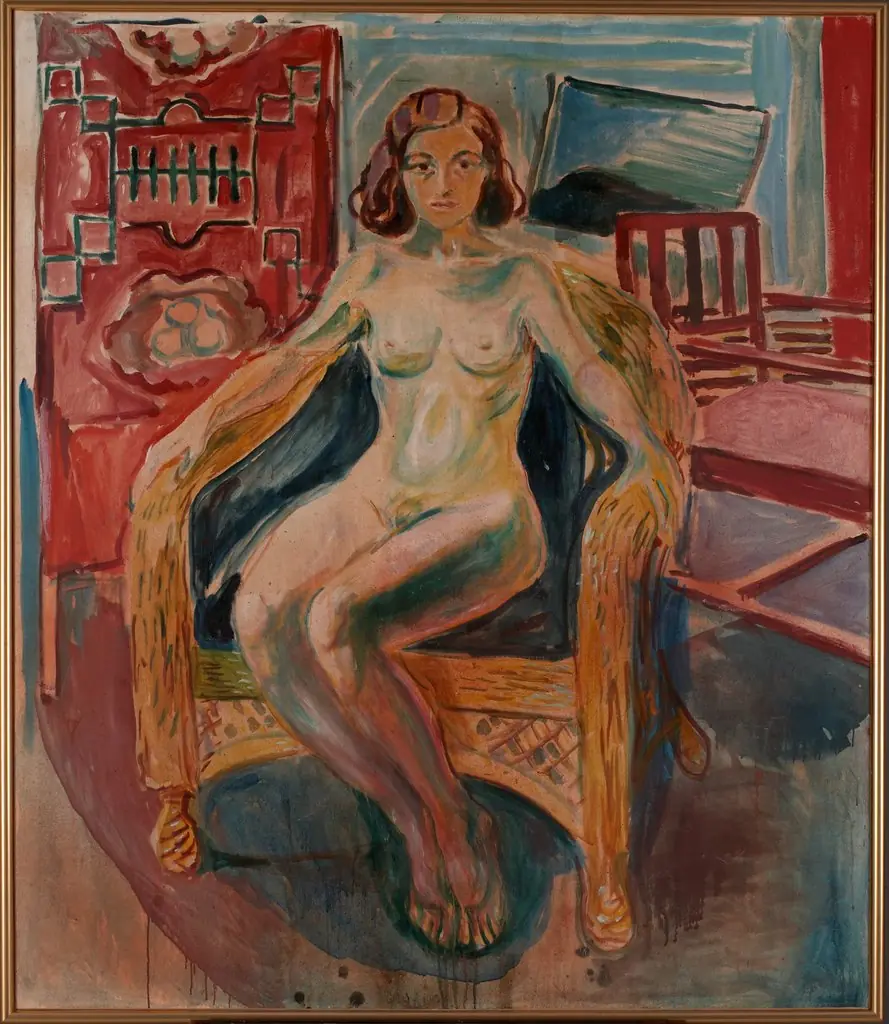
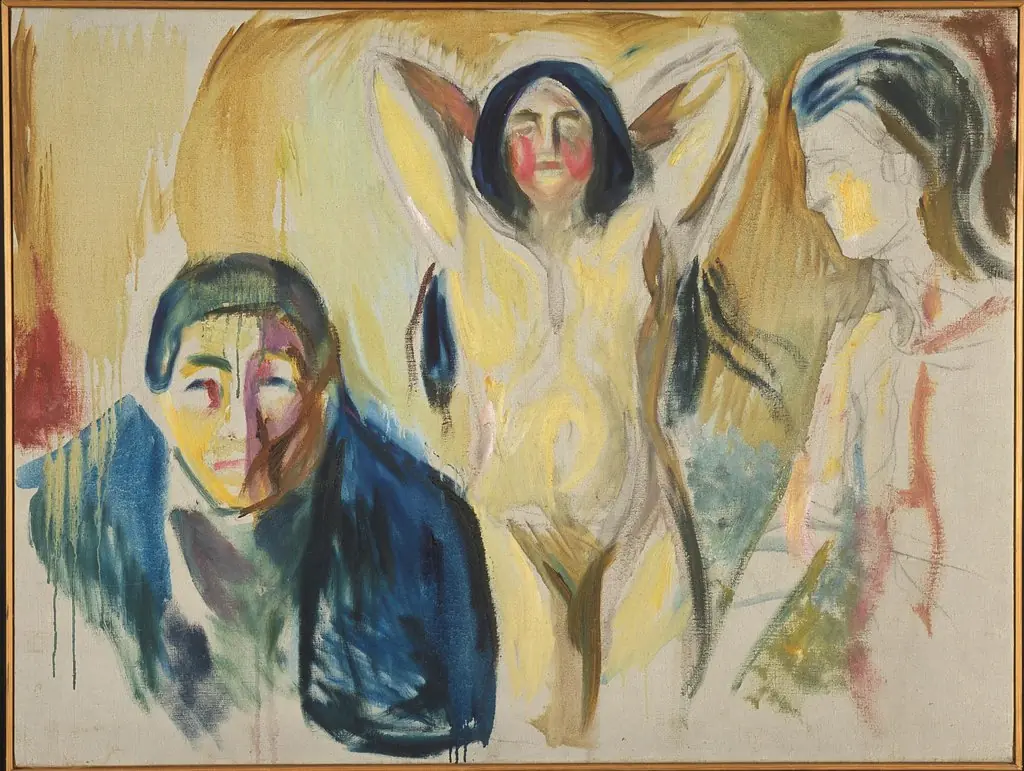
The Human Mountain: Sphinx is an oil painting by the Post-Impressionist artist Edvard Munch. It dates from 1927 and is held in the collection of the Munch Museum.
About this work
Overview
The Human Mountain: Sphinx is a 1927 oil painting by Edvard Munch, characterized by its post-impressionist style and intimate depiction of a nude female figure. The work is part of the Munch Museum's collection.
Subject & Meaning
The painting portrays a recumbent nude woman with a neutral facial expression, her body rendered in a straightforward, unromanticized manner. The emphasis on her physical presence and serene, inward gaze may reflect Munch's exploration of psychological states, though the specific subject's identity and context remain ambiguous.
Technique & Style
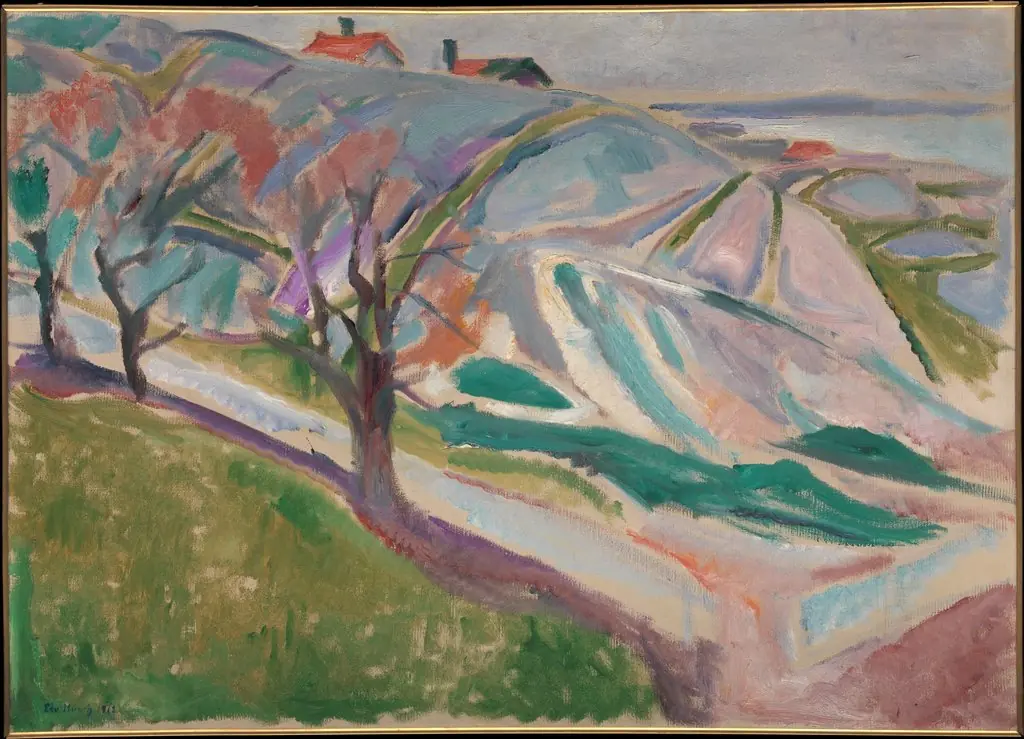
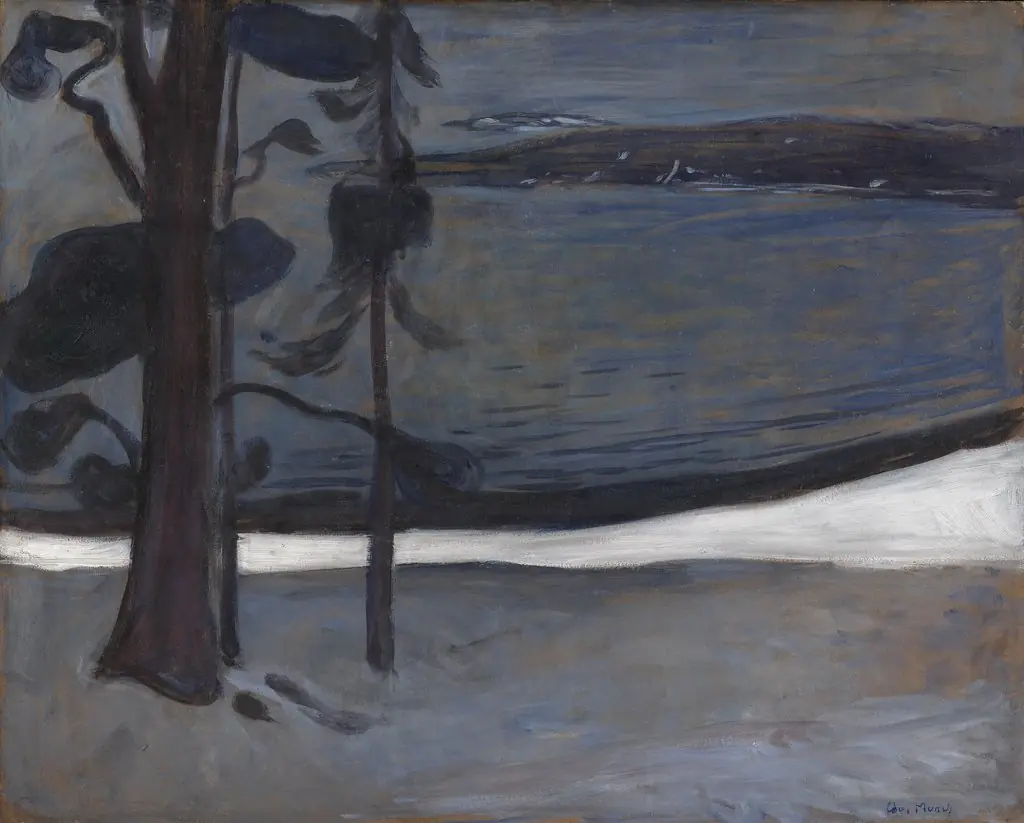
Munch executed the work with visible, rough brushstrokes and muted colors, predominantly blues, whites, and browns. This technique imparts a sense of simplicity and immediacy, consistent with his focus on emotional authenticity over polished representation.
History & Provenance
Created in 1927, the painting is a product of Munch's later period. Its provenance is well-documented, residing in the Munch Museum, which houses a comprehensive collection of the artist's works.
Context
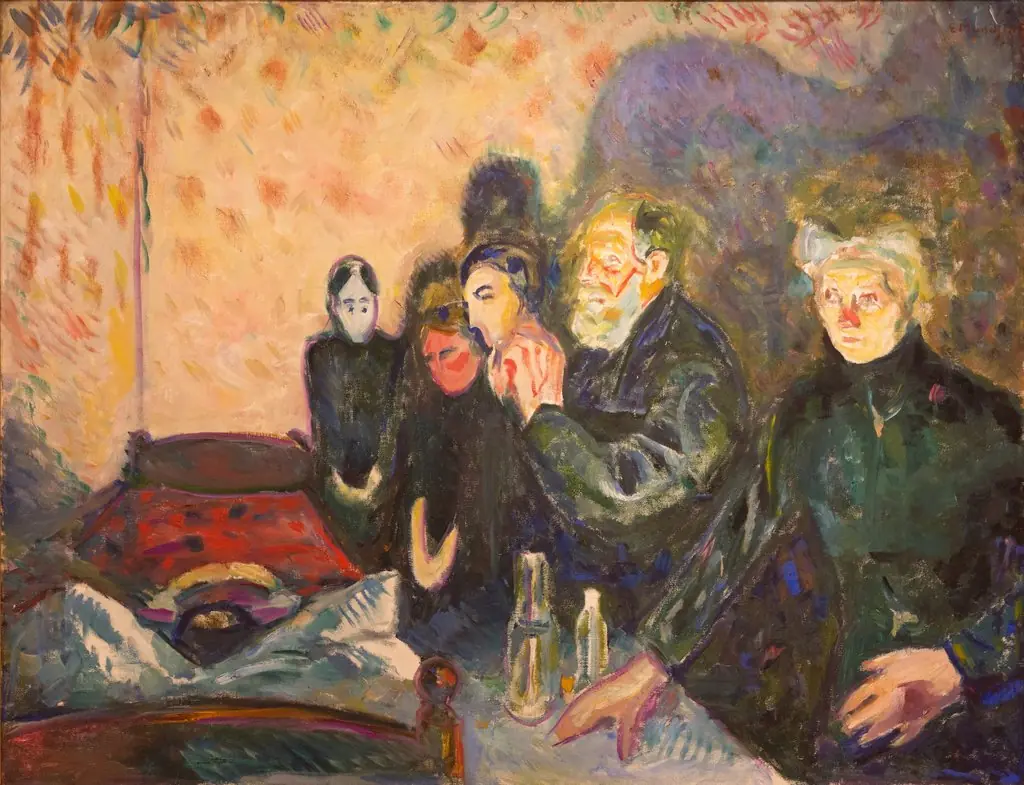
Munch's life experiences, including childhood illness and family struggles with mental health, influenced his artistic preoccupation with inner turmoil. While *The Human Mountain: Sphinx* does not explicitly convey distress, it reflects his broader interest in the human psyche.
Artist & collection

Artist
Edvard Munch ( MUUNK; Norwegian: ; 12 December 1863 – 23 January 1944) was a Norwegian painter.