Artwork
Train Smoke
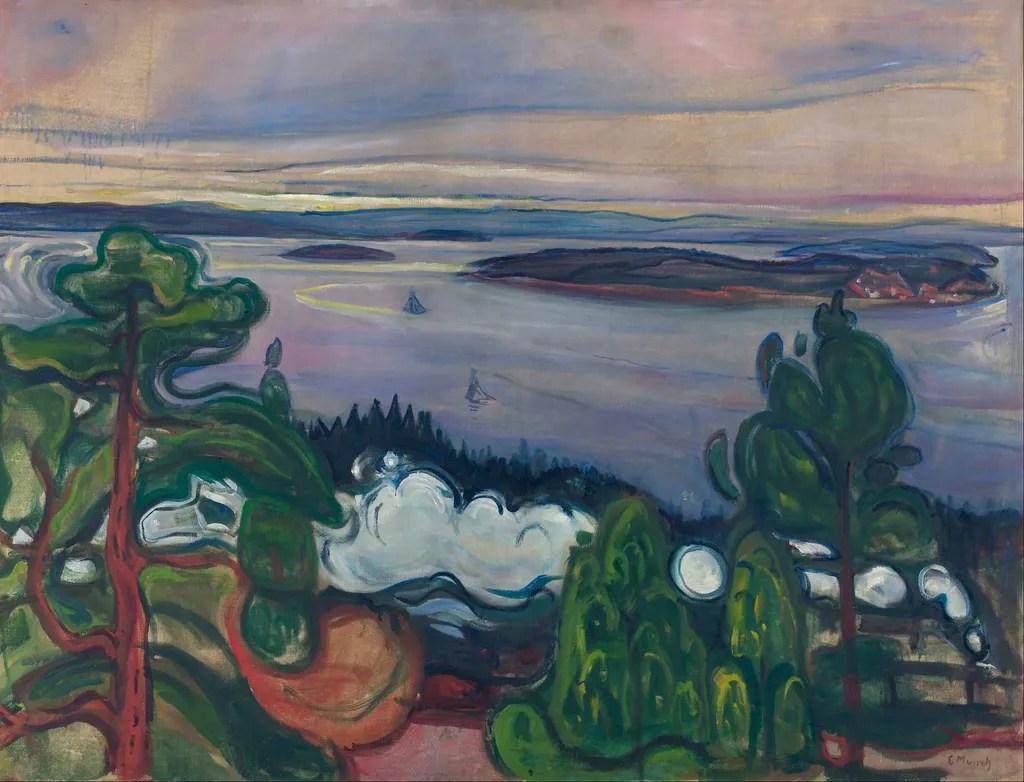
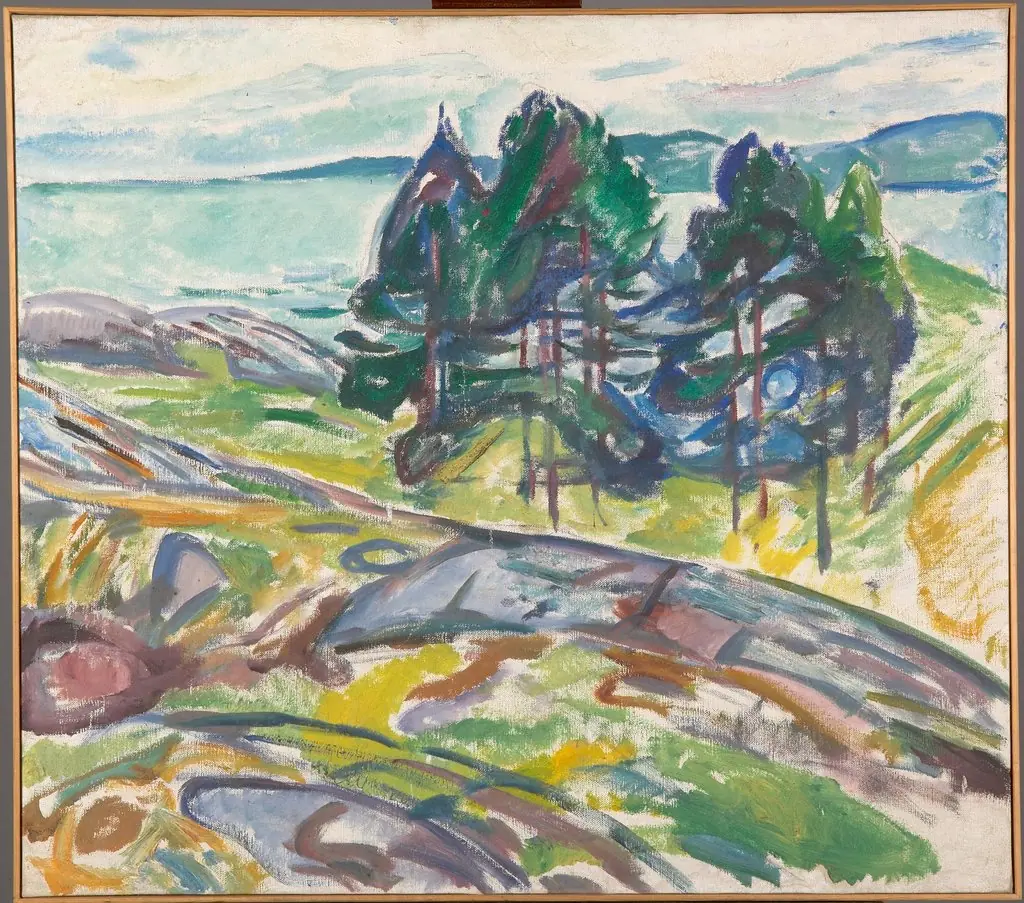
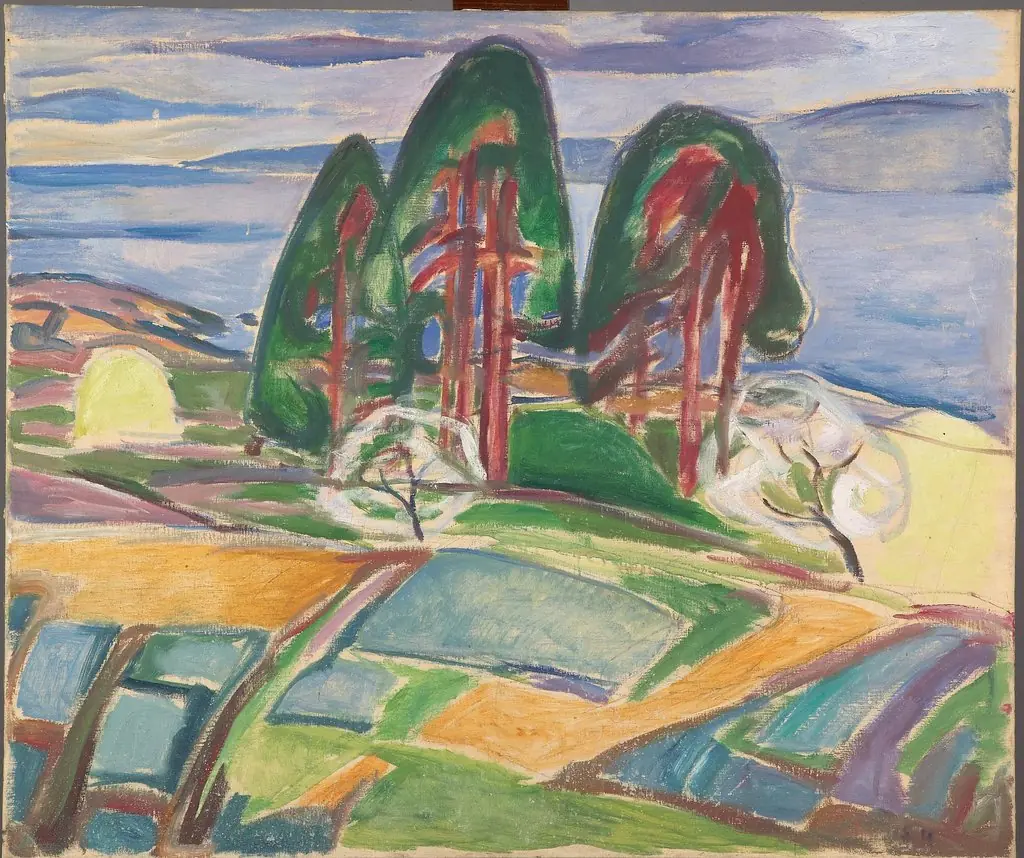
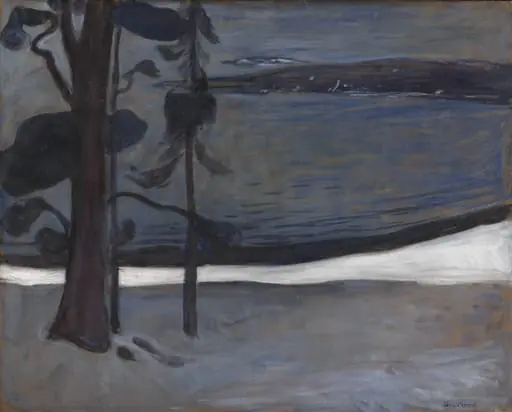
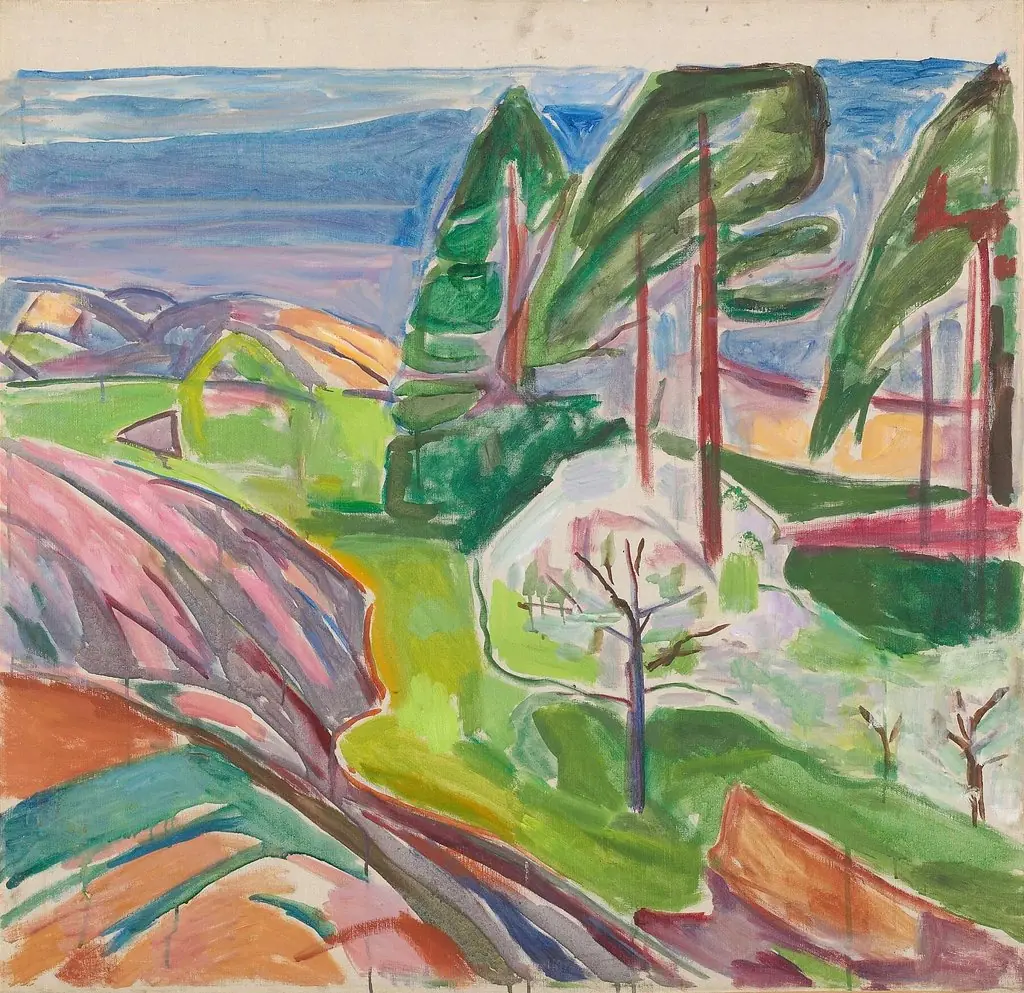
Train Smoke is an oil painting by the Post-Impressionist artist Edvard Munch. It dates from 1900 and is held in the collection of the Munch Museum.
About this work
Overview
Painted in 1900, *Train Smoke* is an oil-on-canvas landscape by Norwegian artist Edvard Munch. It captures a moment of industrial movement against a quiet natural setting, reflecting his interest in the tension between modernity and the environment. The work is part of the collection at the Munch Museum in Oslo, where many of his key pieces are preserved.
Subject & Meaning
The train, placed to the left, draws the eye with its directional motion, while the smoke drifts across the composition, suggesting transience and disruption.
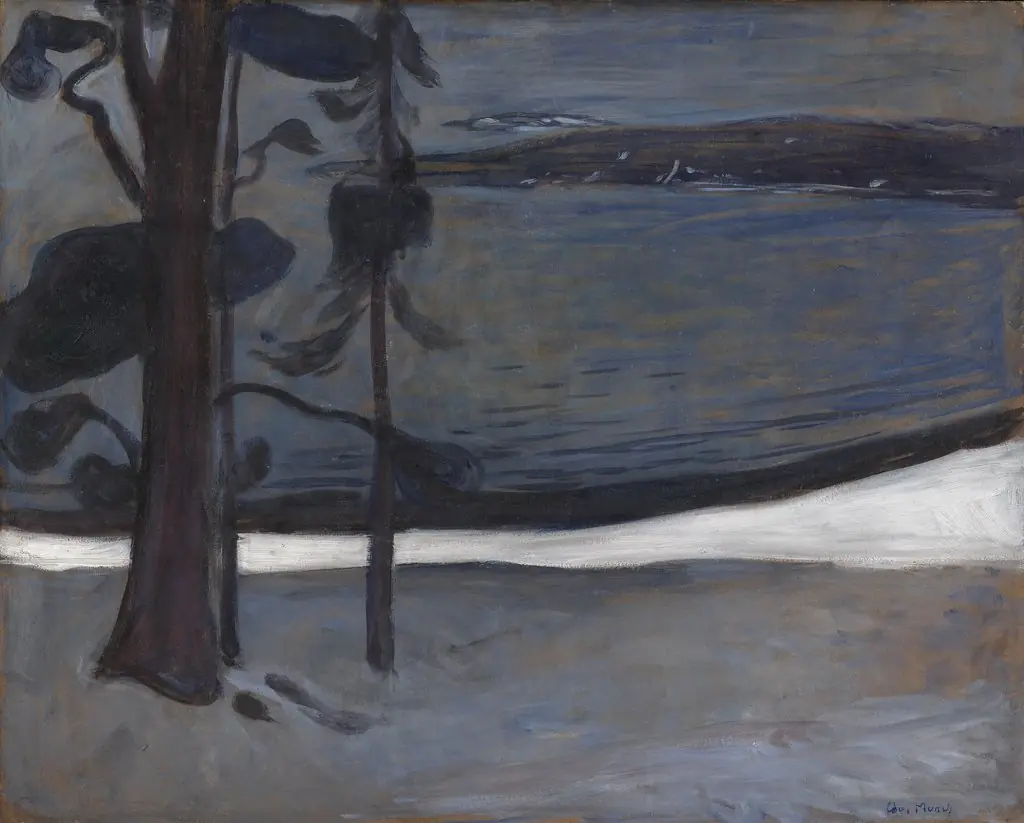
The painting centers on a locomotive releasing plumes of smoke, its presence subtly intrusive against a serene lakeside landscape. The train, placed to the left, draws the eye with its directional motion, while the smoke drifts across the composition, suggesting transience and disruption. Munch often used such motifs to evoke psychological unease, here implying the quiet encroachment of industry on nature.
Technique & Style
Munch employed loose, expressive brushwork to render the smoke in soft grays and whites, contrasting with the muted greens and browns of foreground vegetation. The lake and distant mountains are built with cool blues and grays, creating atmospheric depth. His color choices are not naturalistic but emotionally calibrated, emphasizing mood over detail, a hallmark of his post-impressionist approach.
History & Provenance
Created during a period of intense personal and artistic development, *Train Smoke* emerged after Munch’s studies at the Royal School of Art and Design in Kristiania and his engagement with the radical thinker Hans Jæger. The painting remained in the artist’s possession until his death, eventually entering the Munch Museum’s collection, which holds the largest assembly of his works.
Context
In early 20th-century Norway, railroads symbolized rapid modernization, often viewed with ambivalence. Munch, influenced by existential themes and psychological introspection, did not depict trains as triumphs but as quiet intrusions. This painting aligns with broader European concerns about industrialization’s impact on solitude and nature, filtered through his distinctive emotional lens.
Legacy
While less famous than *The Scream*, *Train Smoke* exemplifies Munch’s consistent exploration of isolation and transition. Its restrained palette and symbolic composition influenced later Nordic expressionists who sought to convey inner states through landscape. The work remains a quiet testament to his ability to infuse ordinary scenes with psychological weight.
Own this work as a print
Artist & collection
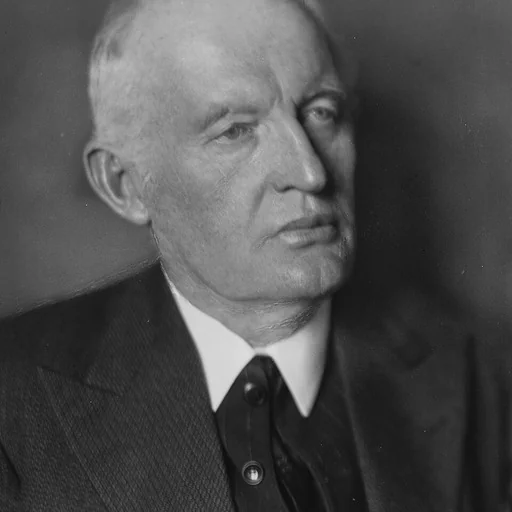
Artist
Edvard Munch ( MUUNK; Norwegian: ; 12 December 1863 – 23 January 1944) was a Norwegian painter.