Artwork
Two Black Horses at the Plough
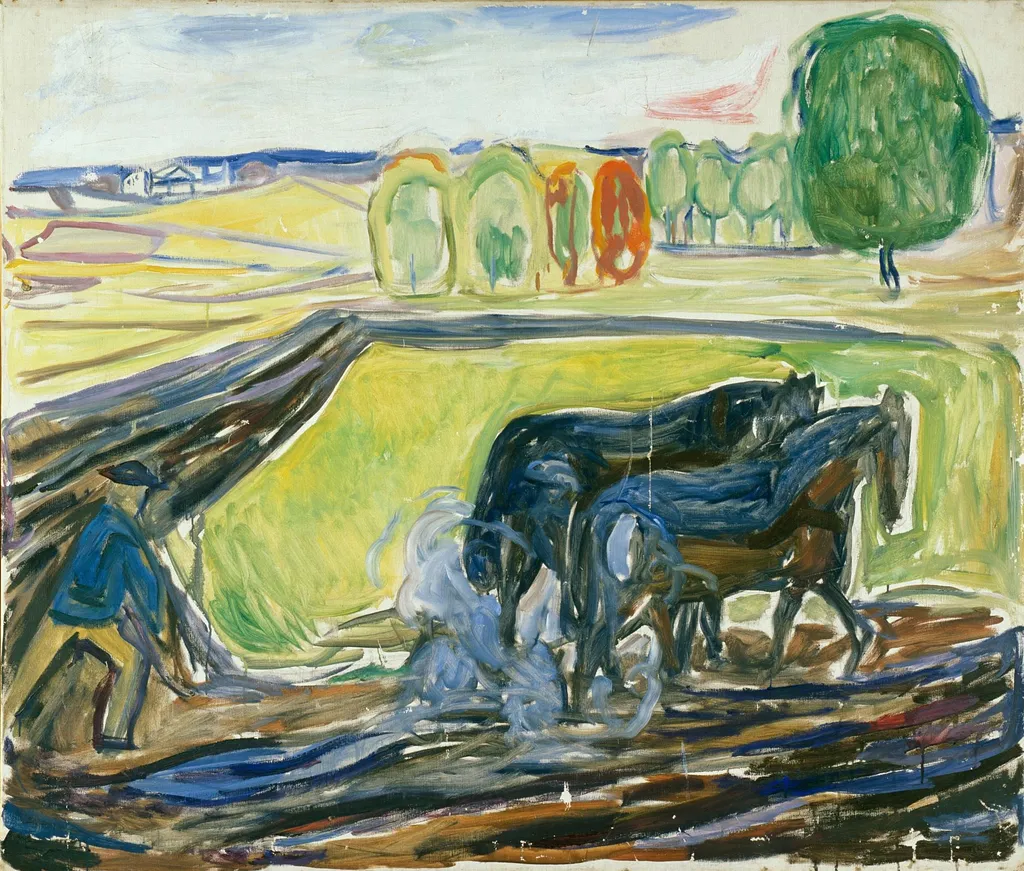
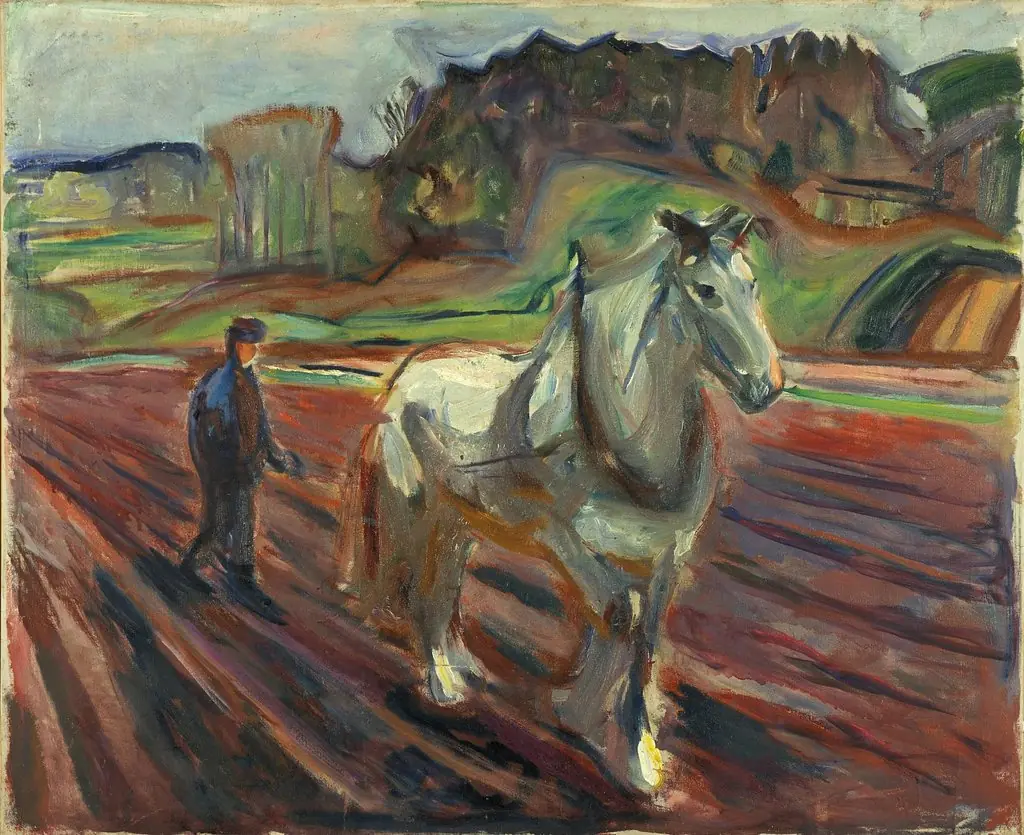
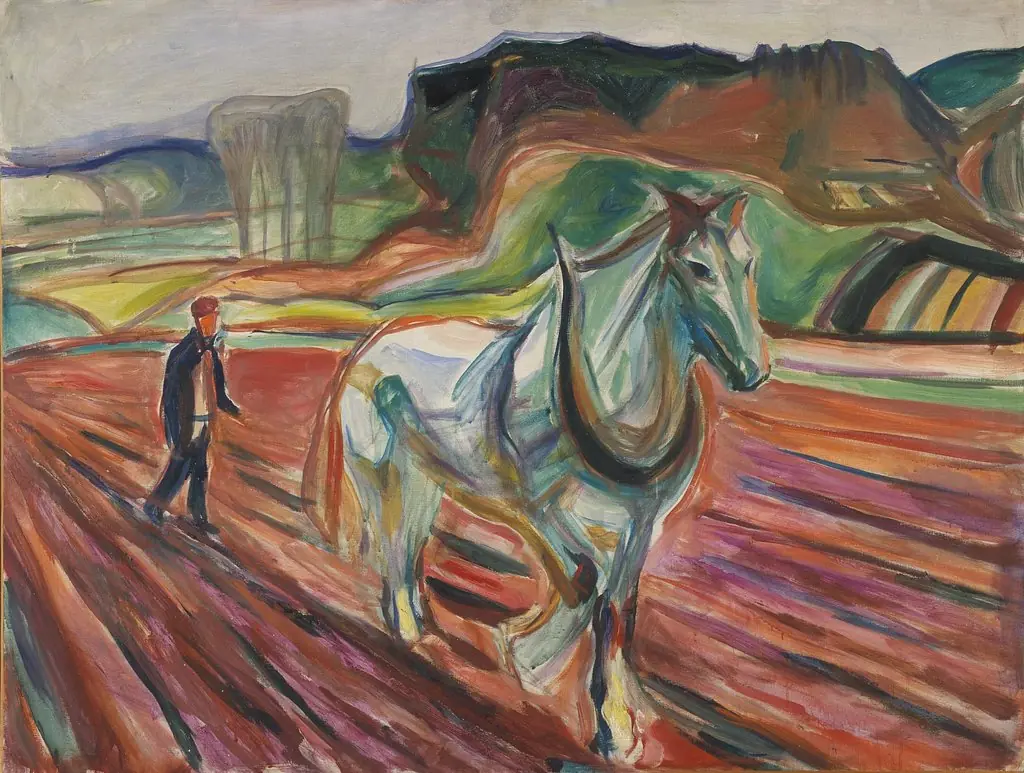
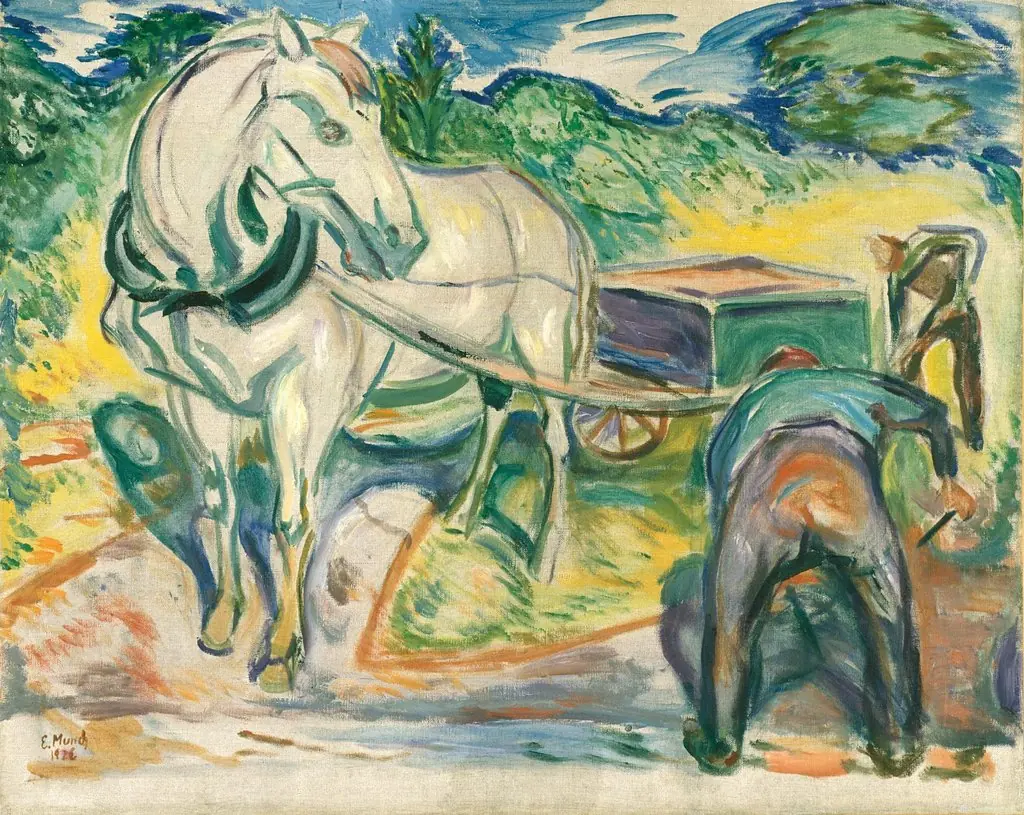
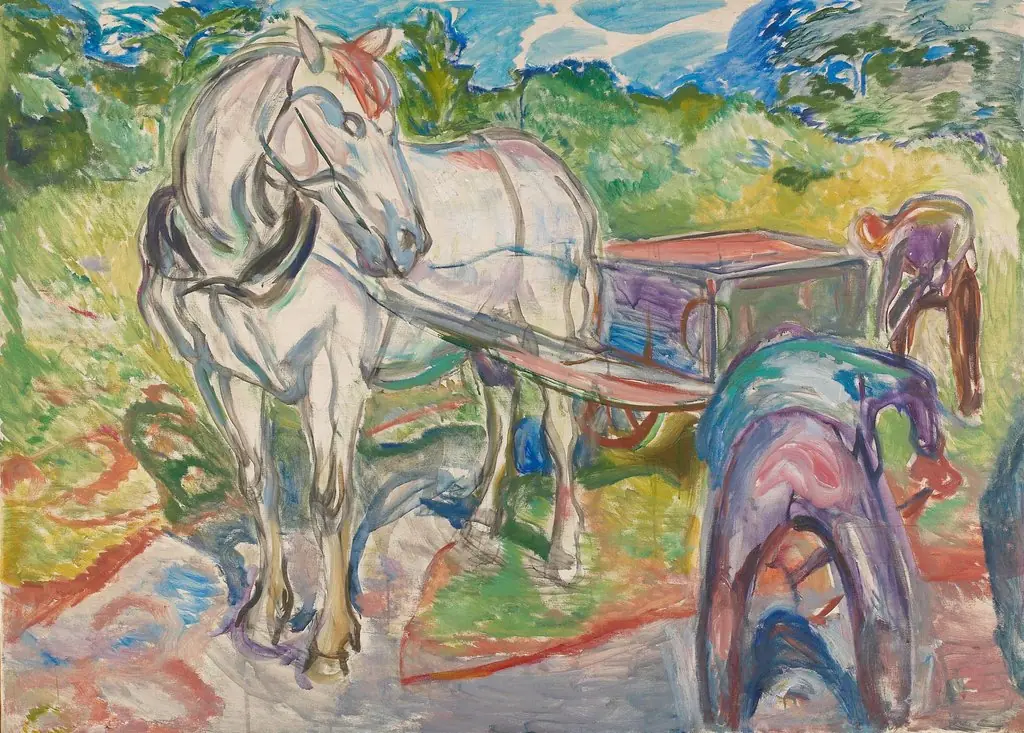
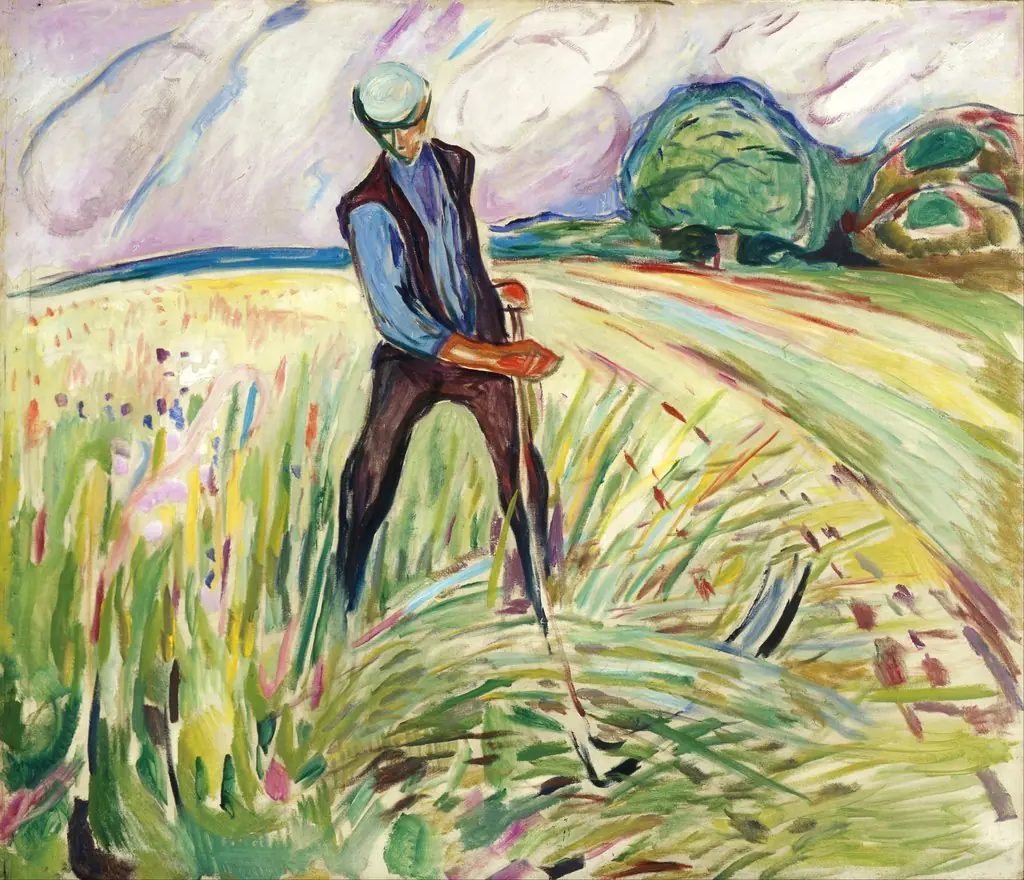
Two Black Horses at the Plough is an oil painting by the Post-Impressionist artist Edvard Munch. It dates from 1919 and is held in the collection of the Munch Museum.
About this work
Overview
It reflects his continued engagement with natural themes during his later years, following decades of exploring psychological states in art.
Painted in 1919, *Two Black Horses at the Plough* is an oil-on-canvas work by Norwegian artist Edvard Munch. It reflects his continued engagement with natural themes during his later years, following decades of exploring psychological states in art. The painting belongs to the collection of the Munch Museum in Oslo, where it is preserved as part of his broader body of work beyond his more famous psychological motifs.
Subject & Meaning
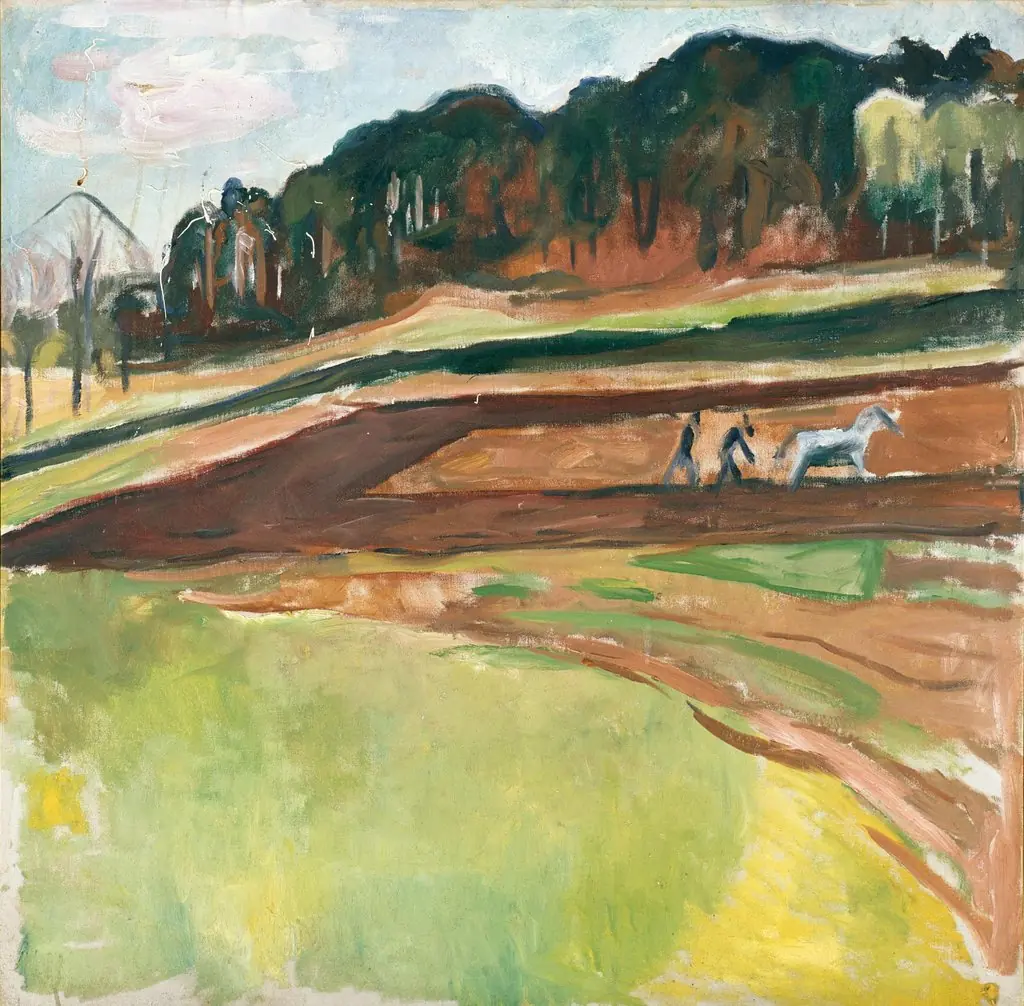
The painting centers on two dark horses pulling a plow across a field, their forms dominating the foreground. Unlike Munch’s earlier works laden with existential dread, this scene conveys quiet labor and rural endurance. The horses, rendered with solidity and presence, suggest a connection between animal strength and the land, evoking cycles of work and renewal without overt symbolism.
Technique & Style
Munch employed thick, expressive brushwork and saturated hues to define form and atmosphere. The horses’ black coats contrast sharply with the earth tones of the field and the pale sky above. Rather than precise detail, he relied on dynamic strokes to suggest movement and texture, aligning with post-impressionist tendencies while retaining his signature emotional intensity through color and gesture.
History & Provenance
Created during Munch’s time at his estate in Ekely, near Oslo, the painting emerged from a period when he increasingly turned to landscapes and rural life. It remained in his personal collection until his death in 1944, after which it was transferred to the Munch Museum, established to house his artistic legacy. Its provenance is well-documented through museum records and his estate inventory.
Context
In the aftermath of World War I, Munch’s focus shifted from inner turmoil to the rhythms of nature and agricultural life. This painting reflects a broader trend in his late work: a search for stability through observation of the natural world. While not overtly political, it resonates with postwar desires for renewal and quiet resilience in the face of upheaval.
Legacy
Though less widely known than *The Scream*, *Two Black Horses at the Plough* exemplifies Munch’s enduring capacity to infuse everyday scenes with emotional weight. It contributes to the understanding of his artistic evolution, demonstrating how his expressive language adapted to themes of labor and nature in his later years, influencing later Scandinavian realists and expressionists.
Own this work as a print
Artist & collection
Artist
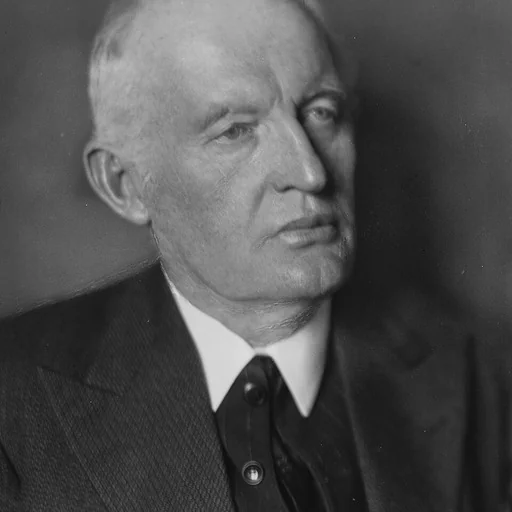
Edvard Munch ( MUUNK; Norwegian: ; 12 December 1863 – 23 January 1944) was a Norwegian painter.