Artwork
Two Women in a Landscape
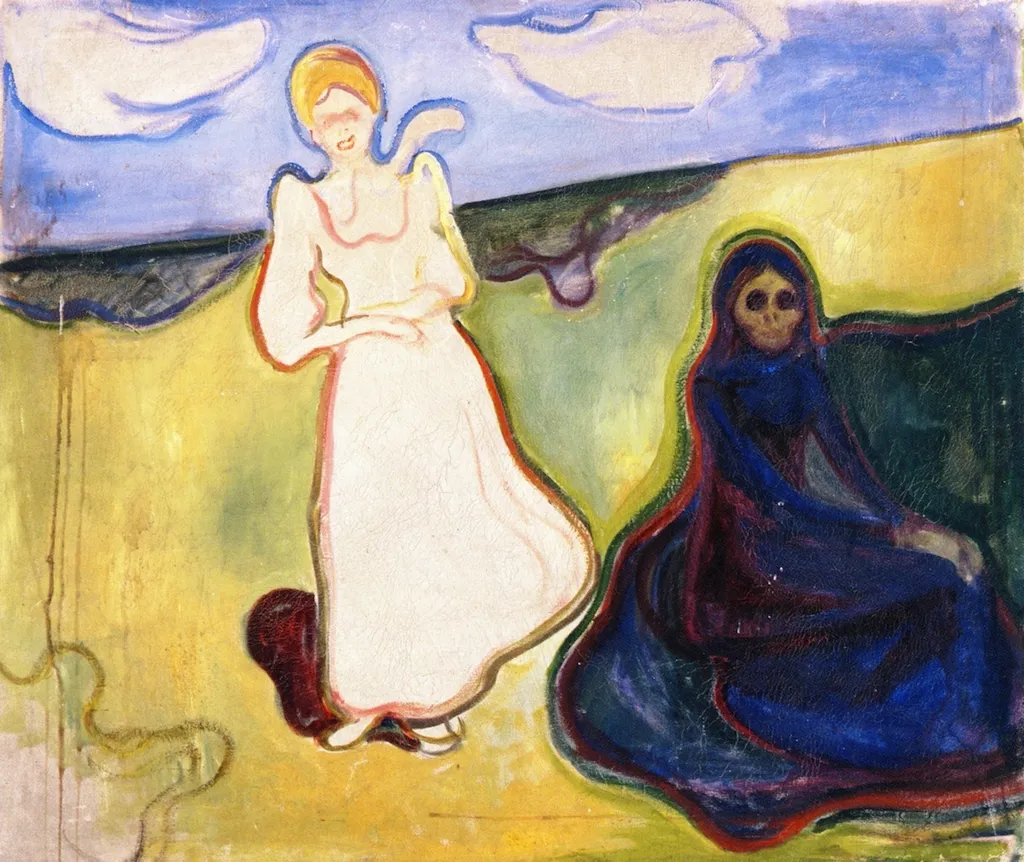
Two Women in a Landscape is an oil painting by the Post-Impressionist artist Edvard Munch. It dates from 1899 and is held in the collection of the Munch Museum.
About this work
Overview
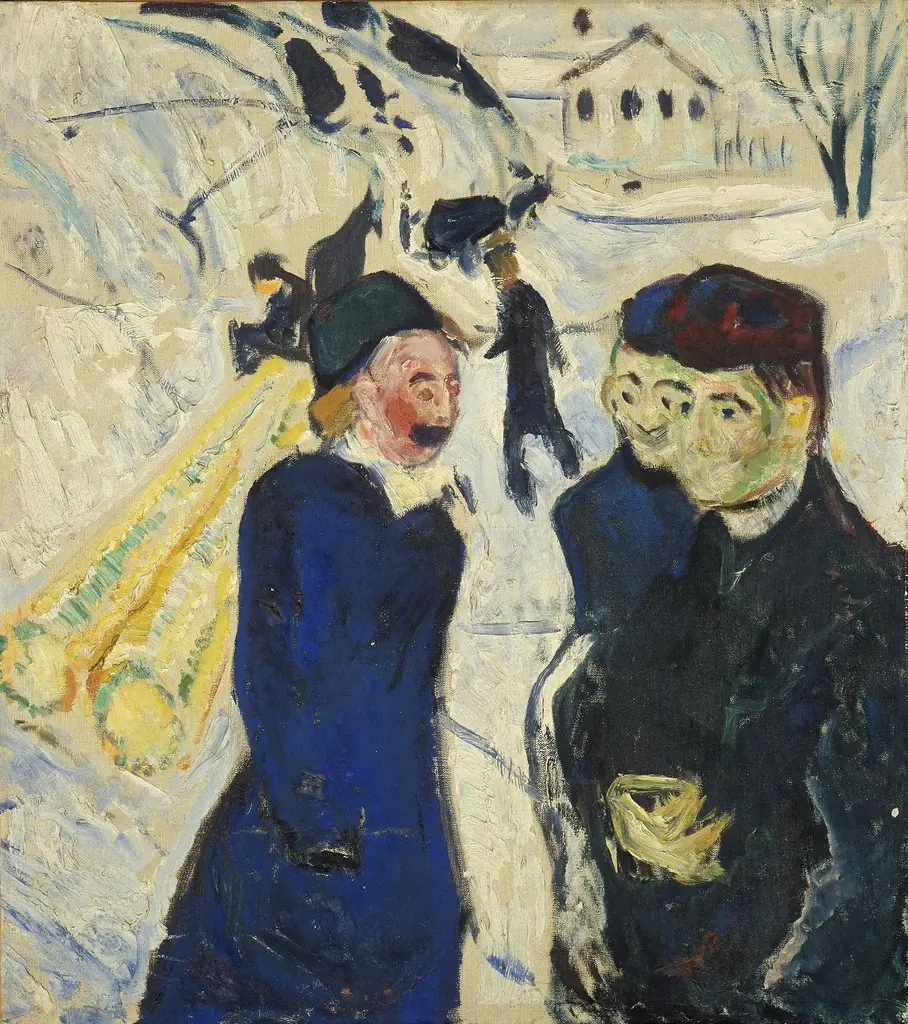
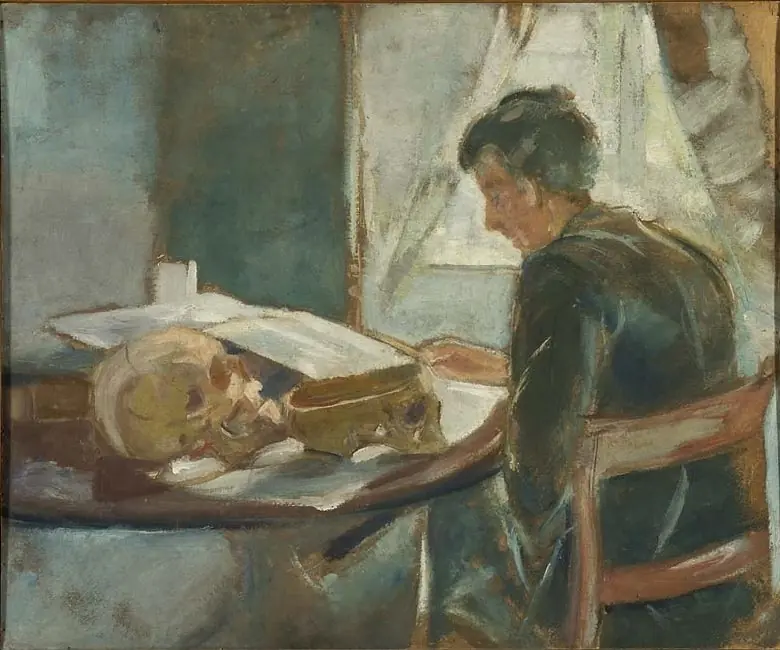
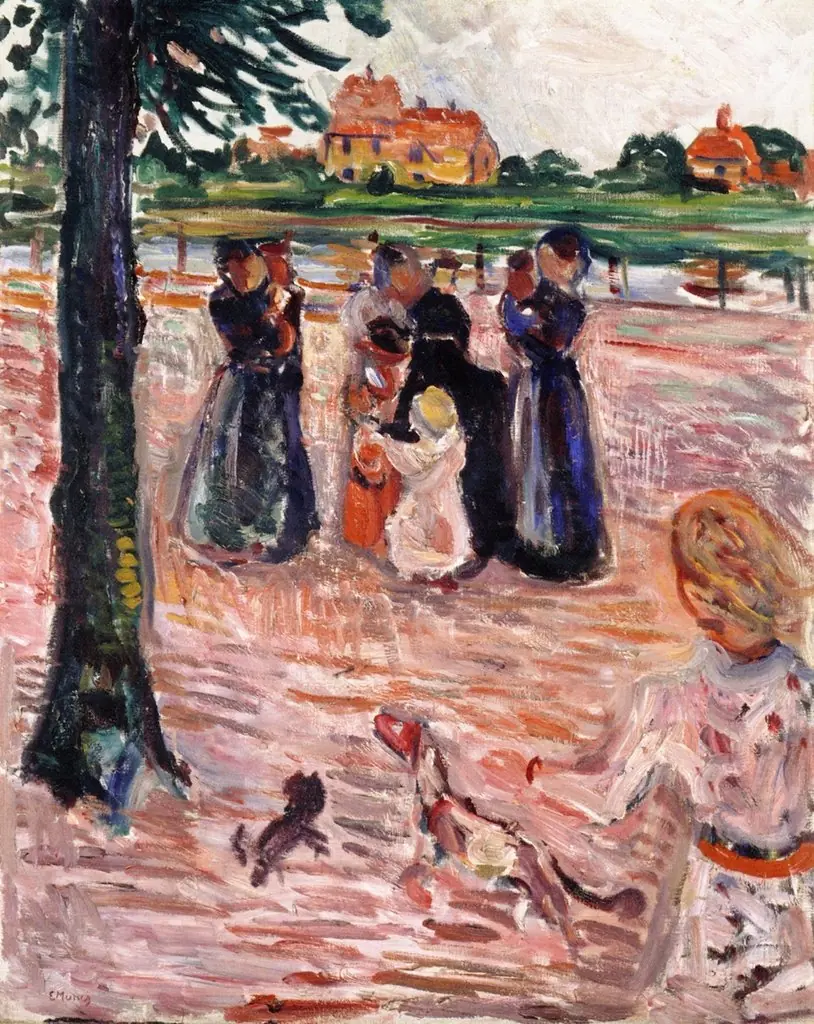
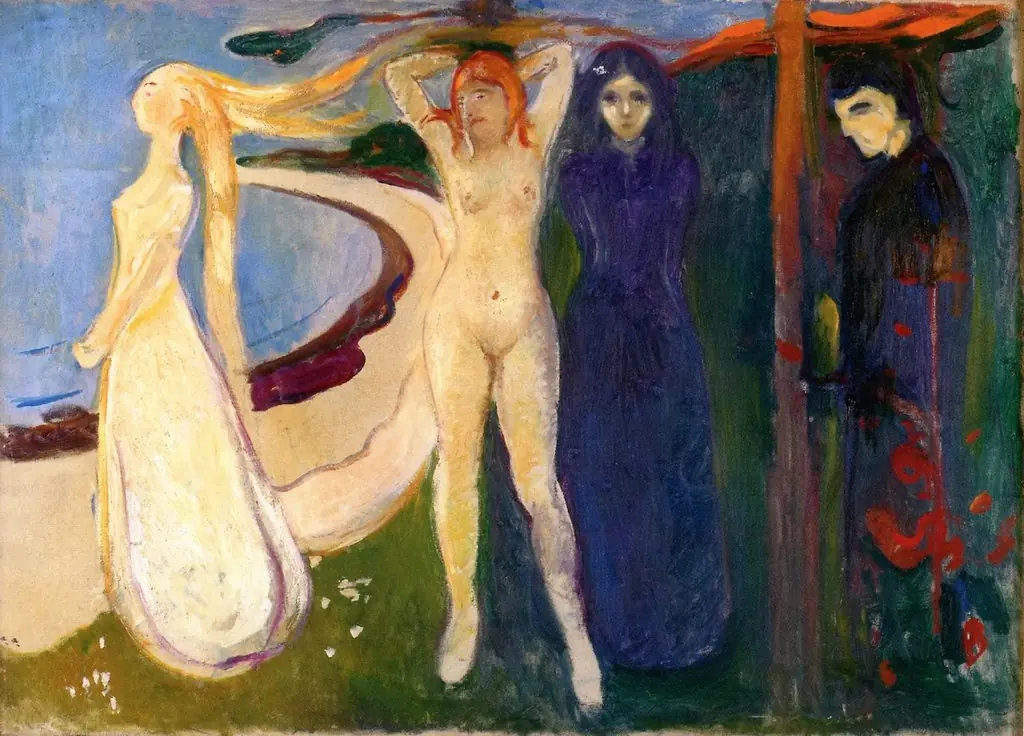
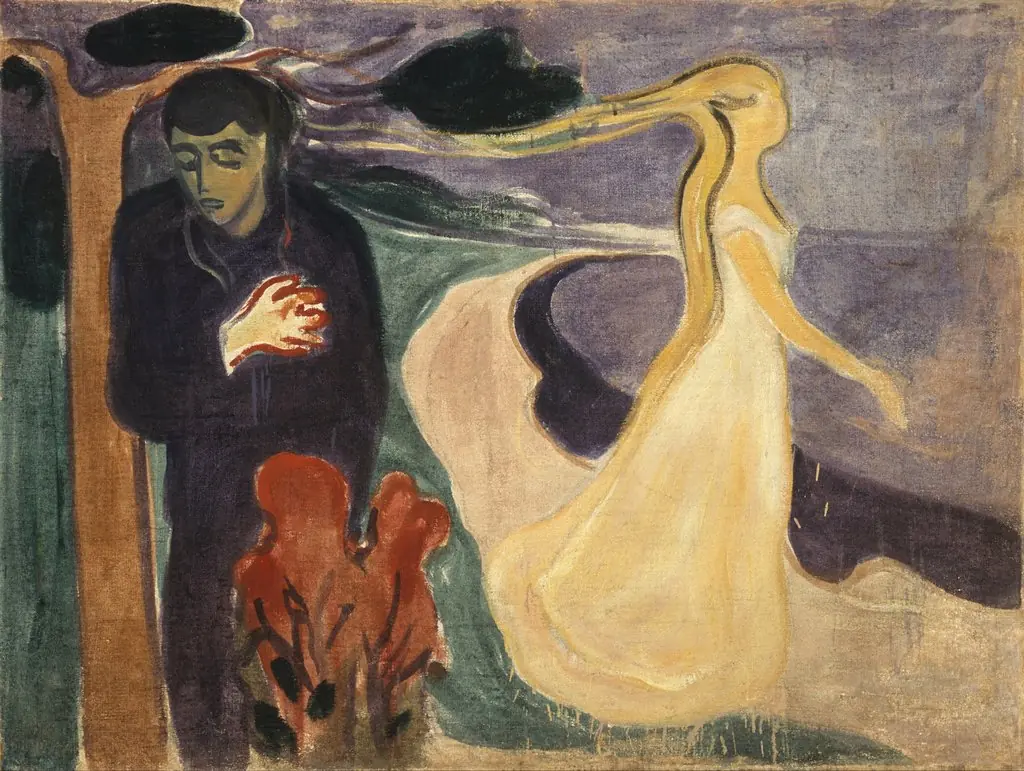
Created in 1899, *Two Women in a Landscape* is a tempera painting by Norwegian artist Edvard Munch. It reflects his shift toward simplified forms and heightened emotional tone, moving beyond naturalism toward symbolic expression. The work is part of a broader series in which Munch explored human presence within nature, using color and composition to evoke mood rather than narrative detail.
Subject & Meaning
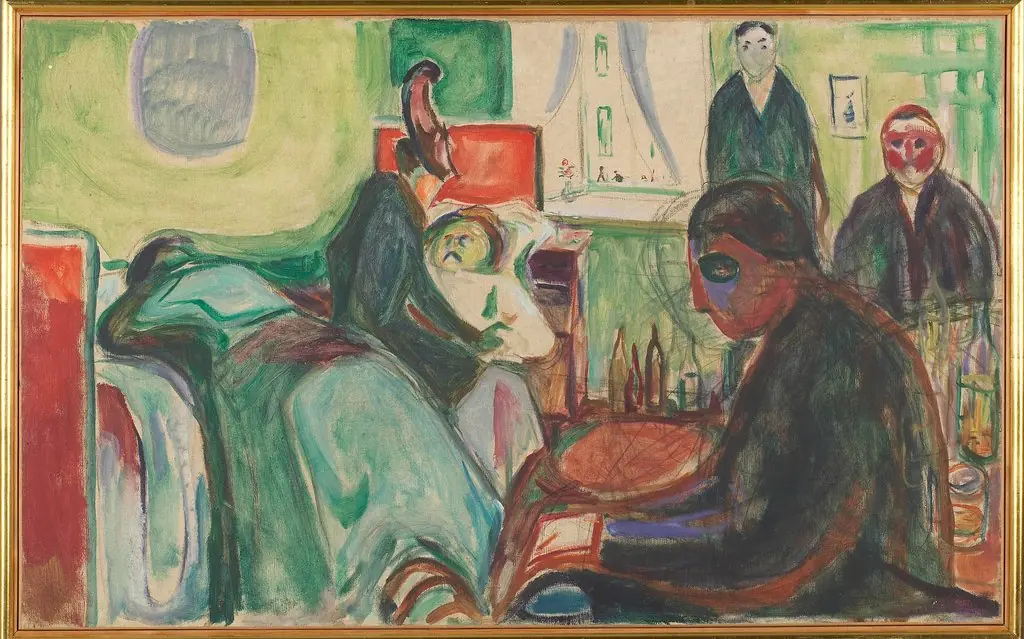
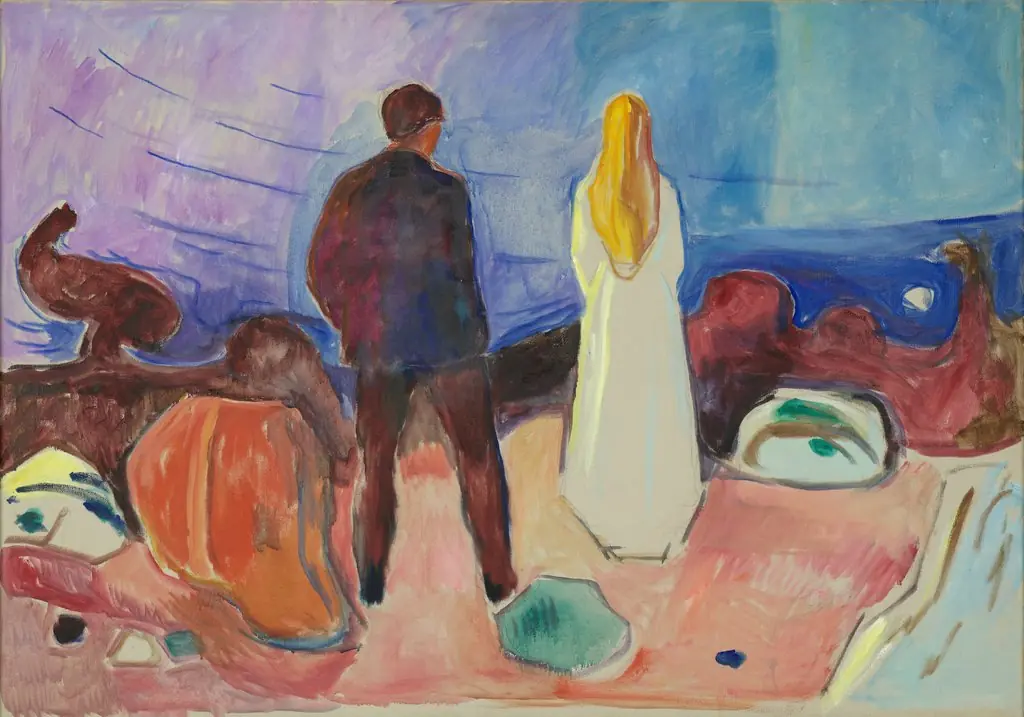
Two women are depicted in a quiet, open landscape—one standing, one seated—engaged in no overt interaction. Their stillness and separation suggest introspection or emotional distance. The absence of identifiable context or action invites interpretation as a meditation on solitude, companionship, or the quiet rhythms of everyday life, consistent with Munch’s interest in psychological states.
Technique & Style
Forms are simplified, outlines firm, and brushwork restrained, emphasizing structure over texture and reinforcing the painting’s contemplative tone.
Munch employed tempera for its matte finish and precise control, allowing sharp contrasts between the white dress of the standing figure and the deep blue of the seated one. The background—yellow field and pale sky—is rendered with broad, flat planes. Forms are simplified, outlines firm, and brushwork restrained, emphasizing structure over texture and reinforcing the painting’s contemplative tone.
History & Provenance
The painting entered the collection of the Munch Museum in Oslo, where it remains today. It was produced during a period when Munch was refining his personal visual language after early exposure to Symbolism and Post-Impressionism. Though not among his most widely exhibited works, it reflects his consistent engagement with themes of human isolation and natural harmony throughout the 1890s.
Context
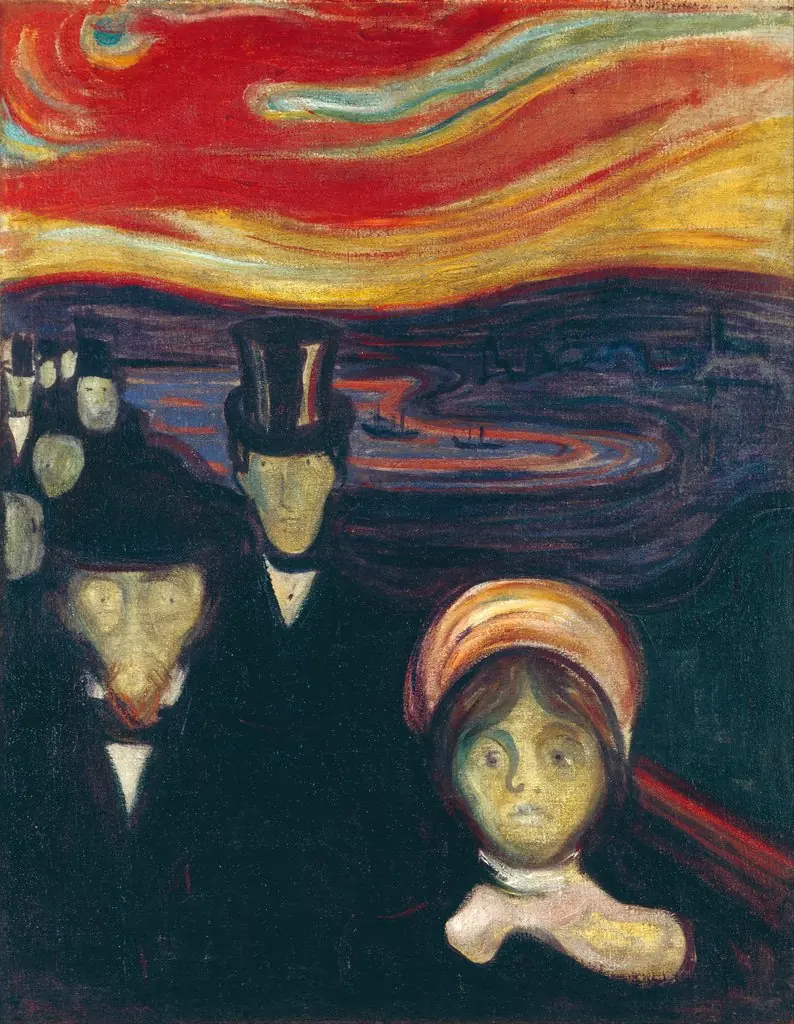
In the late 1890s, Munch moved away from the intense psychological drama of works like *The Scream* toward quieter, more restrained compositions. *Two Women in a Landscape* aligns with his interest in everyday moments infused with emotional weight. This shift coincided with broader European trends favoring symbolic content over realism, influenced by artists like Gauguin and the Nabis.
Legacy
The painting contributes to understanding Munch’s evolution from expressive intensity toward lyrical minimalism. While less known than his iconic figures, it demonstrates his sustained exploration of color as emotional carrier and form as psychological vessel. Its presence in the Munch Museum underscores its role in documenting his broader artistic trajectory beyond shock-value imagery.
Artist & collection
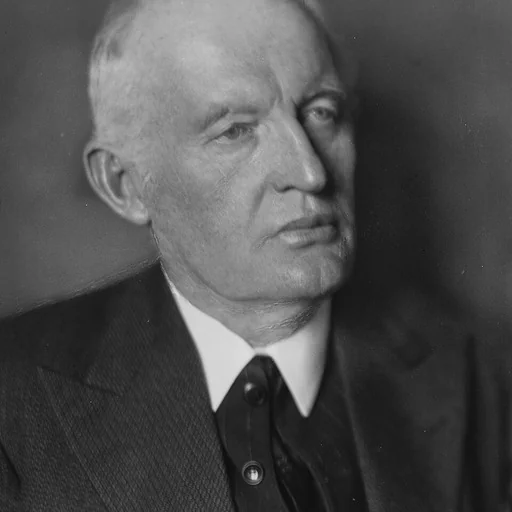
Artist
Edvard Munch ( MUUNK; Norwegian: ; 12 December 1863 – 23 January 1944) was a Norwegian painter.