Artwork
Visiting at Ekely
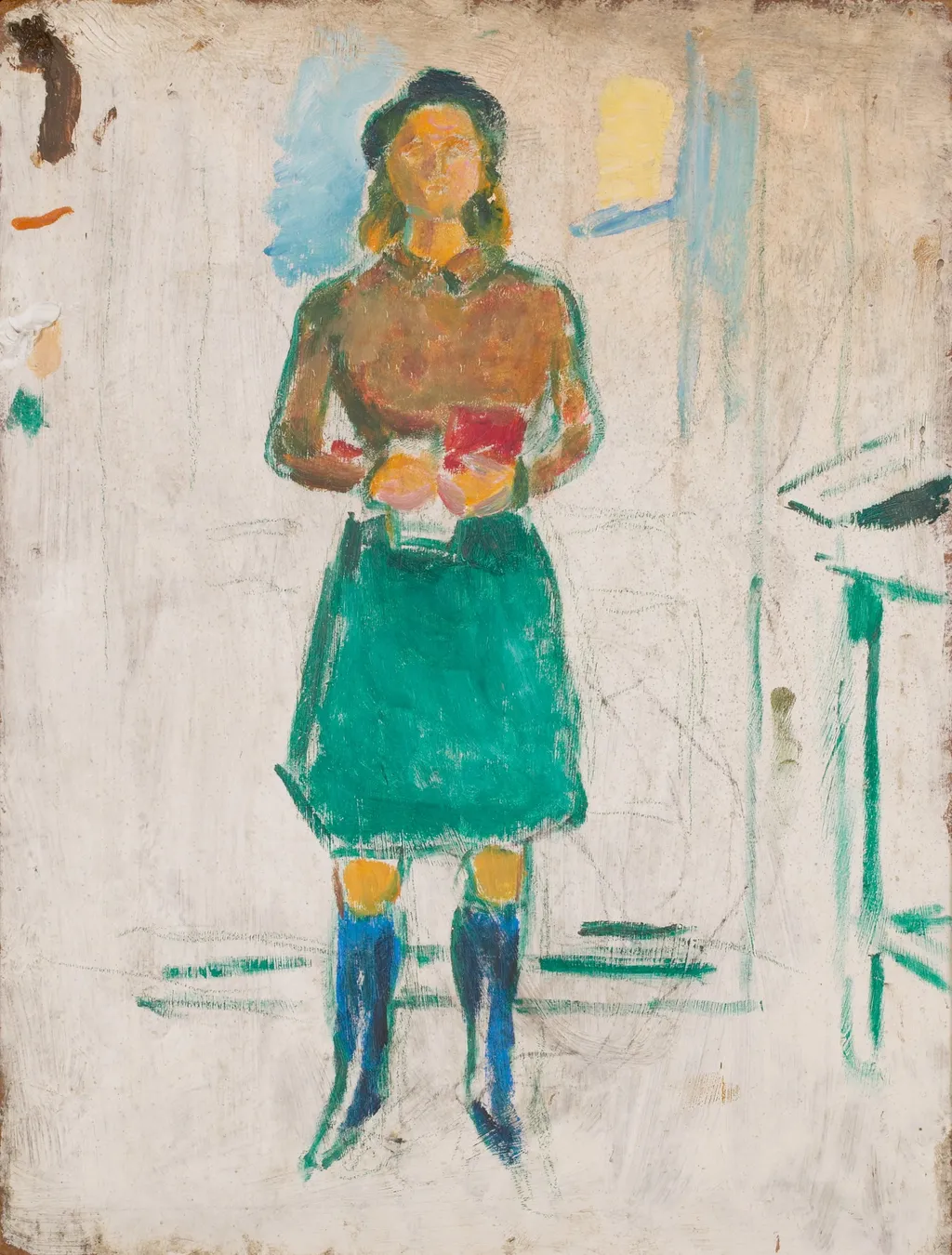
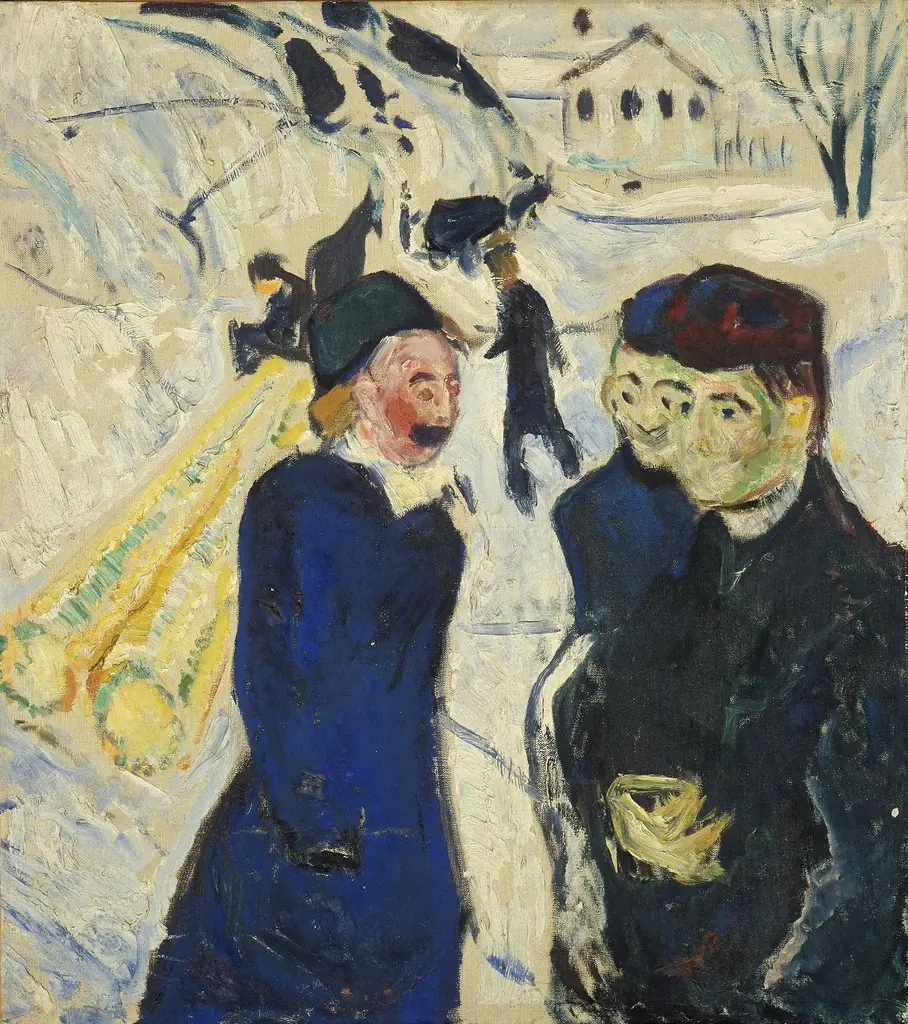
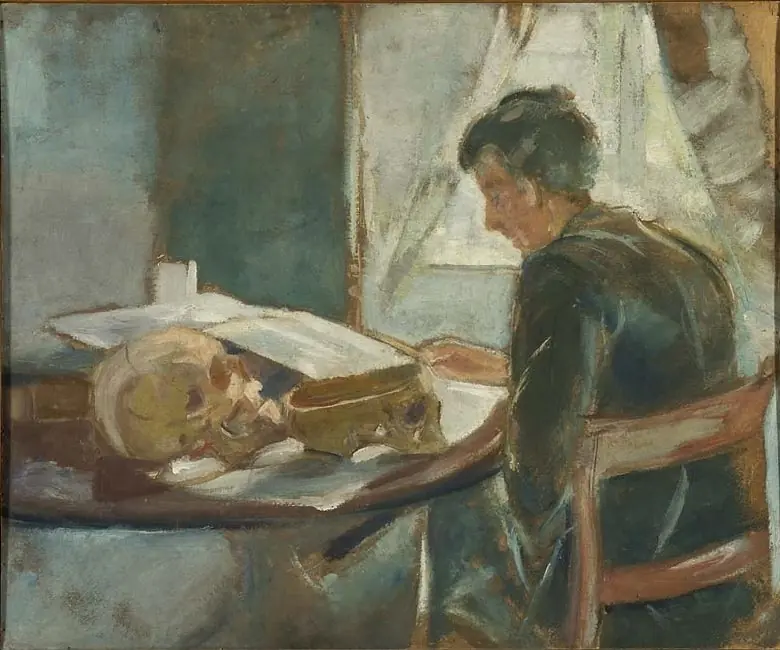
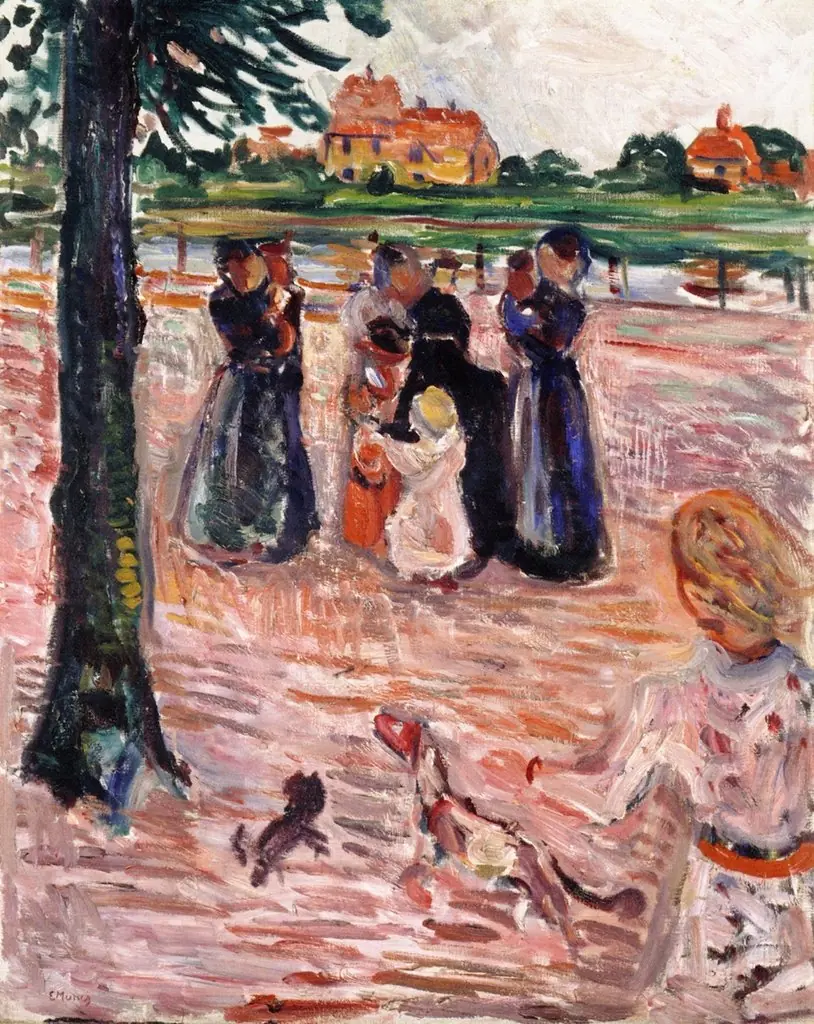
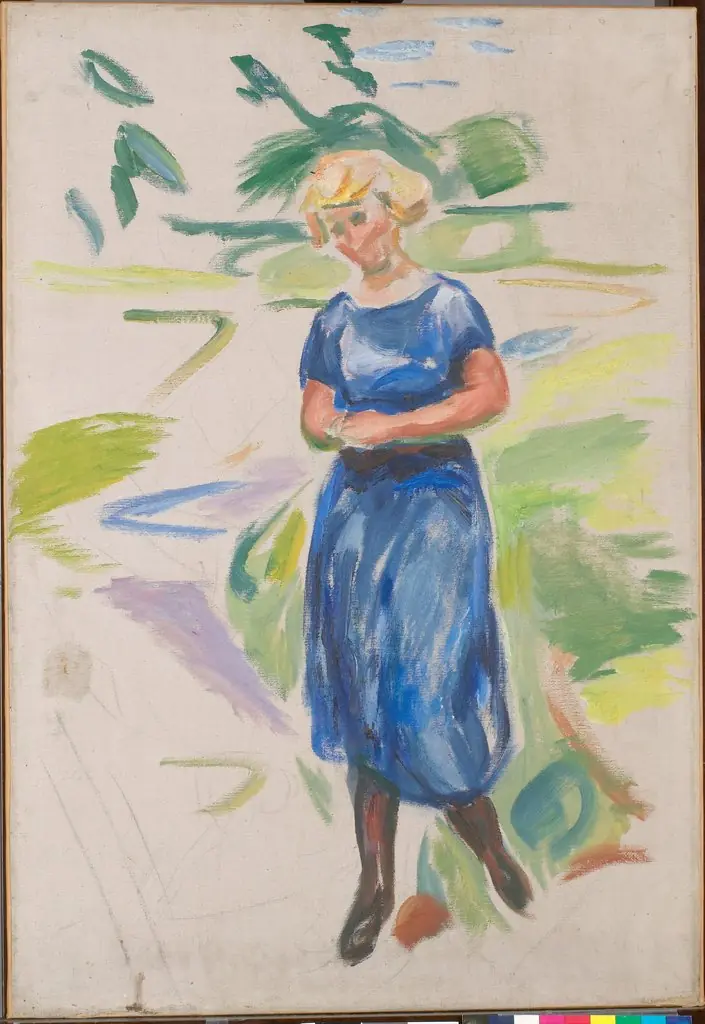
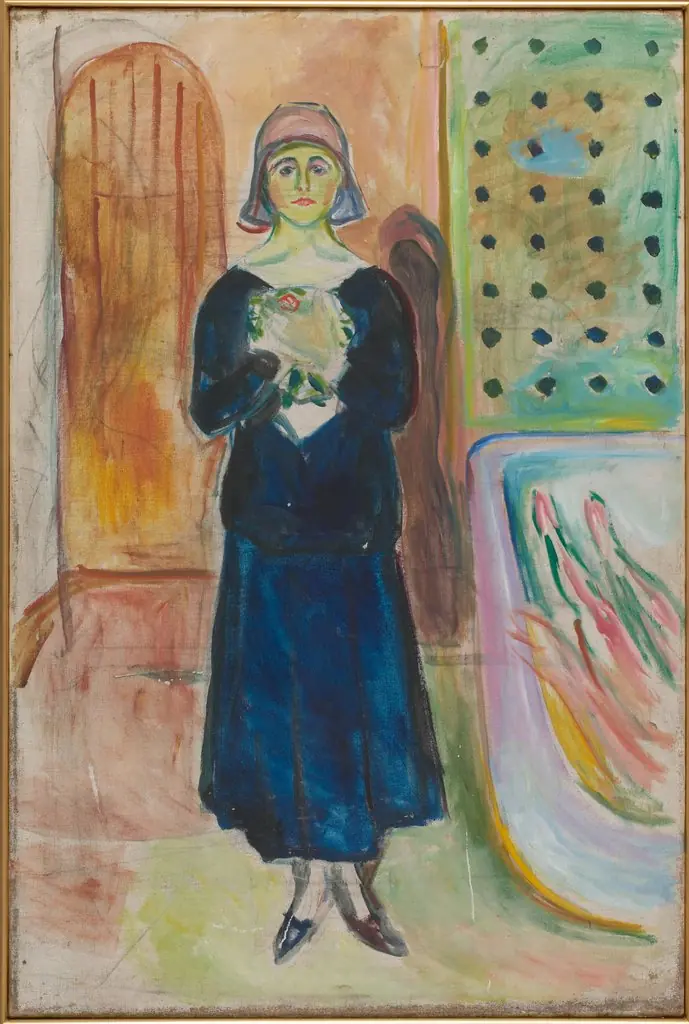
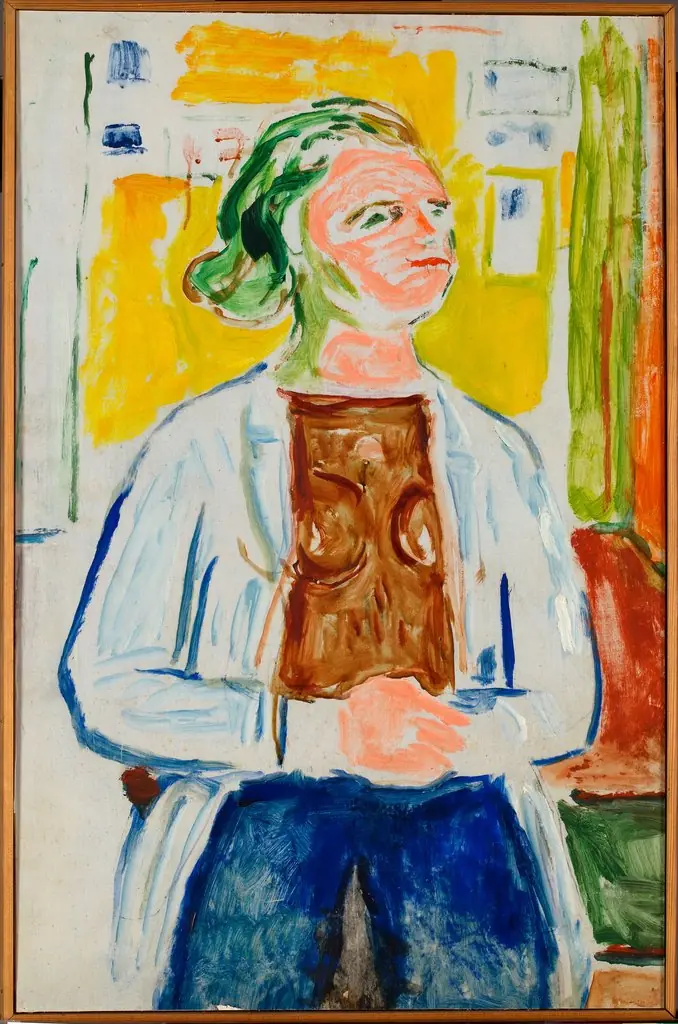
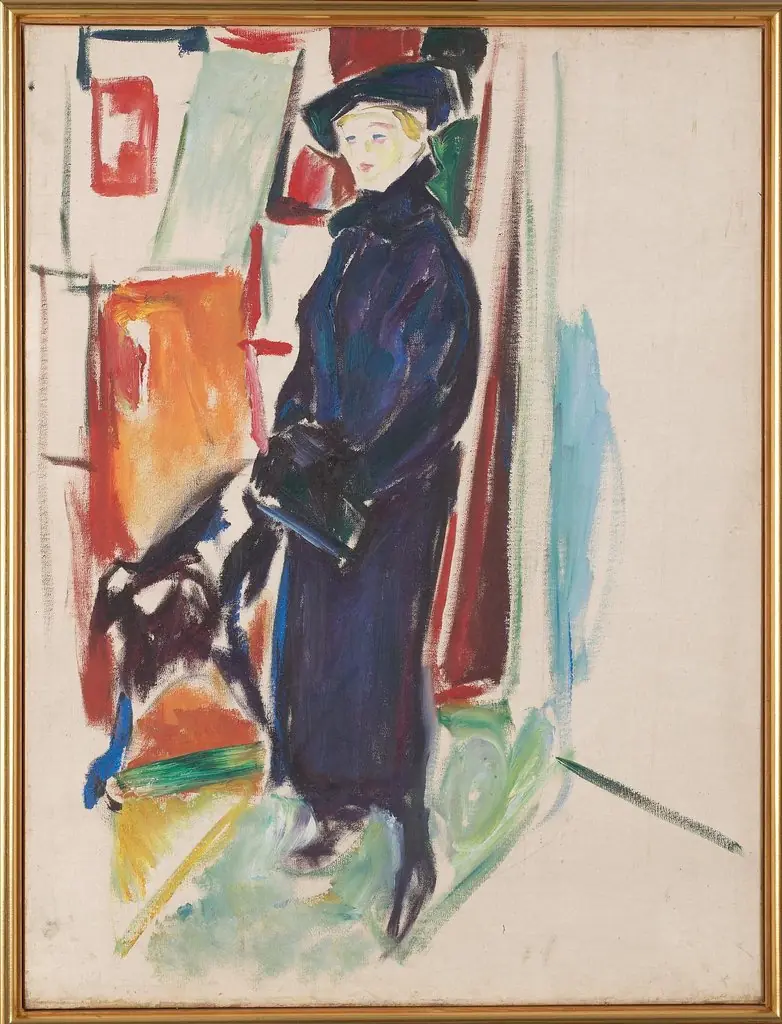
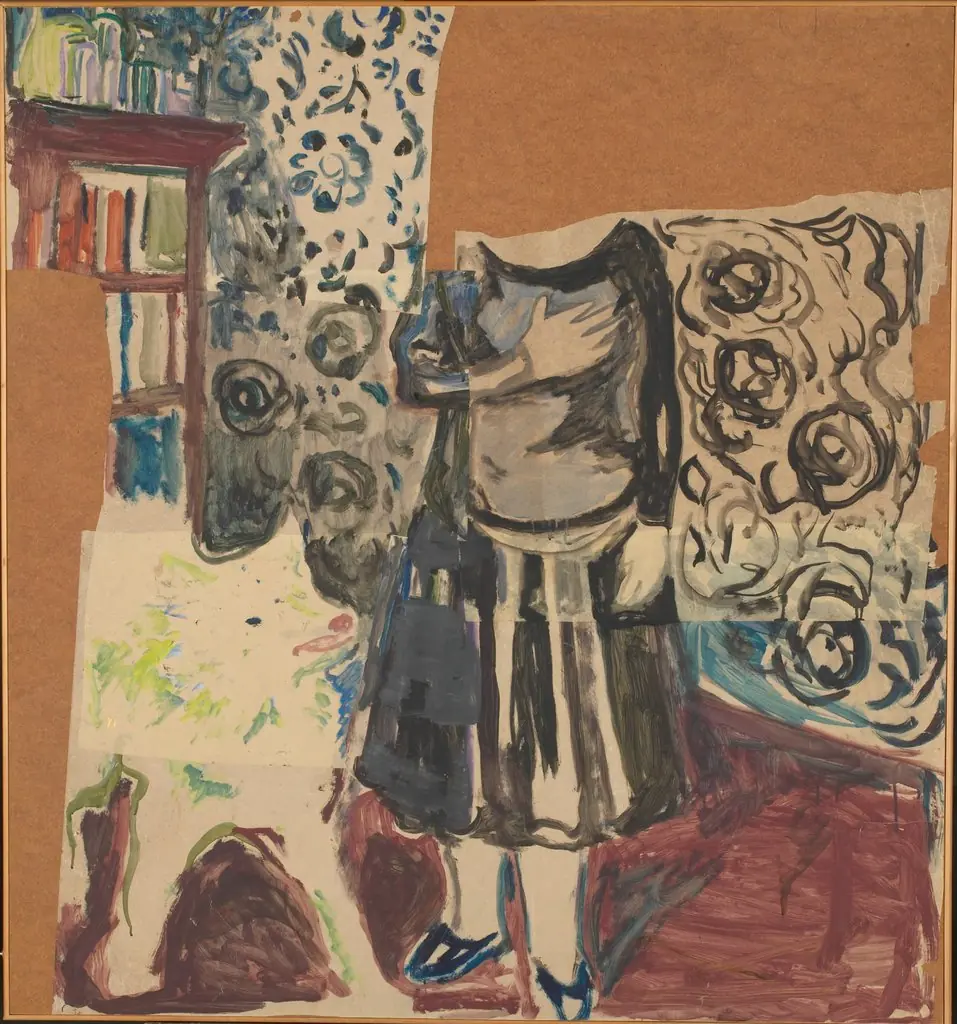
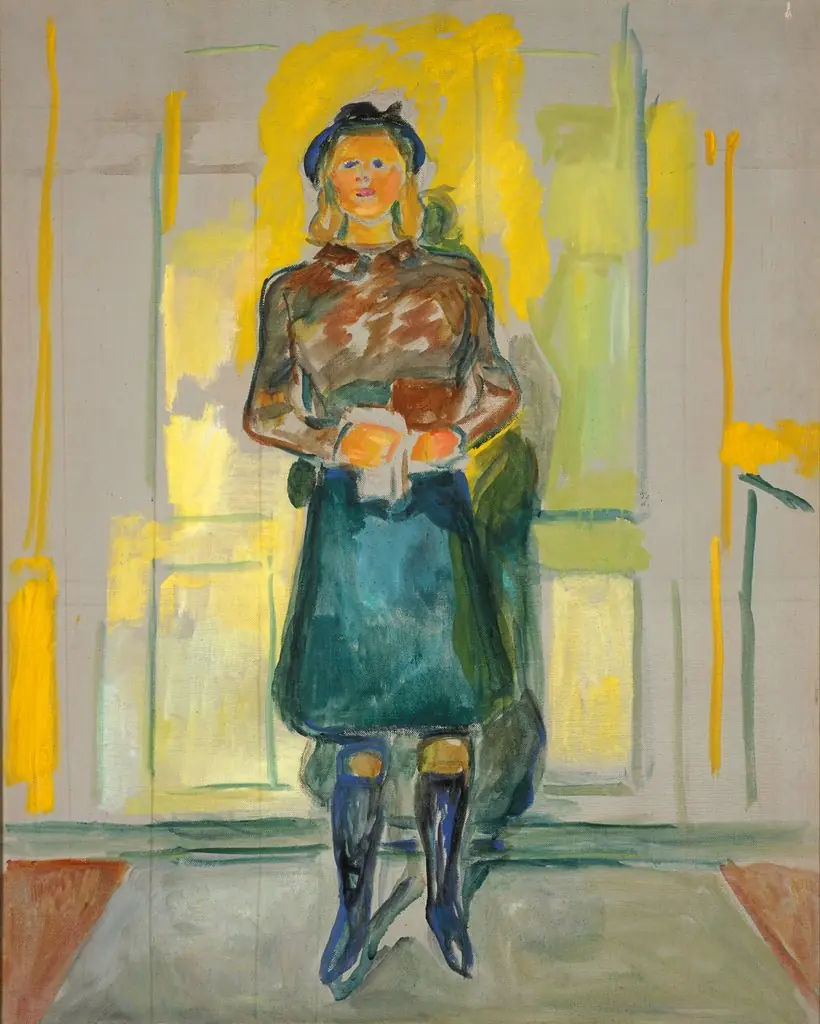
Visiting at Ekely is a charcoal painting by the Post-Impressionist artist Edvard Munch. It dates from 1942 and is held in the collection of the Munch Museum.
About this work
Overview
Created in 1942, *Visiting at Ekely* is one of Edvard Munch’s final works, executed in wax crayon on paper. By this stage of his life, Munch had retreated to his estate at Ekely, where he produced intimate, personal drawings and paintings. The medium’s immediacy reflects his shift toward informal, unembellished expression, moving away from the grander compositions of his earlier years.
Subject & Meaning
The scene lacks dramatic tension, instead conveying quiet domestic presence.
The painting portrays a woman standing near a window, dressed in a green skirt, blue stockings, and a dark beret, holding a red object—possibly a flower or fruit. The scene lacks dramatic tension, instead conveying quiet domestic presence. Though the figure’s identity is unconfirmed, the setting suggests a moment of stillness within Munch’s own home, hinting at themes of solitude and routine in his later years.
Technique & Style
Munch employed wax crayon for its directness and tactile quality, allowing bold, unblended strokes to define form and color. The palette—white, blue, and yellow—creates a luminous, atmospheric backdrop, while the figure is rendered with firm contours and saturated hues. The absence of fine detail and the emphasis on line and flat color reflect a deliberate simplification, aligning with his late style’s focus on emotional resonance over realism.
History & Provenance
The work was produced at Munch’s estate in Ekely, where he lived from 1916 until his death in 1944. It remained in his personal collection and was later transferred to the Munch Museum in Oslo, established to house his legacy. The painting’s survival in his own hands underscores its significance as a private record rather than a public commission.
Context
In his final decade, Munch increasingly turned to intimate subjects, often depicting himself, his household, or visitors in quiet interiors. The use of crayon and pastel became dominant, replacing oil as his primary medium. This shift coincided with his withdrawal from public life and a renewed interest in the everyday, reflecting both physical limitations and a philosophical turn toward simplicity.
Legacy
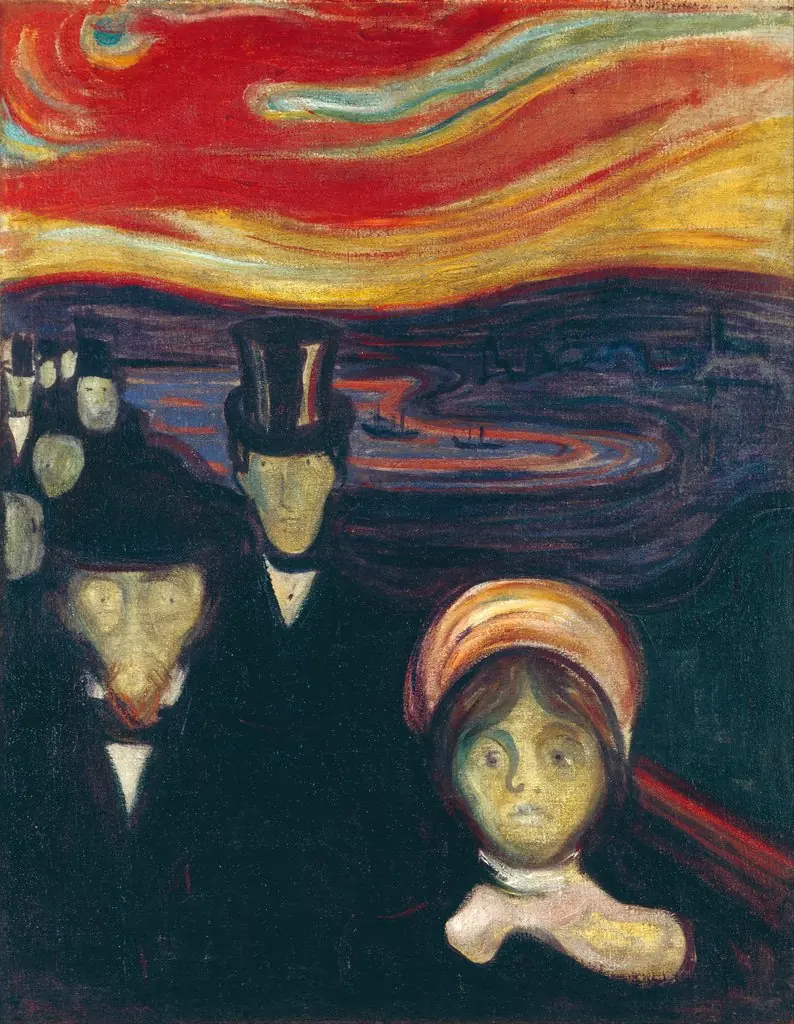
Though less known than his earlier works like *The Scream*, *Visiting at Ekely* exemplifies Munch’s enduring commitment to emotional honesty. Its unadorned technique and subdued subject matter reveal an artist refining his vision through restraint. The piece contributes to understanding how his expressive language evolved in isolation, leaving behind a quiet but persistent testament to his lifelong preoccupation with human presence.
Own this work as a print
Artist & collection
Artist
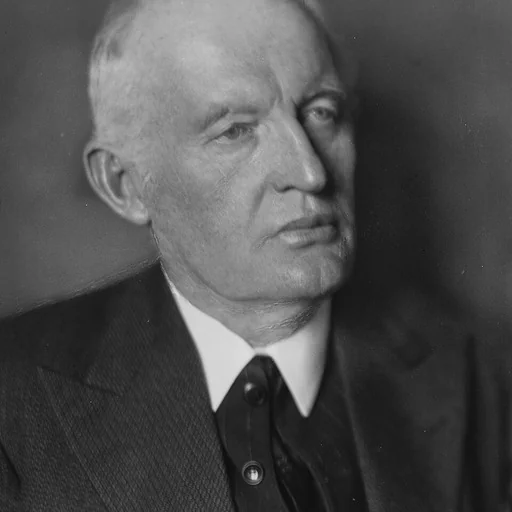
Edvard Munch ( MUUNK; Norwegian: ; 12 December 1863 – 23 January 1944) was a Norwegian painter.