Artwork
Woman in a Blue Dress Pouring Coffee
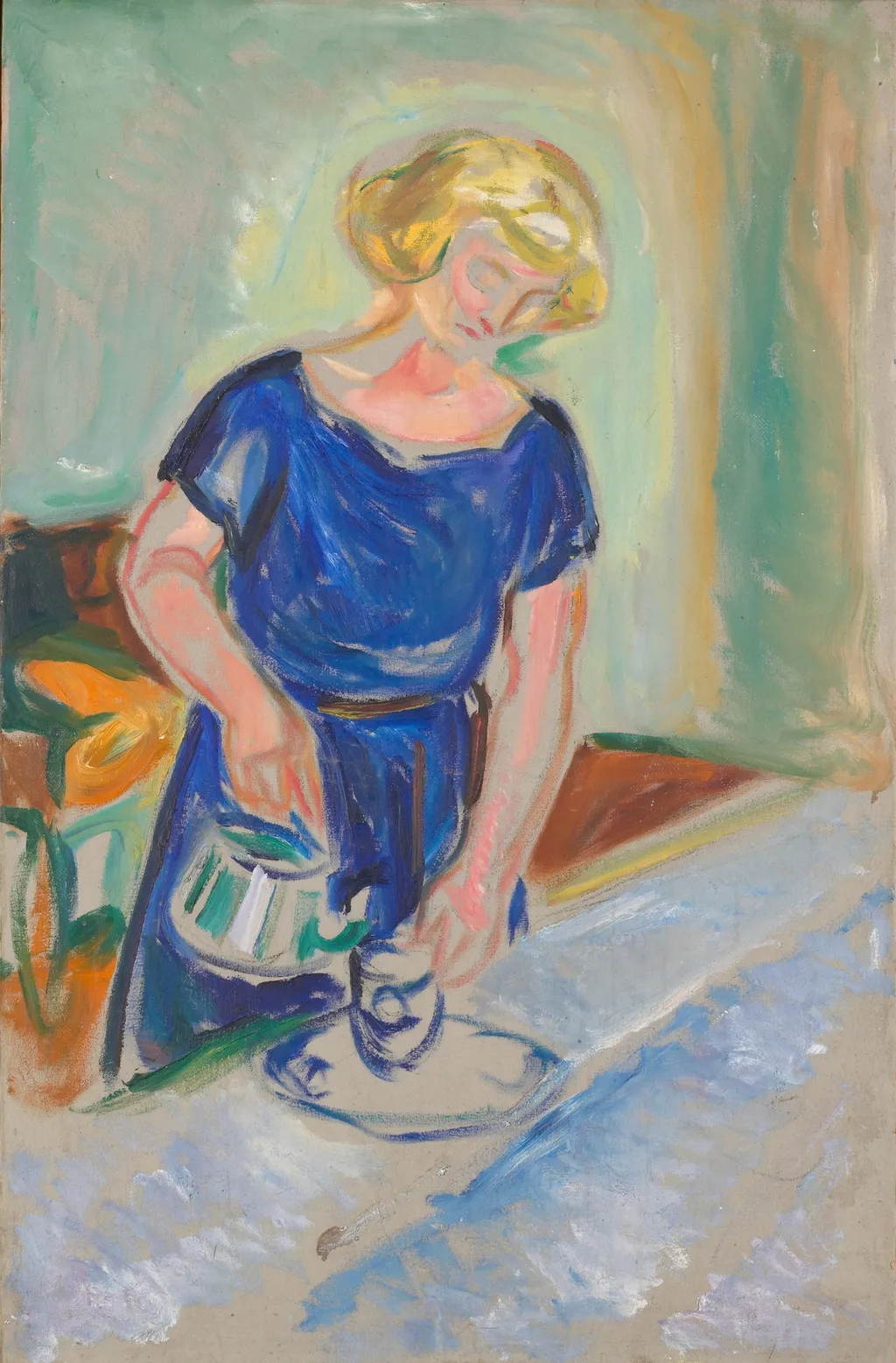
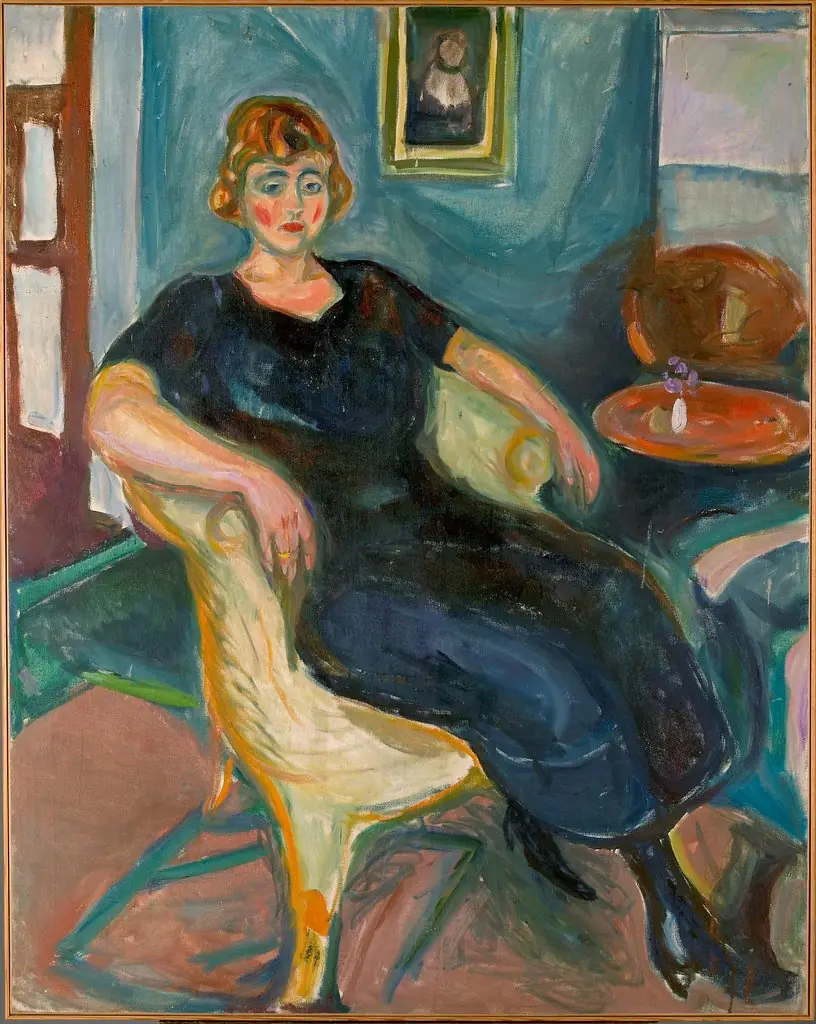
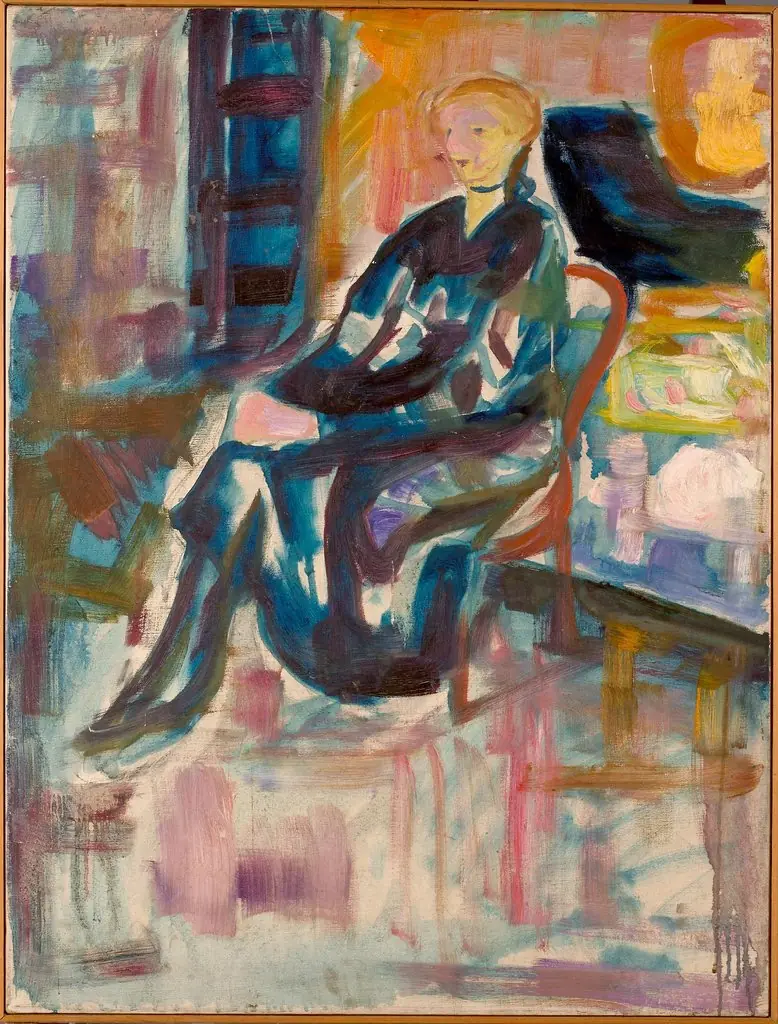
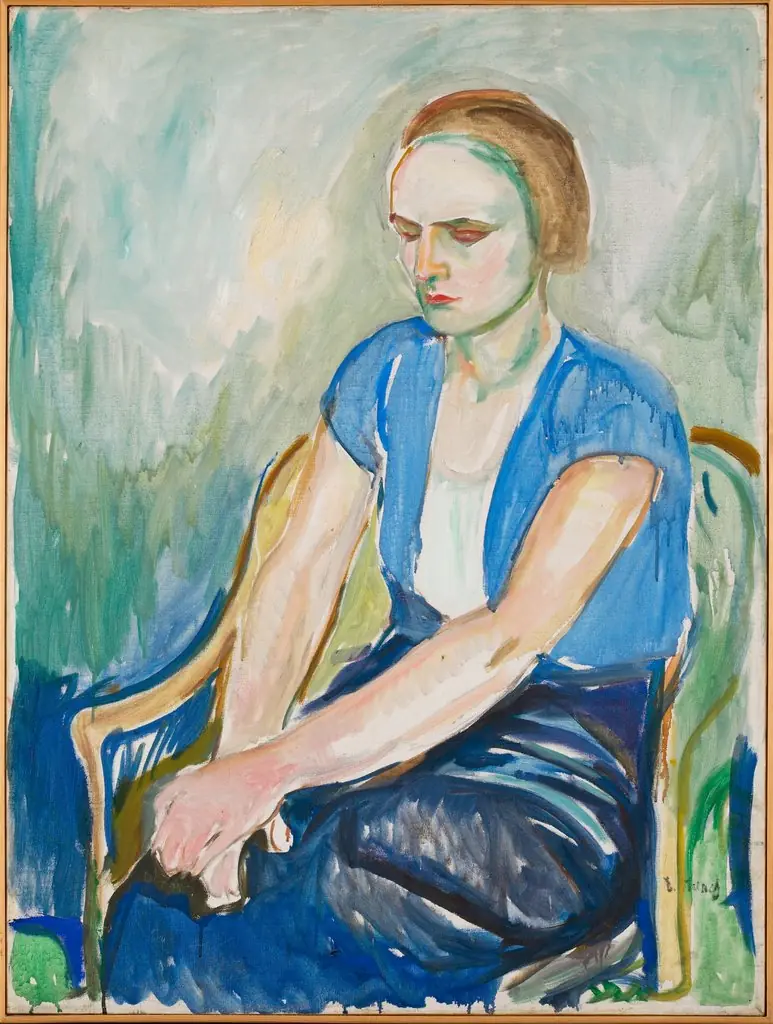
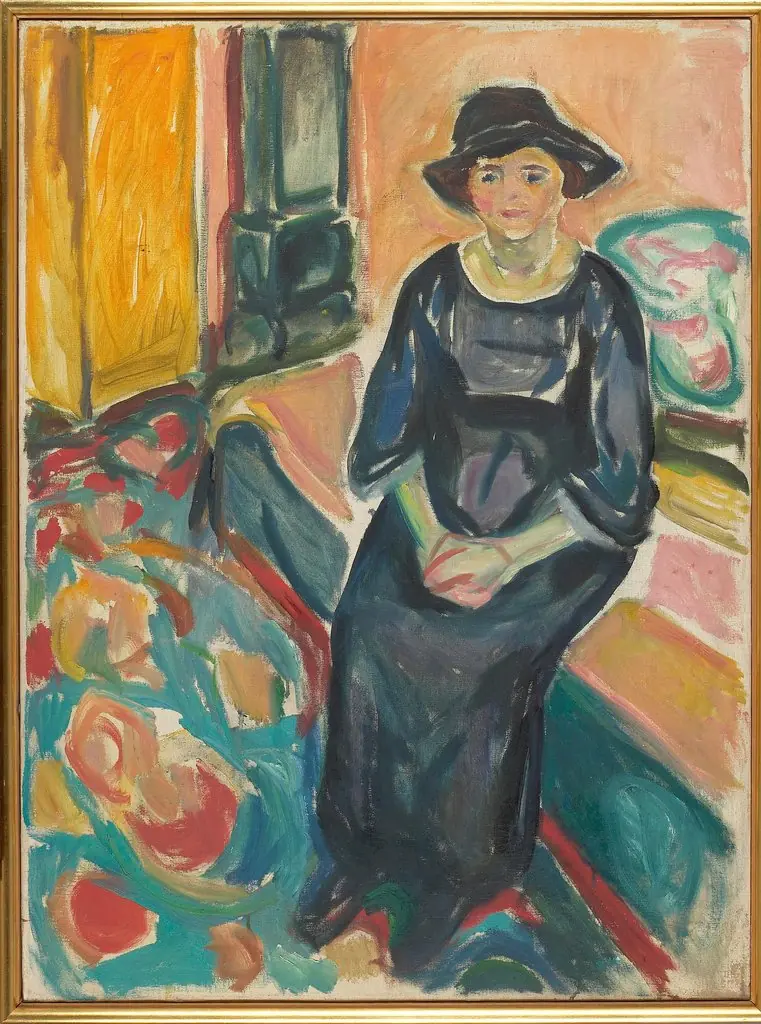
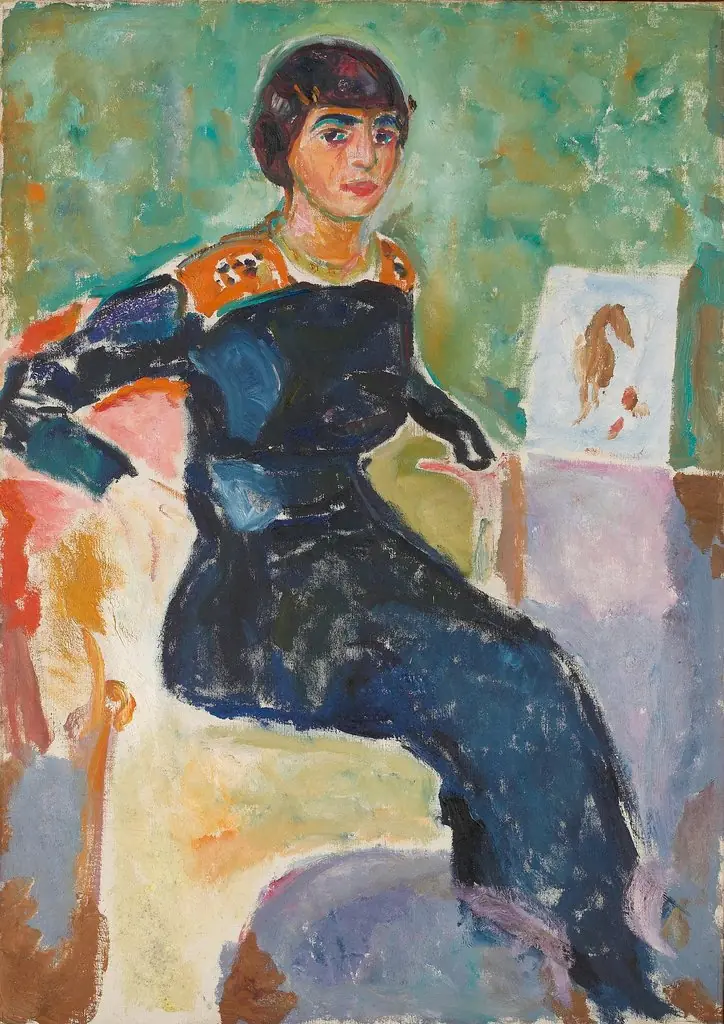
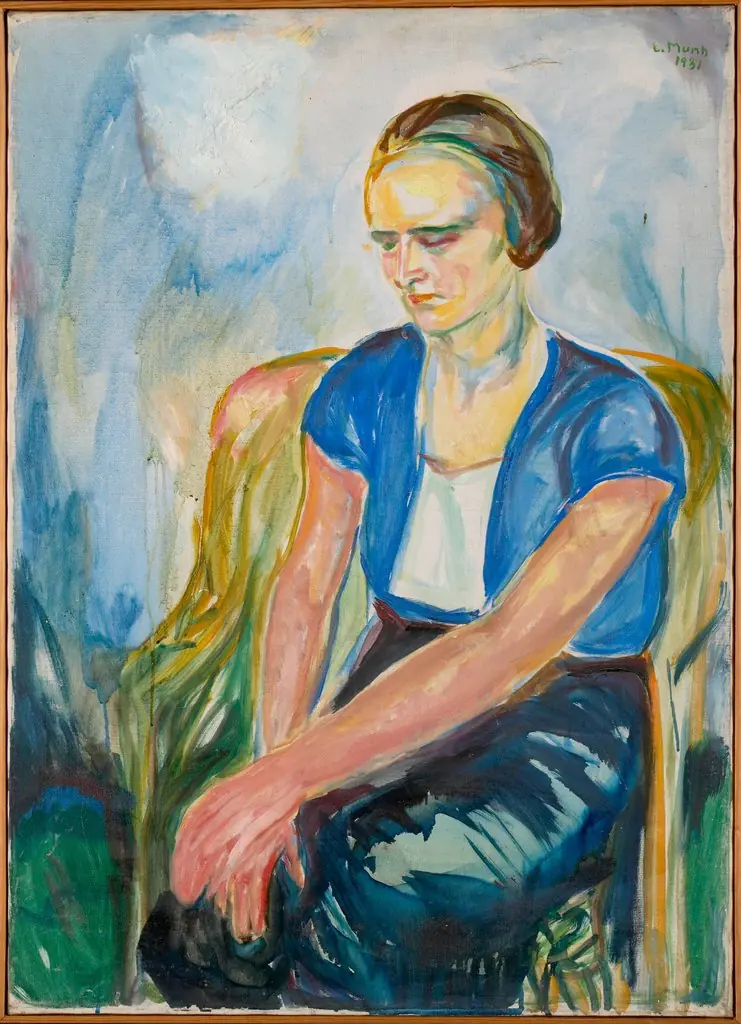
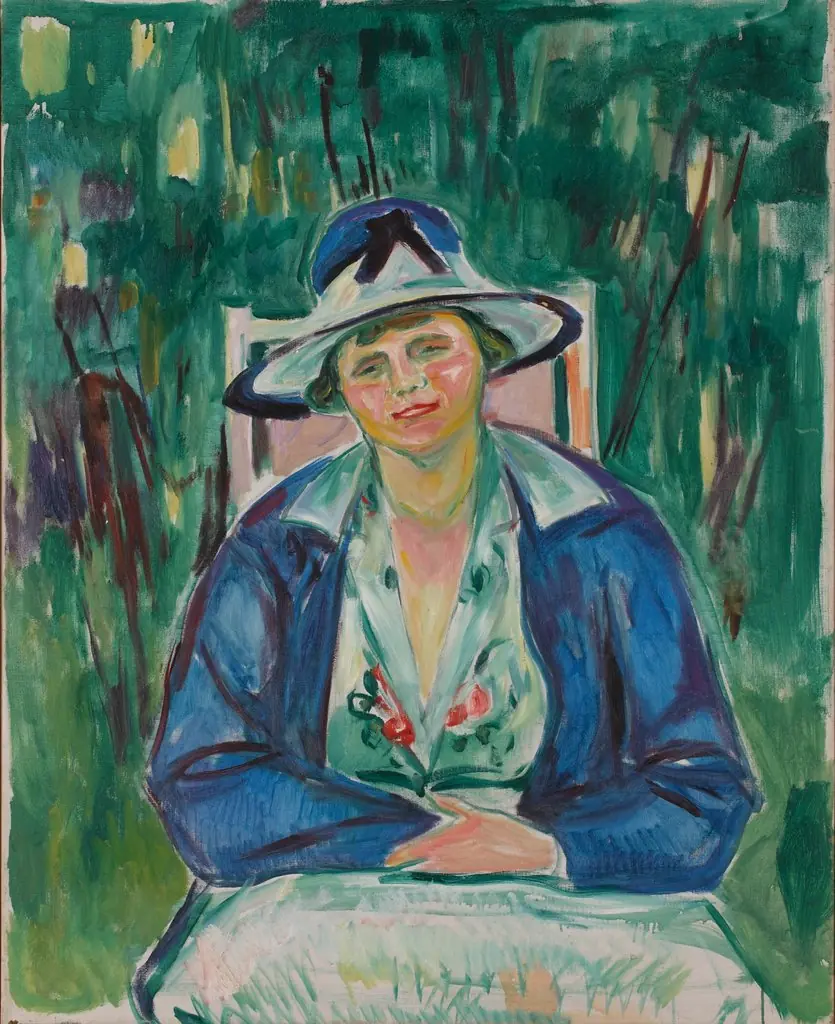
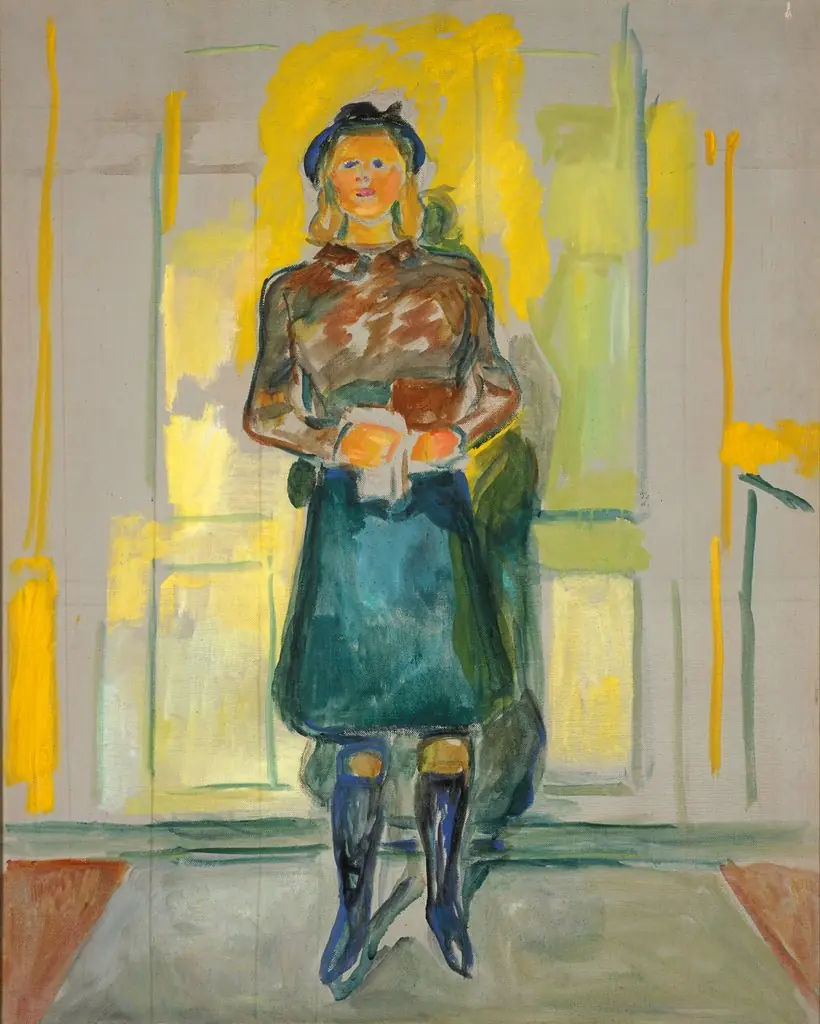
Woman in a Blue Dress Pouring Coffee is an oil painting by the Post-Impressionist artist Edvard Munch. It dates from 1924 and is held in the collection of the Munch Museum.
About this work
Overview
By this stage in his career, Munch had moved beyond the expressive intensity of his earlier years, favoring quieter, more contemplative scenes.
Painted in 1924, *Woman in a Blue Dress Pouring Coffee* is an oil work by Norwegian artist Edvard Munch. It captures a solitary domestic moment, rendered with restrained brushwork and muted tones. By this stage in his career, Munch had moved beyond the expressive intensity of his earlier years, favoring quieter, more contemplative scenes. The painting is part of the permanent collection at the Munch Museum in Oslo.
Subject & Meaning
The figure, a woman in a deep blue dress, is engaged in the quiet ritual of pouring coffee. Her face is indistinct, and her posture suggests introspection rather than interaction. The absence of narrative detail and the blurred features invite focus on the act itself—ordinary, private, and unhurried. The scene conveys solitude not as loneliness, but as a stillness inherent in daily life.
Technique & Style
Munch employs loose, economical brushstrokes to define form without detail. The blue of the dress contrasts subtly with the warm browns and pale greens of the background. Light is diffused, casting no sharp shadows, and the composition is deliberately uncluttered. The blurred facial features and simplified anatomy reflect his mature style: emotional resonance prioritized over realism.
History & Provenance
Created during Munch’s later years, the painting emerged from a period of relative stability after decades marked by personal loss and psychological turmoil. It was likely painted at his home in Ekely, near Oslo, where he lived and worked from 1916 until his death. The work entered the Munch Museum’s collection following his bequest of nearly 1,100 paintings and thousands of prints and drawings.
Context
In the 1920s, Munch increasingly turned to domestic subjects, distancing himself from the existential themes of his youth. While still influenced by Symbolism and Post-Impressionism, his work from this era reflects a preoccupation with routine, solitude, and the passage of time. This painting aligns with other late works that find dignity in unremarkable moments.
Legacy
Though less widely known than *The Scream*, this painting exemplifies Munch’s enduring interest in human interiority. Its quietude offers a counterpoint to his more dramatic compositions, revealing the breadth of his emotional range. It remains a key example of how personal experience shaped his evolving visual language, influencing later generations interested in psychological realism.
Own this work as a print
Artist & collection
Artist
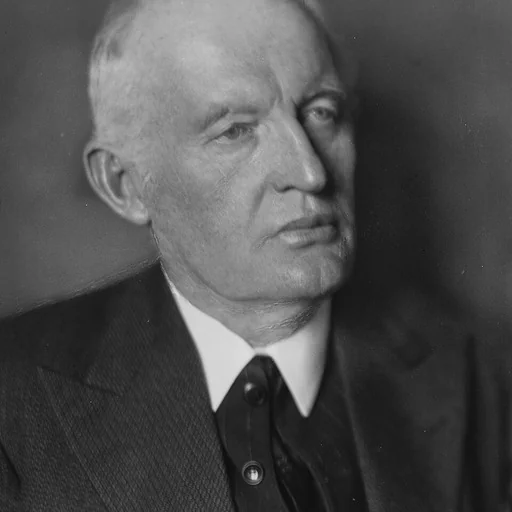
Edvard Munch ( MUUNK; Norwegian: ; 12 December 1863 – 23 January 1944) was a Norwegian painter.