Artwork
Workers and Horse
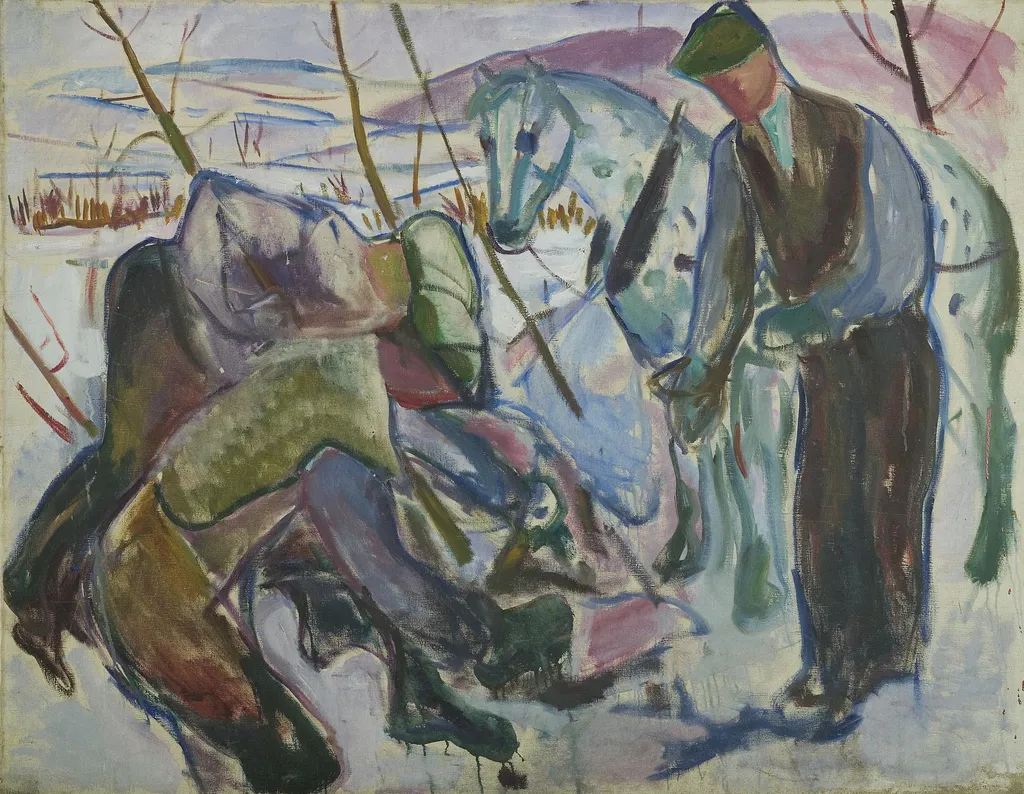
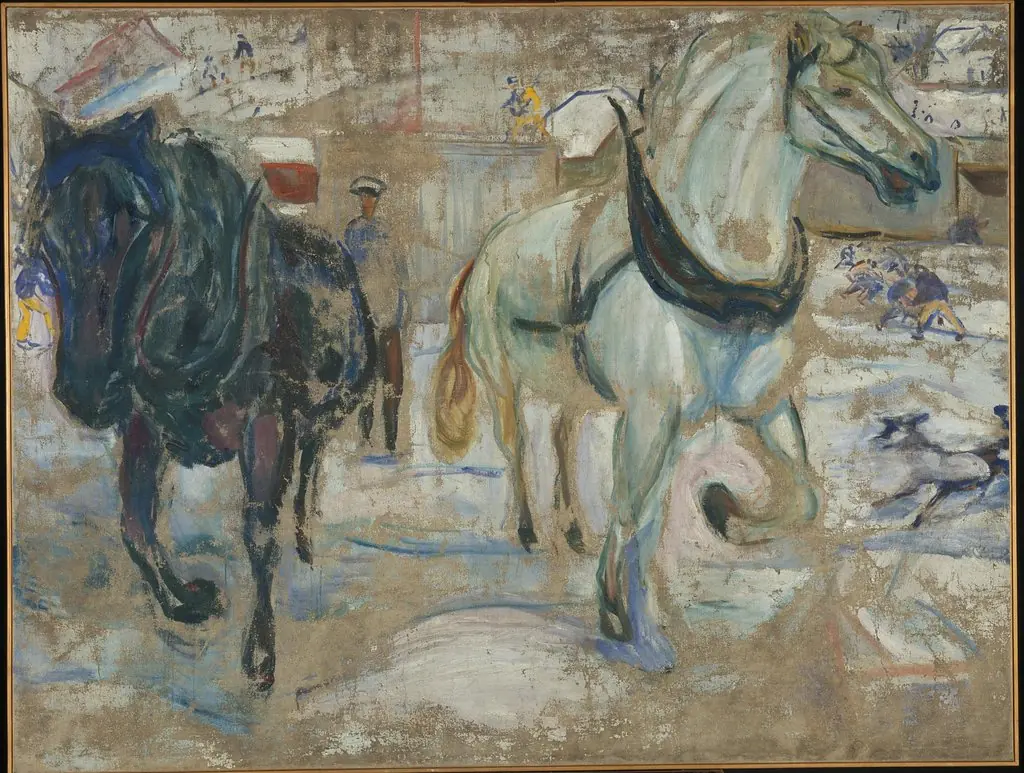
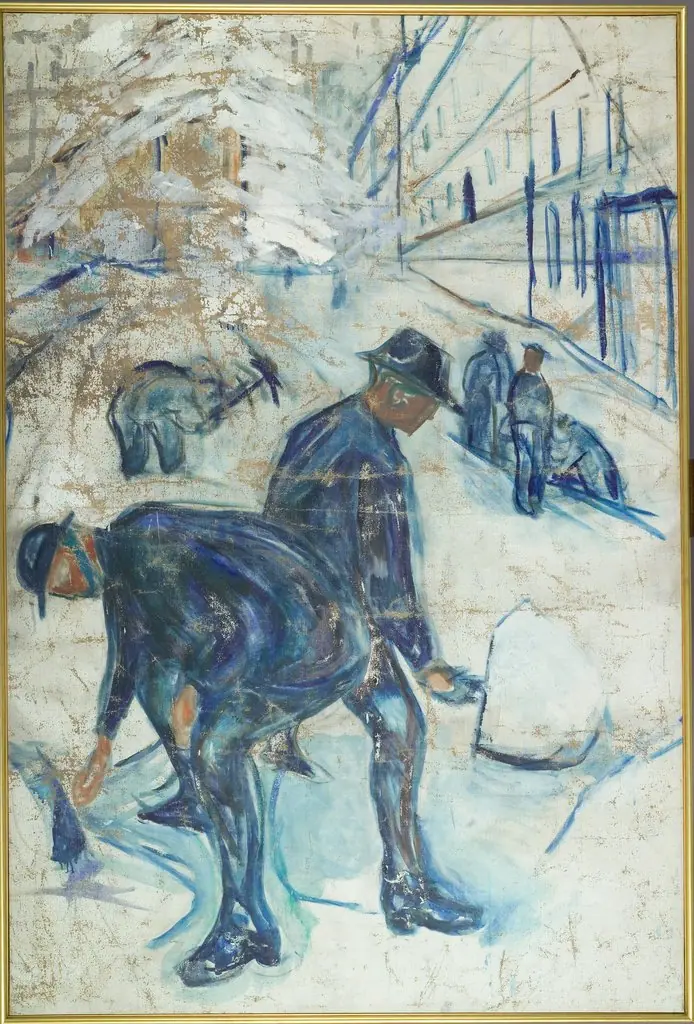
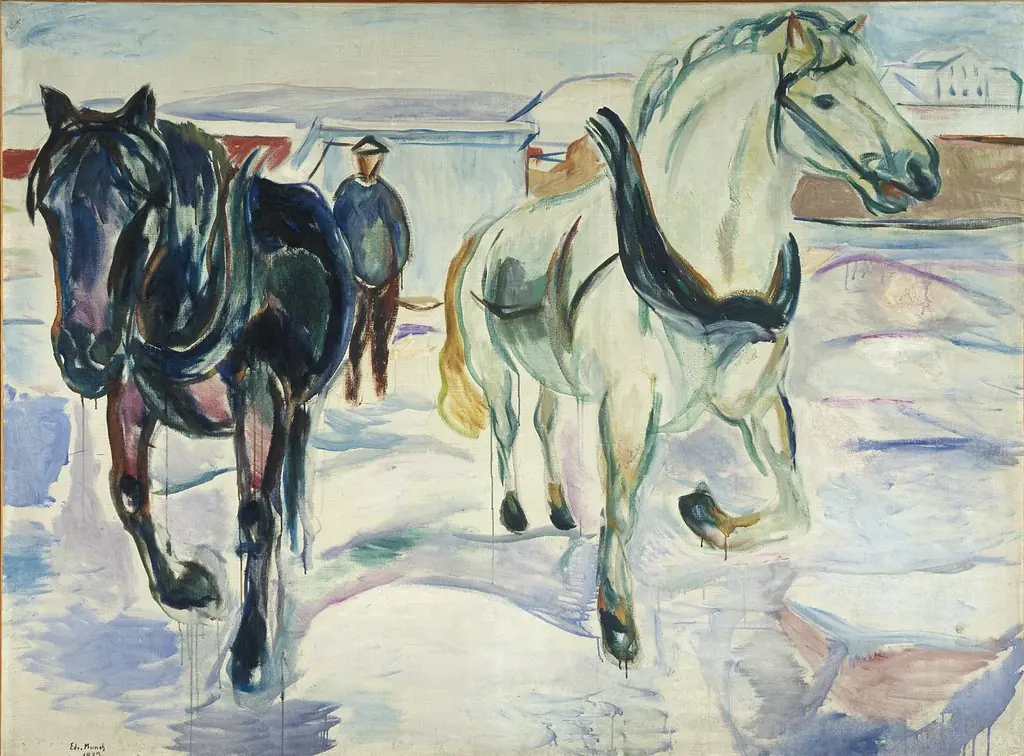
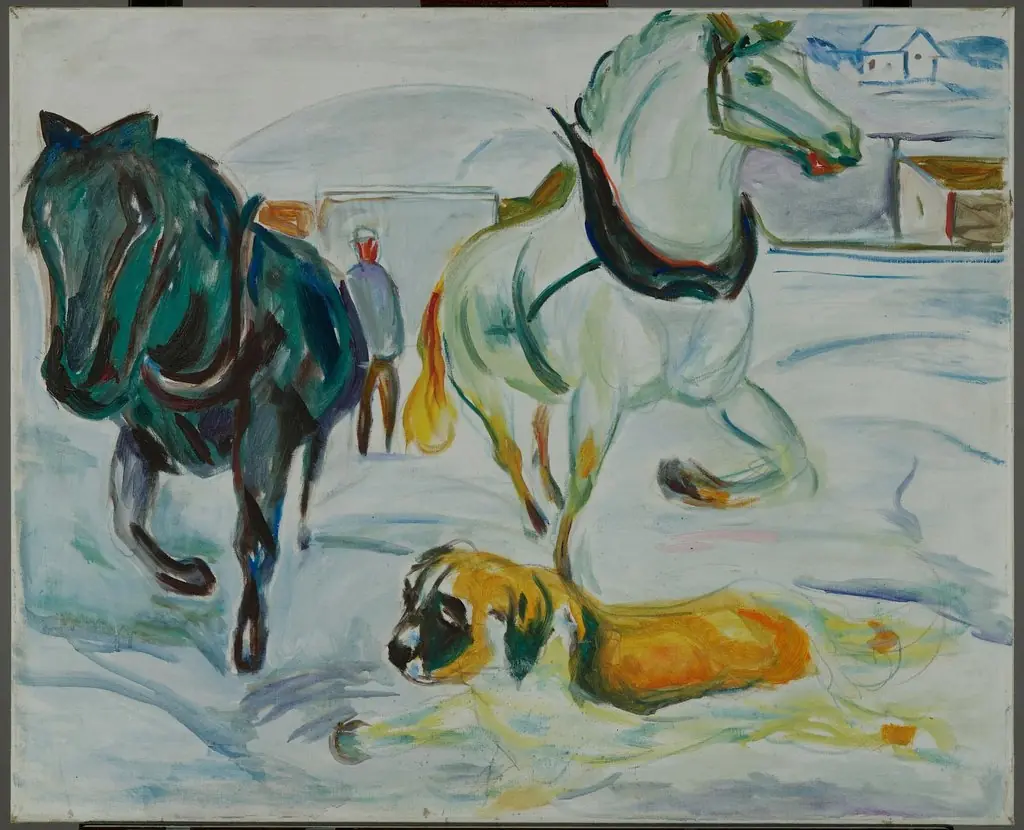
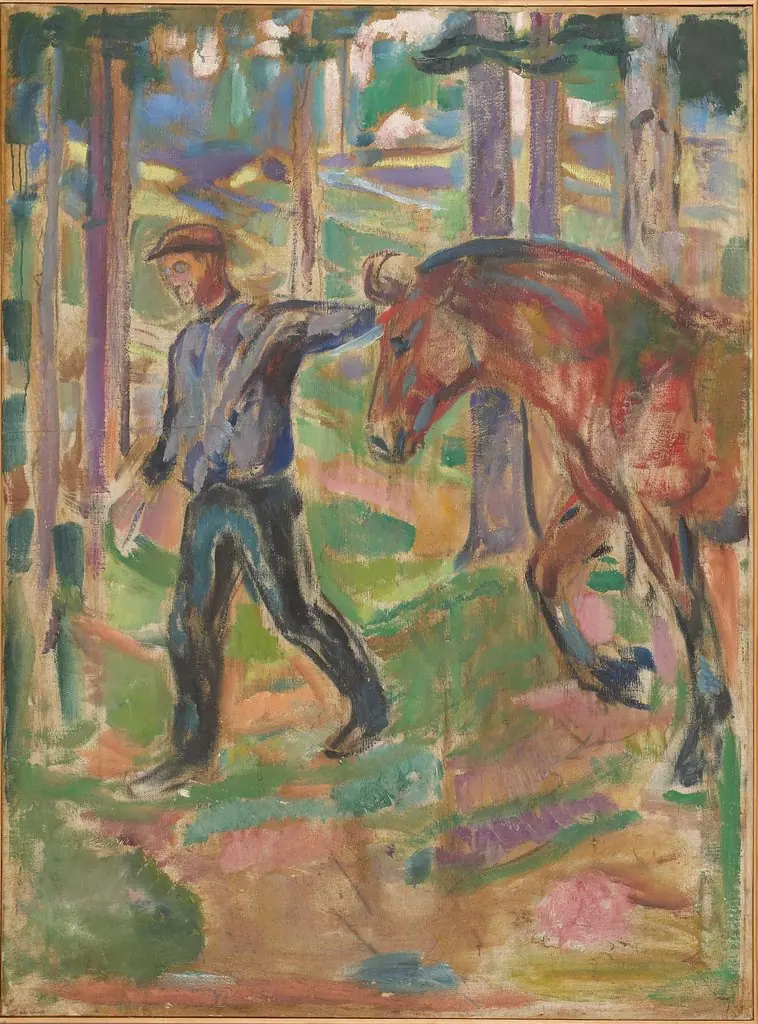
Workers and Horse is an oil painting by the Post-Impressionist artist Edvard Munch. It dates from 1920 and is held in the collection of the Munch Museum.
About this work
Overview
The painting resides in the Munch Museum, part of a broader body of work reflecting his lifelong engagement with human experience.
Painted in 1920, *Workers and Horse* is an oil on canvas work by Norwegian artist Edvard Munch. It captures a quiet moment of rural labor, featuring two men and a white horse in a natural setting. Munch, known for his introspective and emotionally resonant imagery, applied his signature expressive brushwork to this scene, avoiding romanticization in favor of unadorned observation. The painting resides in the Munch Museum, part of a broader body of work reflecting his lifelong engagement with human experience.
Subject & Meaning
The painting portrays two laborers engaged in quiet, unglamorous work beside a horse, their postures suggesting fatigue or contemplation rather than exertion. The absence of narrative detail or dramatic tension shifts focus to the dignity of routine labor. The horse, rendered with calm stillness, becomes a silent companion to the men, reinforcing themes of endurance and quiet coexistence. Munch’s choice of ordinary subjects reflects his interest in the psychological weight of everyday life.
Technique & Style
Munch employed thick, deliberate brushstrokes and a restrained yet vivid palette to convey texture and mood. The figures and horse are modeled with loose, almost sculptural forms, avoiding precise detail in favor of emotional resonance. The background—trees and water—is rendered with soft, blurred edges, creating depth without distraction. His technique merges elements of post-impressionism with a personal expressiveness, prioritizing atmosphere over realism.
History & Provenance
Created during Munch’s later years, *Workers and Horse* was painted after he had established his reputation through works like *The Scream*. It remained in his personal collection until his death in 1944, after which it was transferred to the Munch Museum in Oslo, established to preserve his legacy. The painting’s provenance is well-documented, reflecting Munch’s consistent practice of retaining significant works for institutional donation.
Context
In the early 20th century, Munch increasingly turned to scenes of rural life and labor, moving away from the intense psychological themes of his youth. This shift coincided with his relocation to the countryside near Oslo and a growing interest in the rhythms of nature and manual work. *Workers and Horse* aligns with this period’s quieter tone, reflecting both personal reflection and broader societal changes in Scandinavian labor and land use.
Legacy
While less widely known than Munch’s earlier symbolic works, *Workers and Horse* contributes to understanding his evolving artistic concerns. It demonstrates his sustained commitment to portraying human and animal presence with emotional honesty. The painting remains a quiet but significant example of his later style, valued for its restraint and its testament to the enduring dignity of labor in his visual language.
Own this work as a print
Artist & collection
Artist
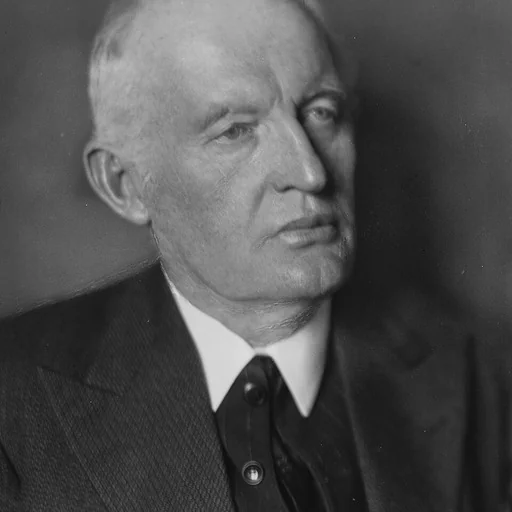
Edvard Munch ( MUUNK; Norwegian: ; 12 December 1863 – 23 January 1944) was a Norwegian painter.