Artwork
The Pathfinder
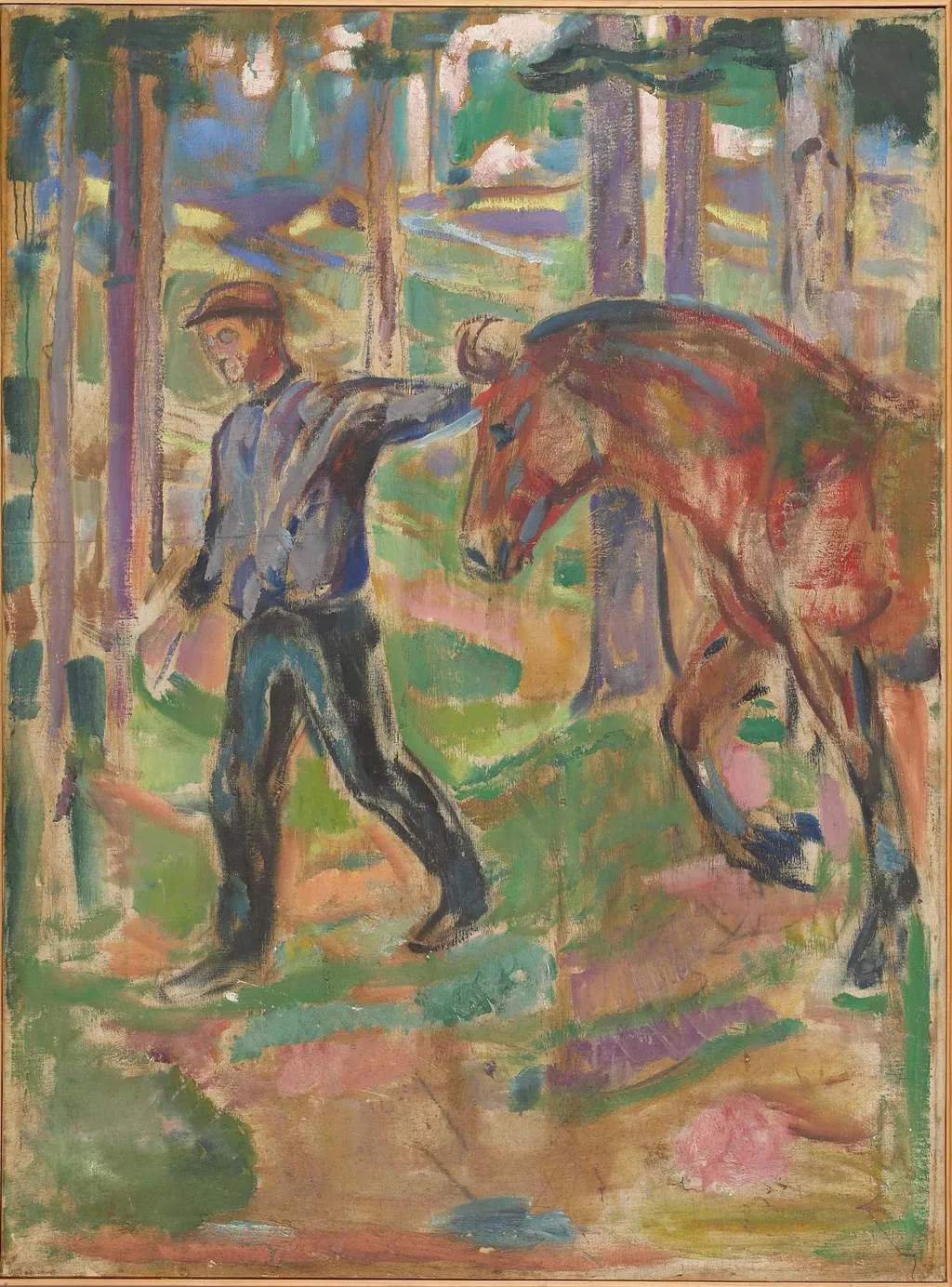
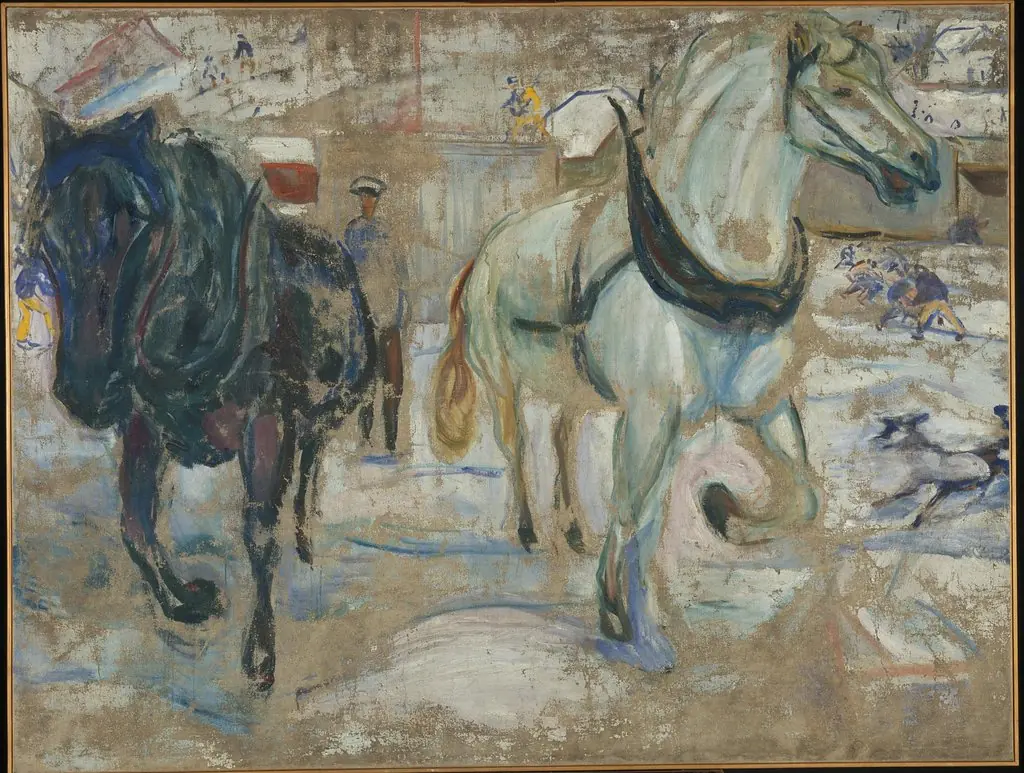
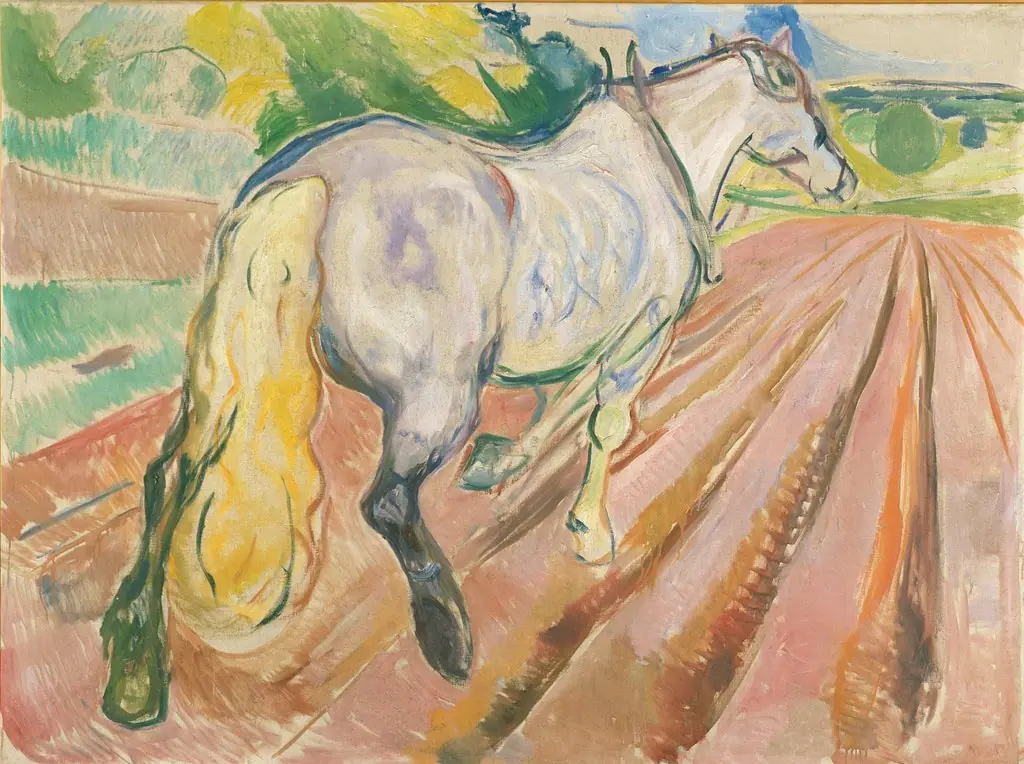
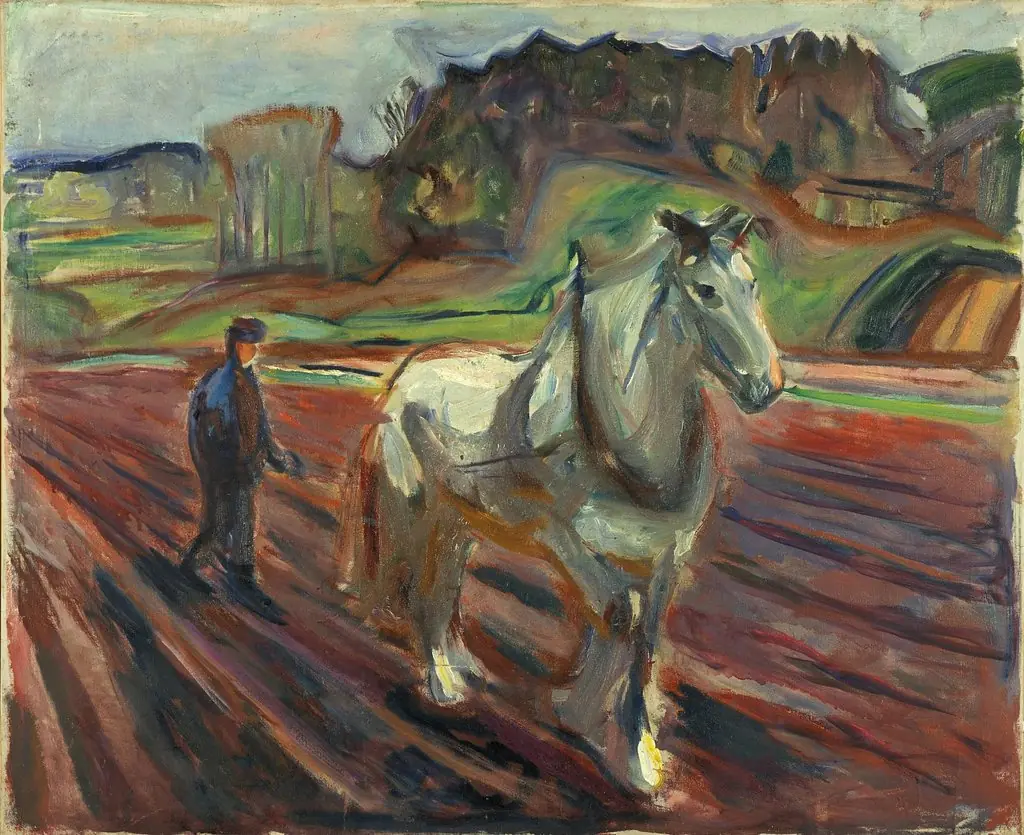
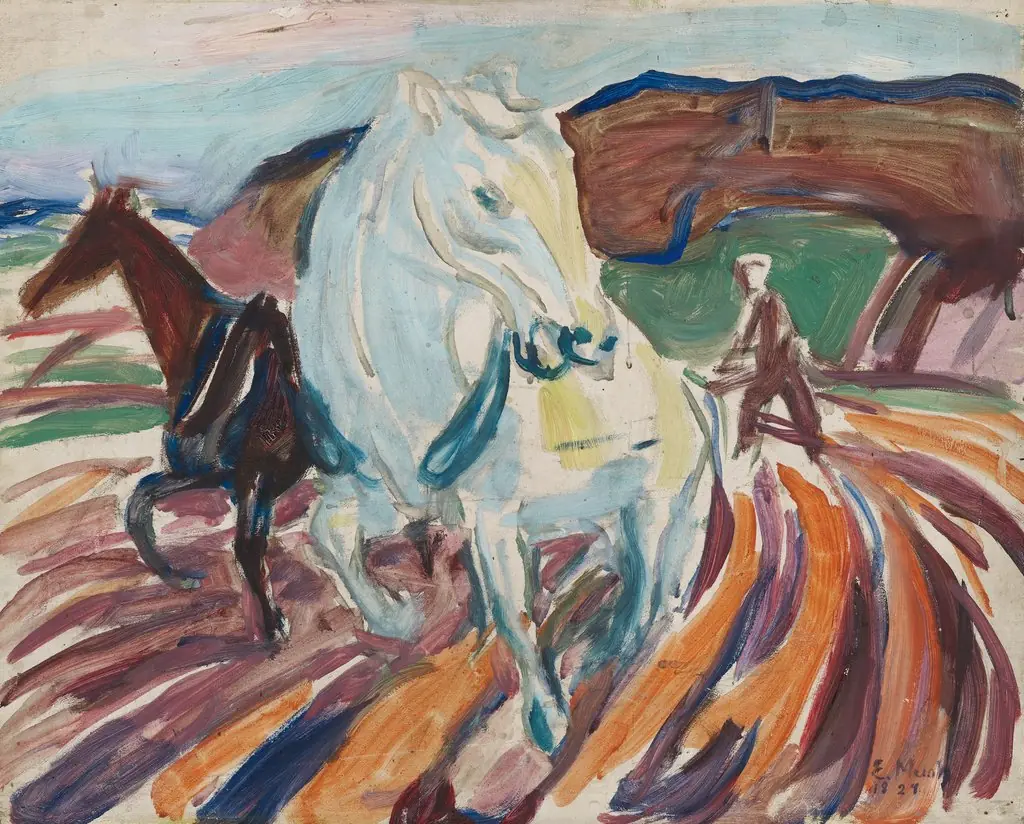
The Pathfinder is an oil painting by the Post-Impressionist artist Edvard Munch. It dates from 1912 and is held in the collection of the Munch Museum.
About this work
Overview
The piece reflects Munch’s ongoing interest in human solitude and the relationship between individuals and nature, themes that recur throughout his career.
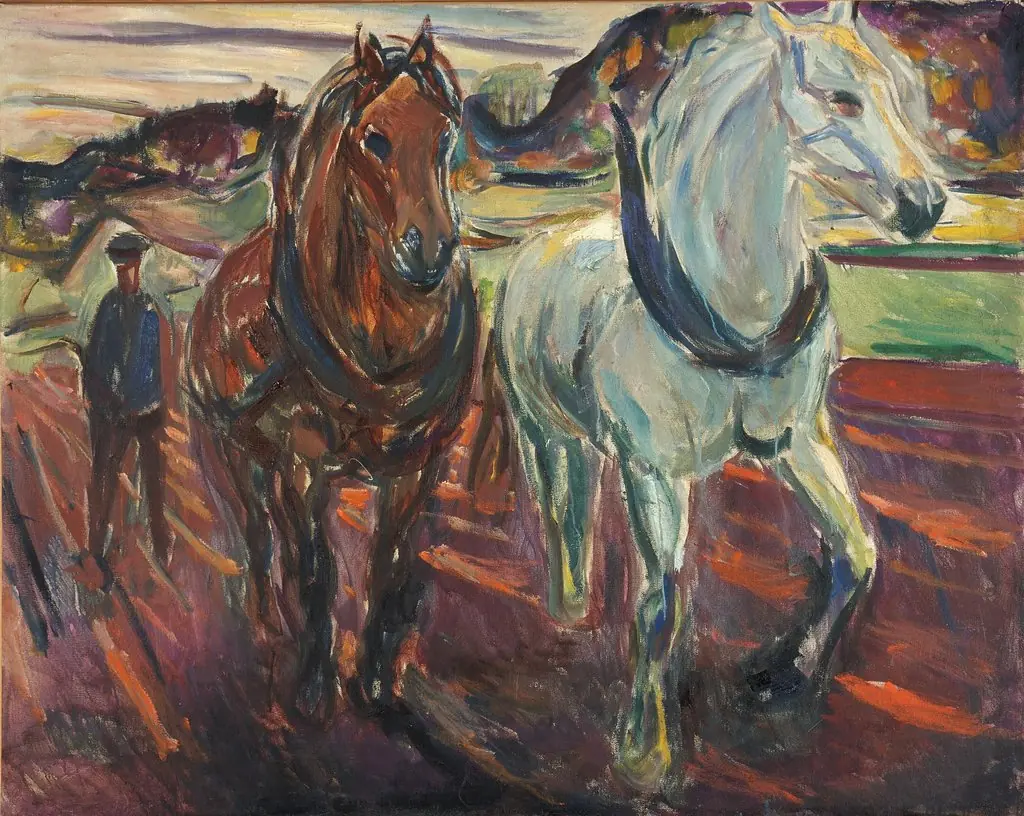
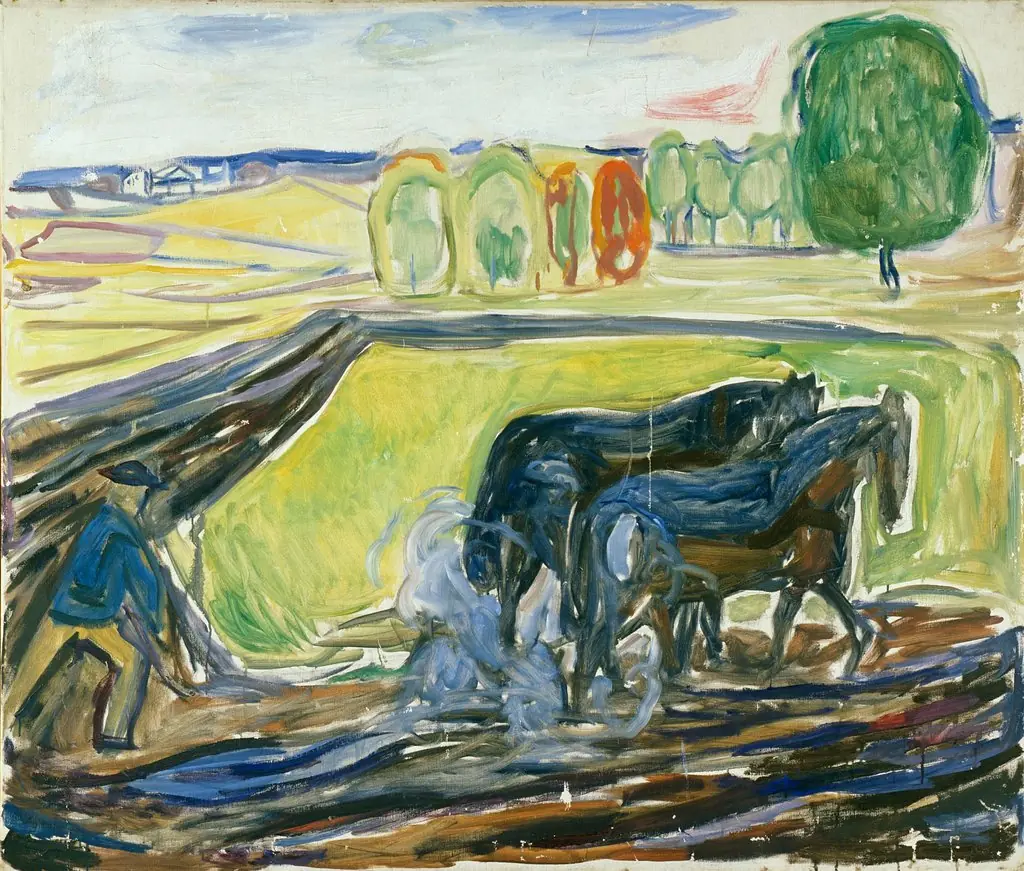
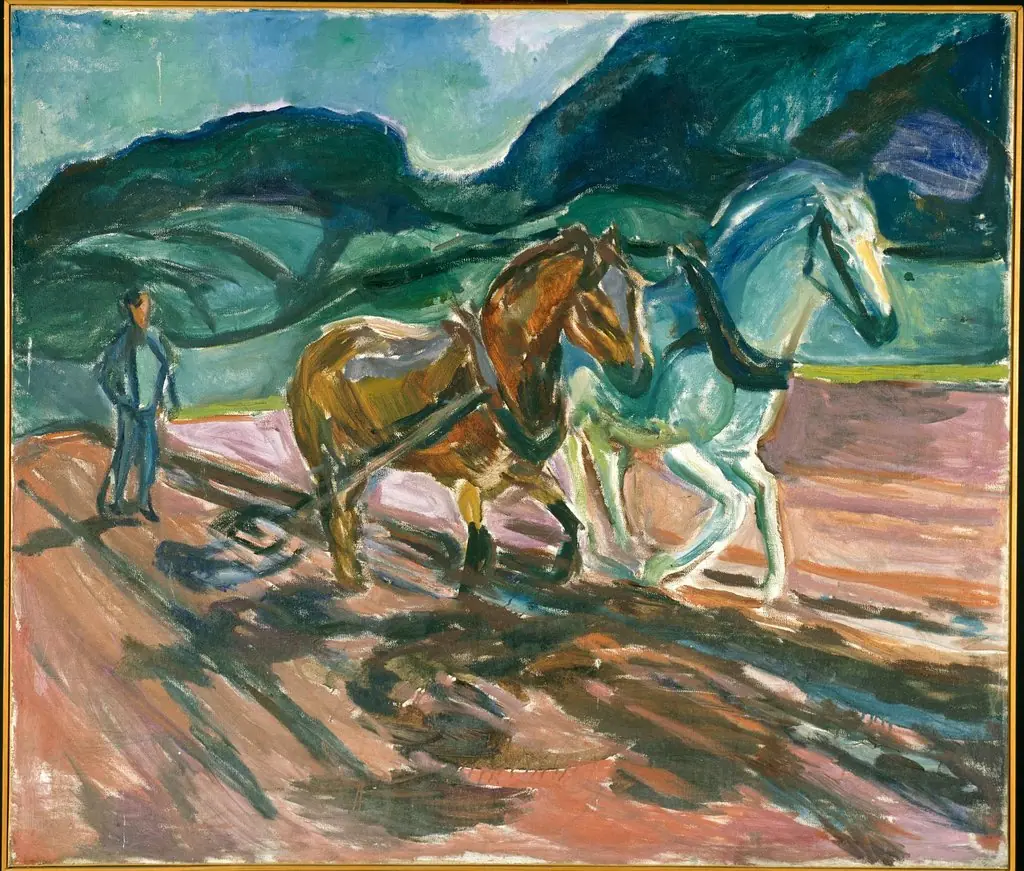
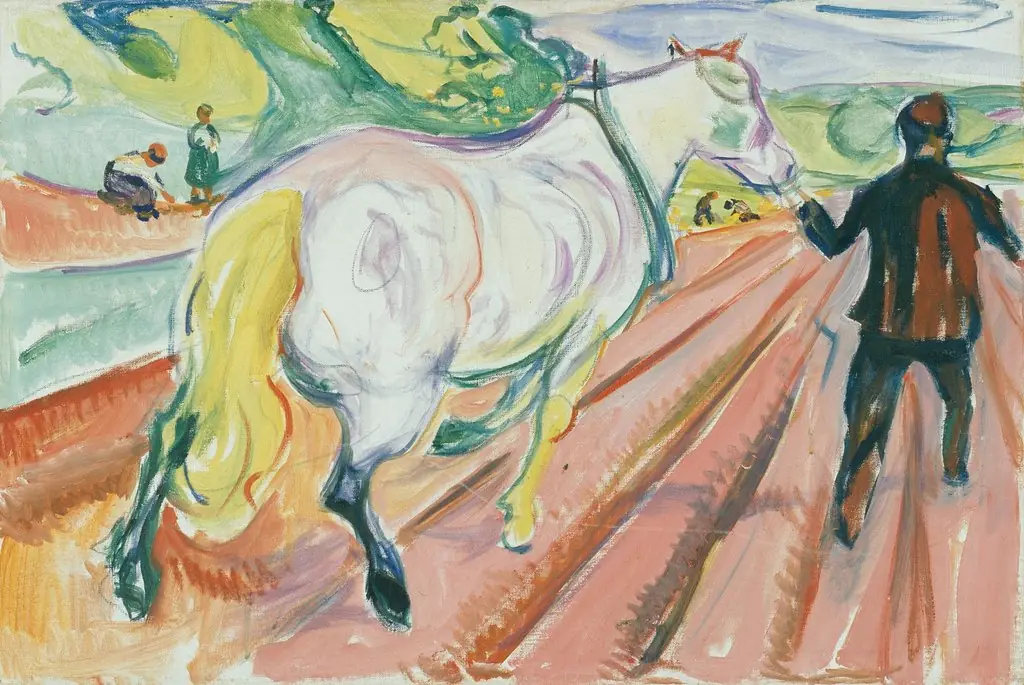
Painted in 1912, *The Pathfinder* is an oil on canvas work by Norwegian artist Edvard Munch. It depicts a solitary figure on horseback moving through a dense woodland, rendered with expressive brushwork and a restrained yet vivid palette. The piece reflects Munch’s ongoing interest in human solitude and the relationship between individuals and nature, themes that recur throughout his career. It resides in the Munch Museum in Oslo, part of a broader collection documenting his artistic evolution.
Subject & Meaning
The painting portrays a lone traveler and his horse advancing through a forest, suggesting a journey both physical and inward. The figure, cloaked in dark clothing and a cap, is anonymous, inviting interpretation as a symbol of existential navigation. The forest, neither menacing nor serene, acts as a neutral backdrop to the quiet determination of the pair. Munch often used such imagery to explore psychological states rather than literal narratives, emphasizing inner tension over external detail.
Technique & Style
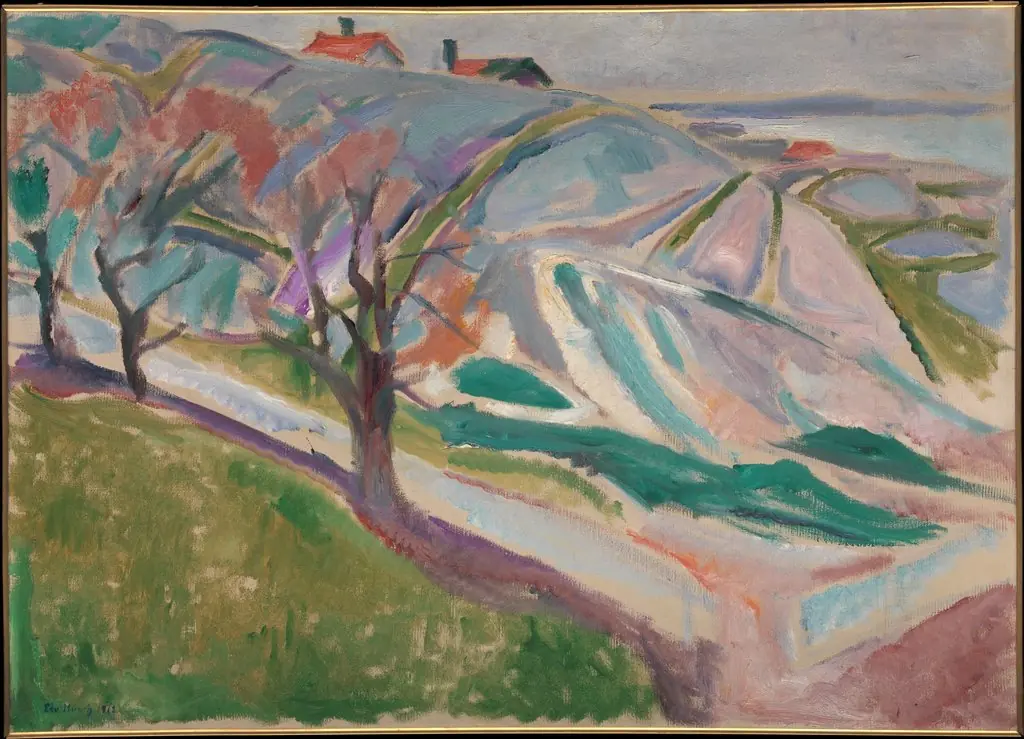
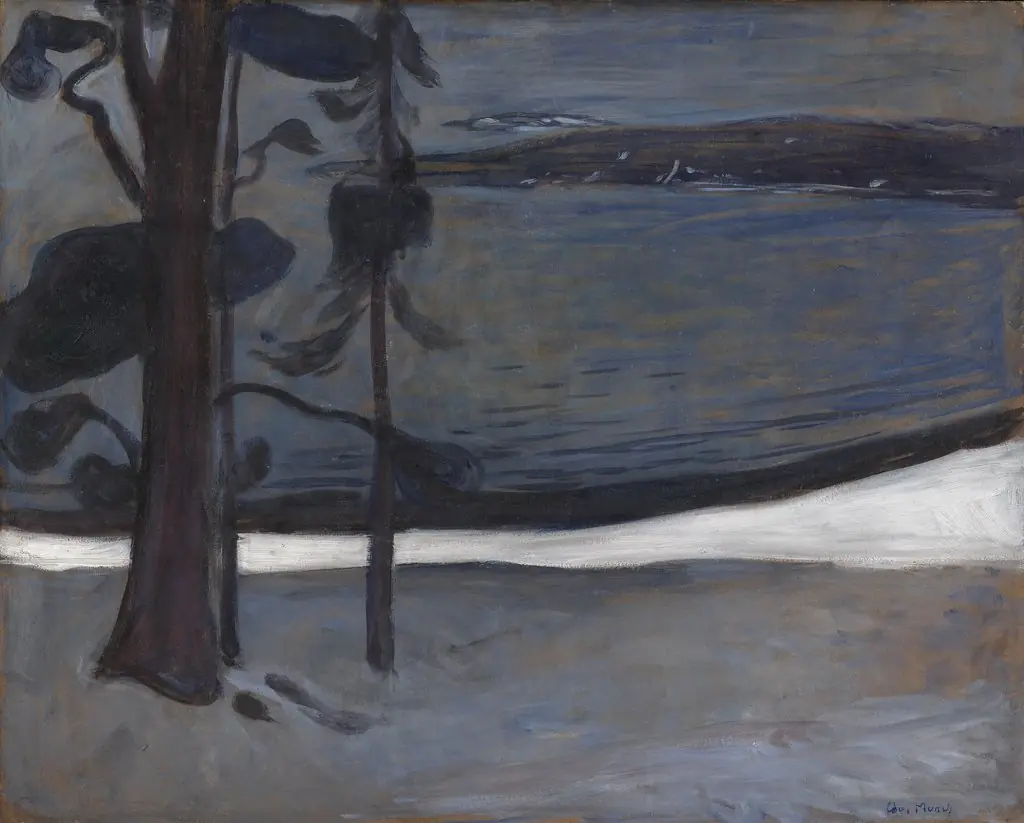
Munch employed thick, directional brushstrokes to convey motion and atmosphere, avoiding smooth transitions in favor of energetic texture. The greens of the forest vary in saturation and tone, creating depth without realism, while the sky peeks through in muted blues and grays. Color is used emotionally rather than descriptively—dark tones anchor the figures, while brighter accents in foliage suggest fleeting light. The composition directs focus to the central pair, isolating them within the natural environment.
History & Provenance
Created during Munch’s mature period, *The Pathfinder* was painted after his return to Norway following years in Berlin and Paris. It entered the collection of the Munch Museum upon its founding in 1963, having remained in the artist’s possession until his death in 1944. The work was not exhibited widely during his lifetime, and its quiet intensity contrasts with the more famous *The Scream*, reflecting Munch’s sustained focus on introspective themes beyond public spectacle.
Context
Munch’s work in the early 20th century was shaped by personal grief, philosophical influences like Hans Jæger’s existentialism, and the broader European turn toward psychological expression. While often grouped with Post-Impressionism, his approach diverged from color-based formalism, prioritizing emotional resonance. *The Pathfinder* aligns with contemporaneous works exploring isolation and inner life, reflecting a Nordic sensibility that valued subtlety over dramatic spectacle.
Legacy
Though less known than *The Scream*, *The Pathfinder* exemplifies Munch’s enduring preoccupation with solitude and movement through uncertain landscapes. It contributes to a body of work that redefined modern painting through subjective experience rather than objective representation. The painting continues to inform interpretations of Nordic modernism, underscoring Munch’s role in shifting art toward psychological depth as a primary concern.
Artist & collection
Artist
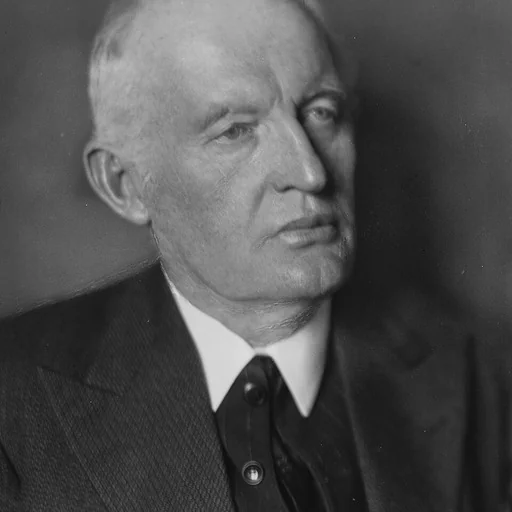
Edvard Munch ( MUUNK; Norwegian: ; 12 December 1863 – 23 January 1944) was a Norwegian painter.