Artwork
Refshaleøen. The Copenhagen Harbour
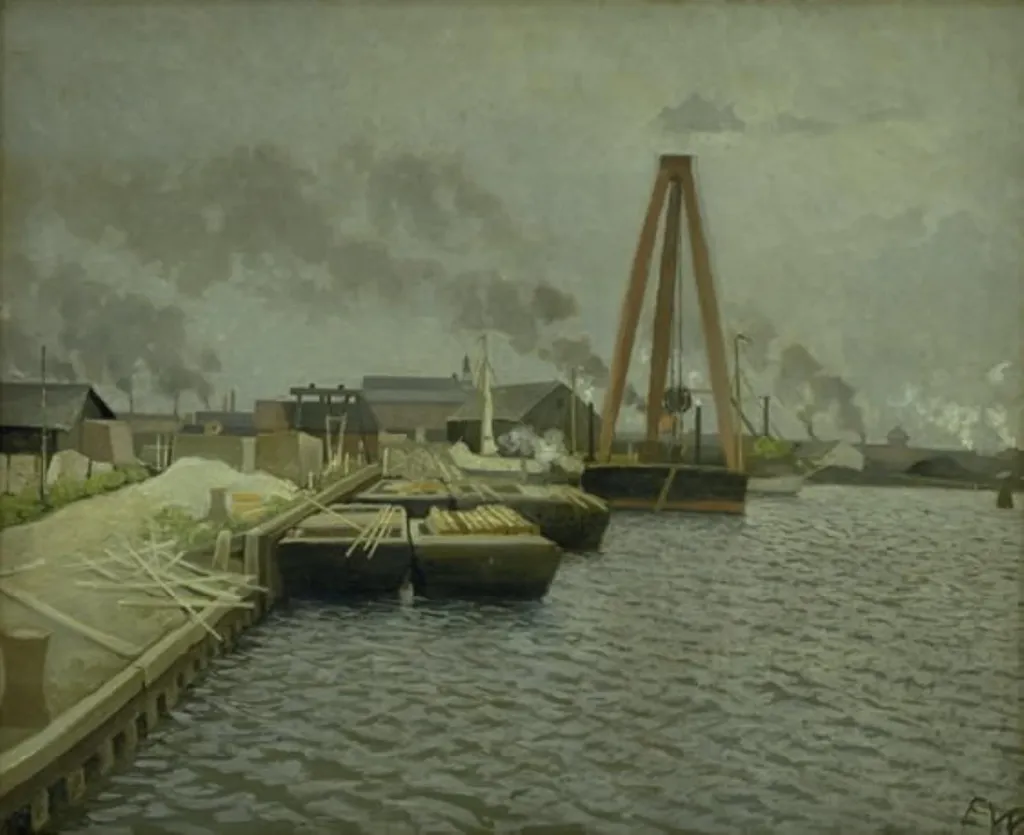
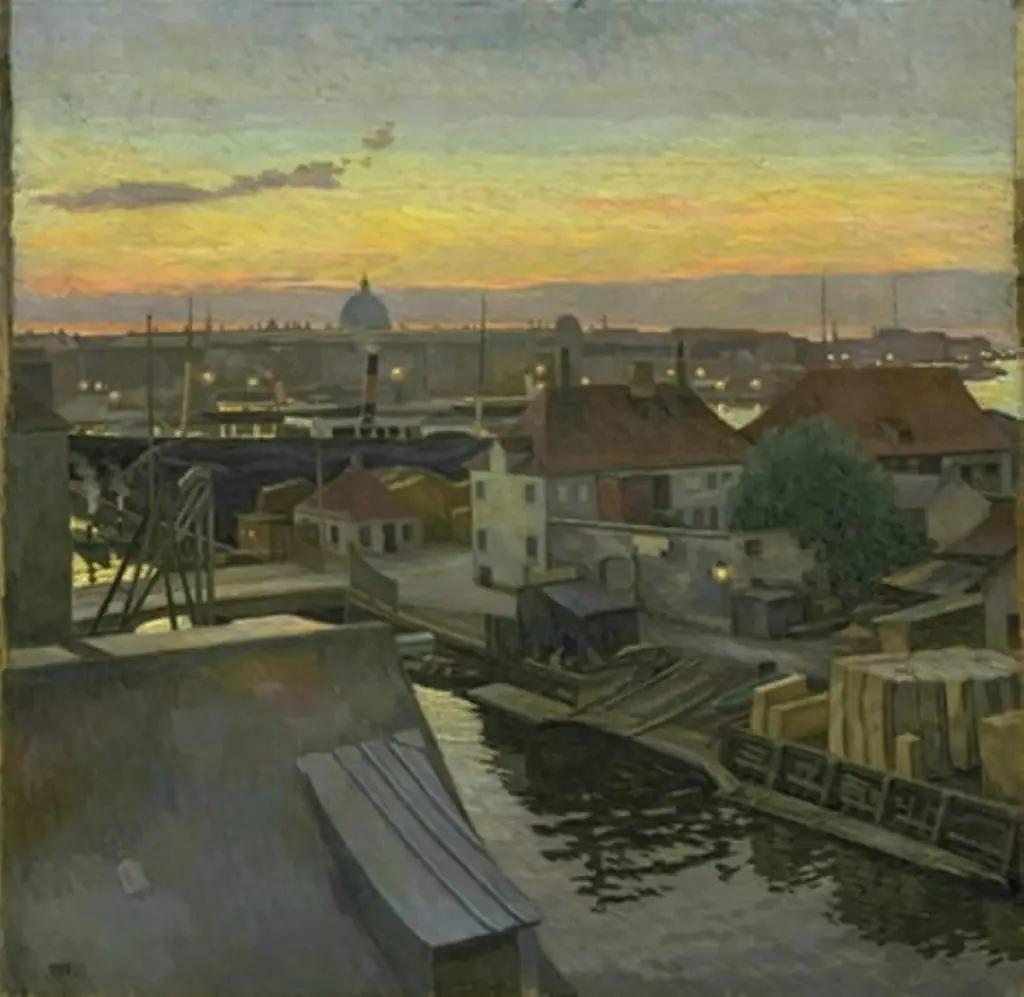
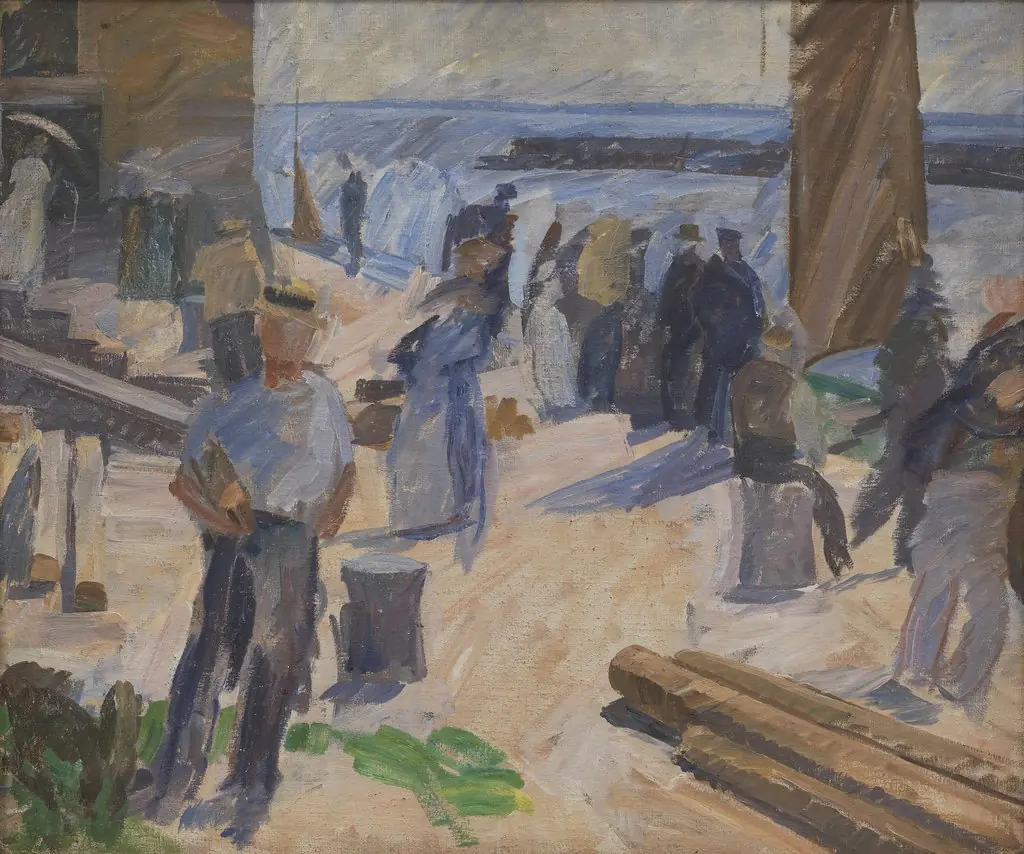
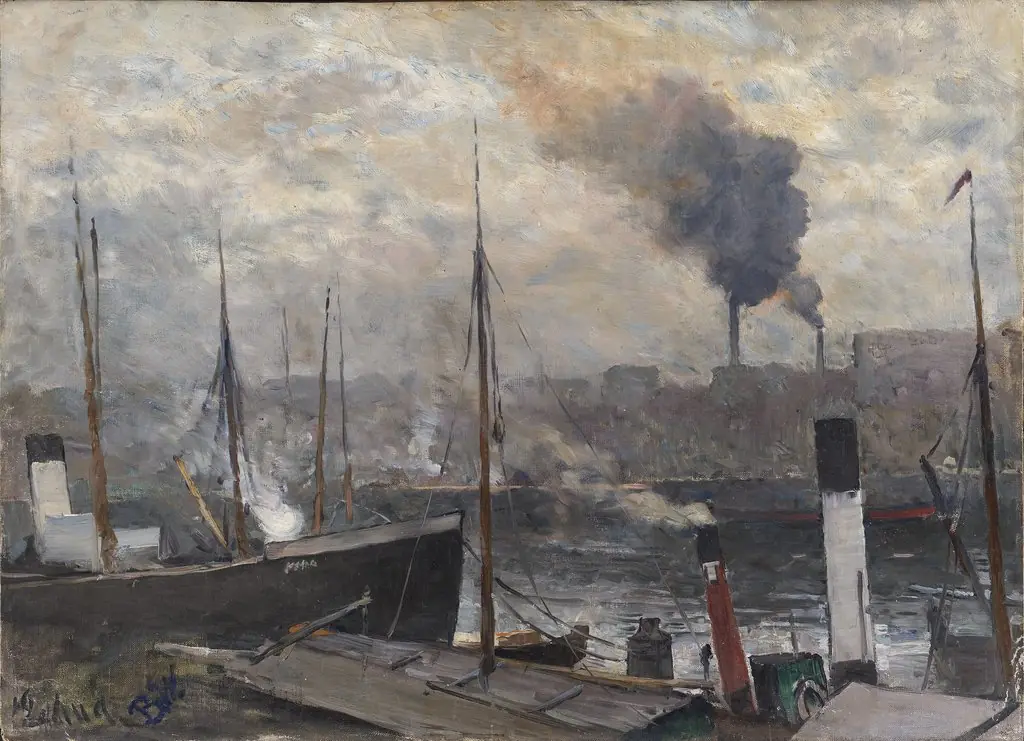
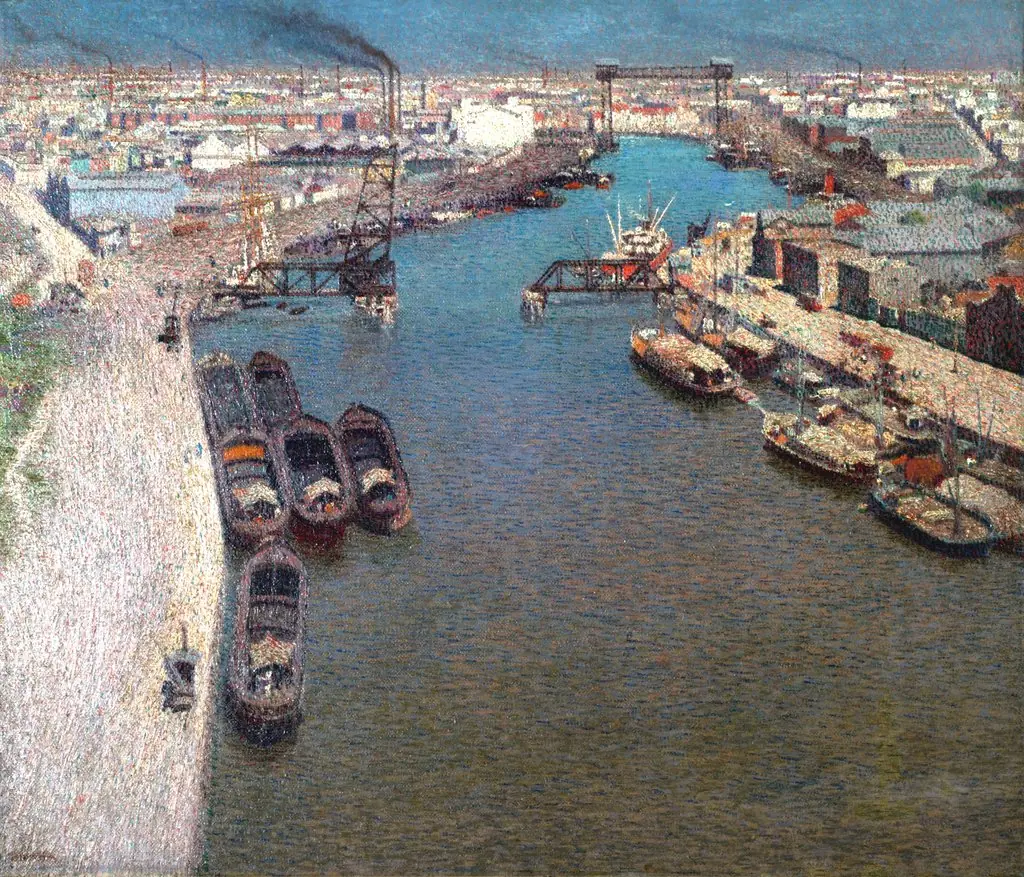
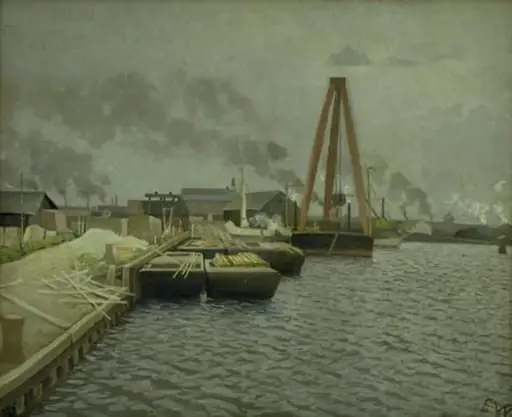
Refshaleøen. The Copenhagen Harbour is an oil painting by the Post-Impressionist artist Edvard Weie. It dates from 1907 and is held in the collection of the Statens Museum for Kunst. Painted in 1907 by Danish artist Viggo Weie, *Refshaleøen.
About this work
Overview
It resides in the collection of Statens Museum for Kunst, reflecting Weie’s engagement with modern Danish life during the early 20th century.
Painted in 1907 by Danish artist Viggo Weie, *Refshaleøen. The Copenhagen Harbour* is an oil-on-canvas depiction of a working waterfront on the island of Refshaleøen. The scene captures the quiet hum of industrial activity without human figures, emphasizing structures and materials over narrative. It resides in the collection of Statens Museum for Kunst, reflecting Weie’s engagement with modern Danish life during the early 20th century.
Subject & Meaning
The painting portrays a harbor at rest yet charged with latent labor. A towering wooden crane dominates the center, flanked by stacked timber and moored vessels. Absent of people, the scene suggests the impersonal rhythm of industry. The still water and overcast sky amplify a sense of solitude within productivity, evoking the quiet dignity of functional spaces in a rapidly modernizing Copenhagen.
Technique & Style
Weie employed thick, deliberate brushwork and muted tones to convey texture and atmosphere. The grey sky and calm water are rendered with soft transitions, while the crane and wooden piles show stronger, angular strokes. His approach aligns with Post-Impressionist concerns for structure and emotional resonance over naturalism, prioritizing form and mood over detailed realism.
History & Provenance
Created in 1907, the painting entered the collection of Statens Museum for Kunst, Denmark’s national art museum, where it remains today. Weie, active in Copenhagen’s modernist circles, was recognized with the Eckersberg Medal in 1925 for his contributions to Danish painting. He lived and worked in Frederiksberg until his death in 1943, leaving behind a body of work focused on urban and industrial landscapes.
Context
In early 20th-century Denmark, industrial expansion reshaped coastal areas like Refshaleøen. Weie’s painting reflects this transformation, capturing the rise of port infrastructure amid traditional maritime life. Unlike romanticized harbor scenes, his work avoids sentimentality, instead presenting the harbor as a site of quiet, unglamorous labor — a hallmark of Danish Modernist realism.
Legacy
Weie’s *Refshaleøen* stands as a quiet testament to Denmark’s industrial transition. Its restrained palette and absence of human presence influenced later generations of Danish painters who sought to depict modern life with emotional honesty. The work continues to be studied for its formal balance and its unembellished view of urban change in the early 1900s.
Artist & collection
Artist
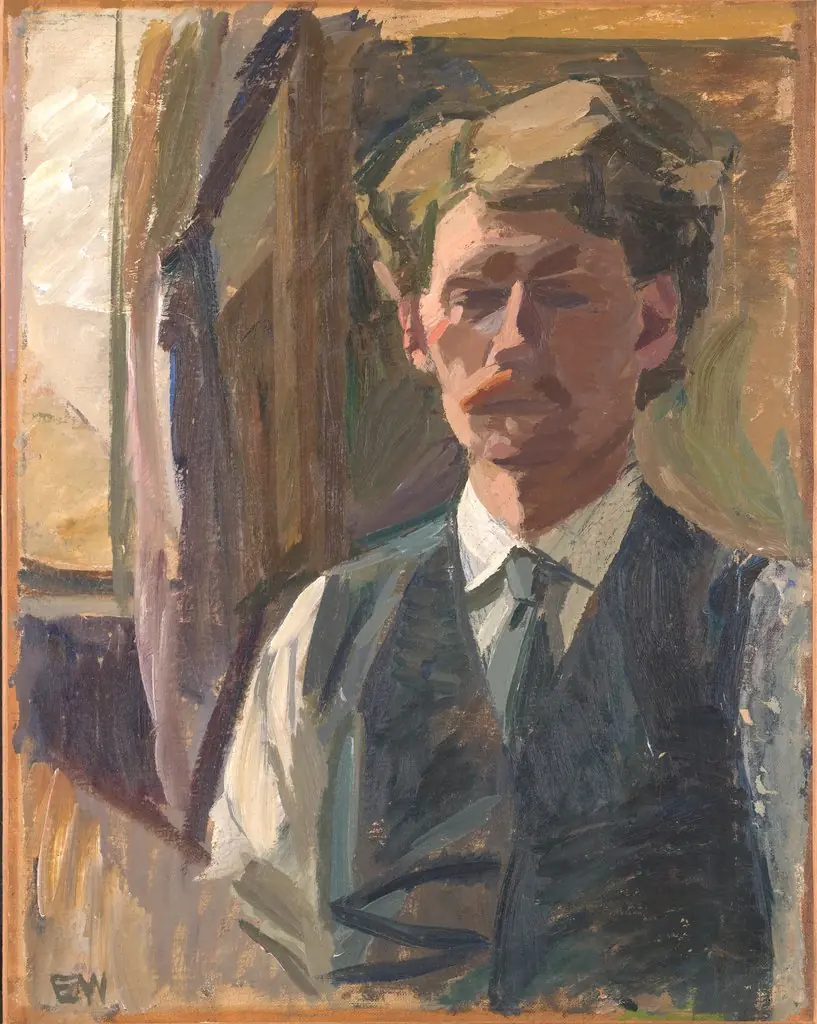
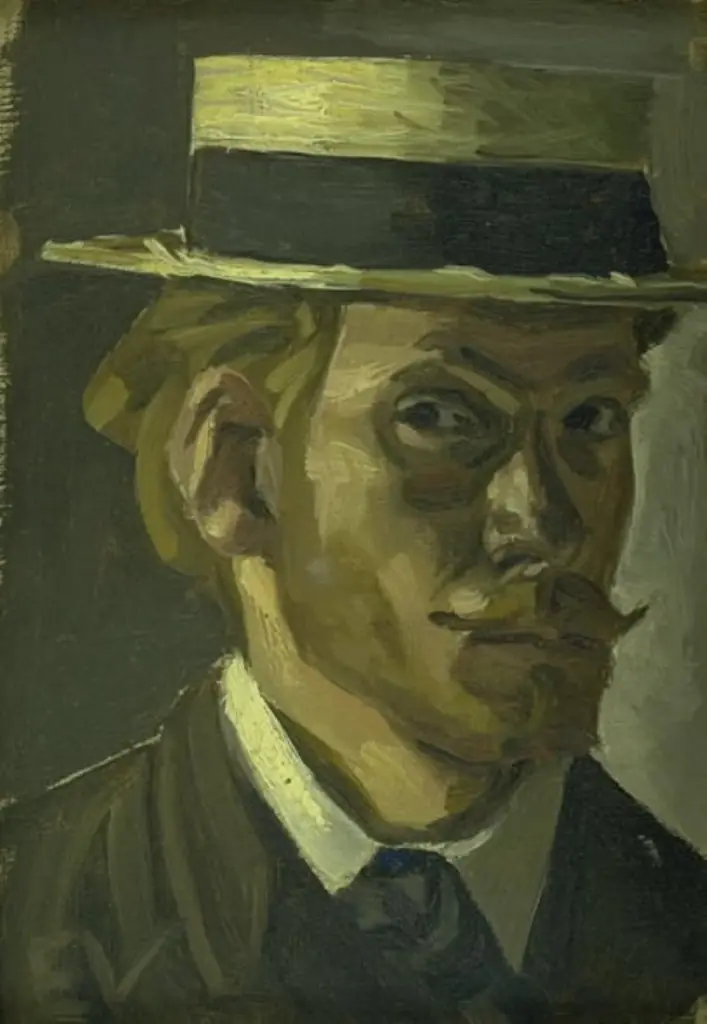
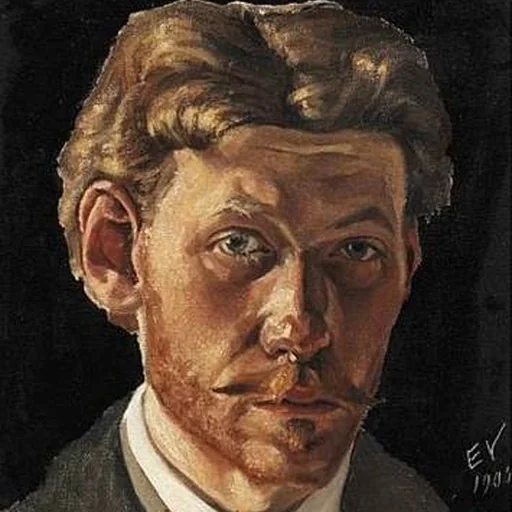
Viggo Thorvald Edvard Weie (18 November 1879 - 9 April 1943) was a Danish Modernist painter. He was a recipient of Eckersberg Medal in 1925. He died during 1943 in Frederiksberg.