Artwork
The Open Window
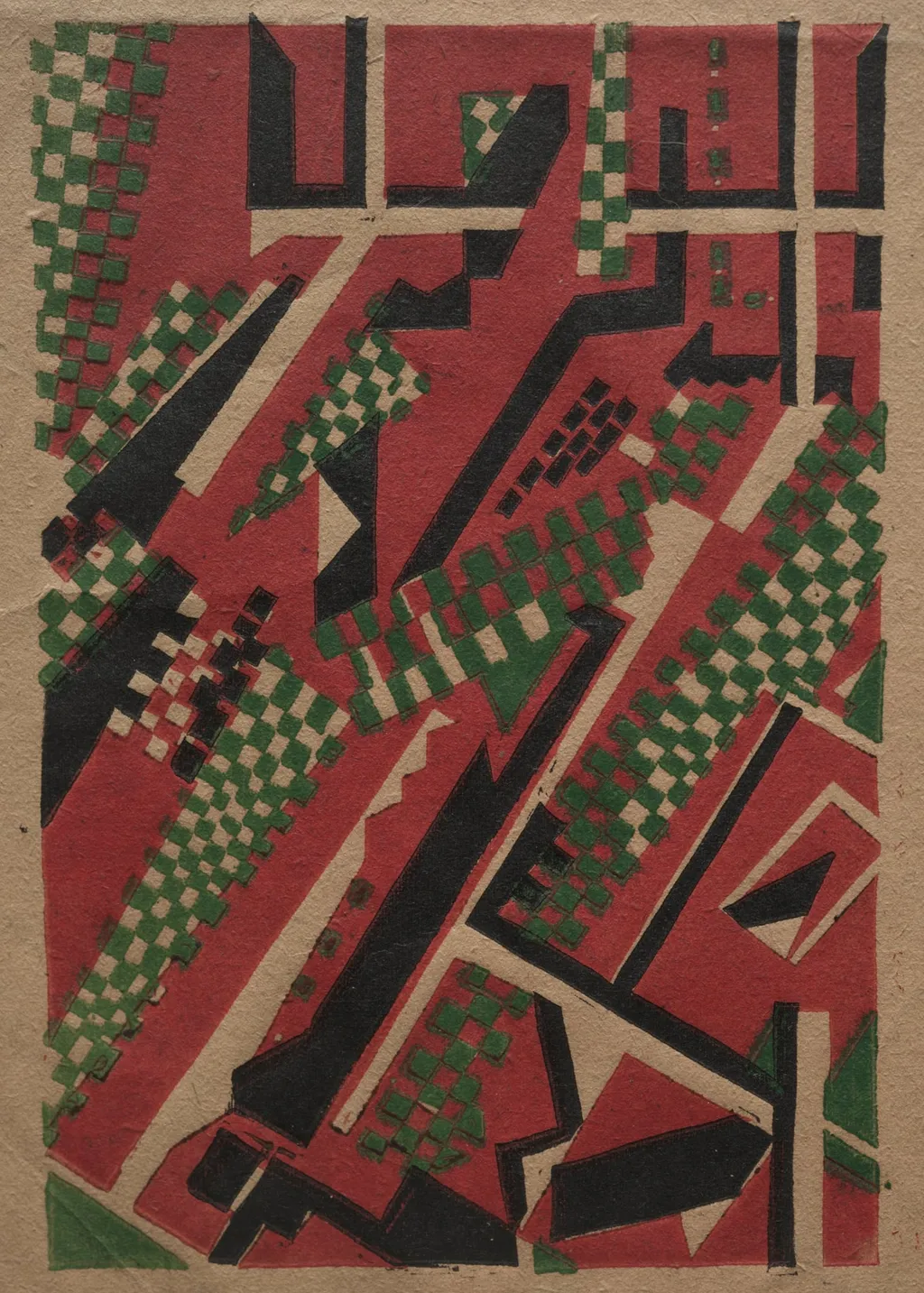
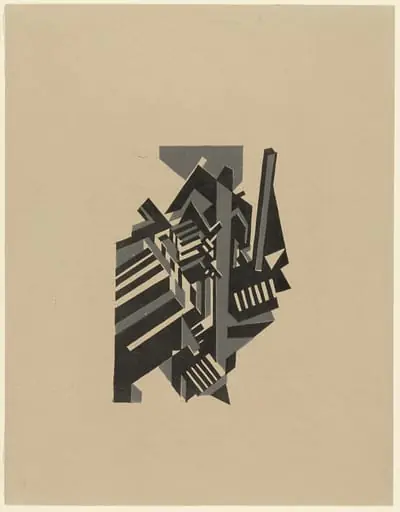
The Open Window is a print by Edward Wadsworth. It dates from 1914 and is held in the collection of the Cleveland Museum of Art.
About this work
Overview
Rather than replicating the original’s brushwork, Wadsworth translated its nocturnal urban view into a flattened, patterned composition.
The Open Window is a woodcut print by Wadsworth, created as a response to Robert Delaunay’s 1911 painting La Ville. Rather than replicating the original’s brushwork, Wadsworth translated its nocturnal urban view into a flattened, patterned composition. He emphasized geometric abstraction, using the woodcut medium to experiment with color relationships and structural rhythm, producing six distinct versions with varying palettes.
Subject & Meaning
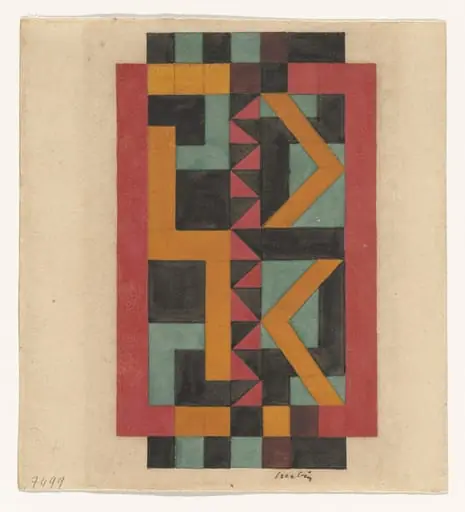
The scene depicts an interior space illuminated by a window opening onto a city at night. The interior walls and floor are rendered as a grid of colored squares, resembling a chessboard. This pattern replaces narrative detail, transforming architecture into abstract rhythm. The contrast between the dark room and the luminous city outside suggests a boundary between private observation and public energy, rendered without literal representation.
Technique & Style
Wadsworth employed woodcut printing to achieve sharp, angular forms and bold color contrasts. The medium allowed him to layer distinct hues across multiple impressions, altering the emotional tone of each version. By isolating color as a structural element, he shifted focus from depiction to perception, using the interplay of blue and orange in this version to heighten visual tension and spatial ambiguity.
History & Provenance
Created in the early 20th century, The Open Window emerged from Wadsworth’s engagement with modernist printmaking and European abstraction. He produced six color variations of the composition, each independently printed. While the specific origins of this blue-and-orange iteration are not fully documented, its existence reflects his systematic exploration of chromatic variation as a conceptual tool within print culture.
Context
Wadsworth’s work aligns with broader modernist interests in abstraction, urban experience, and the redefinition of space. His use of the woodcut echoes contemporaneous experiments by artists like Delaunay and the German Expressionists, who sought to distill complex scenes into elemental forms. The print reflects a period when artists increasingly treated color and pattern as carriers of meaning, independent of representational fidelity.
Legacy
The Open Window exemplifies Wadsworth’s commitment to the woodcut as a vehicle for conceptual inquiry. Its multiple color versions demonstrate a deliberate, almost scientific approach to perception and variation. Though less widely known than his contemporaries, his work contributed to the development of American printmaking as a field capable of abstract and experimental expression.
Own this work as a print
Artist & collection
Artist
Edward Alexander Wadsworth was an English artist initially associated with the Vorticism movement.