Artwork
Untitled
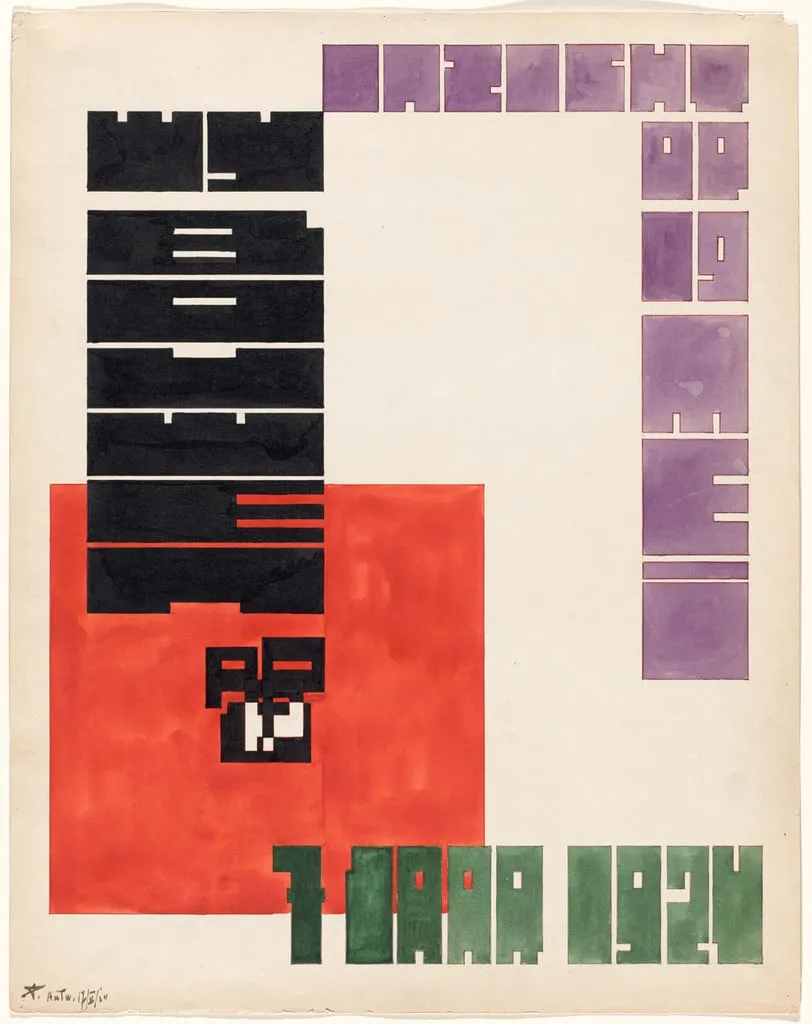
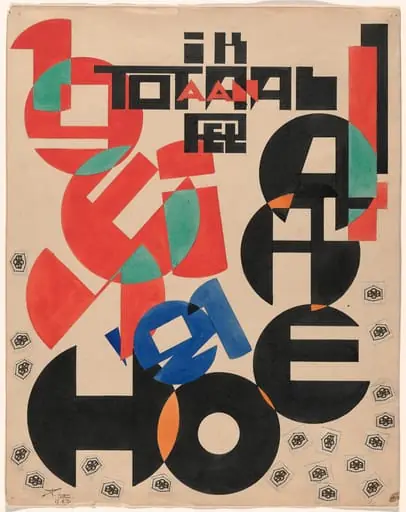
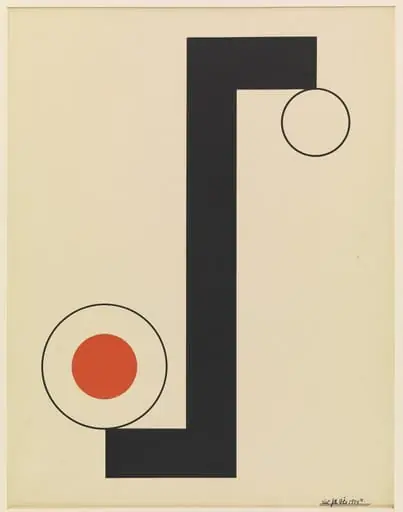
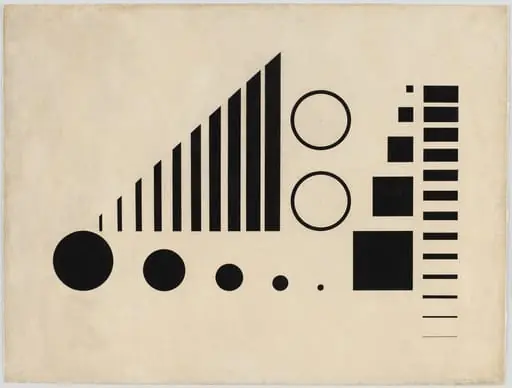
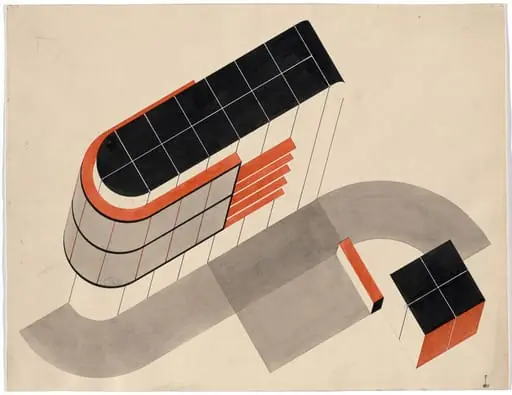
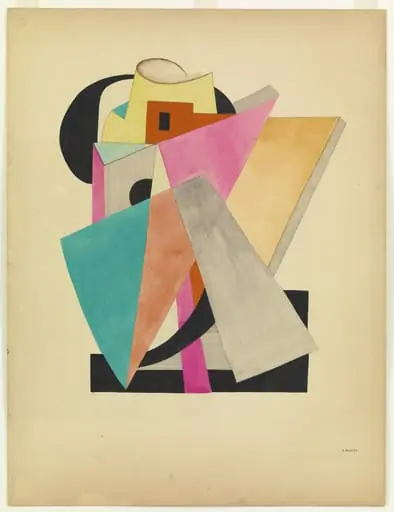
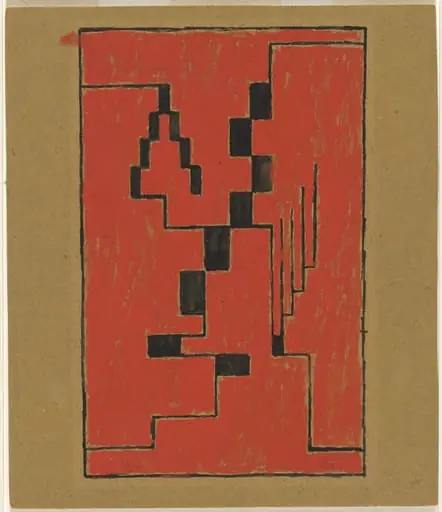
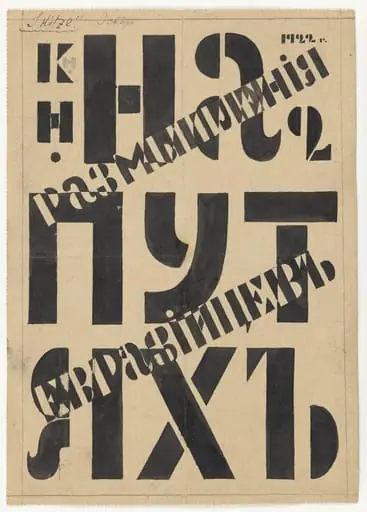
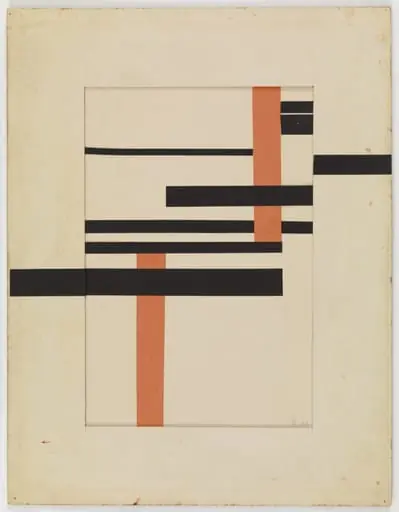
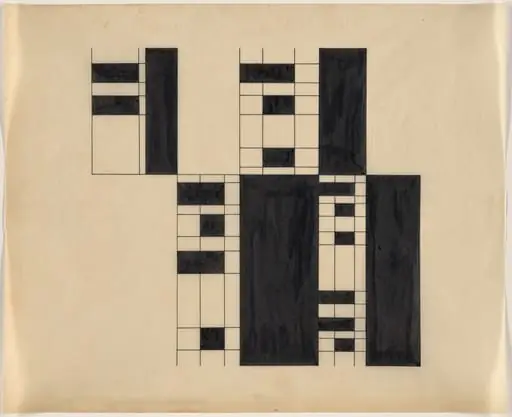
Untitled is a watercolor drawing by Jozef Peeters. It dates from 1924 and is held in the collection of the Museum of Modern Art.
About this work
Overview
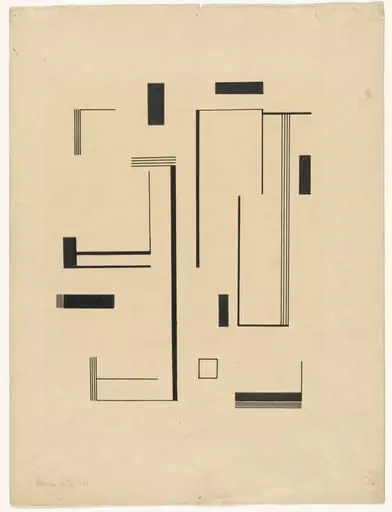
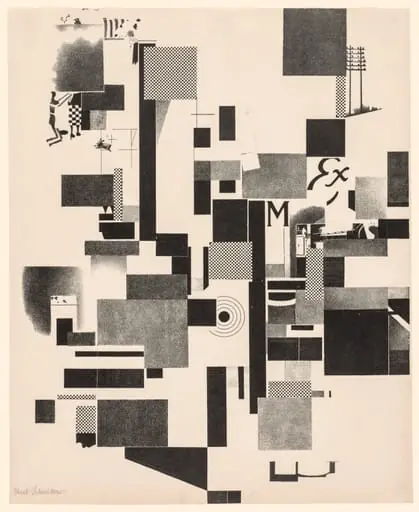
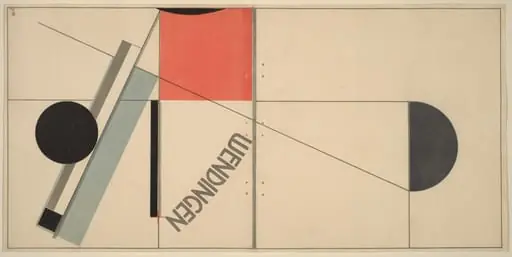
Created in 1924, this watercolor and ink drawing by Belgian artist Jozef Peeters is a non-representational composition on paper.
Created in 1924, this watercolor and ink drawing by Belgian artist Jozef Peeters is a non-representational composition on paper. It combines flat geometric forms with restrained color—black, red, purple, and green—arranged without perspective or shading. The work reflects Peeters’ engagement with early 20th-century modernist trends, particularly after his exposure to Futurism and his involvement in avant-garde circles in Belgium.
Subject & Meaning
The drawing presents abstracted architectural elements—stacked rectangles, aligned lines, and repeated rectangular units—that suggest windows, doors, or structural fragments. No literal building is depicted; instead, the forms function as visual symbols of order and fragmentation. The uniformity of the white lines and absence of depth imply a deliberate rejection of realism, favoring symbolic structure over narrative.
Technique & Style
Peeters employed watercolor and colored ink to build flat, unmodulated planes with minimal layering. The lack of chiaroscuro, texture, or perspective aligns with a geometric abstractionist approach. Lines are precise and uniform, reinforcing the mechanical quality of the forms. The medium’s transparency allows underlying pencil or ink underdrawings to subtly influence the composition, though the final effect remains deliberately flat and two-dimensional.
History & Provenance
Peeters, who briefly studied at the Antwerp Royal Academy, developed a personal style outside academic traditions. After meeting Filippo Tommaso Marinetti in 1918, he embraced Futurist ideas and co-founded the Modern Art group to align Belgian art with international avant-garde movements. This work entered The Museum of Modern Art’s collection as part of its early effort to document European modernism beyond France and Germany.
Context
In the early 1920s, European artists were redefining form through abstraction, influenced by movements like De Stijl, Constructivism, and Futurism. Peeters’ work reflects this climate, though it avoids political rhetoric in favor of formal experimentation. His use of color and geometry resonates with contemporaries like Theo van Doesburg, yet retains a quieter, more introspective tone than the more aggressive Futurist manifestos.
Legacy
Though Peeters is less widely known than his contemporaries, this drawing exemplifies a significant strand of Belgian modernism that sought to reconcile international avant-garde principles with a restrained, personal aesthetic. The work’s inclusion in MoMA’s collection underscores its role in documenting the spread of geometric abstraction beyond major artistic centers, highlighting the diversity of early modernist practice.
Artist & collection
Artist
Jozef Peeters (1895–1960) was a Belgian painter, engraver and graphic artist. In 1913, Jozef Peeters attended for a short time the Antwerp Royal Academy of Fine Arts, but was mainly interested in his own experiments. In…