Artwork
Battersea
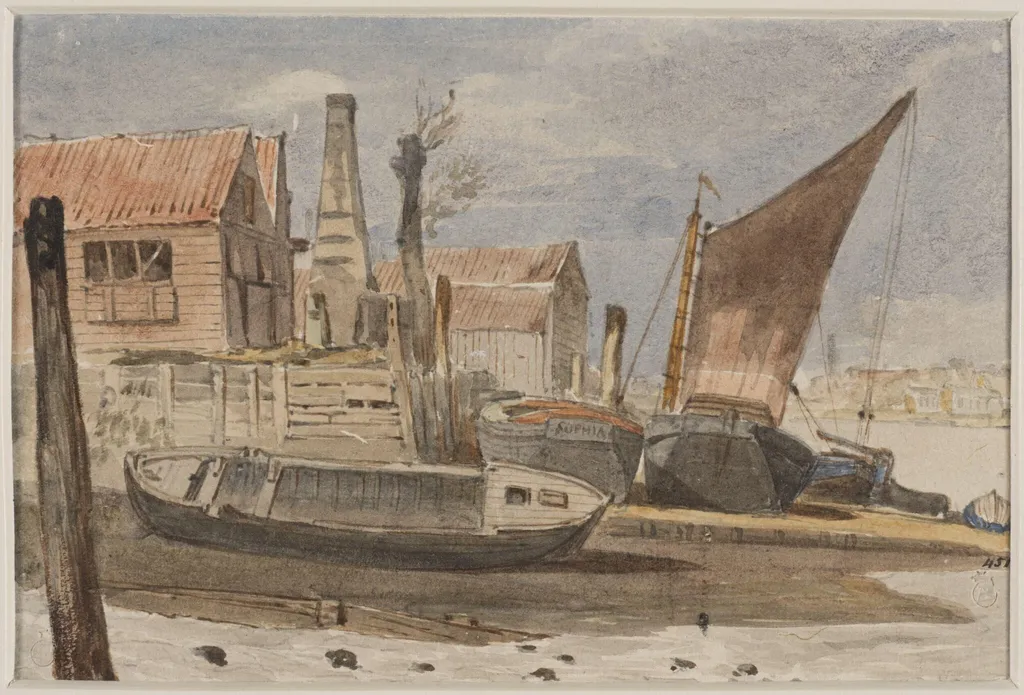
Battersea is a watercolor work on paper by Edward Bragg. It dates from 1850 and is held in the collection of the Victoria and Albert Museum.
About this work
Overview
The scene is composed with restrained detail, focusing on the stillness of the water and the quiet presence of two moored vessels.
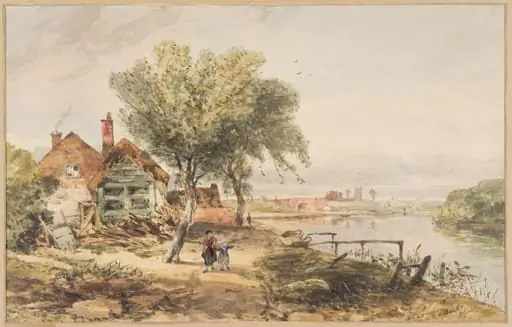
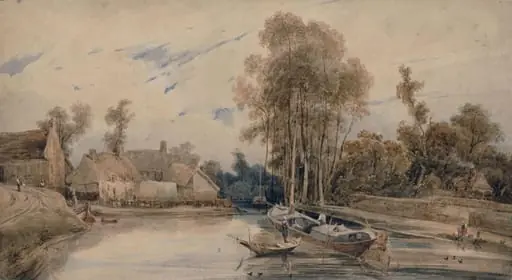
Created in 1850, this watercolour captures a quiet stretch of the River Thames at Battersea, South London. The scene is composed with restrained detail, focusing on the stillness of the water and the quiet presence of two moored vessels. Soft washes and delicate brushwork define the landscape, avoiding dramatic contrasts in favor of a subdued, atmospheric tone that reflects the daily rhythm of the riverside.
Subject & Meaning
The painting portrays a working riverbank, with two boats—one light, one dark, both partially sail-furled—suggesting a pause in labor rather than leisure. The buildings along the shore, including a prominent structure with a red roof, hint at the area’s modest urban development. There is no human presence, yet the scene implies quiet activity, evoking the unremarkable yet enduring life of a Thames-side community in mid-19th century London.
Technique & Style
The artist employs transparent watercolour washes to build subtle gradations of tone, using minimal pigment to suggest texture and depth. Light is diffused evenly, casting soft shadows that define the boats and buildings without harsh outlines. The muted palette—soft greys, pale blues, and earthy reds—enhances the sense of stillness. Brushwork is loose yet deliberate, prioritizing mood over precision, characteristic of amateur topographical watercolours of the period.
History & Provenance
The work is attributed to Edward Bragg, a lesser-known artist active in mid-19th century London. It entered the collection of the Victoria and Albert Museum, where it remains as part of a broader archive of topographical watercolours documenting urban and riverside England. Its survival suggests it was valued for its documentary quality rather than artistic ambition, reflecting a common practice among amateur observers of the time.
Context
In 1850, Battersea was a transitional area between rural outskirts and expanding urban fabric. The Thames remained a vital transport route, and riverside scenes like this one were often recorded by amateur artists and surveyors. Such works served as visual records before photography became widespread, capturing the quiet transformation of London’s periphery amid industrial growth and suburban expansion.
Legacy
Though not widely exhibited or celebrated, this watercolour contributes to a quiet archive of everyday London life. It represents the role of amateur artists in preserving the visual character of places before they were reshaped by modernization. Its preservation in a major museum underscores its value as a historical document, offering insight into the overlooked landscapes of Victorian England.
Own this work as a print
Artist & collection

Artist
Edward Stuyvesant Bragg was an American lawyer, diplomat, and Democratic politician from Fond du Lac, Wisconsin.