Artwork
View on the Thames near Sonning
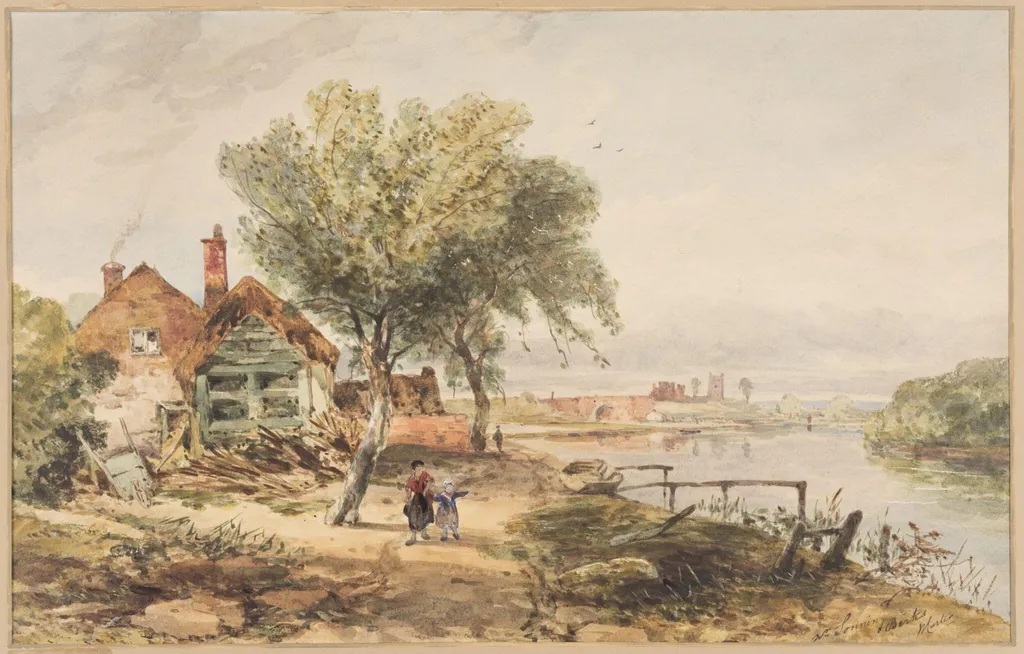
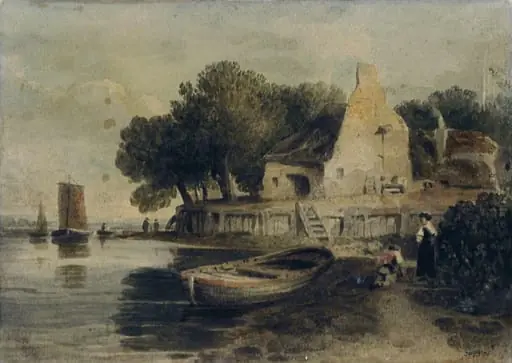
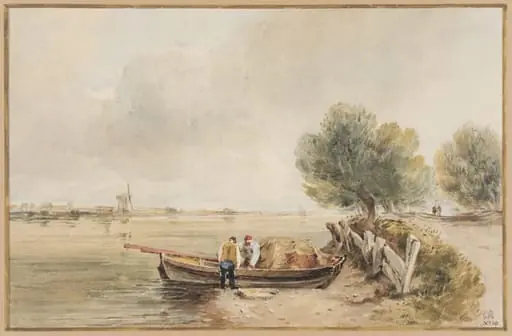
View on the Thames near Sonning is a drawing by William Carter. It dates from 1850 and is held in the collection of the Victoria and Albert Museum.
About this work
Overview
Executed in delicate, translucent pigments, the work captures a quiet moment along the riverbank with subtle tonal shifts.
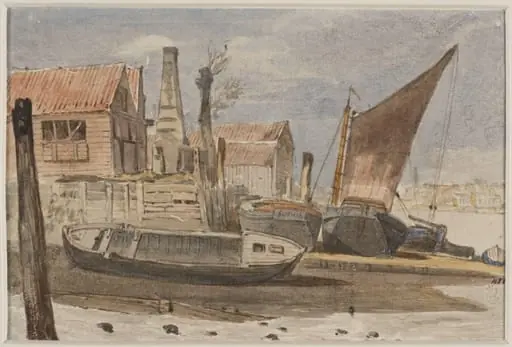
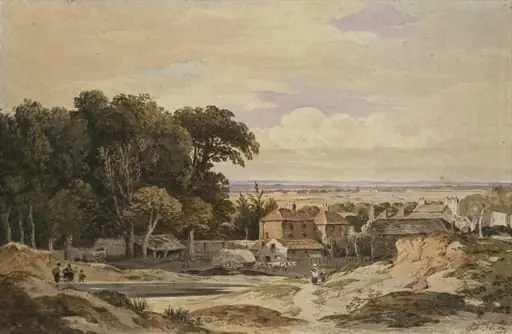
This watercolour drawing by William Carter portrays a tranquil stretch of the River Thames near the village of Sonning. Executed in delicate, translucent pigments, the work captures a quiet moment along the riverbank with subtle tonal shifts. The artist’s hand is evident in the soft blending of hues and the restrained use of detail, suggesting a contemplative observation of the landscape rather than a formal record.
Subject & Meaning
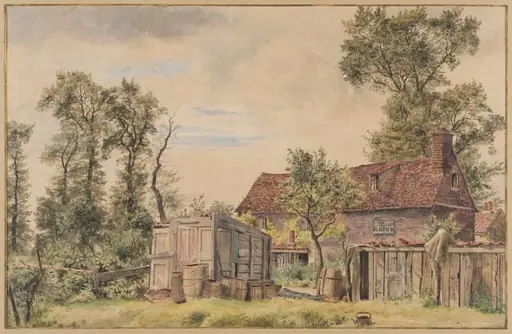
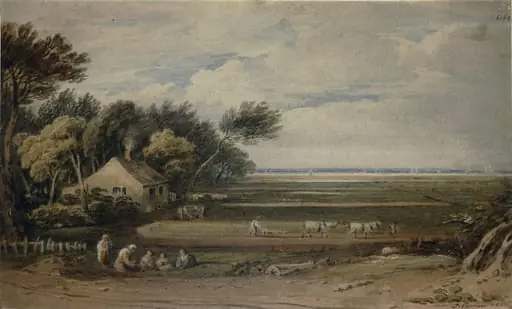
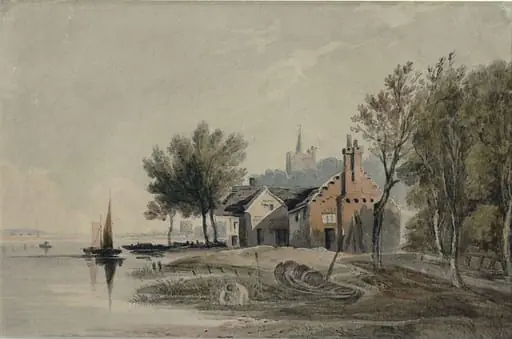
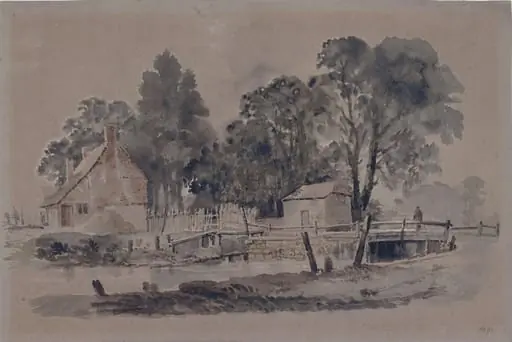
The scene centers on a modest riverside dwelling with a chimney and a lean-to shed, flanked by a lone tree. Two figures—a child and an adult—move slowly along a path, their presence adding scale and quiet narrative. Distant ruins and a bridge appear faintly reflected in the water, hinting at layers of history embedded in the landscape. The composition invites stillness, emphasizing harmony between human habitation and the natural environment.
Technique & Style
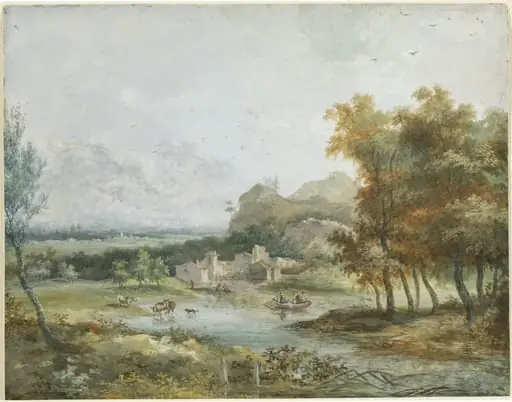
Carter employed watercolour with a light touch, allowing washes to bleed softly at the edges and creating a hazy, atmospheric effect. The palette is subdued, dominated by greys, pale greens, and muted browns, evoking an overcast sky. There is no sharp definition; forms emerge through layered transparency, reinforcing a sense of quiet immediacy. The technique prioritizes mood over precision, aligning with early 19th-century British watercolour traditions.
History & Provenance
The drawing is attributed to William Carter, an artist active in the early 1800s known for topographical watercolours of the Thames Valley. While specific ownership history is not fully documented, its style and subject align with works collected by institutions focused on British landscape drawing. It entered the Victoria and Albert Museum’s collection as part of a broader effort to preserve amateur and professional watercolour studies from the period.
Context
Created during a time when leisurely river excursions became popular among the middle class, this drawing reflects a growing cultural interest in the Thames as both a natural and historical corridor. Artists like Carter documented everyday scenes along its banks, moving away from grand vistas toward intimate, unidealized views. Such works contributed to a broader shift in British art toward personal observation and quiet realism.
Legacy
Carter’s drawing exemplifies the quiet legacy of British watercolourists who captured ordinary landscapes with sensitivity rather than spectacle. Though not widely known today, works like this helped shape the aesthetic of topographical art in the 19th century. Its preservation in the Victoria and Albert Museum ensures continued access for study, offering insight into how ordinary places were seen and valued by contemporaries.
Artist & collection
Artist
William Carter painted detailed oil portraits and pencil views of British country life in the late 1800s and early 1900s.