Artwork
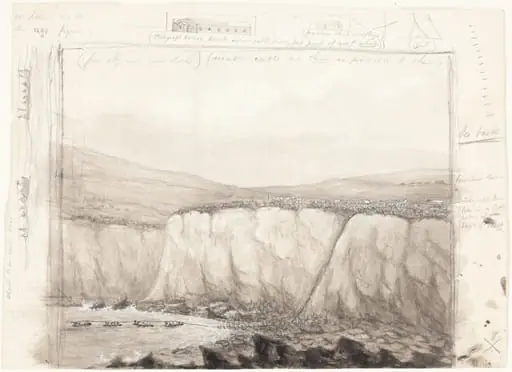
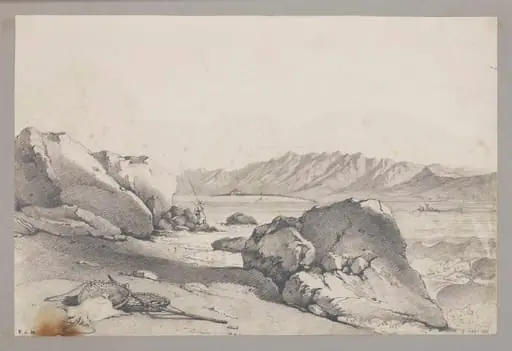
Rubislaw Quarry, Aberdeen - Just after the Blast
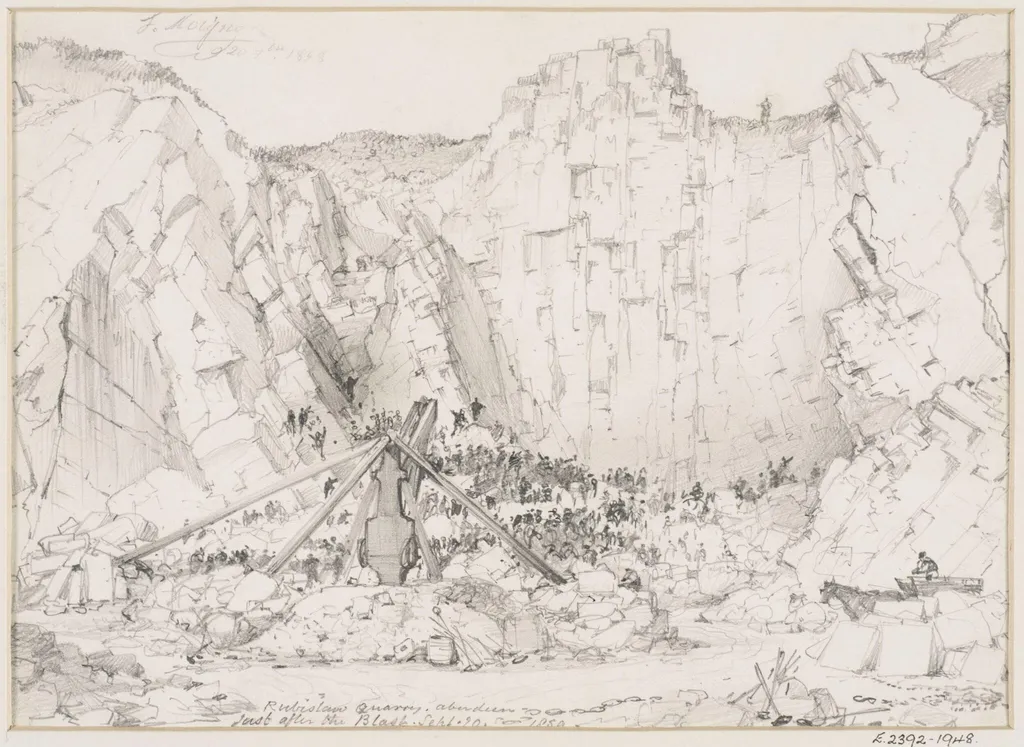
Rubislaw Quarry, Aberdeen - Just after the Blast is a drawing by the Impressionist artist Edward William Cooke. It dates from 20 and is held in the collection of the Victoria and Albert Museum. Edward Cooke’s pencil drawing records Rubislaw Quarry in Aberdeen in the immediate aftermath of an explosion.
About this work
Overview
Edward Cooke’s pencil drawing records Rubislaw Quarry in Aberdeen in the immediate aftermath of an explosion. The work bears its title and date on the surface, while a secondary inscription links it to F. Moigno and the date 20 July 1858. The composition captures a moment of industrial disruption within the quarry’s dramatic landscape.
Subject & Meaning
The scene centers on a massive triangular framework—likely a temporary support or scaffolding—surrounded by a dense gathering of onlookers. Their presence suggests communal interest in the blast’s consequences, while figures positioned at the quarry’s edge convey a sense of vigilance toward the unstable rock faces.
Technique & Style
Executed in pencil, the drawing employs meticulous cross‑hatching to render the textures of stone, debris, and cliff surfaces. The artist’s precise line work conveys depth and materiality, emphasizing the rugged topography and the chaotic arrangement of rocks scattered across the foreground.
History & Provenance
An inscription attributing the piece to F. Moigno, dated 20 July 1858, indicates a possible later ownership or annotation. The original creator, Edward Cooke, is identified by the primary title and date, situating the work within mid‑nineteenth‑century documentary art of industrial sites.
Context
Rubislaw Quarry was a major source of granite in Scotland, and explosions were a routine part of its operation. Cooke’s drawing reflects contemporary interest in documenting industrial processes and their impact on both the landscape and local communities.
Own this work as a print
Artist & collection


 The Laying of the Atlantic Cable at Foilhommerum Bay, Ireland
 Convent of Siltina (on the Nile)
 Plain of Raha, Sinai
 Cromlech, Pass of Llanberis
 Ascent to the Summit of Sinai
 Delabole Slate Quarry, near Camelford, Cornwall
 Masada
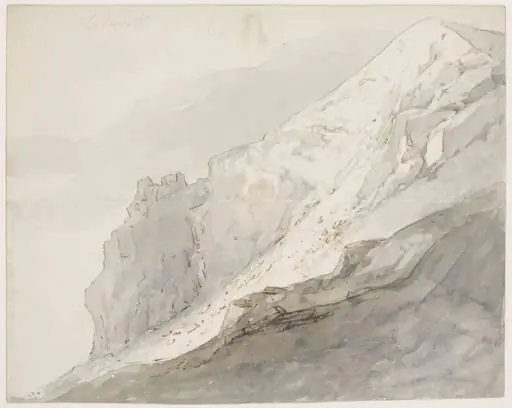 Lulworth
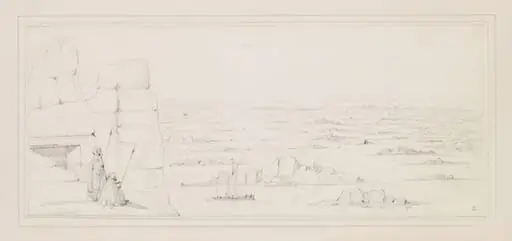 Cataracts of Nubia - Looking North
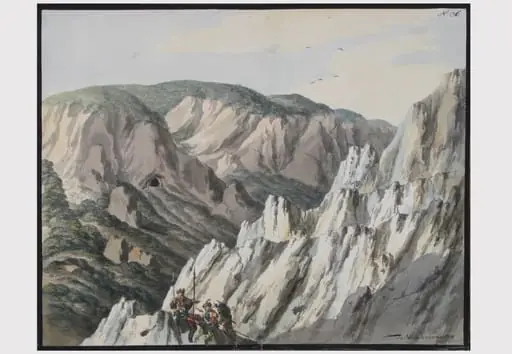 Cheile Turzii
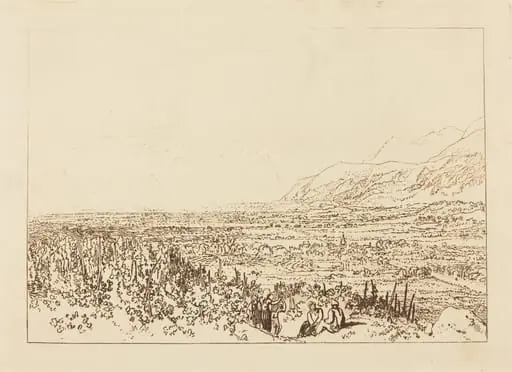 Chain of Alps from Grenoble to Chamberi
 The Barrier, Macao, from Crysilia's Bay