Artwork
Portsmouth Harbour with the 'Victory'
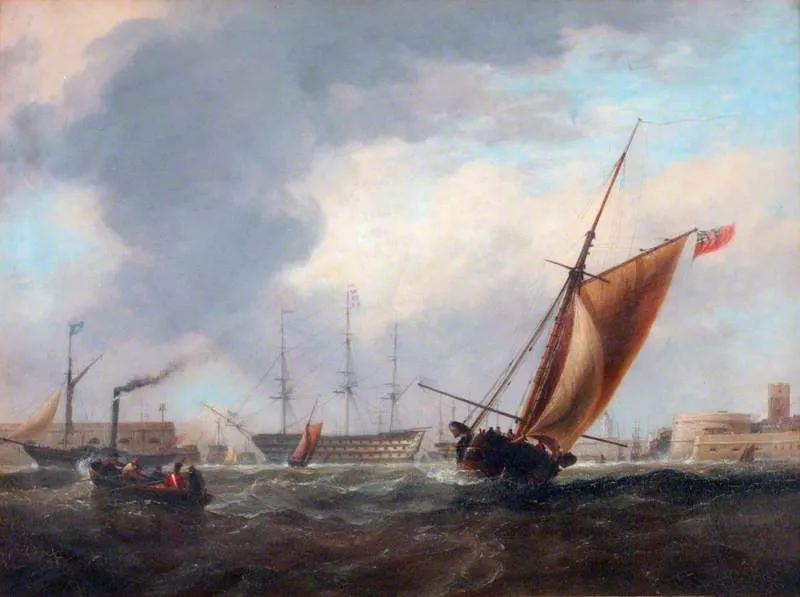
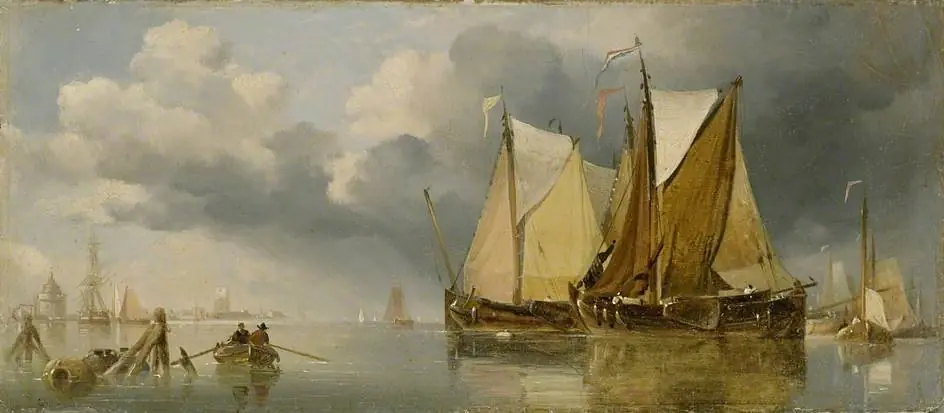
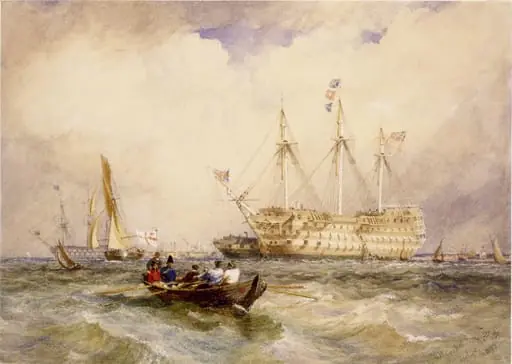
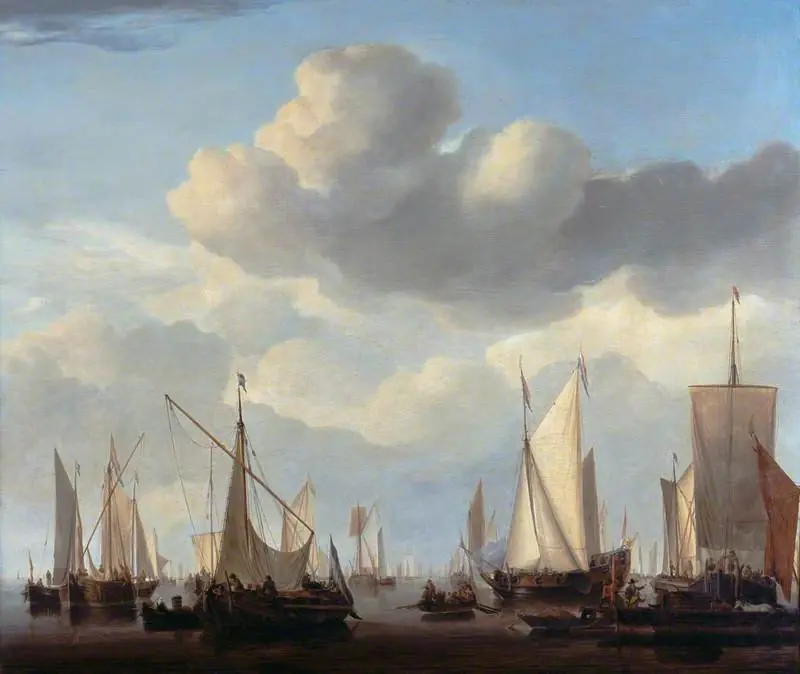
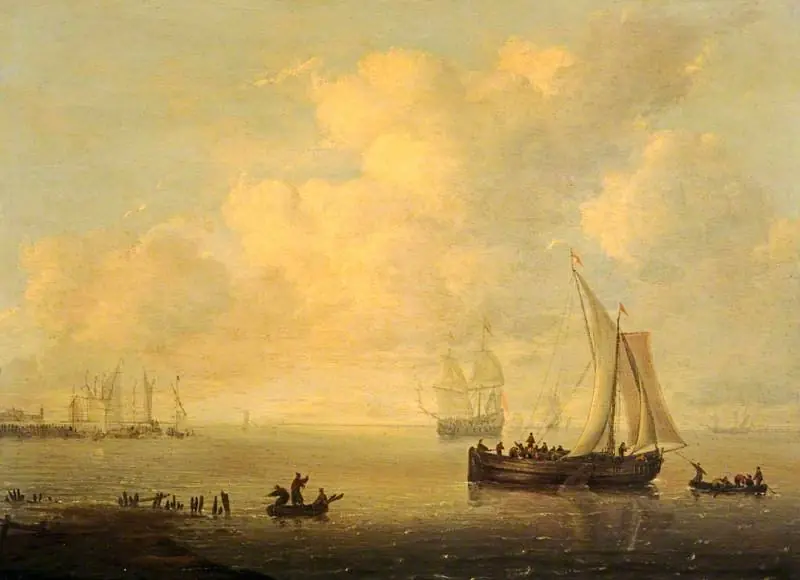
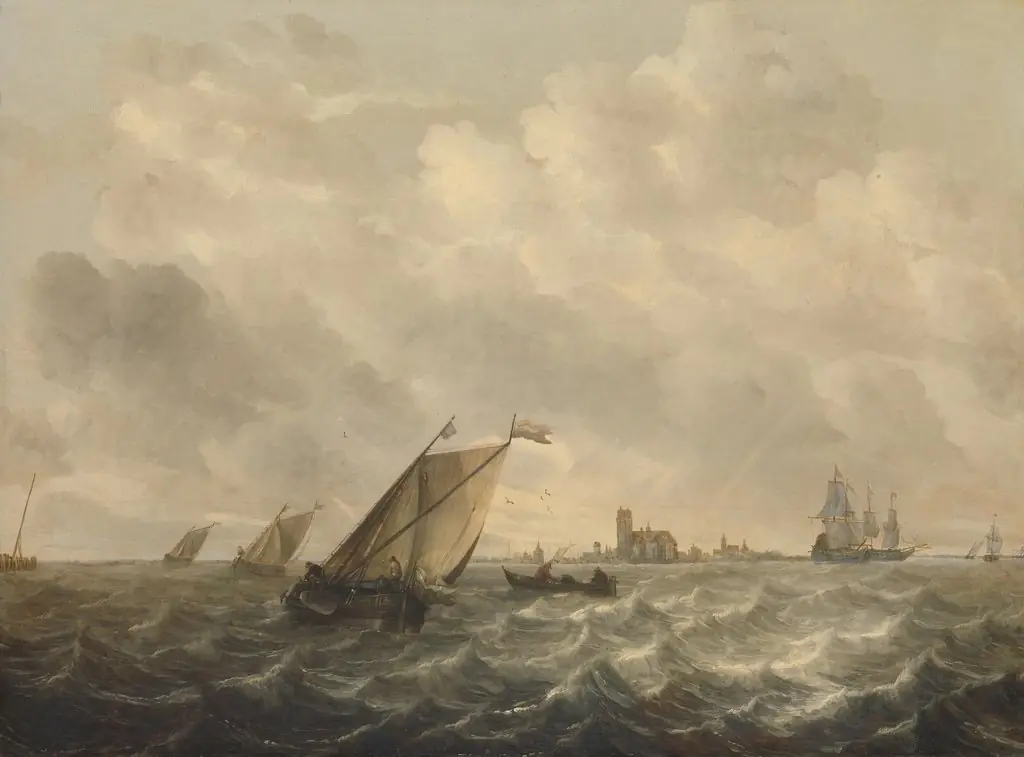
Portsmouth Harbour with the 'Victory' is an oil painting by the British Romanticist artist Edward William Cooke. It dates from 1832 and is held in the collection of the Victoria and Albert Museum.
About this work
Overview
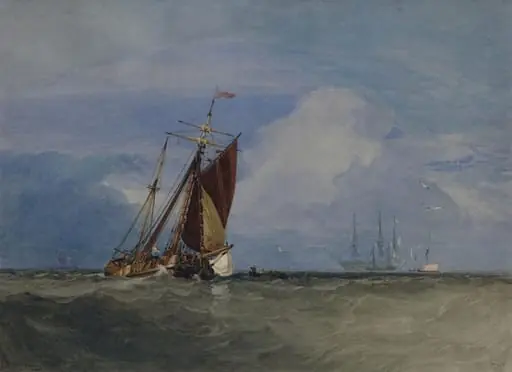
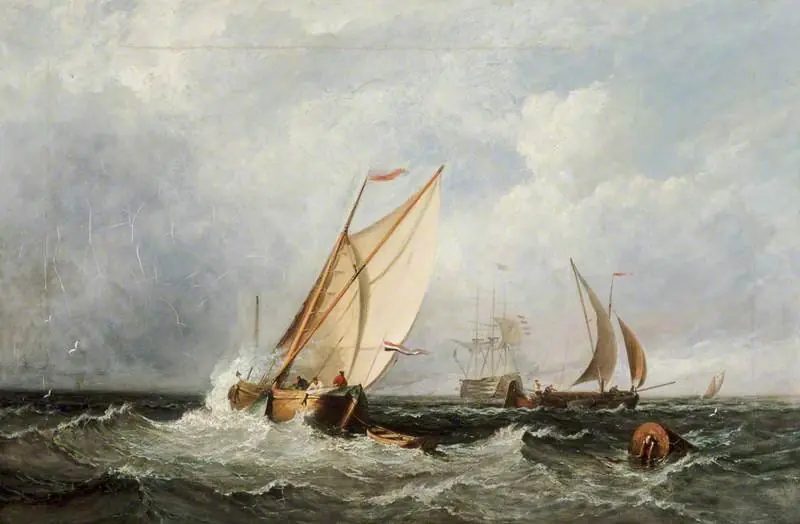
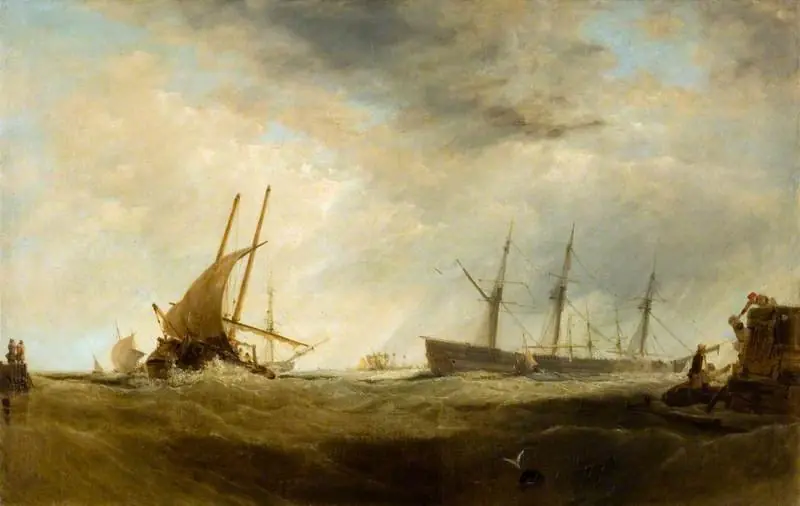
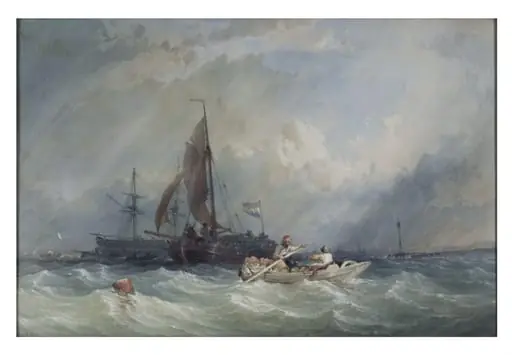
Painted in 1832 by Edward William Cooke, this oil work depicts the bustling activity of Portsmouth Harbour. The composition centers on a large warship, likely HMS Victory, surrounded by smaller vessels and figures engaged in daily maritime tasks. The scene captures a moment of quiet urgency, with ships at anchor and boats shuttling between them, all under a muted, overcast sky.
Subject & Meaning
The painting focuses on HMS Victory, the famed flagship of Admiral Nelson, anchored among a fleet of support vessels. Its presence anchors the scene not just visually but historically, evoking Britain’s naval dominance. The surrounding boats—rowboats, tenders, and barges—suggest the logistical machinery of a working naval port, emphasizing function over ceremony.
Technique & Style
Light filters unevenly through the clouds, casting soft contrasts that guide the eye toward the central vessel.
Cooke rendered the scene with precise, observational detail, characteristic of his maritime training. Brushwork is controlled yet fluid, capturing the texture of sails, water ripples, and wooden hulls. The palette is restrained—greys, blues, and muted browns—enhancing the atmospheric mood. Light filters unevenly through the clouds, casting soft contrasts that guide the eye toward the central vessel.
History & Provenance
Created shortly after the death of Nelson, the painting reflects enduring public interest in the Victory and naval heritage. It entered the Victoria and Albert Museum’s collection in the 19th century, likely through acquisition or donation. Cooke’s reputation as a marine artist ensured the work’s preservation within institutional collections focused on British maritime culture.
Context
In the 1830s, Britain’s naval identity remained central to national pride, even in peacetime. Portsmouth Harbour was a vital base, and depictions of its activity served both documentary and commemorative purposes. Cooke, trained as a draftsman and later a member of the Royal Society of Painters in Watercolours, contributed to a growing genre of topographical marine art that valued accuracy over drama.
Legacy
The painting stands as a quiet record of naval life in the early Victorian era, valued for its fidelity to detail rather than grandeur. It contributes to a broader body of work by Cooke that helped define British marine painting’s shift toward realism. Today, it remains a reference for historians studying port operations and ship design of the period.
Artist & collection