Artwork
Boating in Central Park
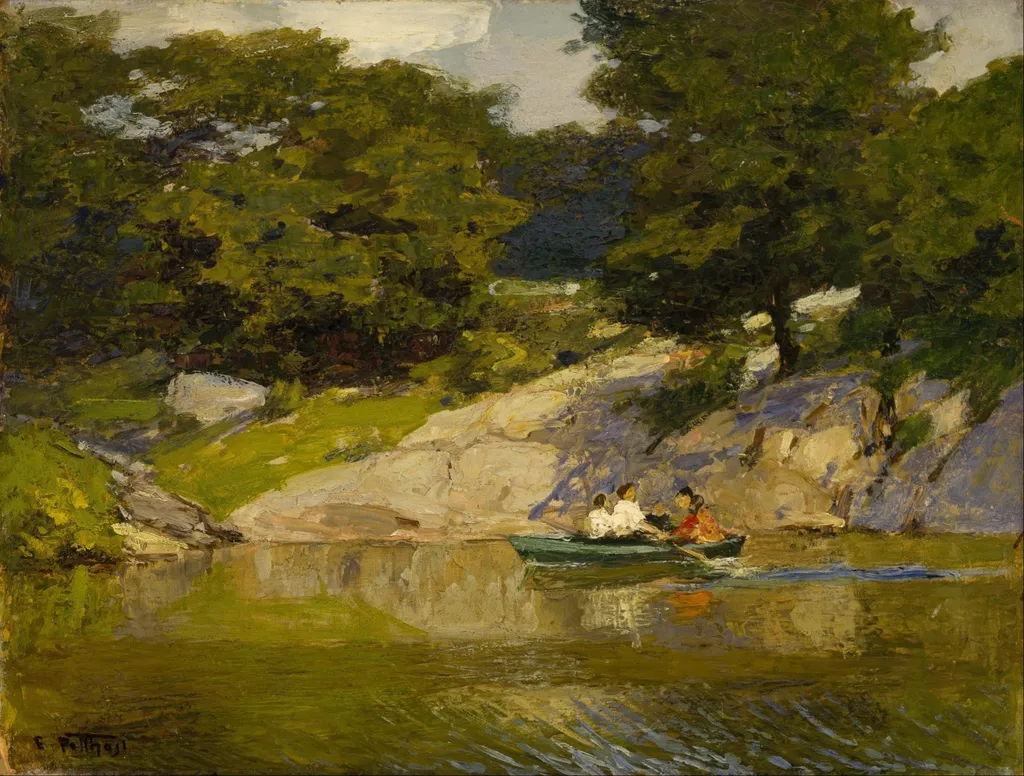
Boating in Central Park is an unspecified painting by the American Impressionist artist Edward Henry Potthast. It dates from 1902 and is held in the collection of the Museum of Fine Arts, Houston.
About this work
Overview
Rather than grand narratives, Potthast focused on the subtle rhythms of public recreation, rendered with a light touch and attention to natural light.
Edward Henry Potthast painted Boating in Central Park around 1902, capturing a quiet moment of leisure in New York’s urban green space. The work is part of the Museum of Fine Arts Houston’s collection and exemplifies the artist’s interest in everyday outdoor scenes. Rather than grand narratives, Potthast focused on the subtle rhythms of public recreation, rendered with a light touch and attention to natural light.
Subject & Meaning
The painting depicts a small rowboat with several figures gliding across a still pond, surrounded by dense trees and a rocky bank. No dramatic action occurs; instead, the scene conveys stillness and solitude amid city life. The figures are small and unobtrusive, suggesting contemplation rather than spectacle. The work reflects early 20th-century urban dwellers’ desire for respite in designed natural environments.
Technique & Style
Potthast employed loose, visible brushwork to suggest foliage, water, and sky without precise detail. His palette favors muted greens, soft browns, and pale blues, creating a harmonious tonal range that enhances the sense of depth. The water’s surface reflects the surrounding trees with gentle distortion, while the brushstrokes add texture without overwhelming the calm atmosphere. The composition avoids sharp lines, favoring soft transitions between elements.
History & Provenance
Created during Potthast’s mature period, the painting was likely made after his return from Europe, where he studied Impressionist techniques. It entered the Museum of Fine Arts Houston’s collection in the mid-20th century, though its earlier ownership history is not well documented. The work remained relatively obscure outside academic circles until broader interest in American Impressionism revived in the late 20th century.
Context
Central Park, designed by Olmsted and Vaux, had become a vital refuge for New Yorkers by the 1890s. Artists like Potthast were drawn to its blend of nature and urban life, portraying it as a democratic space for leisure. Boating in Central Park aligns with broader American Impressionist trends that favored plein air painting and everyday subjects, distinguishing itself from European counterparts through its distinctly urban setting.
Legacy
Though not widely known today, Potthast’s work contributed to the recognition of American Impressionism as a legitimate movement. Boating in Central Park remains a quiet example of how artists documented the evolving relationship between city dwellers and public green spaces. Its preservation in a major museum underscores its value as a historical record of early 20th-century urban recreation.
Own this work as a print
Artist & collection
Artist
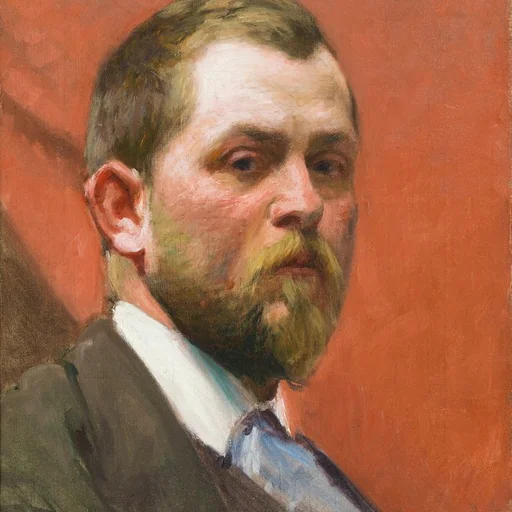
Edward Henry Potthast was an American Impressionist painter. He is known for his paintings of people at leisure in Central Park, and on the beaches of New York and New England.

 The Aberjona River, Winchester
 Landscape on the River Oise
 A Brook in a Clearing (possibly "Brook, Valley of Fontcouverte; Study")
 The Hillsides of Méry-sur-Oise, Opposite Auvers
 Washerwomen
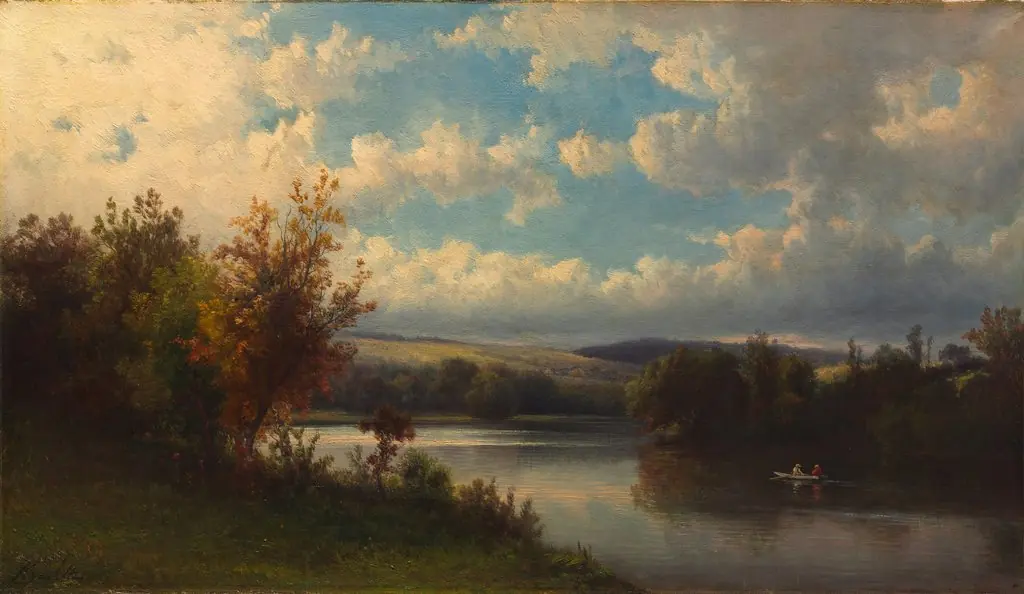 Landscape near Granby, Connecticut
 Landscape near Granby, Connecticut
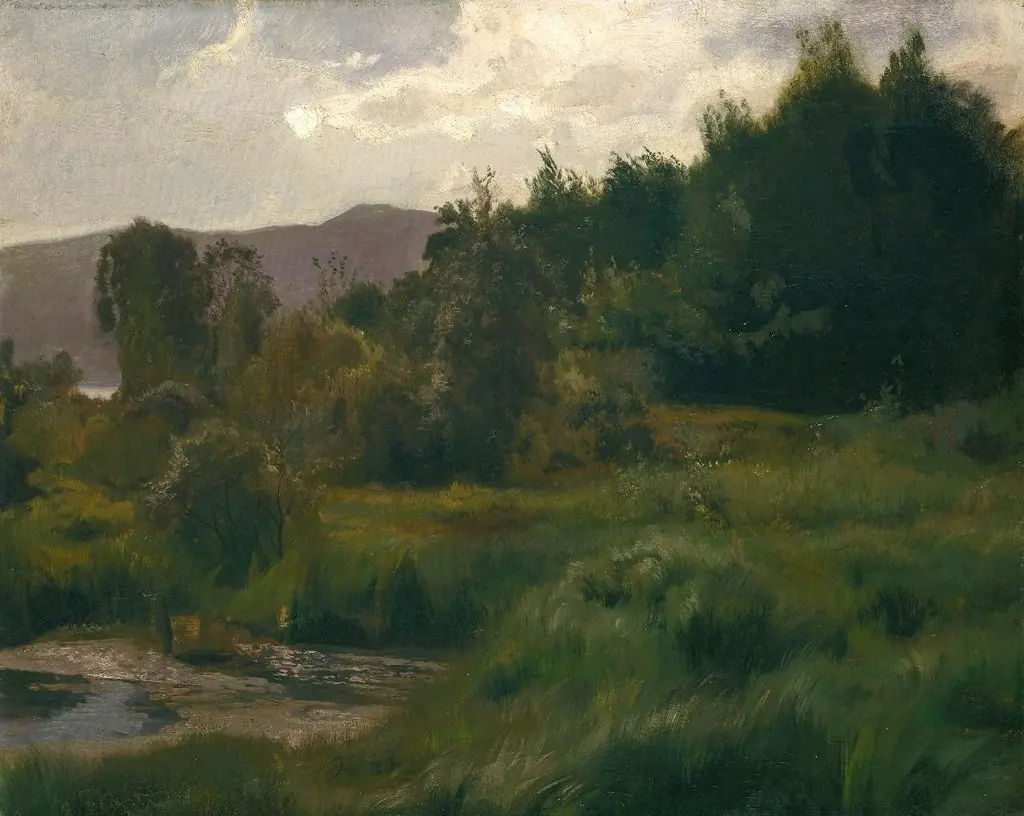 Am Zürichhorn (Studie)
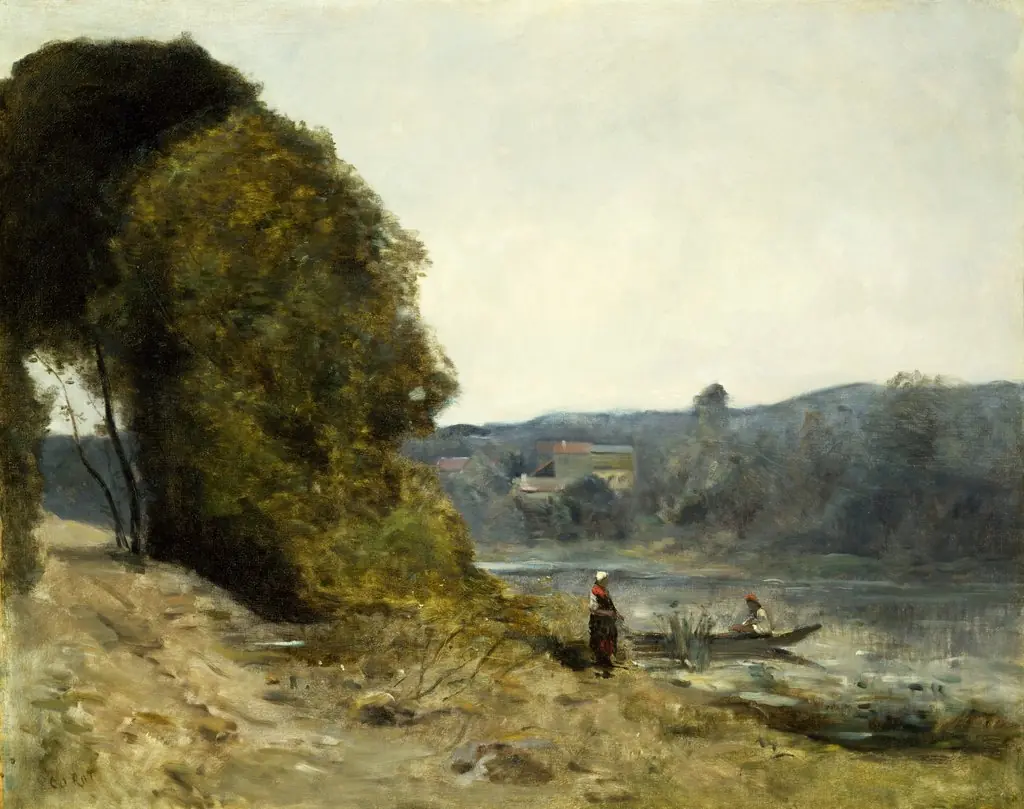 The Departure of the Boatman
 Abramtsevo. Forest shore
 A Brook in the Forest
 River and Rocks