Artwork
Washerwomen
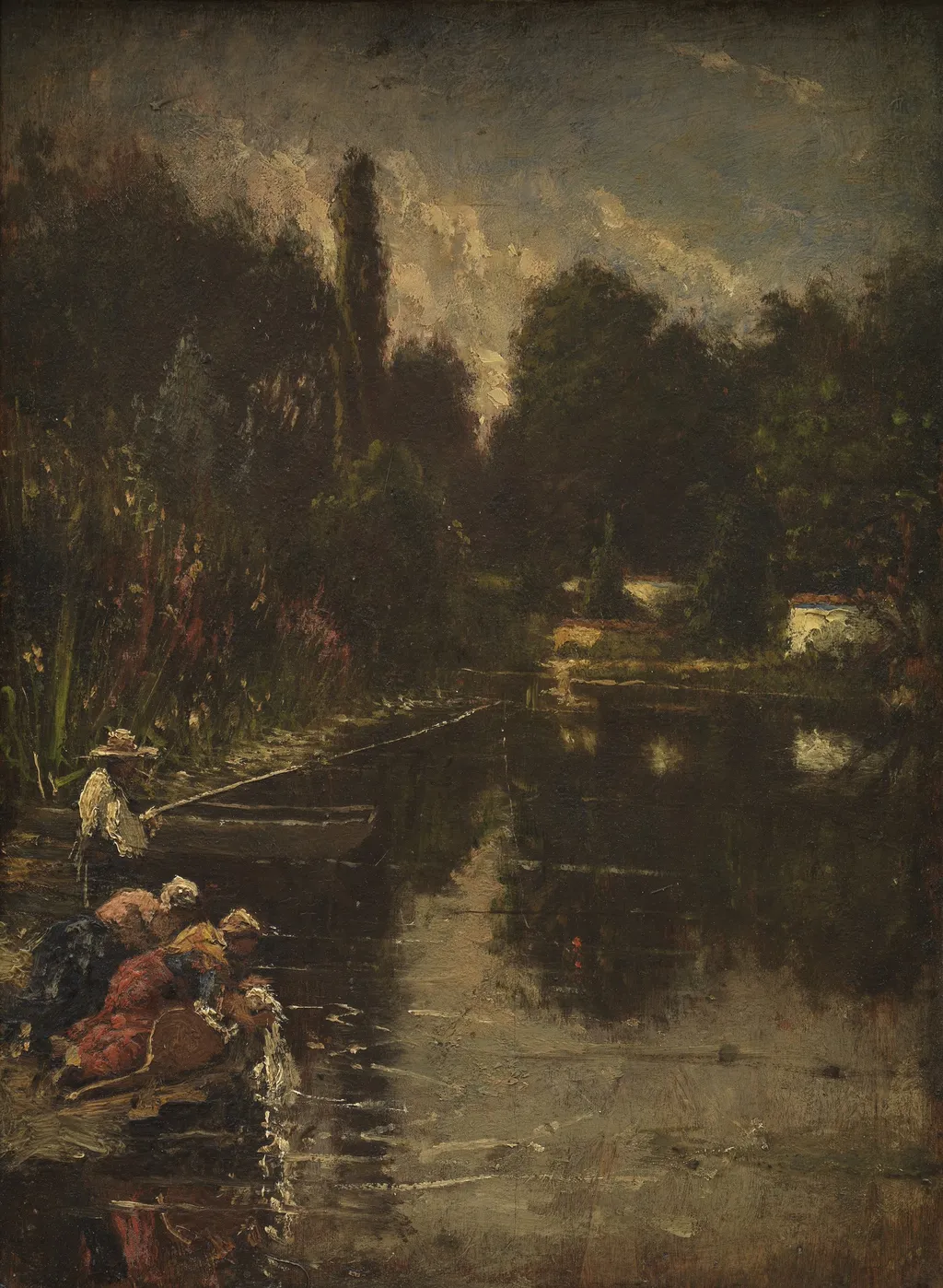
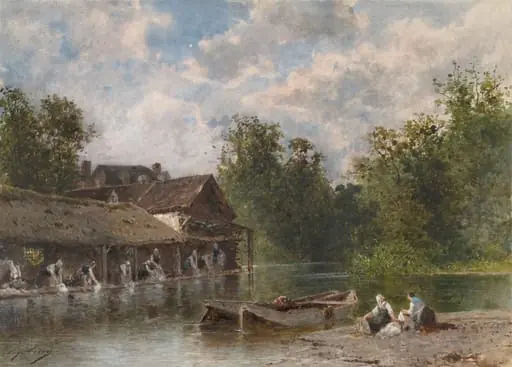
Washerwomen is an oil painting by the Barbizon school artist Thomas Couture. It dates from 1857 and is held in the collection of the Royal Museum of Fine Arts Antwerp.
About this work
Overview
Washerwomen, an oil painting from circa 1857, is a landscape scene by French artist Thomas Couture, associated with the Barbizon school. The work depicts a serene riverside setting where women are engaged in laundry, characterized by its use of chiaroscuro to add depth and realism.
Subject & Meaning
The painting portrays washerwomen in a natural, idyllic environment, emphasizing their daily labor. The serene atmosphere and the women's intent faces highlight the mundane yet essential nature of their task, set amidst lush greenery and a gently flowing river.
Technique & Style
Couture employed oil paint to achieve texture and depth. The composition features varied poses among the washerwomen, with chiaroscuro creating volume and realism. The style aligns with Barbizon school principles, focusing on everyday life and outdoor settings.
History & Provenance
Created by Thomas Couture, a noted teacher of artists like Édouard Manet, Washerwomen is now part of the Royal Museum of Fine Arts Antwerp's collection.
Context
As a Barbizon school work, Washerwomen reflects the movement's emphasis on landscapes and ordinary life. Couture's influence as an educator further situates the piece within 19th-century French art's transition towards more modern themes and techniques.
Own this work as a print
Artist & collection

Artist
Thomas Couture (French pronunciation: ; 21 December 1815 – 30 March 1879) was a French history painter and teacher.