Artwork
Penn's Treaty with the Indians
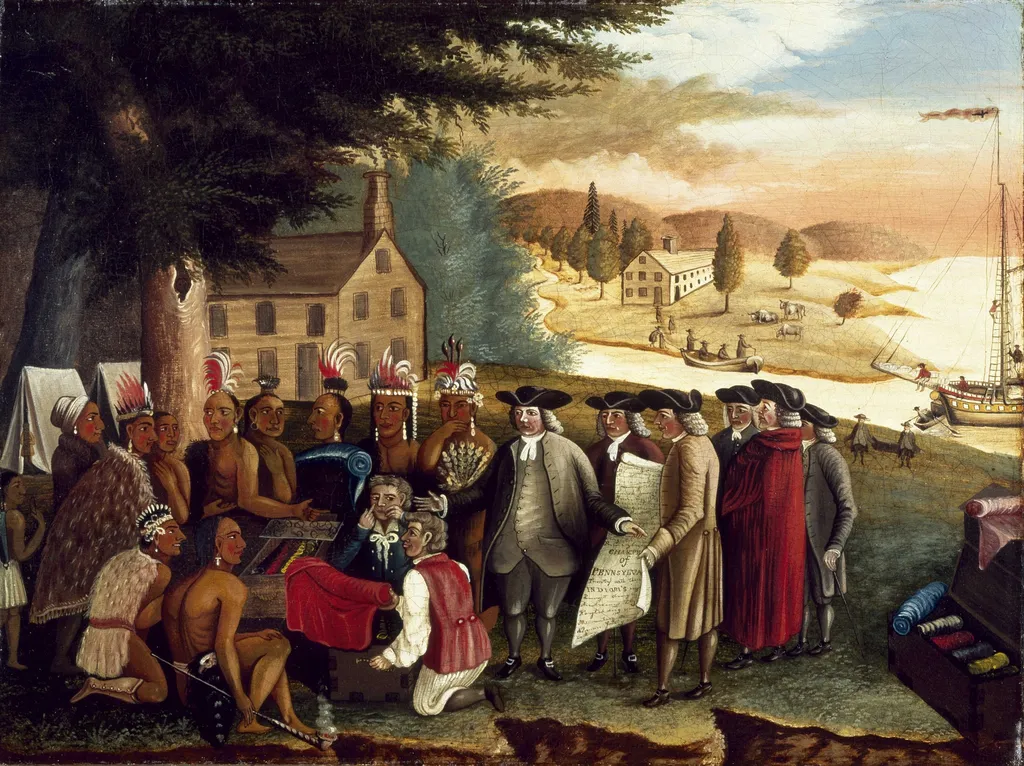
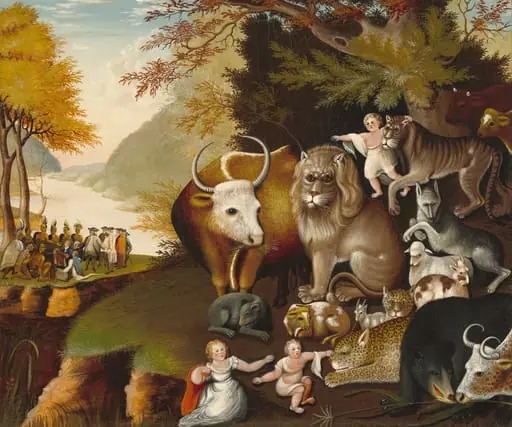
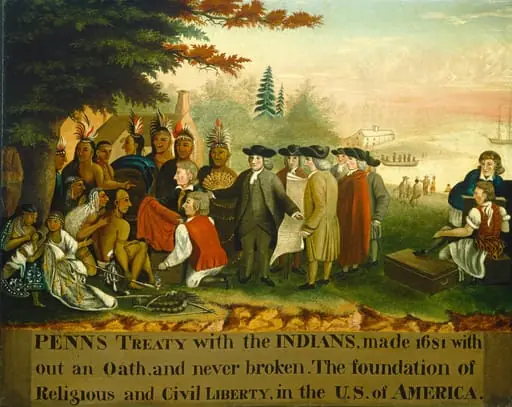
Penn's Treaty with the Indians is an oil painting by the American Folk Art artist Edward Hicks. It dates from 1830 and is held in the collection of the Museum of Fine Arts, Houston.
About this work
Overview
The scene, rendered in balanced composition and muted tones, reflects Hicks’s Quaker beliefs in harmony and nonviolence.
Edward Hicks painted this oil work in 1830, depicting a legendary meeting between William Penn and Lenape leaders. The scene, rendered in balanced composition and muted tones, reflects Hicks’s Quaker beliefs in harmony and nonviolence. Though historically unverified, the moment was idealized as a symbol of peaceful coexistence. The painting resides today in the Museum of Fine Arts, Houston, as part of its American folk art collection.
Subject & Meaning
The painting portrays William Penn, dressed in simple Quaker attire, engaging in dialogue with Native American leaders under a large tree. Their gestures suggest mutual respect, while the absence of weapons and the serene landscape reinforce themes of peace. Hicks, a devout Quaker, used this subject to express his conviction that true Christian conduct required just treatment of Indigenous peoples, countering contemporary expansionist narratives.
Technique & Style
Hicks employed traditional oil techniques with flat, deliberate brushwork characteristic of folk art. Light falls gently across the central figures, creating subtle depth without dramatic chiaroscuro. The background features a calm river, a distant boat, and a modest dwelling, all rendered with symbolic simplicity. Color is restrained—earthy browns, soft greens, and pale blues—enhancing the tranquil, almost timeless atmosphere.
History & Provenance
Painted during Hicks’s mature period, this version is one of many he created on the same theme between 1819 and 1849. It entered the Museum of Fine Arts, Houston’s collection in the 20th century, following earlier ownership by Quaker families and regional collectors. The painting’s repeated production suggests its importance as both personal devotion and public moral statement in early 19th-century America.
Context
Hicks painted during a time of increasing displacement of Native peoples and rising tensions over land. His depiction of Penn’s treaty stood in deliberate contrast to prevailing policies of removal and conquest. Though based on a 1682 agreement, the scene is largely imagined, shaped more by Quaker ideals than historical record, serving as a visual plea for ethical diplomacy.
Legacy
Hicks’s series of treaty paintings influenced later perceptions of early colonial-Native relations, embedding the myth of peaceful negotiation into American cultural memory. Though criticized for romanticizing history, they remain significant as expressions of religious conviction in visual form. Today, they prompt reflection on how art shapes collective memory of contested pasts.
Own this work as a print
Artist & collection

Artist
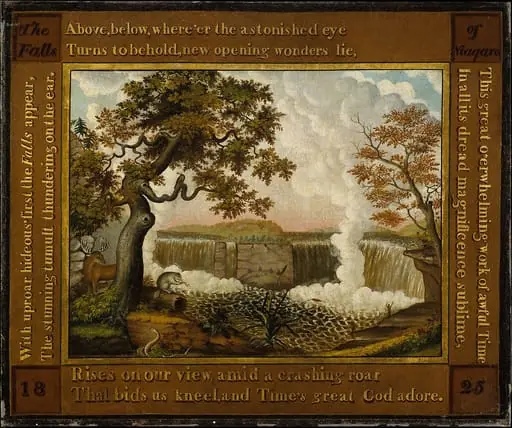
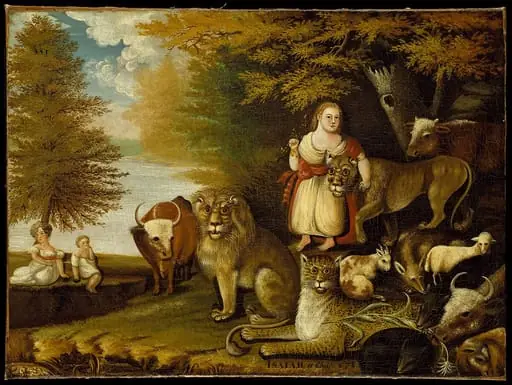
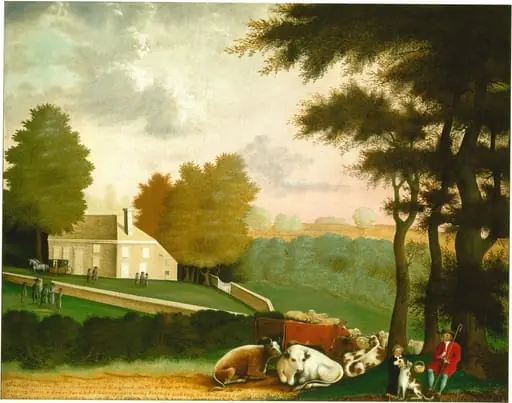
Edward Hicks spent his life caught between two worlds. A Quaker preacher by Sunday and a painter by weekdays, he painted signs and carriages to support his family while quietly building a body of peaceful, crowded…

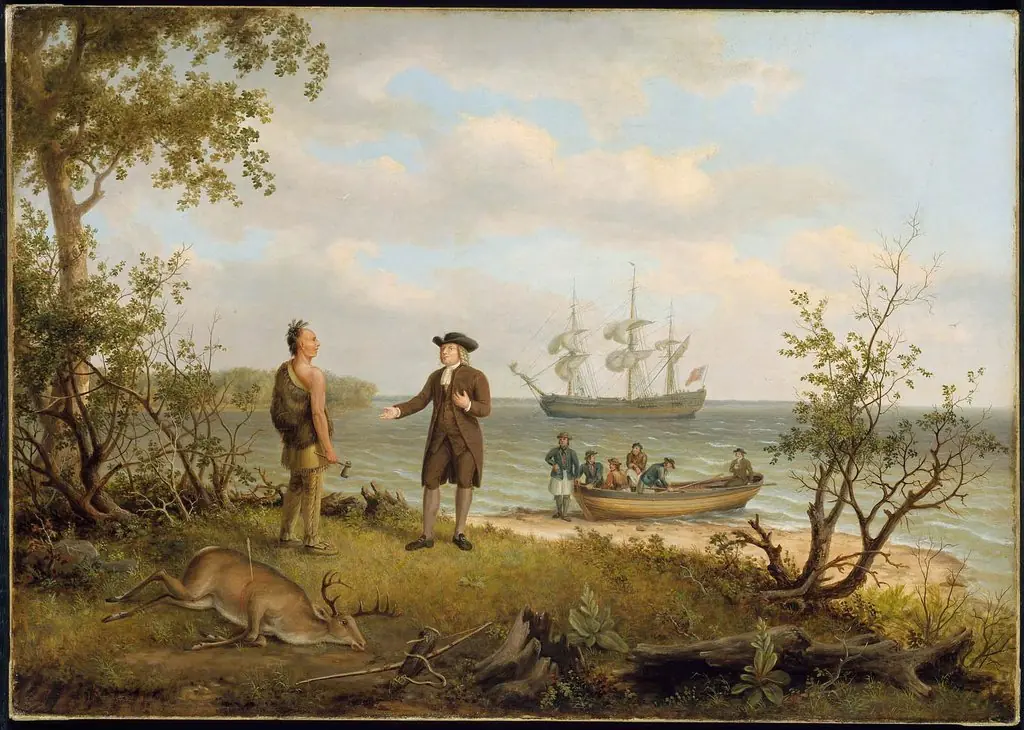 The Landing of William Penn
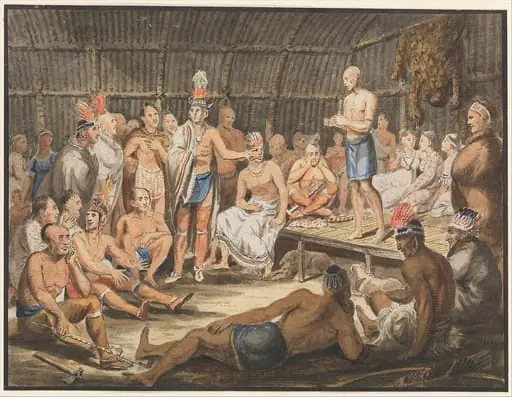 Exhibition of Indian Tribal Ceremonies at the Olympic Theater, Philadelphia
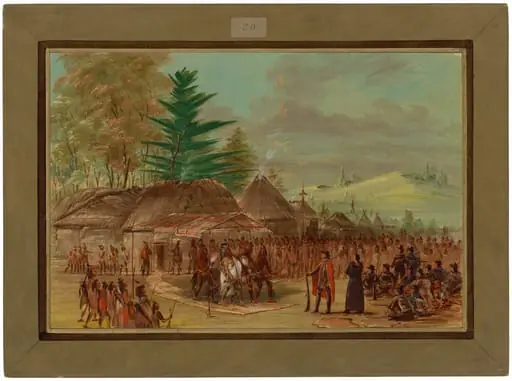 Chief of the Taensa Indians Receiving La Salle. March 20, 1682
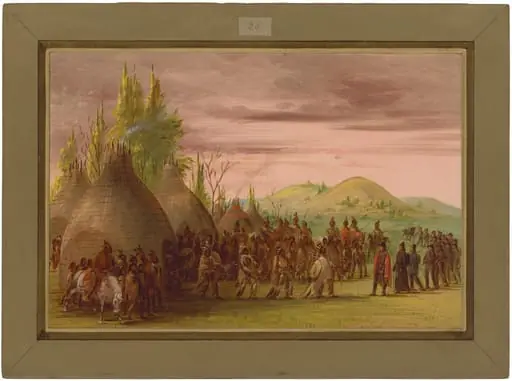 La Salle Received in the Village of the Cenis Indians. May 6, 1686
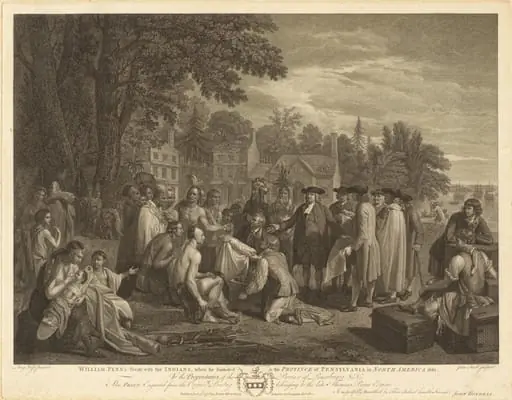 William Penn's Treaty with the Indians
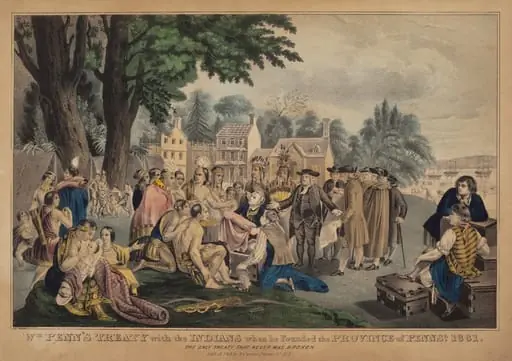 Wm. Penn's Treaty with the Indians When He Founded the Province of Pennsa. 1661: The Only Treaty That Never Was Broken