Artwork
Wm. Penn's Treaty with the Indians When He Founded the Province of Pennsa. 1661: The Only Treaty That Never Was Broken
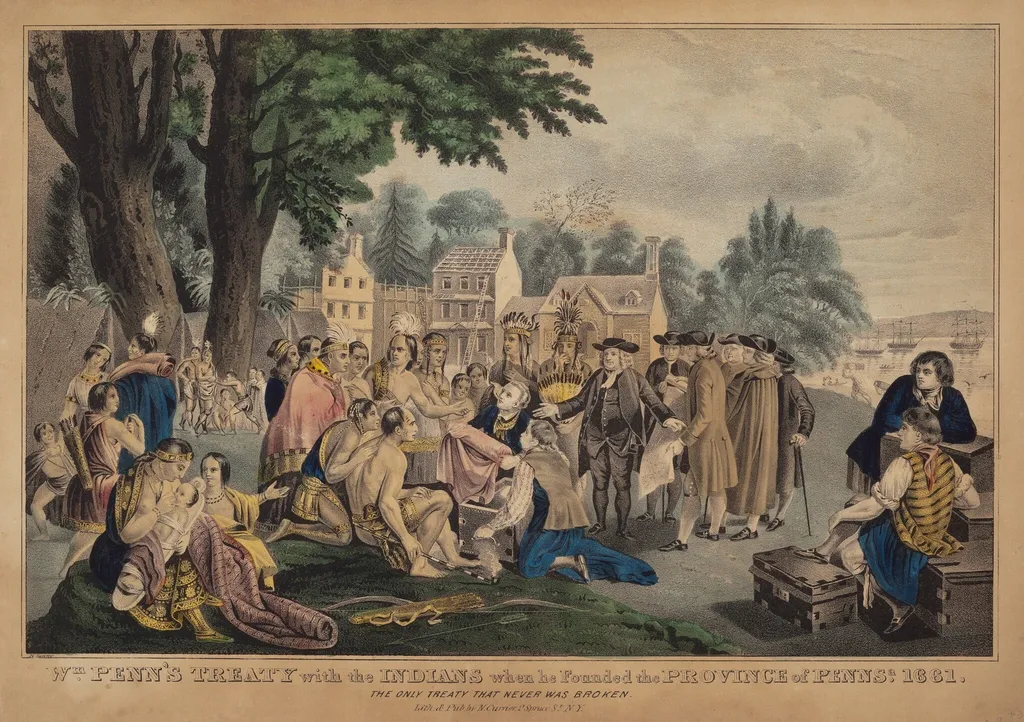
Wm. Penn's Treaty with the Indians When He Founded the Province of Pennsa. 1661: The Only Treaty That Never Was Broken is an ink print by the Impressionist artist Napoleon Sarony. It dates from 1882 and is held in the collection of the National Gallery of Art.
About this work
Overview
Napoleon Sarony’s hand‑colored lithograph, produced in 1882, portrays the 1661 agreement between William Penn and local Indigenous peoples that led to the establishment of Pennsylvania. The image centers on a handshake beneath a large tree, flanked by figures in colonial attire on one side and Native dress on the other, with children and a modest building in the background.
Subject & Meaning
The composition emphasizes the moment of mutual consent, suggesting a lasting peace that, according to the caption, was never violated. By juxtaposing European settlers and Native participants, the work conveys an ideal of harmonious coexistence at the colony’s founding.
Technique & Style
Executed as a hand‑colored lithograph on wove paper, the print employs a restrained palette of earth tones, greens and blues. Sarony’s line work delineates the figures and foliage with clarity, while the applied color adds depth without overwhelming the scene’s documentary tone.
History & Provenance
Created more than two centuries after the actual event, the lithograph reflects 19th‑century American interest in colonial origins. It was circulated as a popular print, and copies have appeared in collections such as the National Gallery of Art in Washington, D.C.
Context
The 1661 treaty is celebrated in Penn’s own writings as a foundation for the “Holy Experiment” of religious tolerance and fair dealings with Native peoples. Sarony’s image participates in a broader visual tradition that romanticizes early colonial negotiations.
Artist & collection


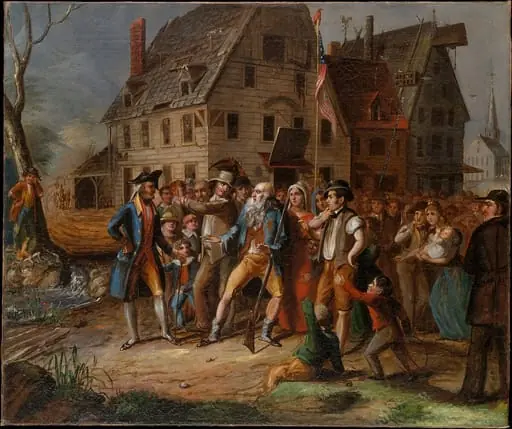 Rip Van Winkle
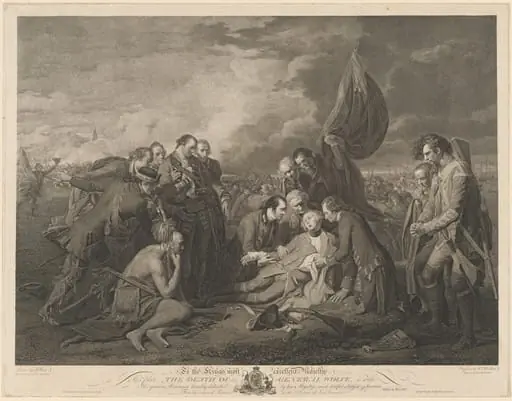 The Death of General Wolf
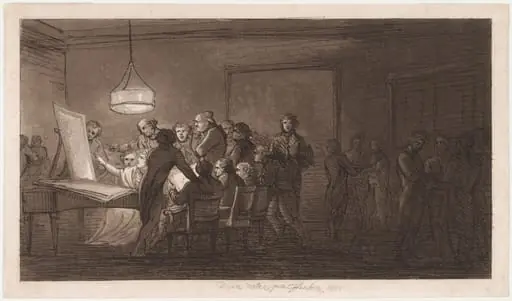 Evening Gathering in the Palais Fries
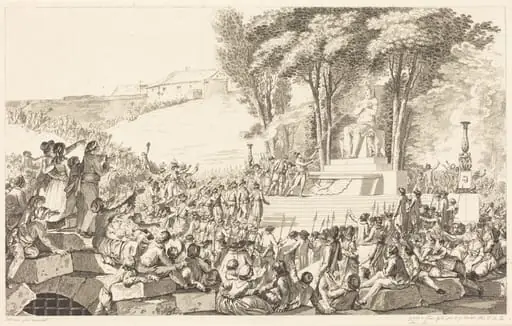 La Fontaine de la Régénération sur les débris de la Bastille, le 10 Aout 1793
 A Welcome Guest
 Cadets Lined up in front of the Het Zeerecht Building in Amsterdam
 Den honette Ambition, III akt, 5. scene
 Congress Voting Independence
 Lady and Gentleman Conversing