Artwork
Terugkerende schapen
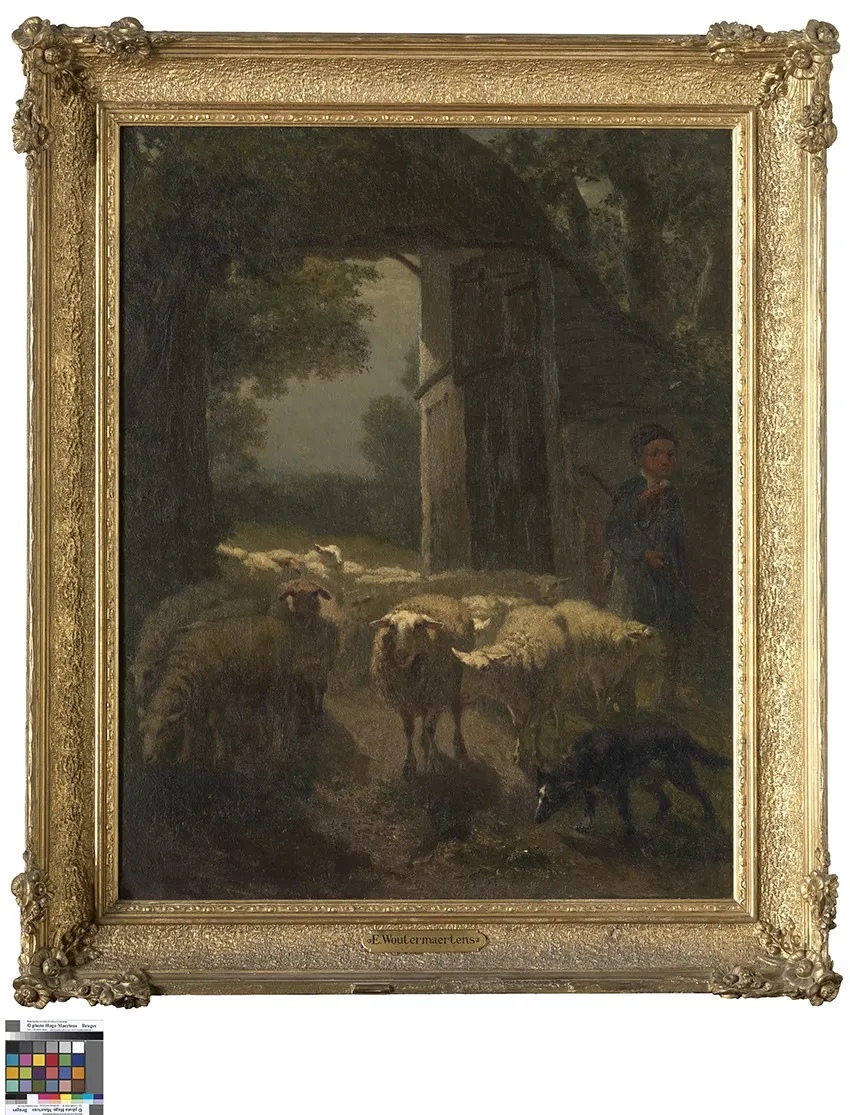
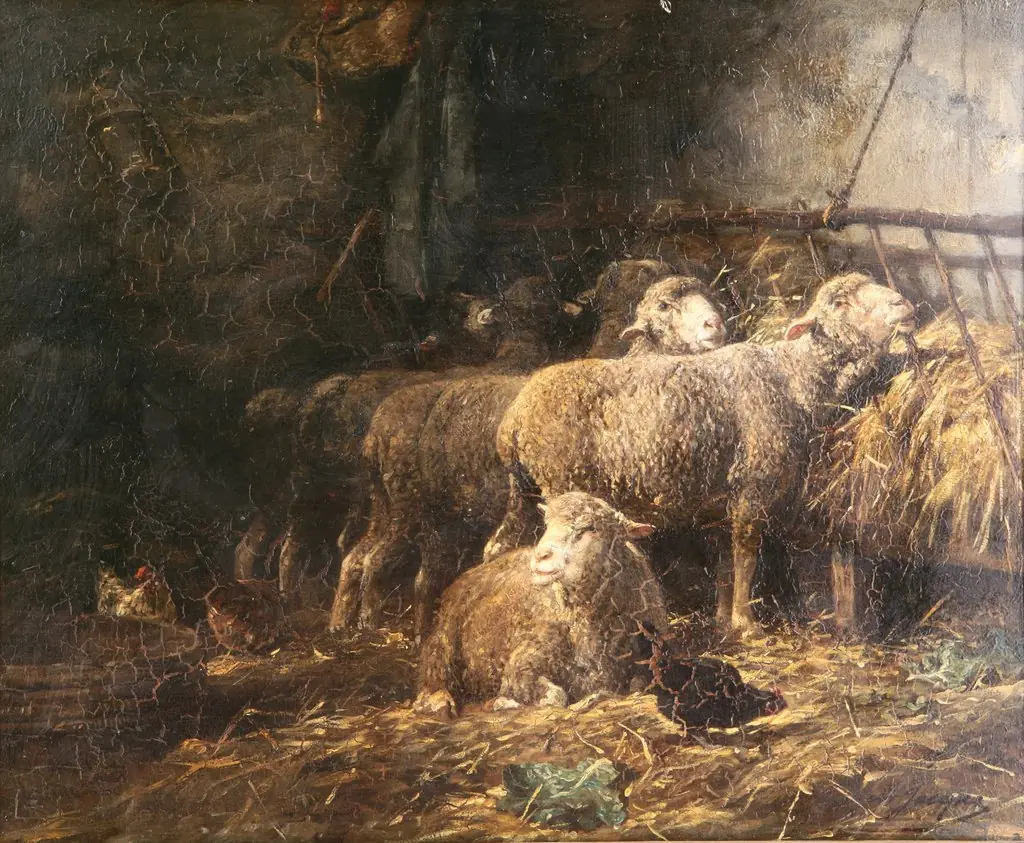
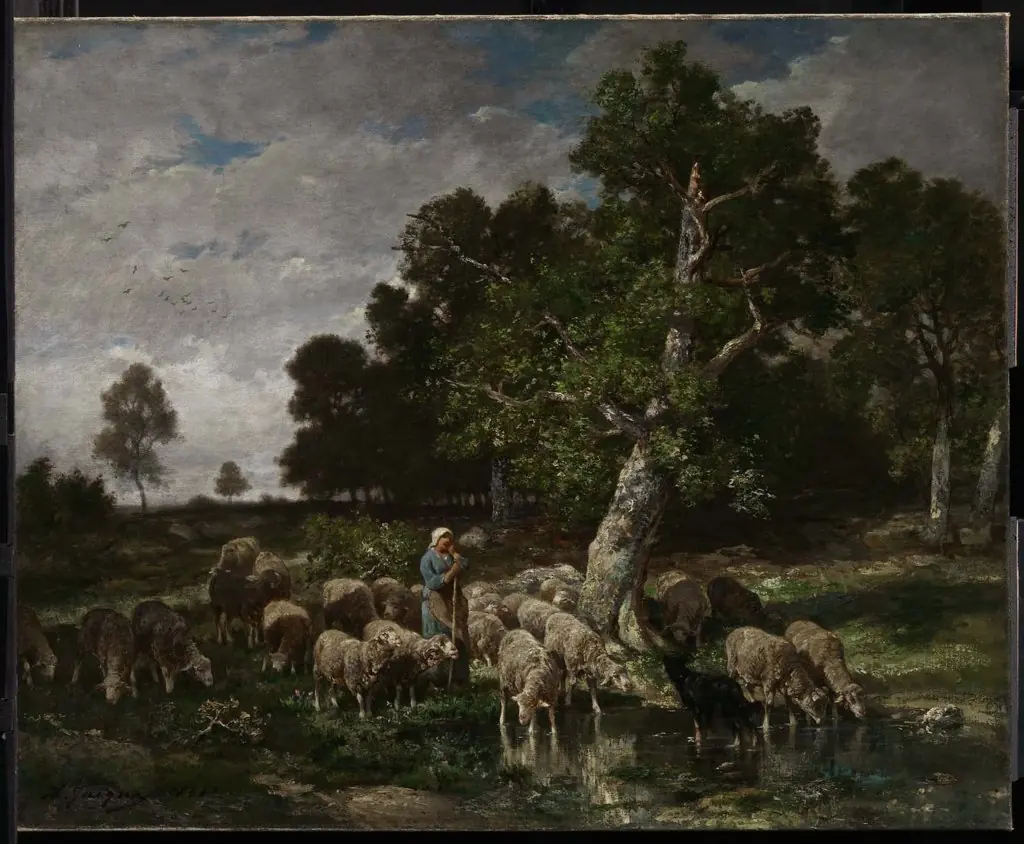
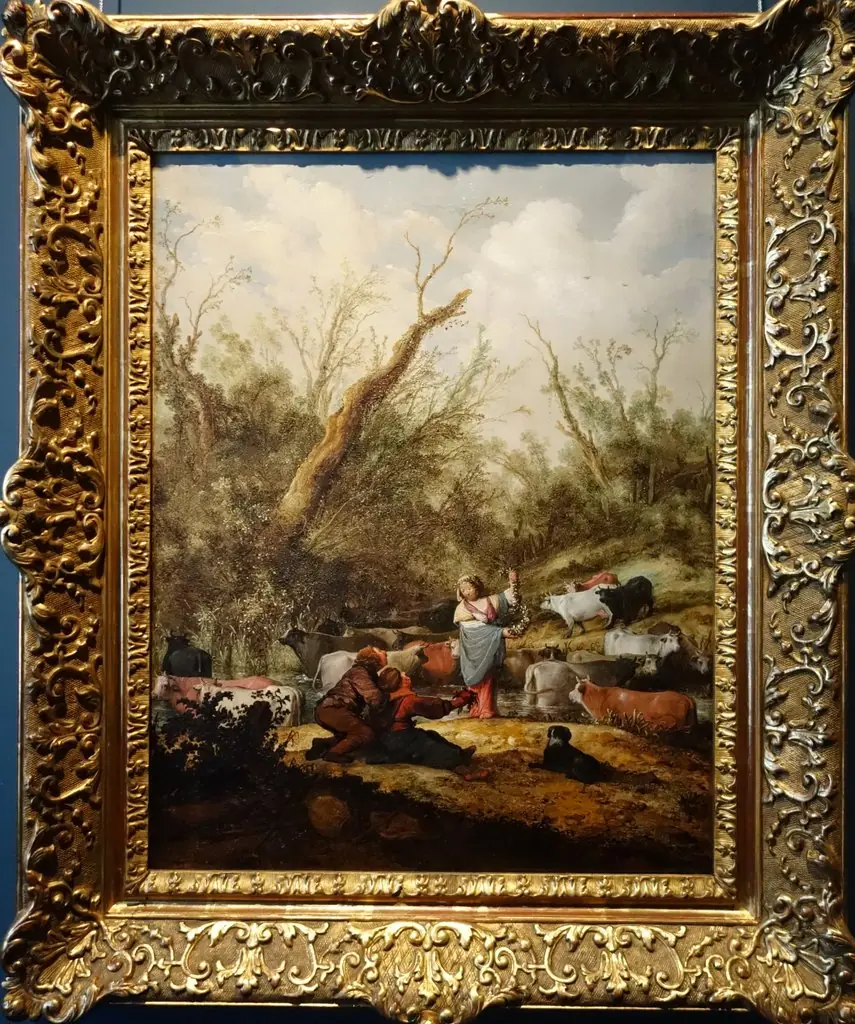
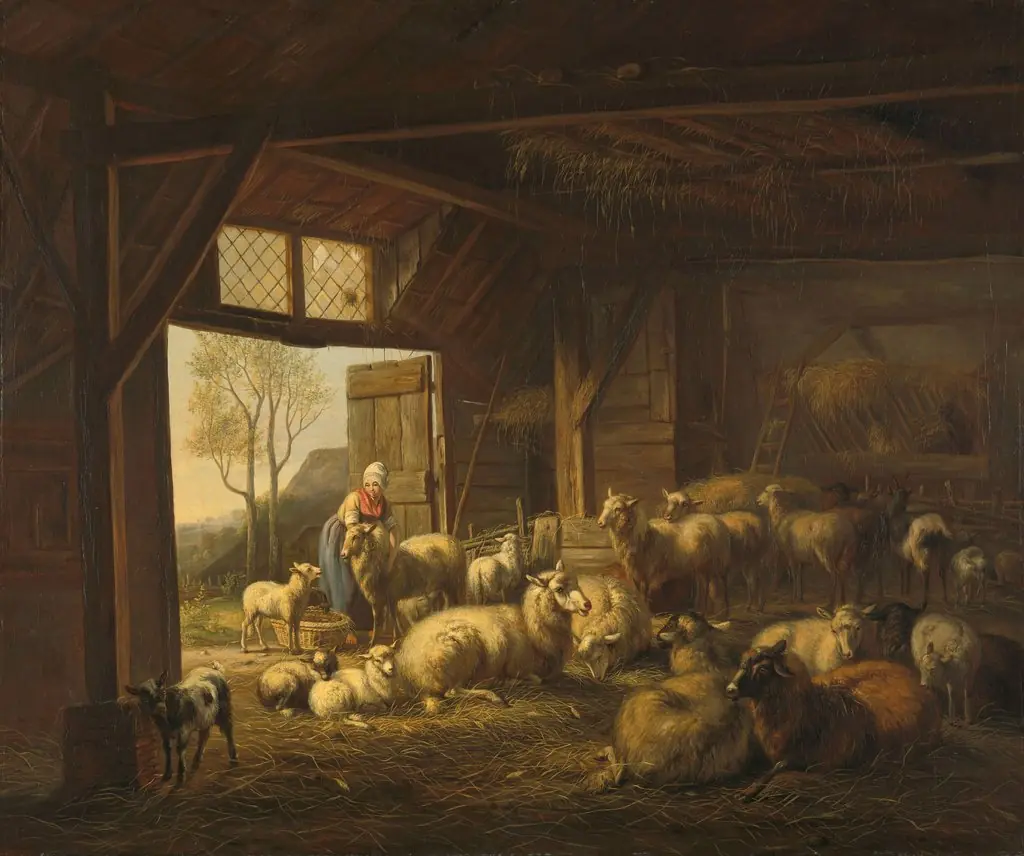
Terugkerende schapen is an oil painting by Edward Woutermaertens. It dates from 1819 and is held in the collection of the Groeningemuseum.
About this work
Overview
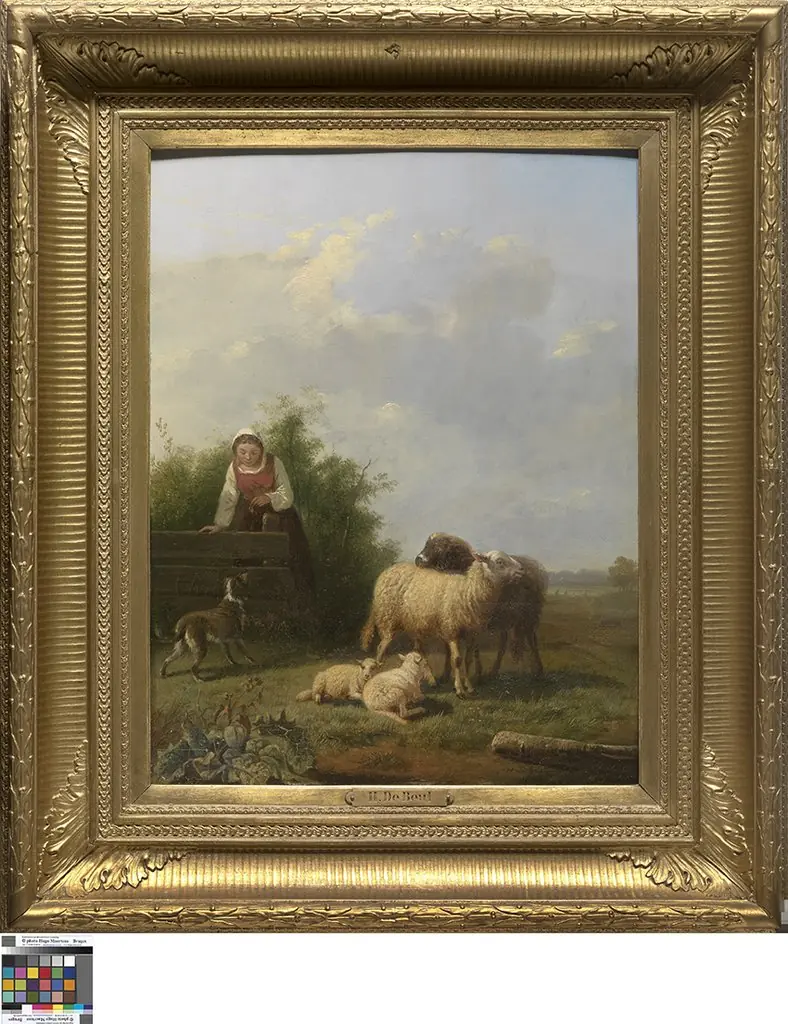
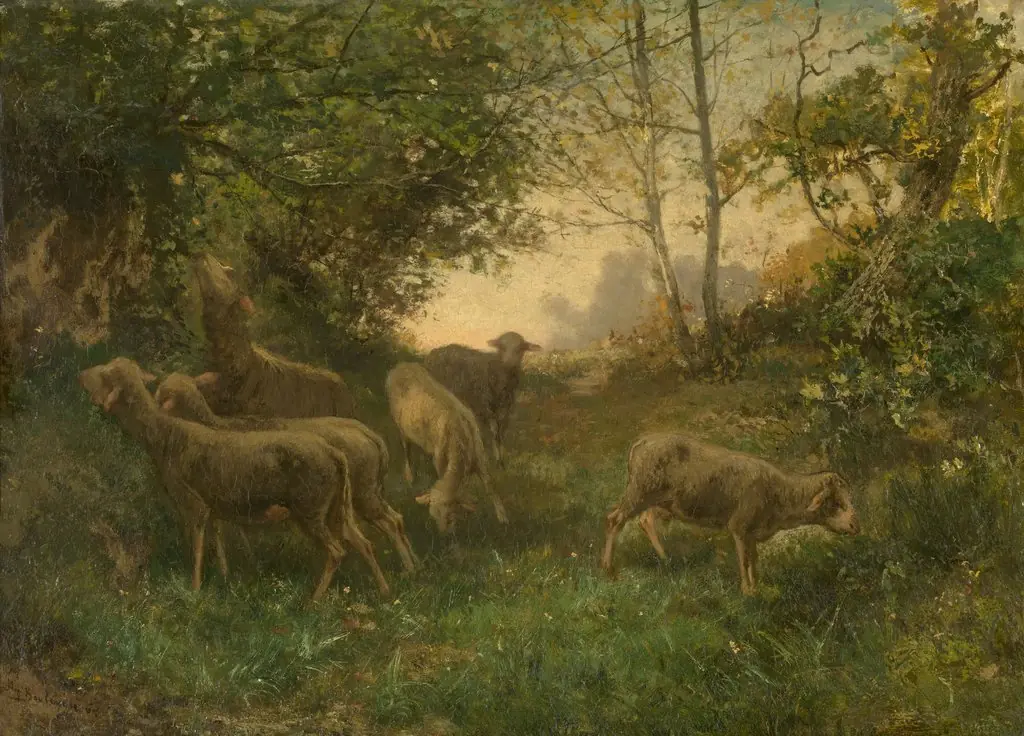
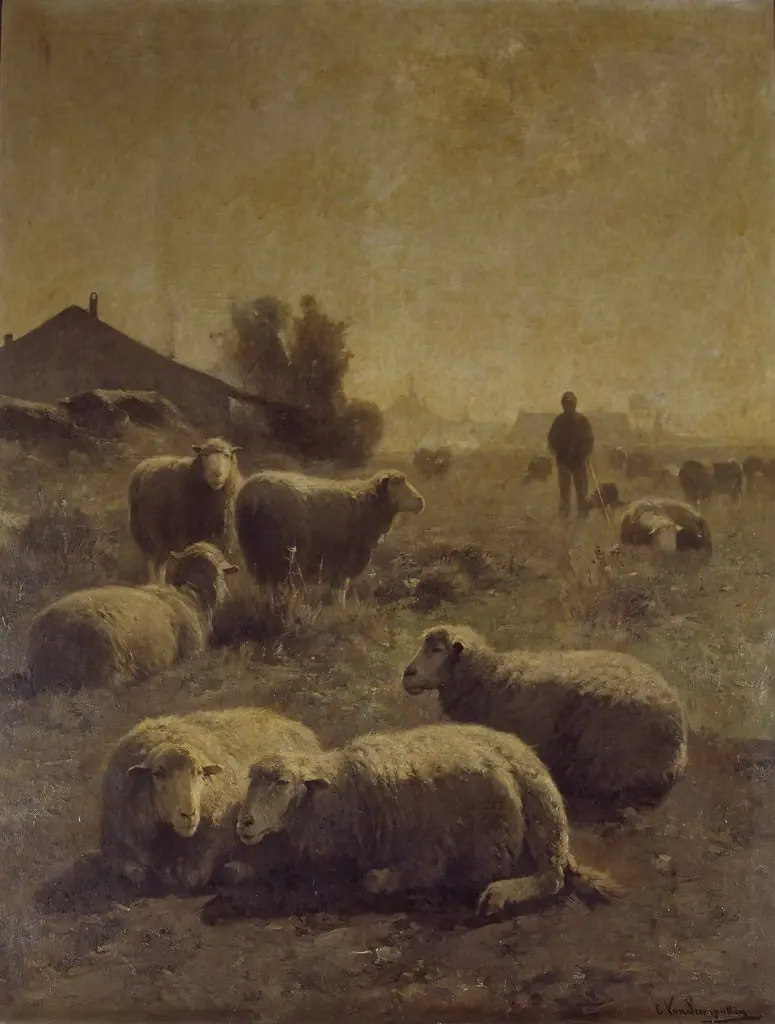
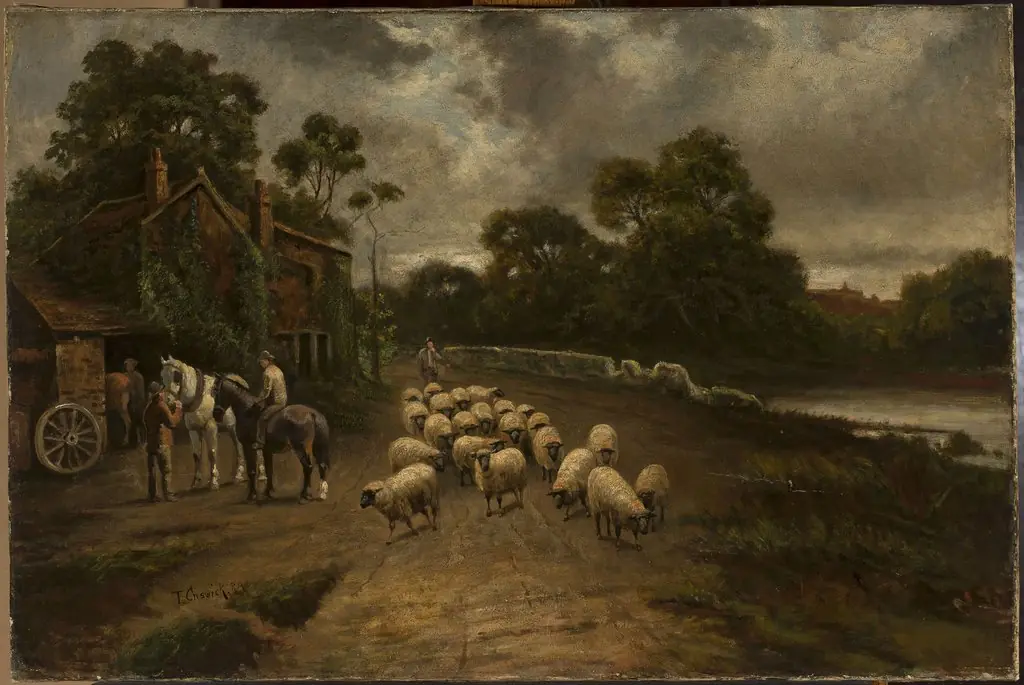
Terugkerende schapen is an 1819 oil painting by Belgian artist Edward Woutermaertens, featuring a serene pastoral scene of a herder, sheep, and a dog near a stone structure, now housed in the Groeningemuseum.
Subject & Meaning
The painting portrays a harmonious relationship between a herder, his flock, and a vigilant dog, set against a lush natural backdrop. The herder's gentle gaze towards the viewer conveys a sense of peaceful coexistence.
Technique & Style
Woutermaertens employed chiaroscuro to create deep contrasts, enhancing the scene's depth and tranquility. Variations in sheep size and color add realism, while the stone structure provides contextual framing.
History & Provenance
Created in 1819, the same year of Woutermaertens' birth, this work exemplifies his early focus on animal scenes, a theme that would define his career. It is currently part of the Groeningemuseum's collection.
Context
Reflecting early 19th-century Belgian art's inclination towards pastoral themes, Terugkerende schapen showcases Woutermaertens' contribution to this tradition with his detailed, serene animal depictions.
Legacy
As one of Woutermaertens' formative works, it laid the groundwork for his recognition as a specialist in pastoral and animal scenes, influencing subsequent generations of Belgian artists exploring similar themes.
Artist & collection
Artist
Edward Woutermaertens or Edouard Woutermaertens (15 August 1819 – 30 October 1897) was a Belgian artist who specialized in the painting of scenes with animals, with a particular preference for sheep.