Artwork
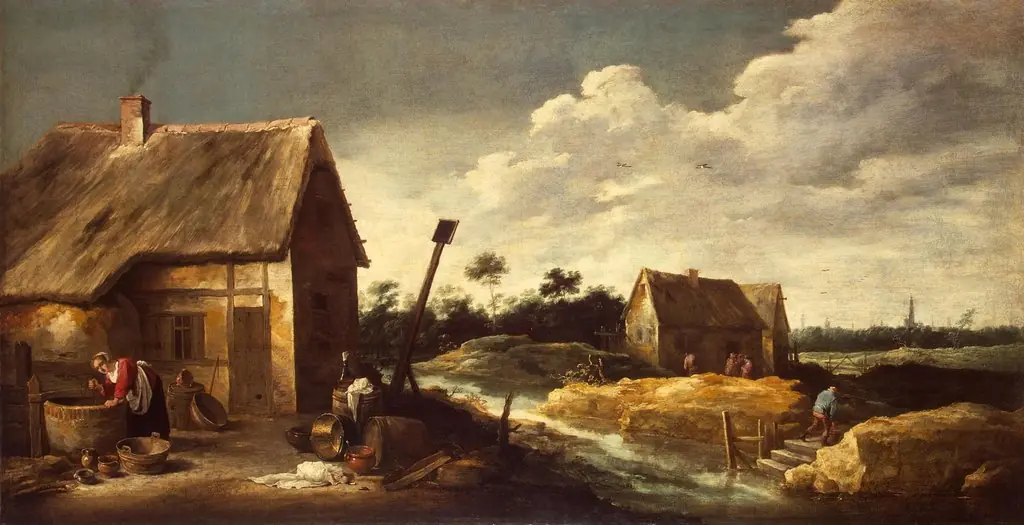
Landscape with farm at a river
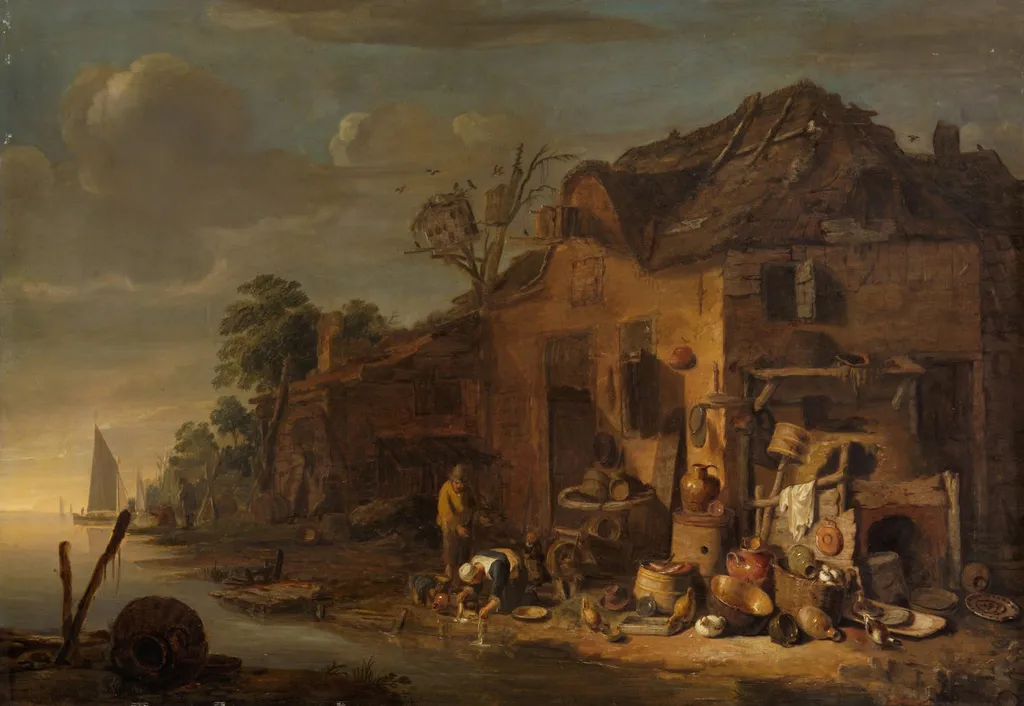
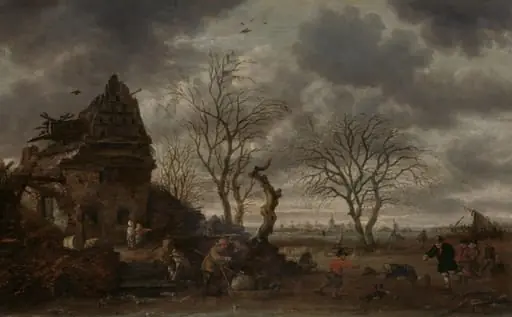
Landscape with farm at a river is an oil painting by the Dutch Golden Age artist Egbert van der Poel. It dates from 1647 and is held in the collection of the Kunsthistorisches Museum.
About this work
Overview
Executed in oil paint, the work demonstrates Van der Poel's skill in capturing the atmospheric conditions and everyday industry of the Dutch countryside.
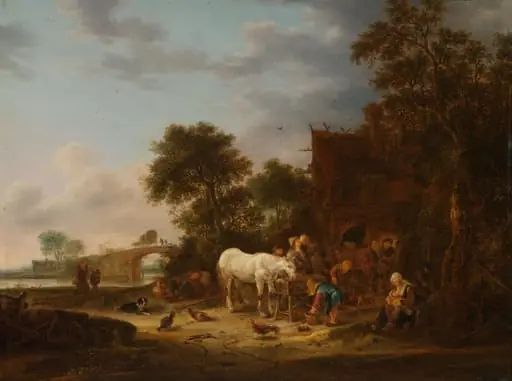
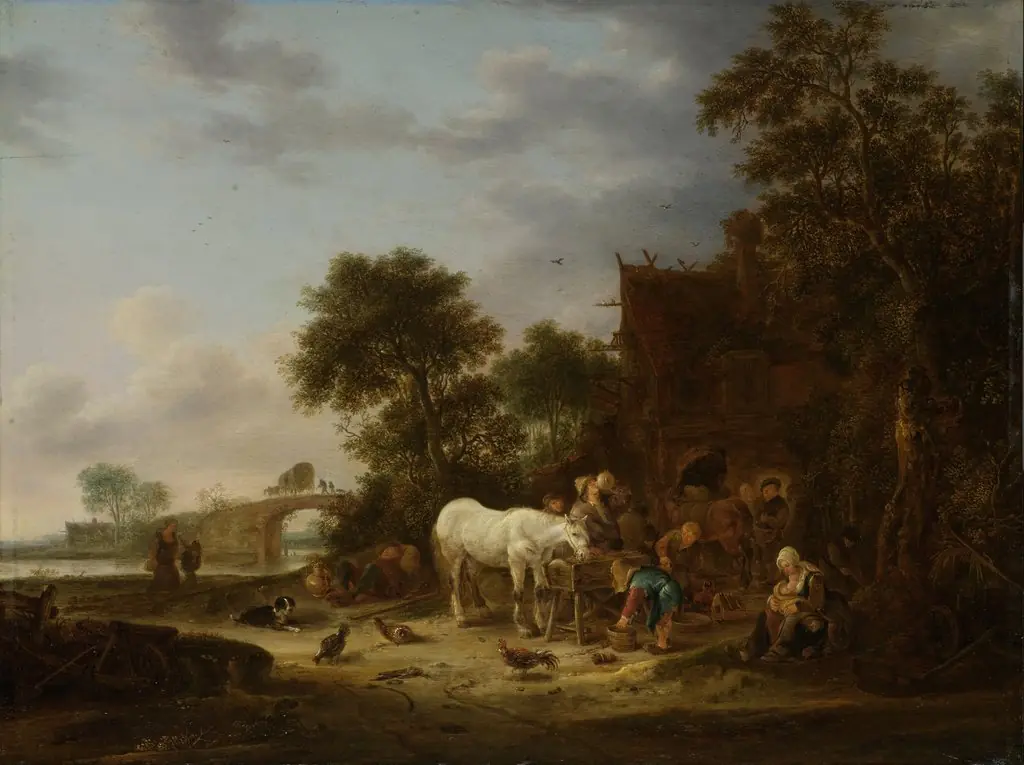
Painted in 1647, Landscape with Farm at a River is a characteristic example of Egbert van der Poel's early landscape work during the Dutch Golden Age. The composition depicts a rural riverside setting dominated by a weathered stone house situated on the left bank. In the foreground, two figures are engaged in labor near a cart laden with clay pots and jars, while additional pottery is scattered across the uneven ground, suggesting a local pottery trade or transport. A sailboat navigates the river in the middle distance, providing a sense of depth and connectivity to the wider waterway. The sky is rendered with dramatic contrast; dark, heavy clouds occupy much of the upper register, yet a break in the overcast allows sunlight to illuminate the central scene, highlighting the textures of the earth and the figures' activities. Executed in oil paint, the work demonstrates Van der Poel's skill in capturing the atmospheric conditions and everyday industry of the Dutch countryside. This piece reflects the artist's focus on intimate, genre-infused landscapes that were popular among 17th-century Dutch collectors, showcasing his ability to balance narrative detail with a realistic treatment of light and weather.
Subject & Meaning
The work presents a modest agricultural scene, emphasizing daily labor and the relationship between human activity and the natural environment. The presence of pottery and a cart suggests local craft or trade, while the solitary sailboat hints at broader connections beyond the immediate landscape. The contrast between the solid, grounded architecture and the fleeting light may allude to the transience of work against enduring place.
Technique & Style
Van der Poel employs a pronounced chiaroscuro, using deep shadows to model the stone house and foreground figures, while bright highlights illuminate the sky and water. This interplay of light and dark creates a three‑dimensional effect, giving the structures a tactile solidity. The muted palette and careful handling of atmospheric perspective reinforce the sense of depth and quietude.
History & Provenance
Created in the mid‑seventeenth century, the painting entered the collection of the Kunsthistorisches Museum in Vienna, where it remains on display. Its acquisition reflects the museum’s broader commitment to Dutch Golden Age works, situating van der Poel among contemporaries whose rural scenes were valued for both aesthetic and documentary qualities.
Context
Egbert van der Poel, active during the Dutch Golden Age, was known for his depictions of everyday life and modest interiors. This riverine landscape aligns with the period’s interest in realistic portrayals of the Dutch countryside, where waterways were central to commerce and daily existence. The work exemplifies the era’s shift toward naturalistic observation combined with controlled, dramatic lighting.
Artist & collection

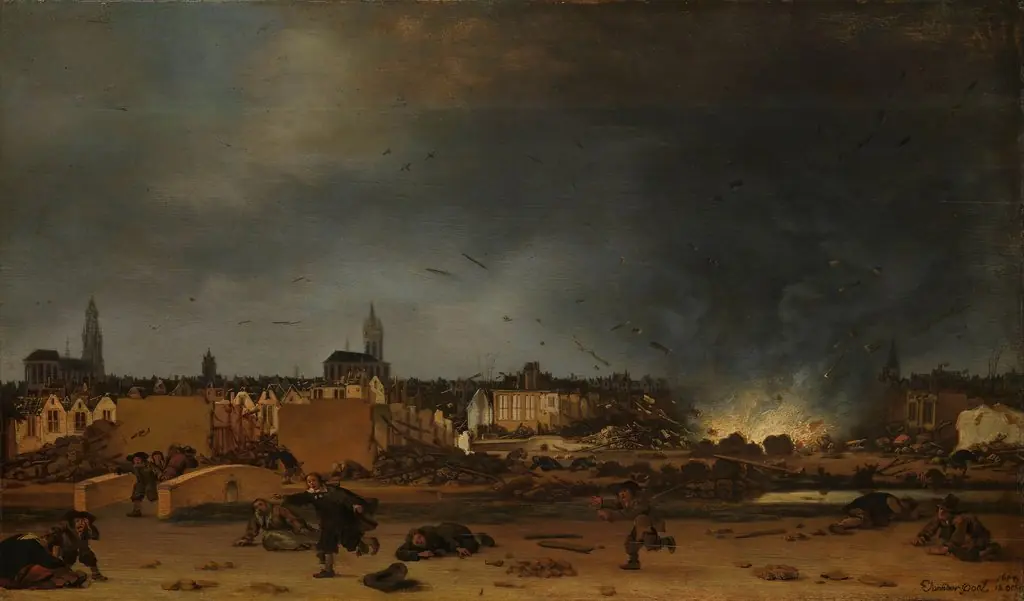 The explosion of the powder magazine in Delft, 12 October 1654
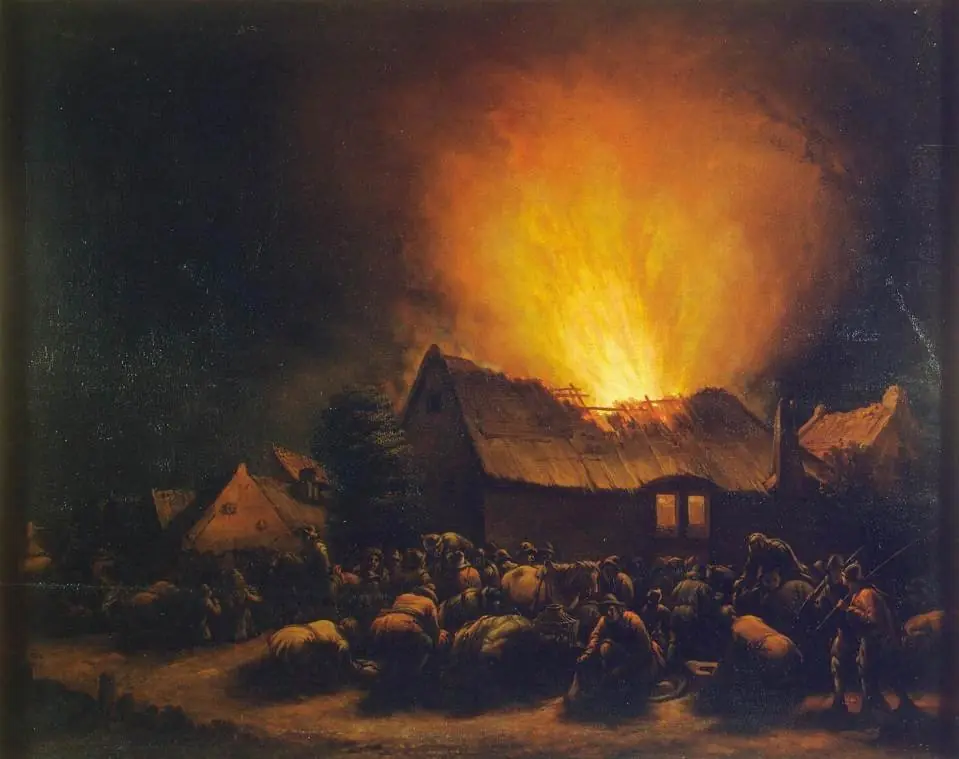 Fire in a Village
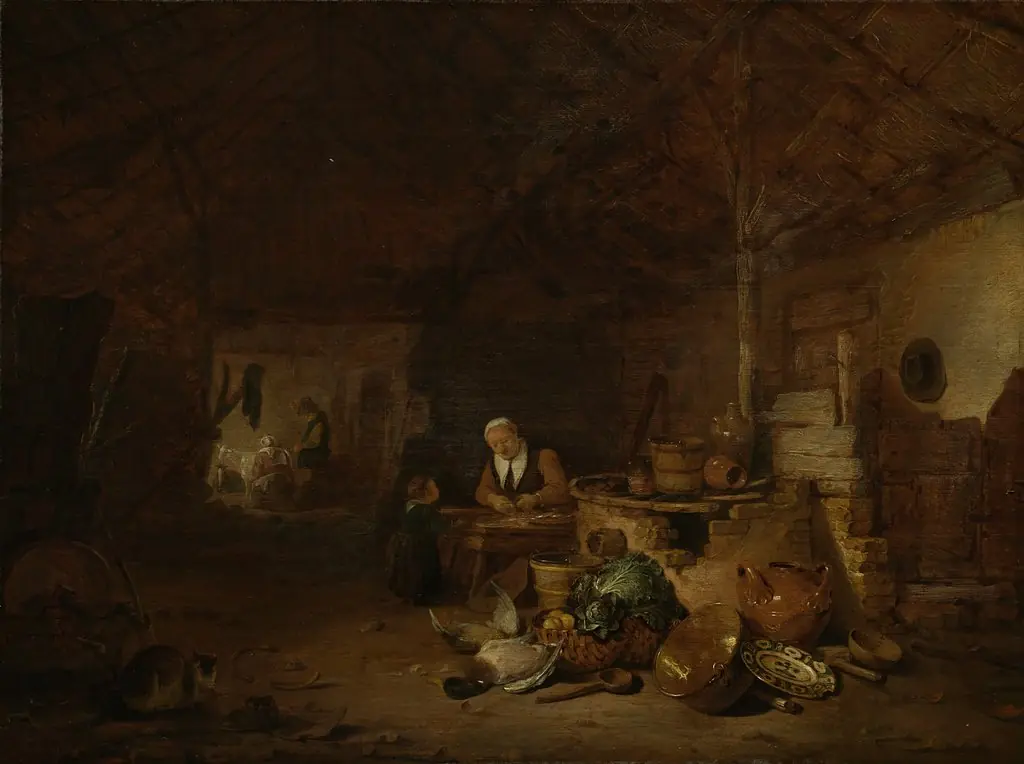 Interior of a barn
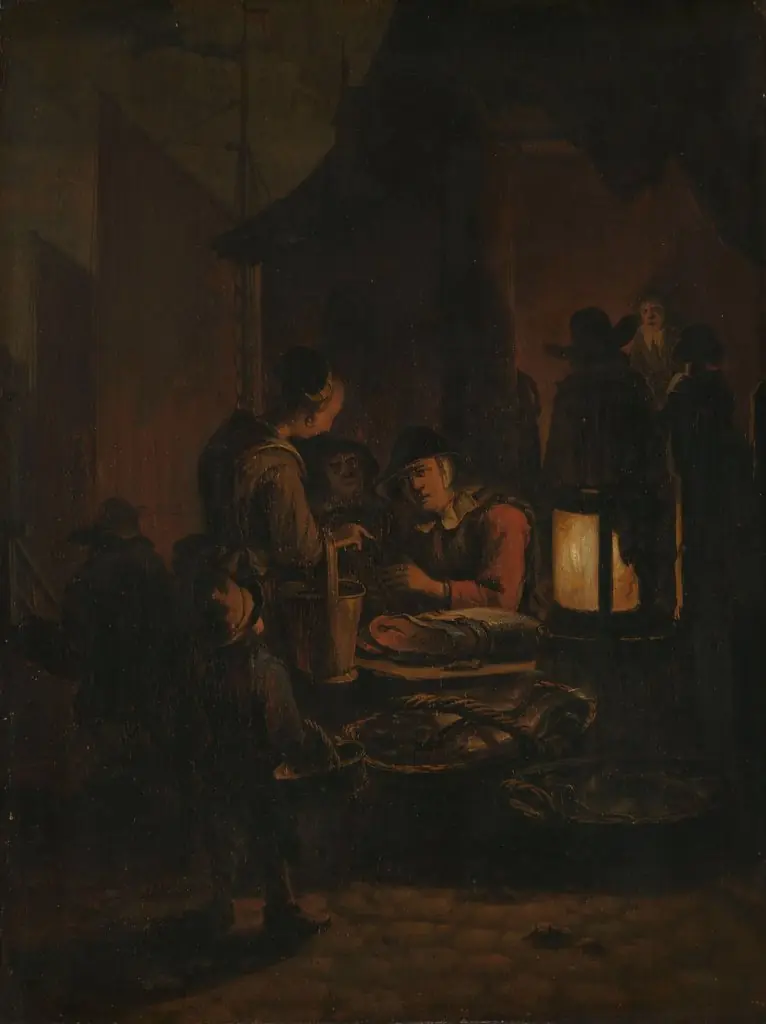 Fish market at night
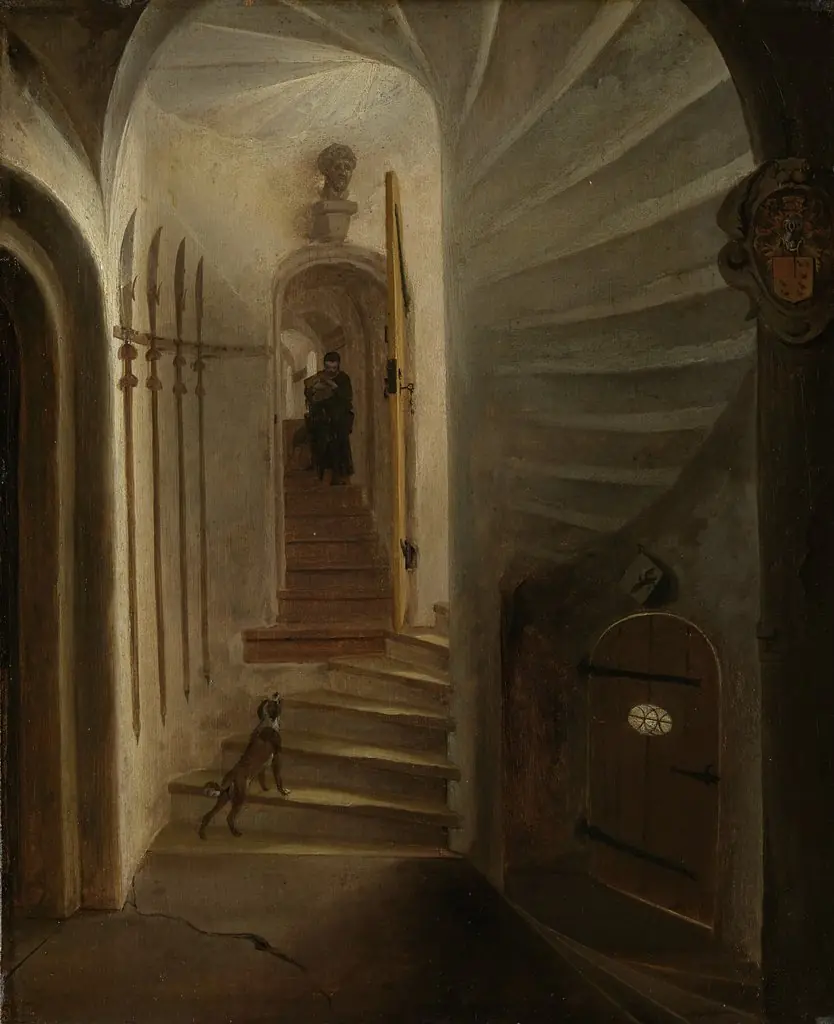 Portal of a stairway tower, with a man descending the stairs: presumably the moment before the assassination of William the Silent in the Ptinsenhof, Delft
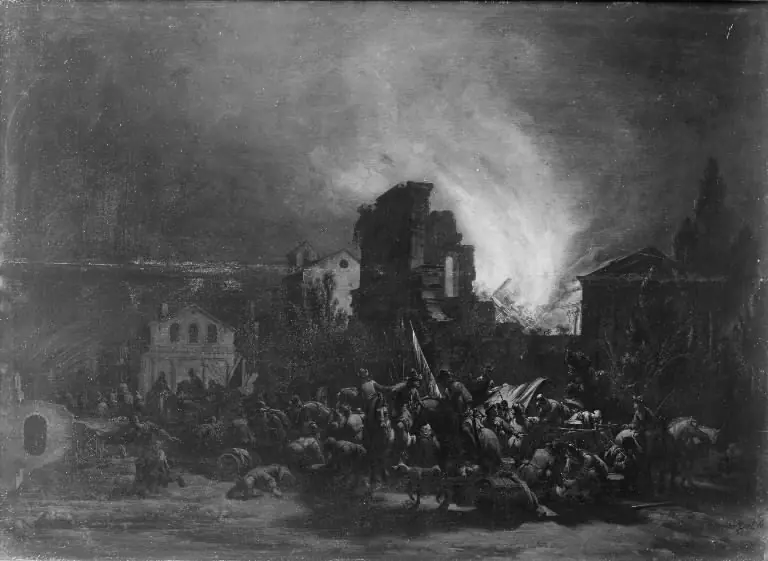 Nocturnal Fire and Looting in a Town
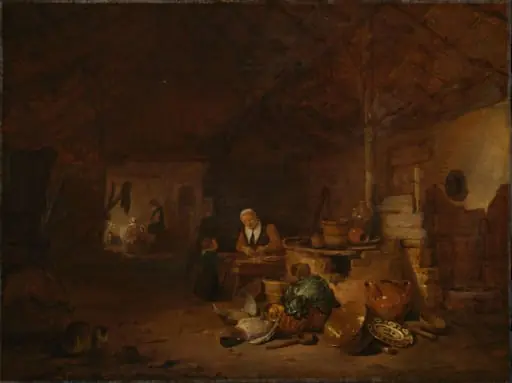 Interior of a barn
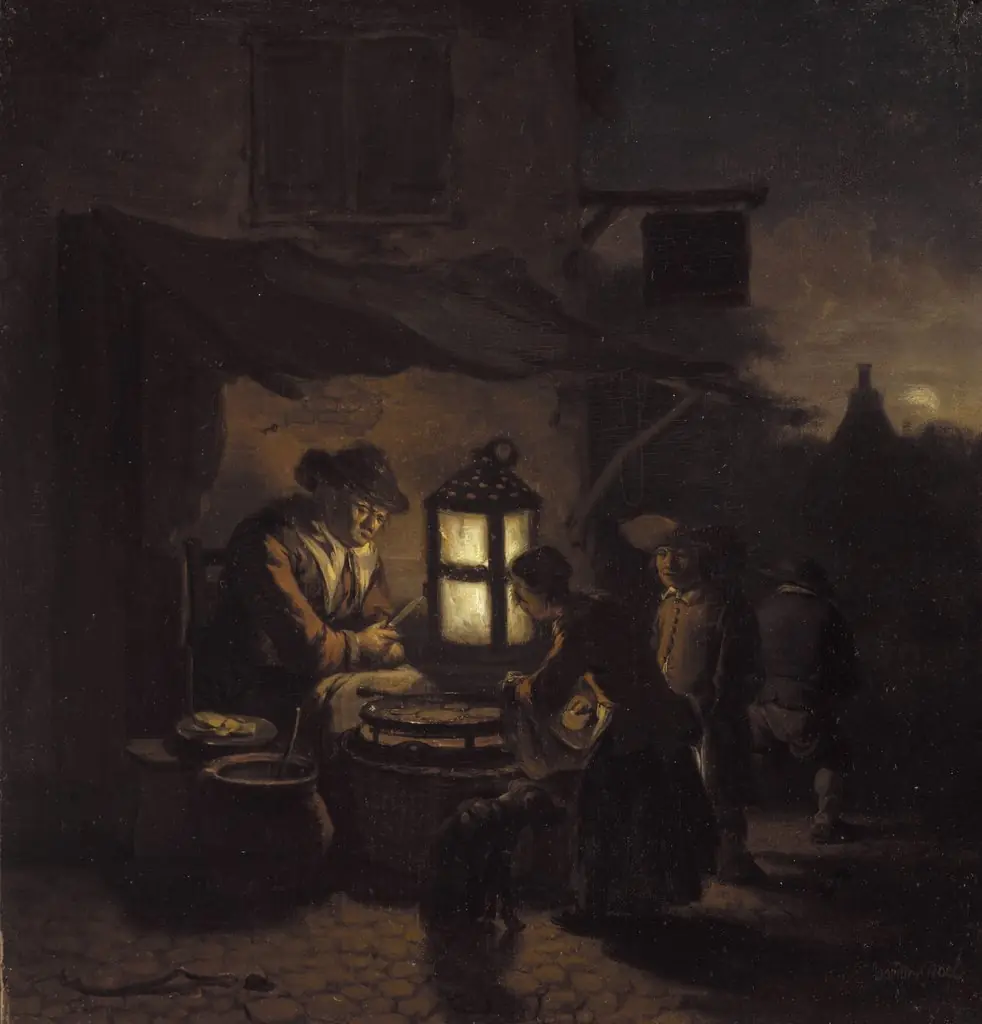 The Pancake Maker