Artwork
Winter scene
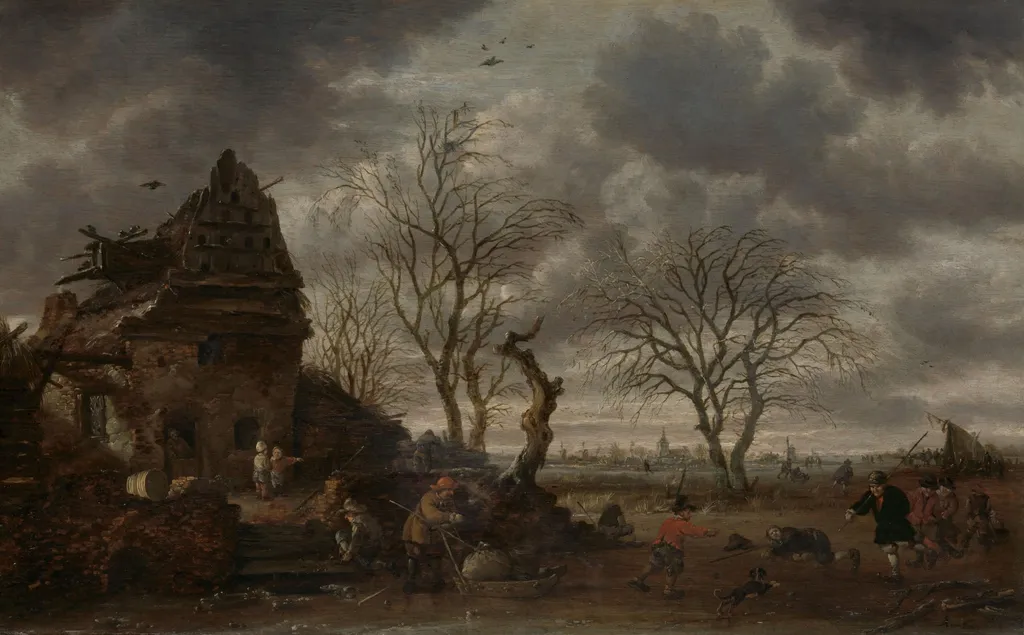
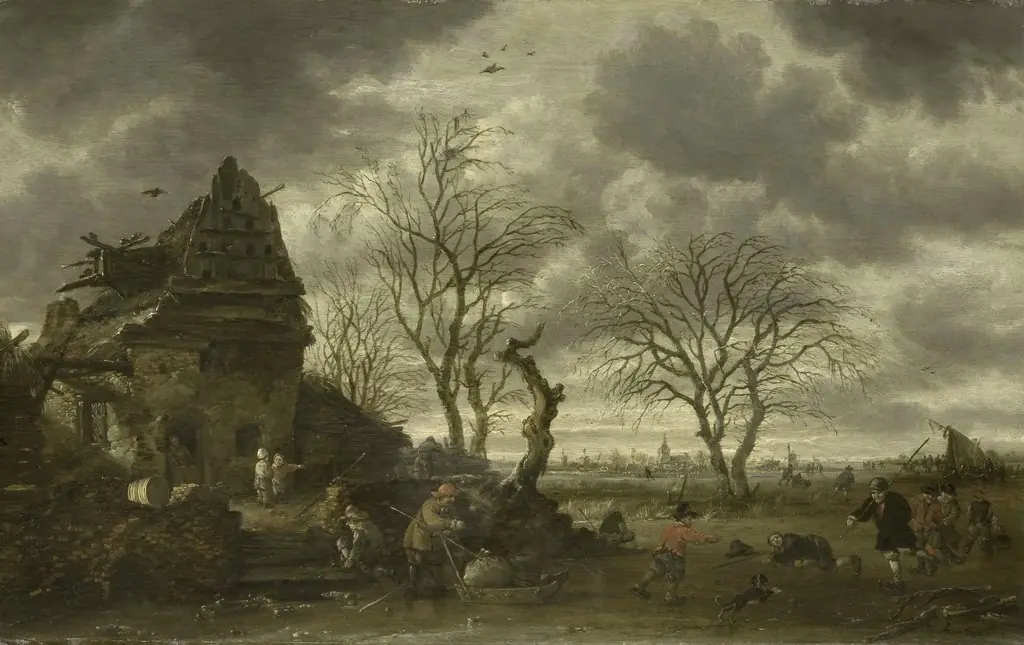
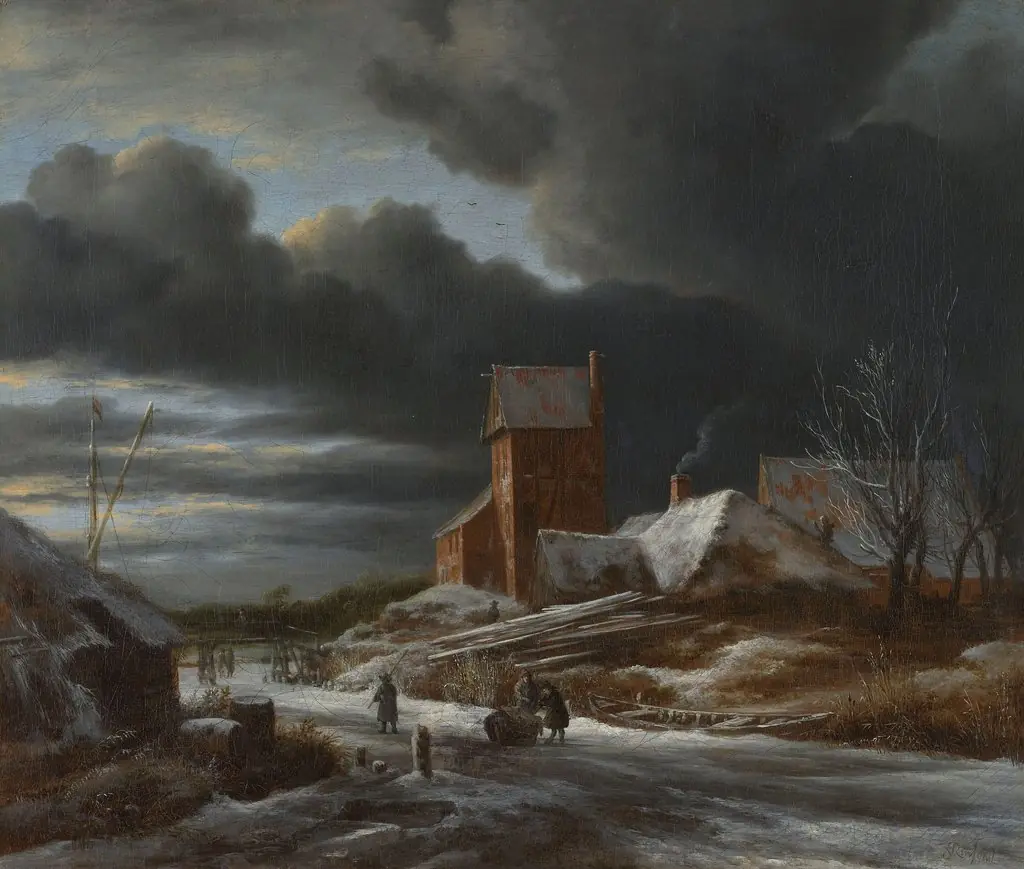
Winter scene is an unspecified painting by the Dutch Golden Age artist Salomon Rombouts. It dates from 1681 and is held in the collection of the Rijksmuseum. This unsigned painting depicts a quiet winter landscape with minimal human presence.
About this work
Overview
This unsigned painting depicts a quiet winter landscape with minimal human presence. Snow blankets the ground, and a pale sky presses down over a frozen river. A dilapidated farmhouse stands to the left, its roof sagging, while skaters move silently across the ice. In the distance, a small tent and the faint outline of a village suggest habitation, but the scene remains subdued and unembellished.
Subject & Meaning
The scene captures rural winter life without narrative or drama. The abandoned farmhouse and solitary tent imply transience or hardship, while the skaters suggest fleeting human activity against enduring cold. There is no celebration or symbolism—only observation. The emptiness may reflect the quiet endurance of seasonal cycles rather than any specific event or story.
Technique & Style
The artist used muted tones—gray, white, and muted browns—to convey the chill and stillness of winter. Brushwork is restrained, with soft edges and little detail, especially in the distant village. The lack of signature and refined finish suggests a working sketch or study rather than a polished commission. Light is diffused, enhancing the sense of atmospheric quiet.
History & Provenance
The painting’s origin is unknown due to the absence of a signature or documented record. It entered the Rijksmuseum’s collection without clear attribution, likely acquired as part of a broader group of Dutch landscape studies. Its unassuming nature and lack of provenance suggest it was never intended for public display or commercial sale.
Context
In 17th-century Dutch art, winter landscapes were common, often reflecting regional climate and daily life. Unlike grander compositions by artists like Hendrick Avercamp, this work avoids crowds and color, focusing instead on solitude and decay. It aligns with lesser-known painters who documented rural scenes without theatricality.
Legacy
Though anonymous, the painting contributes to a broader understanding of Dutch winter scenes beyond celebrated masters. Its simplicity invites comparison with other understated works in the Rijksmuseum’s collection, revealing how everyday observation shaped Dutch landscape traditions. It endures not as a highlight, but as a quiet witness to its time.
Own this work as a print
Artist & collection