Artwork
Der Geruch
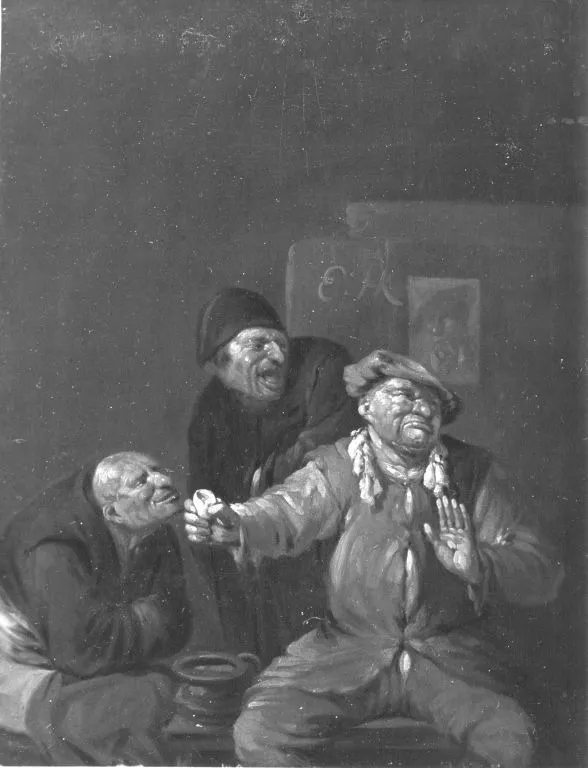
Der Geruch is an unspecified painting by the Dutch Golden Age artist Egbert van Heemskerck II. It dates from 1669 and is held in the collection of the Bavarian State Painting Collections.
About this work
Overview
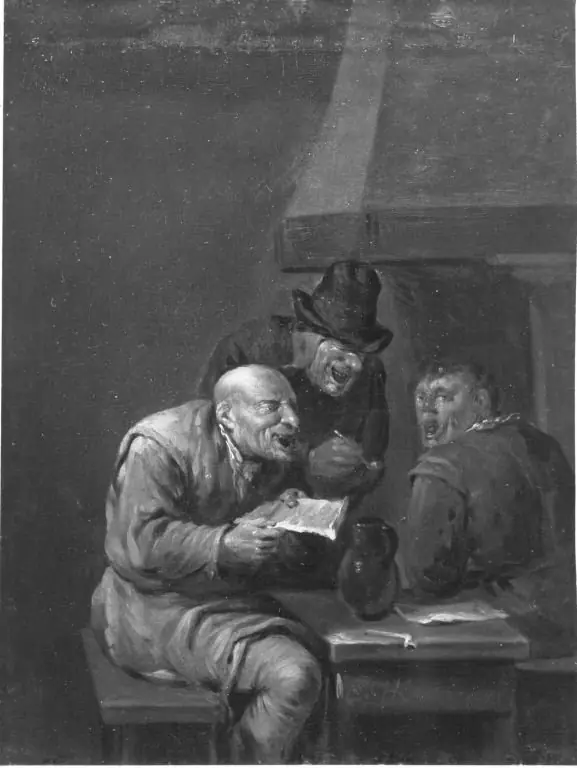
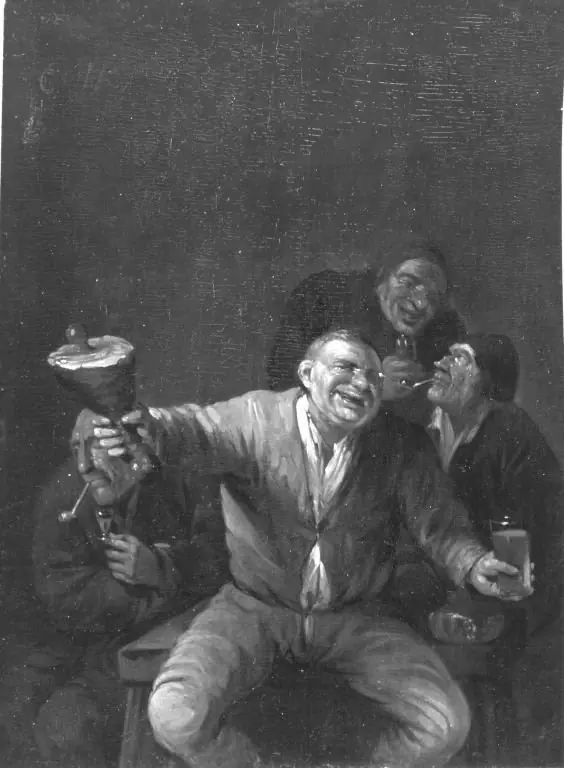
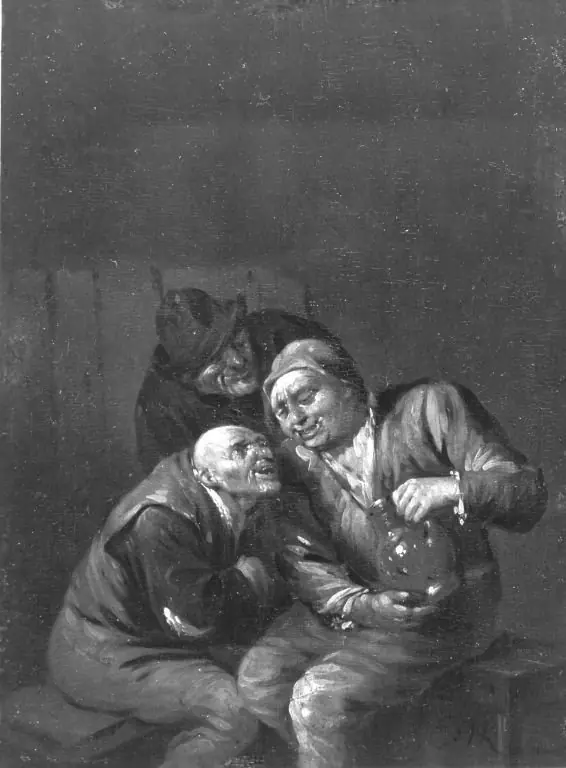
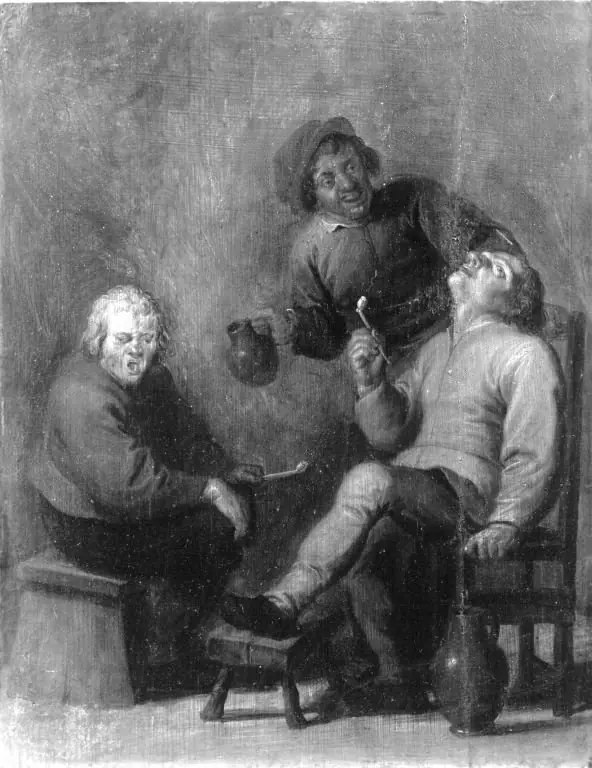
Painted in 1669 by Egbert van Heemskerck II, this oil on panel work captures a quiet interior scene with three male figures. It resides in the Alte Pinakothek in Munich, where it is cataloged under the title Der Geruch. The composition is tightly framed, emphasizing the stillness and introspective mood of the figures within a shadowed room.
Subject & Meaning
The painting portrays three men in a dimly lit space, one centrally positioned holding a small object, possibly a scent-containing vessel. The others observe in silence, their postures suggesting contemplation rather than interaction. The title, meaning 'The Smell,' implies an unseen sensory experience, inviting speculation about the object’s nature and its psychological effect on the men.
Technique & Style
Van Heemskerck employs strong chiaroscuro to model forms and isolate the central figure against a near-black background. Facial expressions and gestures are subtly rendered, avoiding dramatic expression. The loose fabric of the central figure’s shirt and the muted textures of clothing convey realism without embellishment, aligning with Dutch genre traditions of quiet, intimate observation.
History & Provenance
The painting entered the Alte Pinakothek’s collection in the early 19th century, likely through royal Bavarian acquisitions of Dutch and Flemish works. Its attribution to Egbert van Heemskerck II has been consistently upheld by scholars, though its early ownership prior to the museum’s acquisition remains undocumented.
Context
Created during the height of Dutch genre painting, the work reflects a broader interest in domestic moments and sensory experience. Unlike narrative-driven scenes, it favors ambiguity and psychological restraint, aligning with contemporaries like Pieter de Hooch and Gerrit Dou, who explored the quiet tensions of everyday life through controlled lighting and composition.
Legacy
Der Geruch remains a quiet example of mid-17th-century Dutch genre painting, valued for its restraint and atmospheric precision. It contributes to scholarly understanding of how Dutch artists conveyed internal states through minimal gesture and controlled light, influencing later traditions of psychological realism in European art.
Artist & collection