Artwork
Bauernschenke
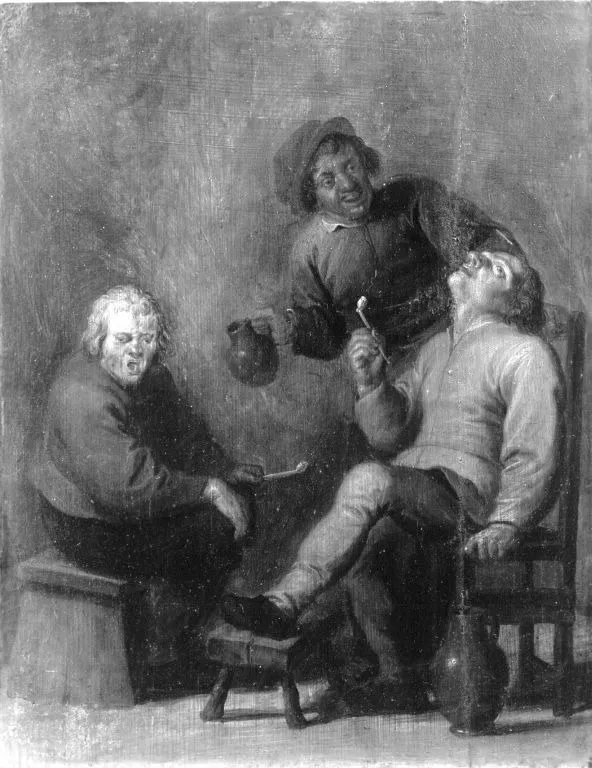
Bauernschenke is an unspecified painting by the Dutch Golden Age artist Gerrit Lundens. It dates from 1654 and is held in the collection of the Bavarian State Painting Collections.
About this work
Overview
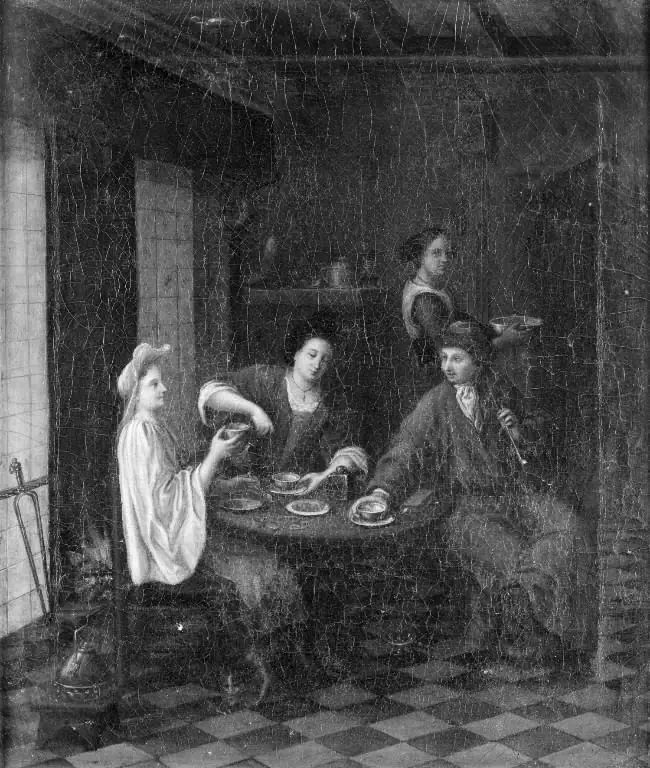
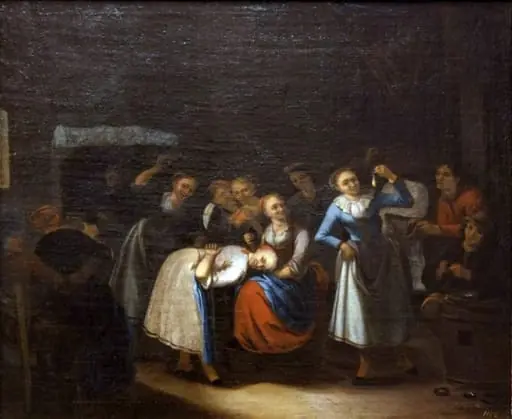
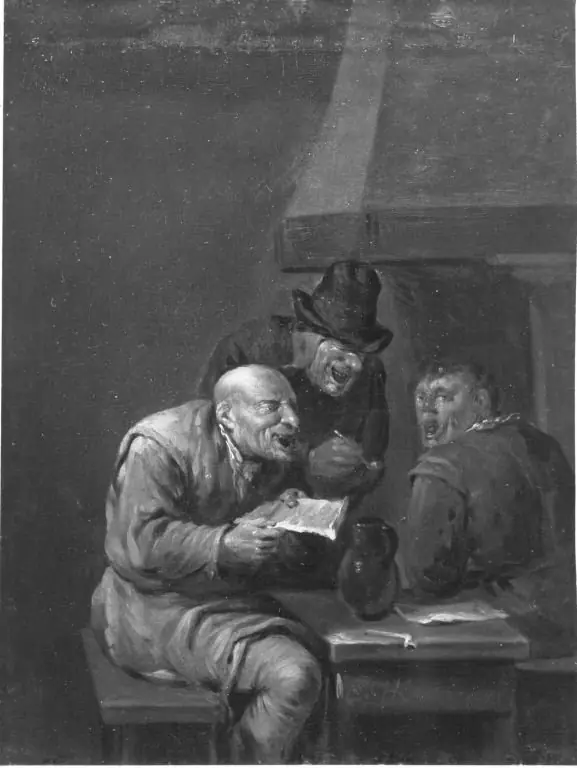
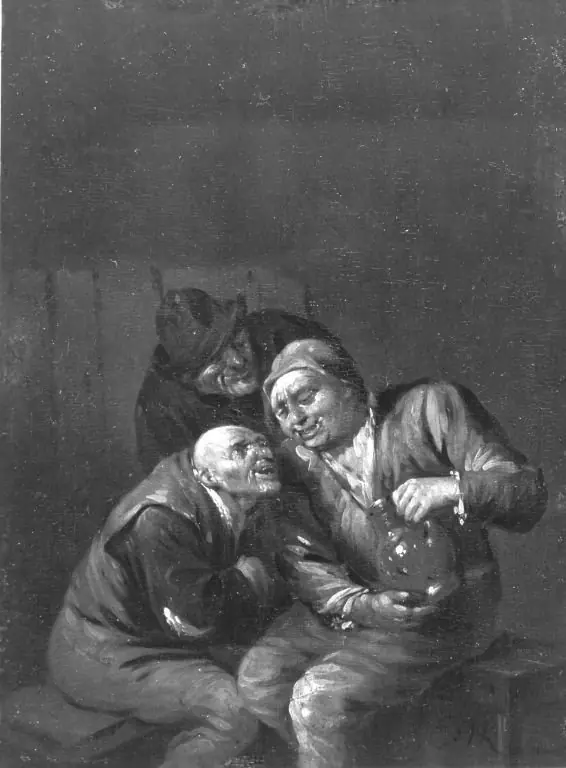
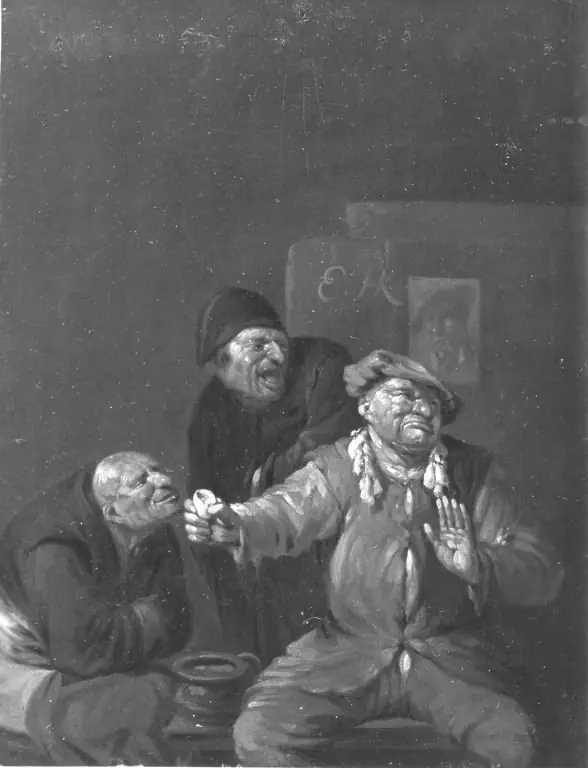
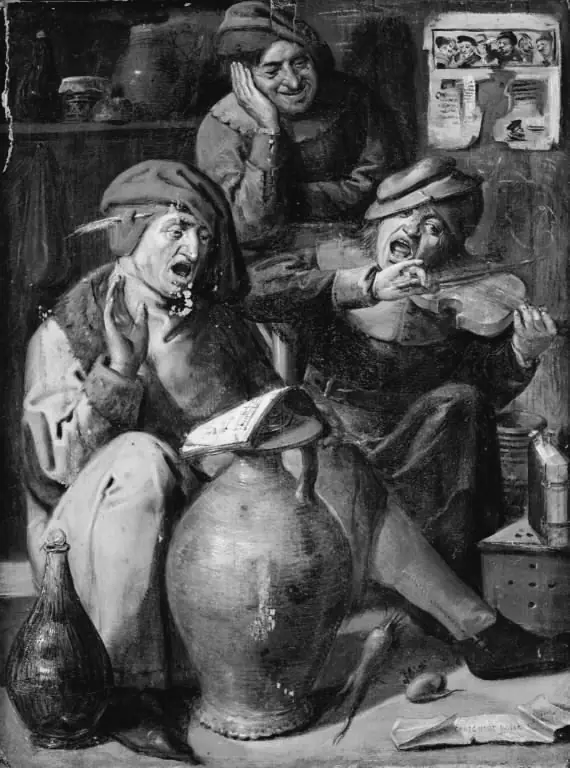
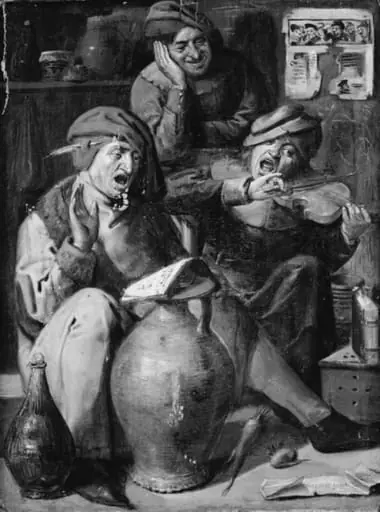
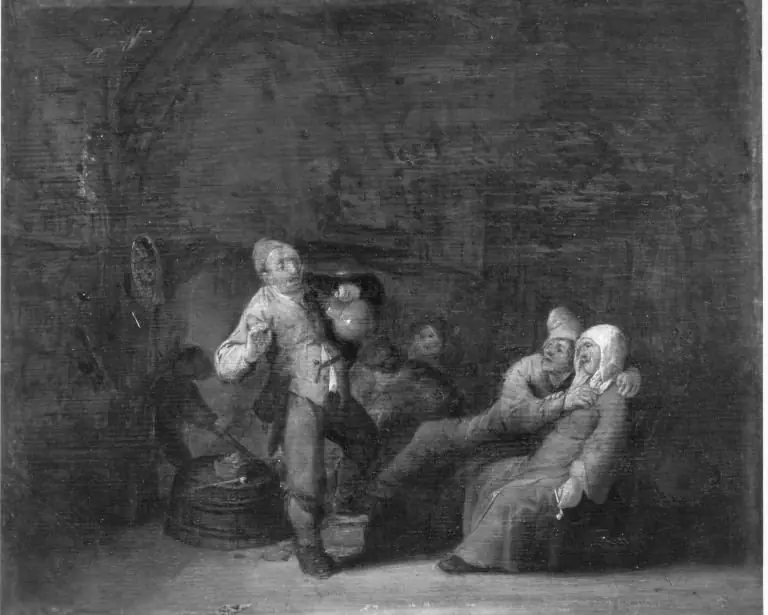
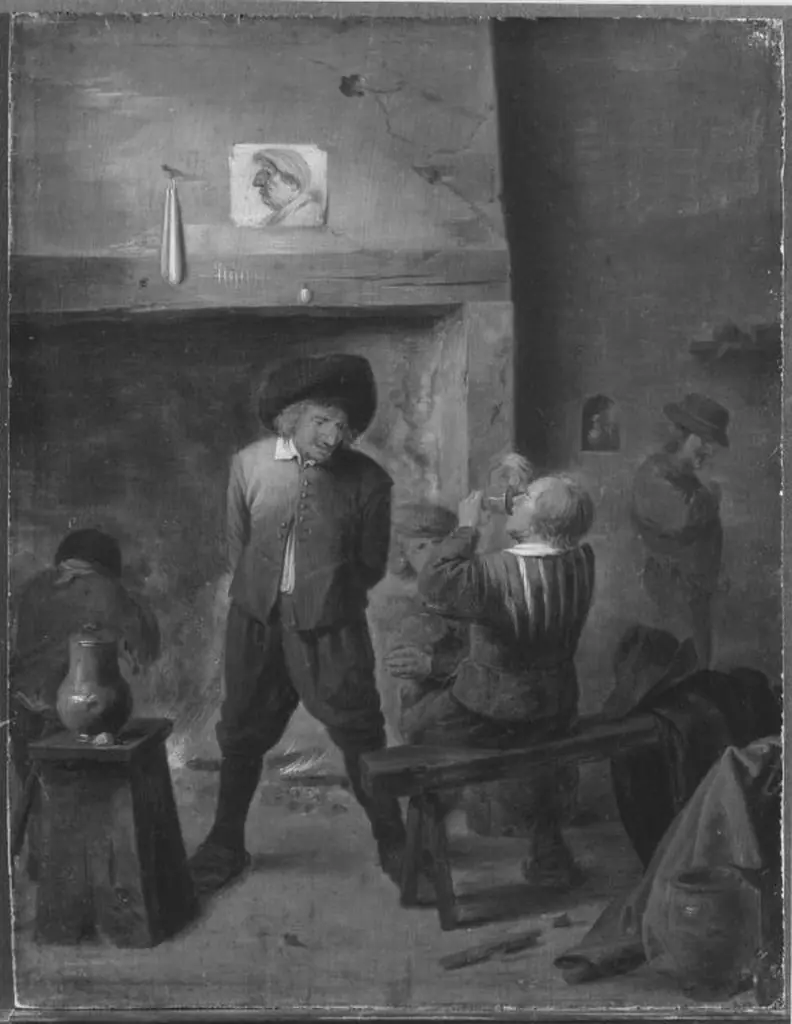
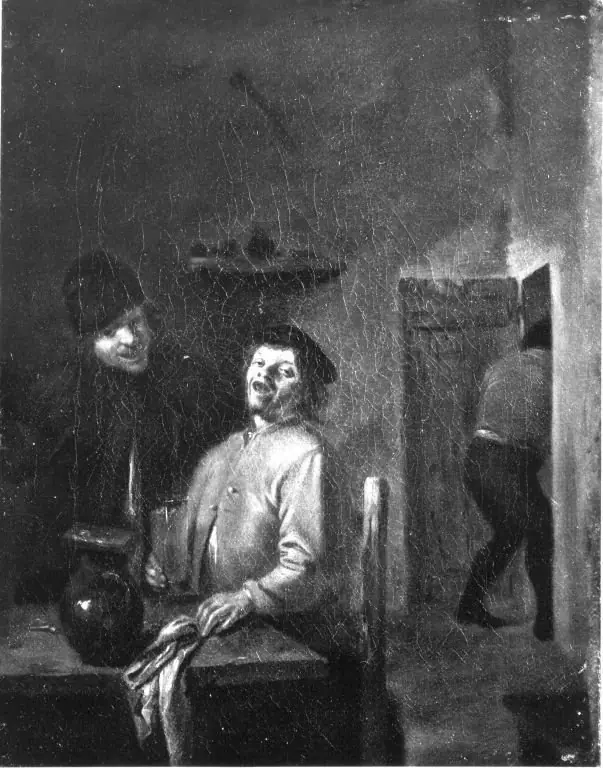
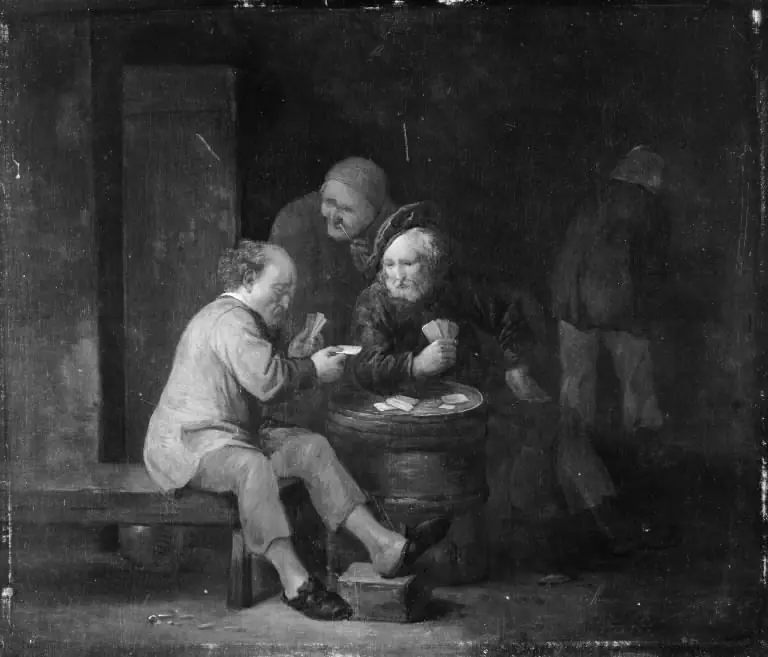
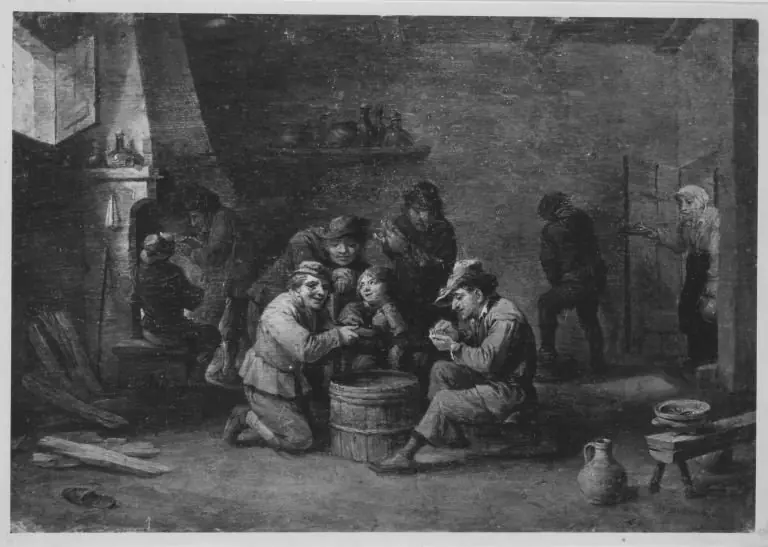
Gerrit Lundens’ 1654 oil painting *Bauernschenke* depicts a modest interior where four men are gathered around a table. The scene is rendered in low light, with selective illumination highlighting faces and objects, creating a sense of immediacy. The work exemplifies the Dutch Golden Age’s focus on everyday moments, presenting a quiet, domestic episode rather than a grand narrative.
Subject & Meaning
The composition centers on a tavern or inn setting, likely drawn from Lundens’ own experience as a wine merchant and innkeeper.
The composition centers on a tavern or inn setting, likely drawn from Lundens’ own experience as a wine merchant and innkeeper. One figure leans back, spoon in hand, while another laughs, a third holds a jug, and a fourth appears startled. The varied expressions suggest a spontaneous interaction, perhaps a moment of conviviality interrupted by surprise, reflecting the social dynamics of 17th‑century Dutch public houses.
Technique & Style
Lundens employs chiaroscuro, contrasting deep shadows with bright highlights to model the figures and emphasize texture. The uneven lighting creates depth, while the crisp rendering of clothing and objects conveys material detail. The painter’s brushwork is controlled, favoring smooth surfaces over visible strokes, aligning the work with the refined realism typical of Dutch genre painting.
History & Provenance
After its creation, *Bauernschenke* entered various private collections before being acquired by the Alte Pinakothek in Munich, where it remains on display. The painting’s provenance reflects the 19th‑century interest in Dutch genre scenes among German collectors, contributing to the museum’s extensive holdings of Northern European art.
Artist & collection
Artist
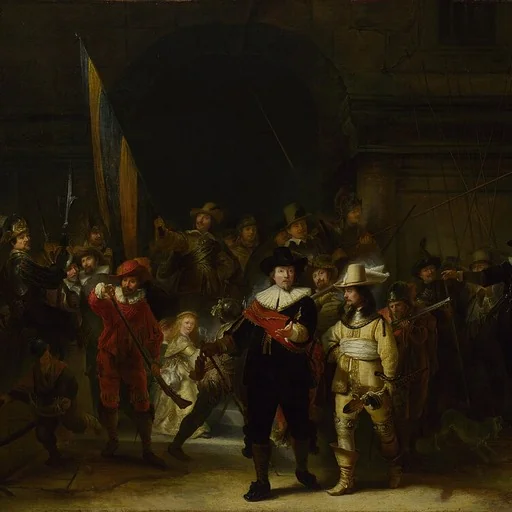
Gerrit Lundens (1622 – 1686), was a Dutch painter known for his genre scenes, portraits and a single vanitas painting.